Clownfish Care at a Glance
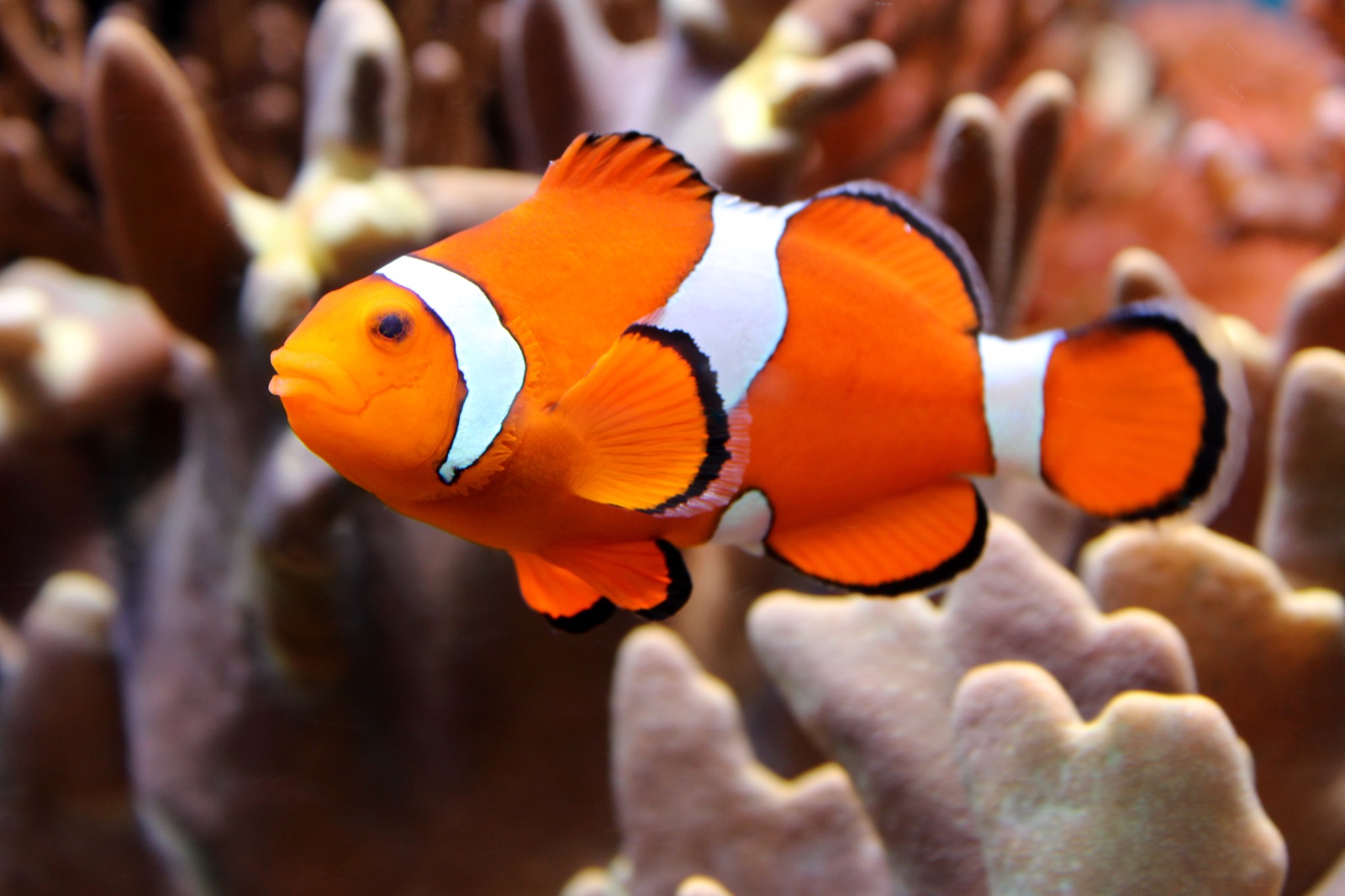
Clownfish, also called anemonefish, are marine damselfish best known for their relationship with sea anemones. Captive-bred Ocellaris and Percula clownfish are among the more approachable saltwater fish, but “beginner-friendly” does not mean freshwater-simple. They require a fully cycled marine aquarium, stable salinity and species-appropriate territory.
Quick answer: Start an Ocellaris or Percula clownfish in a mature 29- to 30-gallon saltwater aquarium. Keep temperature around 74–80°F, specific gravity around 1.020–1.025, ammonia and nitrite at 0 ppm, and feed a varied marine omnivore diet. A sea anemone is optional, not required.
| Care requirement | Practical starting point |
|---|---|
| Care level | Beginner-to-intermediate marine |
| Adult size | About 3–7 inches, depending on species |
| Lifespan | Often 10–15+ years; some documented beyond 20 years |
| Tank size | 29–30 gallons for small species; larger for territorial species |
| Temperature | 74–80°F (23–27°C) |
| Specific gravity | Approximately 1.020–1.025 |
| Diet | Omnivorous marine pellets, flakes and frozen foods |
| Temperament | Semi-aggressive; varies by species and breeding status |
| Anemone required? | No |
Are Clownfish Good for Beginners?
Ocellaris and Percula clownfish can be good first marine fish because captive-bred individuals are generally hardy, accept prepared foods and do not require a sea anemone. They are not appropriate for an uncycled aquarium, a freshwater tank or a rushed same-day setup.
Saltwater beginners must learn how to mix marine salt, measure salinity with a calibrated refractometer, top off evaporation correctly and maintain biological filtration. Evaporated water leaves salt behind, so routine top-off uses fresh purified water—not additional saltwater. Replacement saltwater should be mixed and matched to the aquarium before a water change.
Choose captive-bred fish where available. Captive-bred clownfish are accustomed to aquarium foods, reduce pressure on wild populations and are usually a more responsible starting choice. Avoid buying an anemone simply because the clownfish is associated with one; anemones have their own lighting, maturity and stability requirements.
Clownfish Size and Lifespan
Clownfish size depends strongly on species. Great Barrier Reef Foundation information places the group broadly around 7–17 cm (roughly 3–7 inches). Ocellaris and Percula clownfish usually remain near the smaller end, while Maroon and some Clarkii-complex clownfish grow larger and defend more territory.
| Type | Approximate adult size | Behavior note |
|---|---|---|
| Ocellaris clownfish | About 3–4 inches | Common captive-bred beginner choice |
| Percula clownfish | About 3–4 inches | Similar care to Ocellaris |
| Pink skunk clownfish | About 4 inches | Often less aggressive but still territorial |
| Tomato clownfish | About 5 inches | More assertive with maturity |
| Clarkii clownfish | About 5–6 inches | Active and territorial |
| Maroon clownfish | Up to about 6–7 inches | Large, powerful and often highly territorial |
Many well-kept captive clownfish live 10–15 years or longer. Scientific sources report that clownfish can exceed 20 years, with longevity estimates for orange clownfish reaching still higher. Buying a clownfish is therefore a long-term commitment, not a short-lived starter purchase.
Popular Types of Clownfish
Ocellaris Clownfish
Amphiprion ocellaris is the most familiar “Nemo-like” clownfish and one of the most commonly captive-bred marine fish. Standard orange, black-and-white and designer patterns may all belong to this species. Color morphs do not automatically represent separate species.
Percula Clownfish
Amphiprion percula closely resembles Ocellaris but often develops stronger black margins around its white bars. It is another sensible choice for a suitably prepared first marine tank.
Clarkii, Tomato and Cinnamon Clownfish
These fish become larger and more territorial than many Ocellaris clownfish. They need extra swimming space, structure and careful tank-mate planning.
Maroon Clownfish
Maroon clownfish are visually striking but are not the easiest first clownfish. Adult females can become large and strongly territorial, especially around a host area or nest.
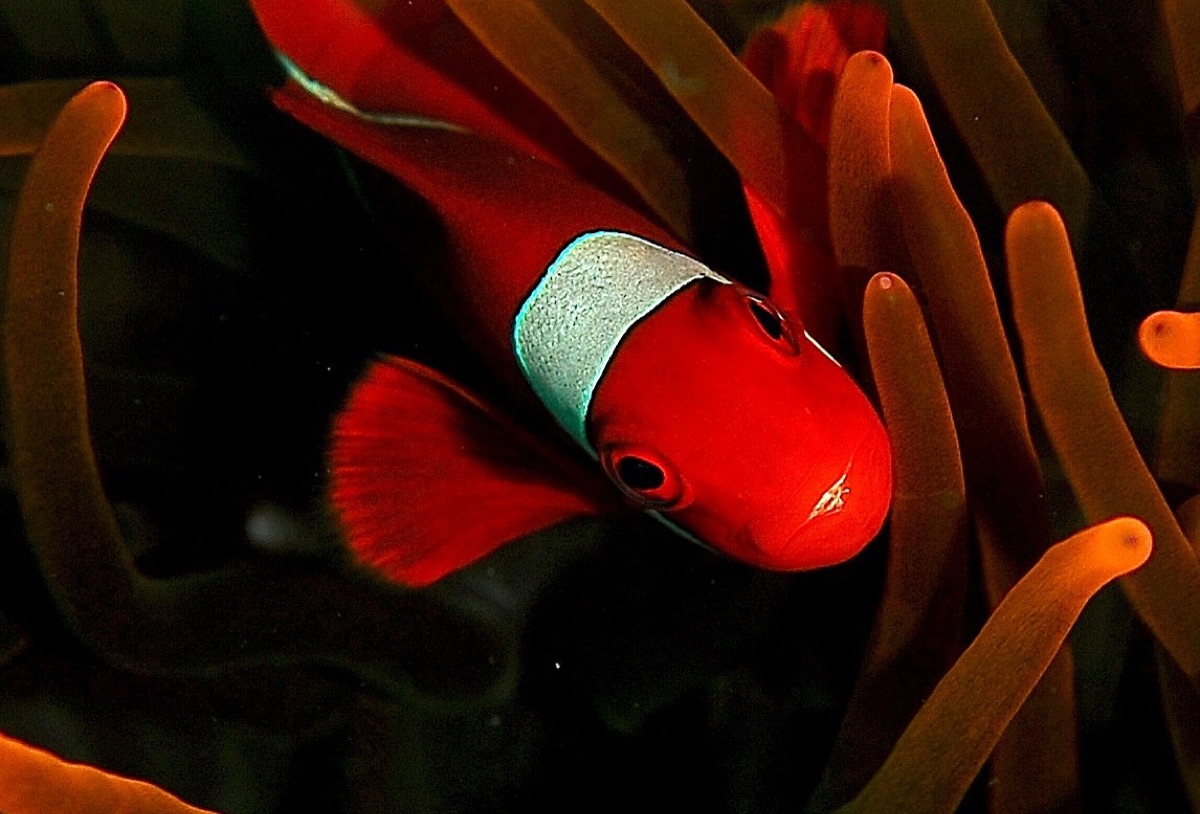
Retail labels such as Snowflake, Picasso, Storm or Wyoming White usually describe selectively bred patterns. Confirm the underlying species before deciding tank size and compatibility.
Clownfish Tank Size
A 29- to 30-gallon aquarium is a cautious starting point for one Ocellaris or Percula clownfish or a compatible pair. Although smaller minimums are frequently promoted, additional water volume makes salinity, temperature and waste levels easier to stabilize and leaves more room for territory.
Larger species—including Maroon, Tomato and Clarkii clownfish—need more space. A 40- to 55-gallon aquarium or larger is a more realistic starting point depending on the species, tank mates and aquascape. A pair defending eggs or a host location may claim a much larger area than juveniles did in a store.
Choose the aquarium by adult fish, total stocking and available territory, not just gallons. Use the Tank Size Calculator as a planning aid, then confirm the exact clownfish species with a reputable marine specialist.
How to Set Up a Clownfish Tank
Cycle the aquarium completely before adding clownfish. The system needs a reliable biological filter capable of converting ammonia to nitrite and then nitrate. Test results—not the number of days the tank has been running—determine whether the cycle is functioning.
A practical setup includes an appropriately sized aquarium and stand, heater, thermometer, marine-capable filtration, circulation, cured live rock or other biological media, marine salt mix, refractometer, test kits, secure lid and safe hiding places. A protein skimmer can help manage dissolved organic waste but does not replace water changes or responsible stocking.
Arrange rock securely before livestock is added. Provide caves and visual barriers without blocking circulation. Clownfish often select one small region as a territory and may ignore much of the aquarium, but tank mates still need escape routes and separate shelter.
Lighting can remain straightforward in a fish-only system. Reef-quality lighting becomes important when photosynthetic corals or host anemones are introduced. Do not buy powerful lighting solely because a clownfish “should” have an anemone.
Clownfish Water Parameters and Salinity
Stable chemistry is more important than frequent adjustments toward a single perfect number. A suitable starting range for many captive-bred clownfish is:
| Parameter | Starting target | Why it matters |
|---|---|---|
| Temperature | 74–80°F | Avoid rapid daily swings |
| Specific gravity | 1.020–1.025 | Measure with a calibrated refractometer |
| pH | Approximately 8.0–8.4 | Stability and adequate alkalinity matter |
| Ammonia | 0 ppm | Any detectable amount requires action |
| Nitrite | 0 ppm | Indicates incomplete or disrupted biofiltration |
| Nitrate | Kept low and controlled | Target depends on fish-only versus reef system |
Check salinity after evaporation and before water changes. Top off evaporation with fresh purified water because salt remains in the aquarium. Use mixed saltwater only to replace saltwater intentionally removed during a water change.
The Water Parameter Checker can help organize readings, but it cannot diagnose disease or replace a calibrated instrument.
Clownfish Diet: What Do Clownfish Eat?
Clownfish are omnivores. Wild diets include zooplankton, small crustaceans, algae and edible material associated with their reef habitat. In captivity, use a complete marine pellet or flake as a staple and rotate appropriately sized frozen foods such as mysis shrimp, brine shrimp and mixed marine preparations.
Offer small portions one or two times daily for most adults, adjusting to size, age, filtration and condition. Juveniles or breeding fish may need a different schedule. Food should be consumed promptly; repeated excess contributes to ammonia, nitrate and nuisance algae.
Thaw frozen food before feeding and avoid adding large amounts of packing liquid. Vary foods rather than depending on brine shrimp alone. A colorful fish is not necessarily well nourished—monitor body condition, appetite and waste production over time.
Use the Fish Feeding Calculator as a starting estimate, then adjust based on actual consumption and water tests.
Do Clownfish Need an Anemone?
No. Clownfish can thrive and breed in captivity without a sea anemone. In the wild, clownfish and host anemones form a mutualistic relationship: the anemone offers protection among its stinging tentacles, while the clownfish can provide nutrients, cleaning and water movement.
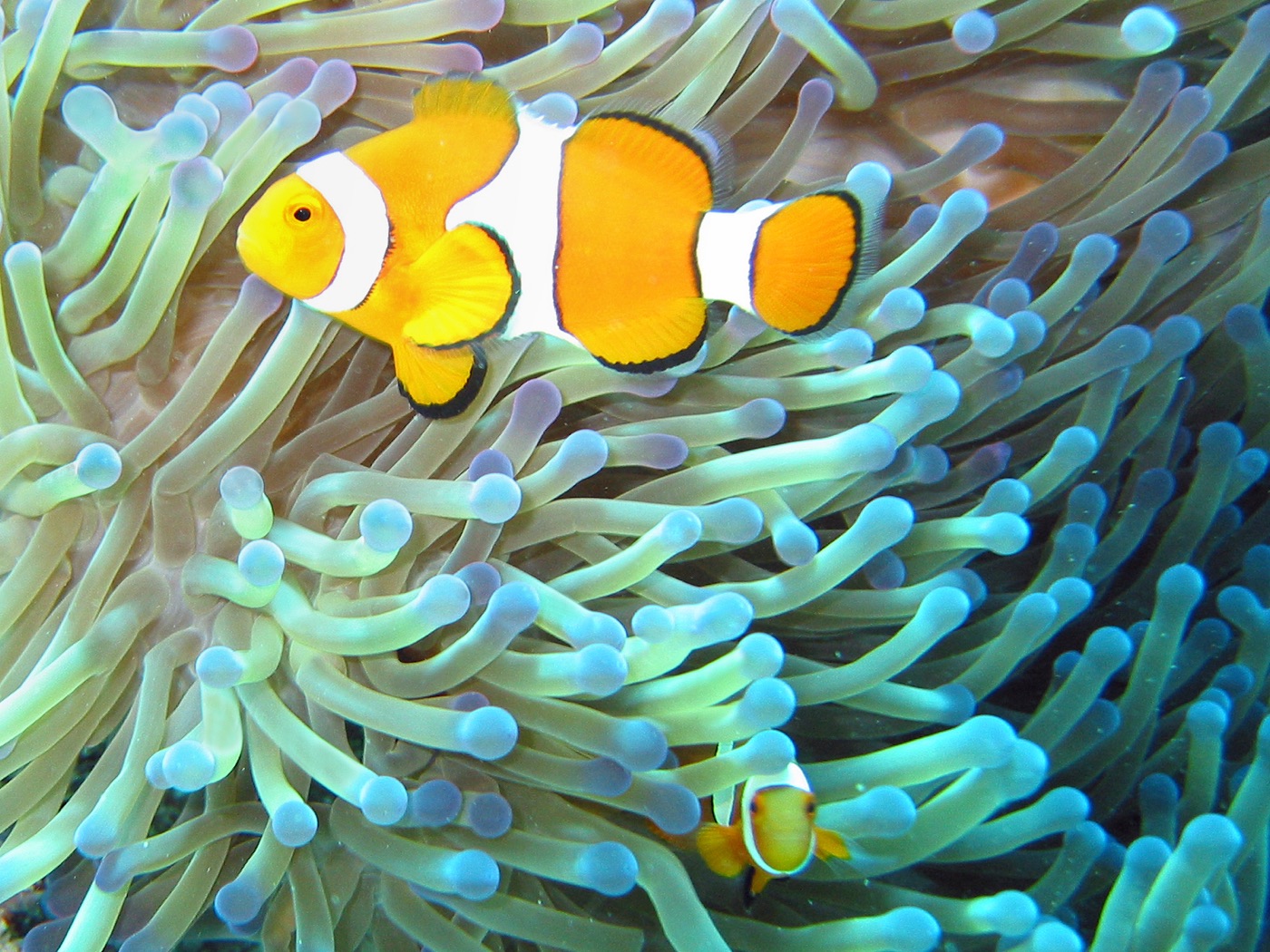
Anemones are not decorations. Many require a mature, highly stable reef aquarium, strong species-appropriate lighting, carefully managed flow and protection from pump intakes. A wandering anemone can sting other animals or be injured by equipment. The clownfish may also ignore the anemone or attempt to use a coral, powerhead corner or other object as a host.
If you want an anemone, research the exact clownfish–anemone compatibility and establish the reef system for the anemone’s needs first. Do not add one to solve clownfish stress caused by poor water or inadequate territory.
Clownfish Tank Mates
Tank-mate compatibility depends on clownfish species, tank size, established territory and breeding status. Gobies, blennies, cardinalfish, some wrasses and other appropriately sized peaceful-to-semi-aggressive marine fish may work in a sufficiently large system.
Avoid combining multiple clownfish species casually. Established clownfish may attack newcomers, and two unpaired adults can fight severely. Do not rely on a generic compatibility list without considering order of introduction, rockwork and individual behavior.
Introduce fish gradually, quarantine when practical and monitor feeding, breathing and aggression. Have a divider or separate cycled system ready if a new combination fails. Check possible combinations with the Fish Compatibility Checker, then confirm with species-specific marine references.
Clownfish Behavior and Sex Change
Clownfish live within a size-based social hierarchy. They are sequential hermaphrodites: juveniles develop as males, and the dominant breeding individual becomes female. The female is usually the largest fish, while the breeding male is second in rank. If the female disappears, the breeding male can transition permanently to female and another subordinate fish can become the breeding male.
Territorial chasing, clicking or popping sounds and defending a chosen corner can be normal, but continuous attack, torn fins, hiding and refusal to eat indicate an unsafe pairing or insufficient space. Aggression often increases when a pair matures or begins spawning.
Clownfish Breeding
A bonded pair prepares a hard surface near its chosen territory. The female deposits adhesive eggs, the male fertilizes them and then spends much of the incubation period cleaning, fanning and guarding the clutch. Eggs often darken as embryos develop, and visible eyes appear near hatching.
Breeding adults is much easier than raising larvae. Larvae require a separate rearing system, suitable first foods such as live rotifers, controlled lighting, gentle aeration and careful water management. Do not assume ordinary flakes or a community aquarium will raise the hatch successfully.
Clownfish can spawn repeatedly under stable conditions. Captive breeding is valuable because it supplies aquarium-adapted fish and reduces dependence on wild collection.
Clownfish Price and Buying Advice
Common captive-bred Ocellaris clownfish are often among the less expensive marine fish, while rare designer patterns, established pairs and uncommon species may cost substantially more. Price changes with locality, size, breeder, pattern and availability, so avoid treating one online price as permanent.
The fish is only a small part of the real cost. Budget for a marine aquarium, rock, filtration, circulation, heater, salt mix, refractometer, test supplies, food, quarantine equipment and ongoing replacement water. A healthy standard-pattern captive-bred fish is usually a better first purchase than an expensive morph placed into an immature system.
Choose alert fish with clear eyes, intact fins, steady breathing and a strong feeding response. Ask whether the fish is captive-bred, what it currently eats and how long it has been at the store. Avoid fish with thick mucus, rapid breathing, white spots, frayed fins or repeated scratching.
Clownfish Health and Warning Signs
Warning signs include rapid breathing, gasping, thick or excessive mucus, white spots, fading color, clamped or damaged fins, repeated rubbing, loss of appetite and abnormal swimming. One disease strongly associated with clownfish is Brooklynellosis, sometimes called clownfish disease, but symptoms overlap with other parasites and water-quality problems.
Test temperature, salinity, ammonia, nitrite, nitrate and pH immediately when behavior changes. Do not medicate the display tank based only on a photograph or a guessed diagnosis. Some treatments harm invertebrates, biological filtration or corals. Isolate affected fish when appropriate and consult a qualified aquatic veterinarian or experienced marine-fish professional.
Quarantine new fish before introduction whenever possible. A separate quarantine system makes observation and treatment safer and reduces the risk of introducing parasites to the display aquarium.
For symptom-by-symptom diagnosis, urgency and treatment, see the full guide to clownfish health problems, with separate pages for ocellaris, percula, tomato and maroon clownfish diseases.
Clownfish Tank Maintenance Checklist
- Check temperature, fish behavior and equipment every day.
- Replace evaporation with fresh purified water and verify salinity.
- Feed measured portions and remove persistent leftovers.
- Test ammonia and nitrite whenever fish behavior changes.
- Track nitrate, pH, alkalinity and salinity on a regular schedule.
- Perform partial water changes according to test results and stocking.
- Clean mechanical filtration without removing all biological media at once.
- Inspect pumps, heaters, electrical connections and guards.
- Record results so gradual changes become visible.
Never use soap or household cleaning sprays on aquarium equipment. Prepare replacement saltwater separately and match temperature and salinity before adding it.
Frequently Asked Questions
Are clownfish freshwater or saltwater fish?
Clownfish are marine saltwater fish. They cannot live in a freshwater aquarium.
Can one clownfish live alone?
Yes. A single clownfish can live successfully without a mate. A compatible pair can also work, but adding two random mature fish does not guarantee a safe pair.
How many clownfish can live together?
For most home aquariums, one fish or a compatible pair is the safest plan. Larger social groups require substantial space, careful size hierarchy and advanced management.
Do clownfish need coral?
No. They need stable marine water and secure territory. Coral and anemones add separate reef-care requirements.
Why is my clownfish staying in one corner?
A clownfish may choose a corner as territory, especially without an anemone. Check breathing, appetite, bullying, flow and water quality before assuming the behavior is harmless.
What is the best clownfish for beginners?
A healthy captive-bred Ocellaris or Percula clownfish is usually the most suitable starting choice. Maroon, Tomato and some Clarkii types are generally more territorial.
How We Reviewed This Clownfish Guide
FishCare AI does not claim invented hands-on experience or veterinary credentials. This guide was built by comparing an aquatic-veterinarian-reviewed care sheet, public-aquarium and reef-conservation resources, current taxonomy summaries and specialist husbandry principles.
Veterinary guidance supports health and husbandry; scientific or institutional sources support biology, behavior and conservation.
When tank-size recommendations vary, we use a cautious 29- to 30-gallon starting point and explain species-level differences.
Community conventions are not presented as personal testing. Practical advice is separated from documented biological claims.
Symptoms are educational, not a diagnosis. Medication decisions belong with a qualified aquatic veterinarian.
Substantive corrections are reviewed and dated. If you have a primary source that improves this page, contact the editorial team.
References and Further Reading
- PetMD — Clownfish Care Sheet, reviewed by Maria Zayas, DVM
- Great Barrier Reef Foundation — Clownfish facts, habitat and symbiosis
- National SEA LIFE Centre Birmingham — Clownfish biology and lifespan
- Clownfish overview and linked scientific references
Published July 6, 2026 · Substantially reviewed and updated July 30, 2026 · FishCare AI Editorial Team