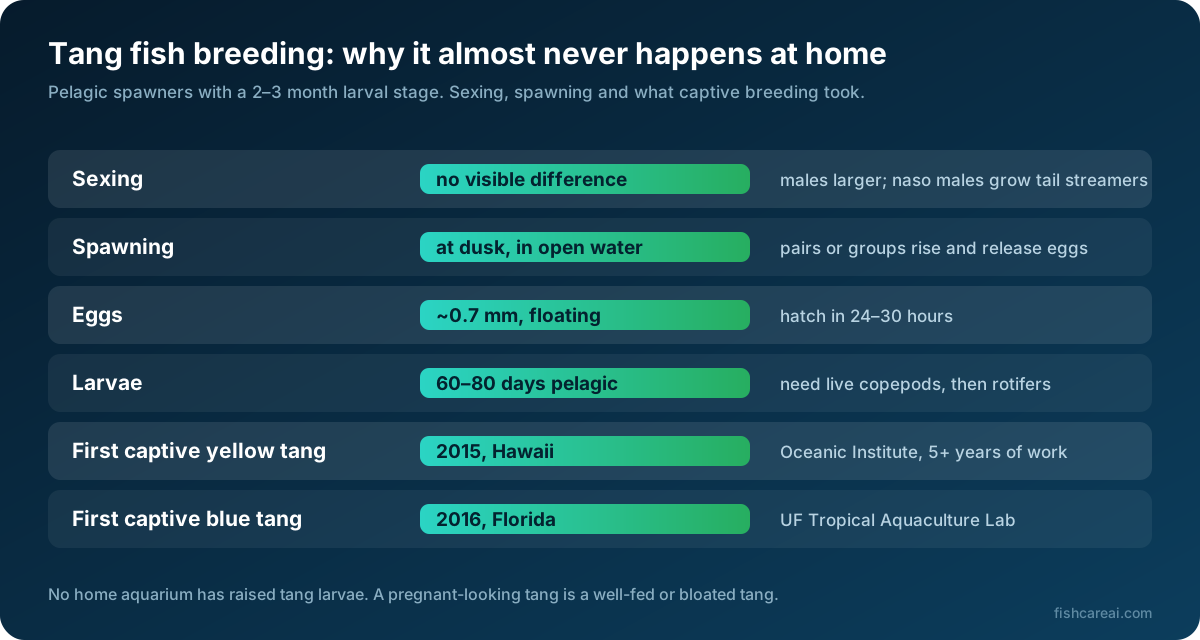
Tang fish breeding in a home aquarium stops at the first step: you cannot tell a male from a female, and if a pair does spawn, the eggs float away and hatch into larvae that drift in open water for two to three months eating plankton no hobbyist can supply. Every captive-bred tang on sale today came from a research hatchery, and the first ones only appeared in 2015. This page covers what can be done — sexing where it is possible, recognising a spawn, and understanding why the fry are the problem — and what to make of a tang that looks pregnant.
Male vs Female Tang Fish
Tangs are sexually monomorphic: males and females have the same colour, fins and shape, and there is no external difference you can rely on in a shop. The exceptions and the hints:
| Species | Male | Female | Reliable? |
|---|---|---|---|
| Naso / blonde naso | Long streamers on the tail lobes, larger nose bump | Short or no streamers | Yes, in adults |
| Yellow, purple, scopas | Slightly larger; displays with raised fins at dusk | Slightly smaller, rounder when full of eggs | No |
| Blue (hippo) | Larger; may show a pale flush when courting | Same colour | No |
| Kole, tomini | Slightly larger | Same | No |
| Sailfin, desjardini | Larger with a taller sail | Same pattern | Only in a known pair |
In a group, the male is the one that circles, flares its fins and chases at dusk; a lone tang gives you nothing to go on. Buying “a pair” of tangs from a shop is buying two tangs of unknown sex that will probably fight (see tang fish tank mates).
How Tang Fish Spawn
Tangs are broadcast (pelagic) spawners. On the reef, groups gather at dusk near a reef edge or channel where the current runs out to sea; pairs or small groups dash upward, release eggs and sperm at the top of the rush, and return to the bottom. Yellow tangs spawn in pairs or groups around the full moon; blue tangs and naso tangs spawn in large aggregations. There is no nest, no guarding and no parental care — the eggs are carried away on the current within seconds. The reproductive biology is summarised on the Acanthuridae page.
In a large aquarium (180 gallons and up) with a settled group of yellow or convict tangs, dusk spawning rushes do occasionally happen, usually noticed as two fish shooting up the water column together with the lights dimming. The skimmer collects the eggs by morning.
Tang Fish Eggs and Larvae
- Eggs: about 0.7 mm, clear, buoyant, with an oil droplet. A female releases tens of thousands per spawn. They hatch in 24–30 hours.
- Larvae: hatch at 1.5–2 mm with no mouth or fins, living on the yolk for two days, then need live prey far smaller than rotifers — copepod nauplii of specific species.
- Pelagic stage: 60–80 days drifting in open water, growing into the transparent, kite-shaped “acronurus” larva, before settling onto a reef and taking adult colour within days.
That two-month pelagic stage on a diet of cultured copepods is why tang fish breeding was considered impossible for decades and why a home tank cannot do it: the larvae need a dedicated larval tank, live copepod cultures scaled up daily, and no filtration that would remove the prey.
Can You Breed Tang Fish at Home?
Practically, no. The parts that are possible — keeping a compatible group in a very large tank and occasionally seeing a spawn — are described above. The parts that are not are the same for every aquarist without a hatchery: collecting floating eggs before the overflow takes them, and raising larvae that need 60–80 days of live copepods. The realistic route to “breeding tangs” for a hobbyist is to buy captive-bred fish and support the hatcheries that do the work. The husbandry that keeps an adult healthy is the same whichever way it was born; see the tang fish care guide.
Captive Tang Fish Breeding: How It Was Done
| Milestone | Year | Where | What it took |
|---|---|---|---|
| First captive-bred yellow tang | 2015 | Oceanic Institute, Hawaii Pacific University | Five years of larval-diet trials; copepod nauplii, then rotifers and artemia |
| First captive-bred blue tang | 2016 | University of Florida Tropical Aquaculture Lab / Rising Tide | Same copepod-first protocol, 50+ day larval run |
| Commercial yellow and blue tangs | 2017–present | Biota, Hawaii and Florida hatcheries | Limited numbers, higher price, arrive eating pellets |
| Other tangs bred (purple, sailfin, naso) | 2018–2023 | Research and commercial hatcheries | Small batches; not yet routine |
Captive-bred tangs matter for two reasons: they take pressure off wild reefs (Hawaiian collection has been closed since 2021), and they survive the first year in a home tank far better than wild fish, because they arrive with no wild parasites and already eating prepared food. Both are covered on the types of tang fish page.
Is My Tang Fish Pregnant?
No tang is ever pregnant; they do not carry young. A tang with a swollen belly is one of three things: well fed (a full, rounded belly after nori is healthy), bloated from too much frozen or dry food and too little fibre (two days of seaweed only, and it clears), or in rare cases carrying eggs just before a spawn, which passes within a day. A belly that stays swollen for a week with raised scales or a fish that stops eating is a health problem, not a breeding one — see tang fish diseases. What a healthy adult should look like, size by size, is on the tang fish size page; how it should be fed is under tang fish food.
Tang Fish Care FAQ
How do you tell a male tang from a female?
In most species you cannot by eye. Males tend to be slightly larger and, in a group, the one that displays and chases at dusk. Naso tangs are the exception: mature males grow long streamers on the tail lobes and a larger nose bump.
Can tang fish breed in a home aquarium?
Spawning occasionally happens in large tanks with a mature pair, but raising the young does not. Tang eggs float and hatch into tiny pelagic larvae that drift for 60–80 days and need live copepod nauplii; no home aquarium has raised one.
Do tang fish lay eggs?
Yes. Tangs are broadcast spawners: pairs or groups rise into open water at dusk and release eggs and sperm together. The eggs are about 0.7 mm, float in the current, and hatch within 24–30 hours.
Can a tang fish get pregnant?
No. Tangs do not carry young. A tang with a swollen belly is well fed, bloated from too much frozen food, or in rare cases carrying an internal problem. Two days of nori-only feeding clears most swollen bellies.
Are captive-bred tangs available?
Yes, in limited numbers. Yellow tangs were first raised at the Oceanic Institute in Hawaii in 2015, blue tangs at the University of Florida in 2016, and a handful of hatcheries now sell them. They cost more and arrive eating pellets.
Do tangs pair for life?
No. Most tangs spawn in groups or in temporary pairs that form at dusk and separate afterwards. A 'pair' of tangs in an aquarium is two fish that tolerate each other, not a bonded couple.