What are the most common clownfish health problems?
The most common clownfish health problems are parasites and stress. The main diseases are marine ich (Cryptocaryon), marine velvet (Amyloodinium), Brooklynella — often called "clownfish disease" — Uronema, and gill or skin flukes, plus secondary bacterial infections.
The one rule that matters most: fast or heavy breathing combined with dust, slime or peeling skin is an emergency. Velvet and Brooklynella can kill a clownfish within days, so move the fish to a quarantine tank and start treatment the same day — don't wait to "see how it goes."
Most other signs — pale color, not eating, hiding — come from stress or water quality. Test ammonia, nitrite, salinity and temperature first; it takes five minutes and rules out the most common cause.
How urgent is your clownfish's problem?
Emergency
- Rapid breathing or gasping at the surface
- Fine gold or grey "dust" on the body
- Thick white slime or skin peeling off
- Lying on the bottom, not responding
Urgent
- Distinct white salt-grain spots
- Red sores, streaks or ulcers
- Cloudy or bulging eyes
- Not eating for 3+ days
Watch
- Pale color after a move or water change
- Hiding during the first week
- Small fin nips from a tank mate
- Wiggling in place near a host spot (normal)
Clownfish symptoms and what they usually mean
Find the closest match, then open the species guide for a step-by-step diagnosis.
Not eating
Urgent if 3+ daysNew-tank stress, poor water, or the first sign of ich, velvet or Brooklynella.
White spots or patches
UrgentSalt-grain spots = marine ich. Spreading white slime patches = Brooklynella (emergency).
Coughing or fast breathing
EmergencyGill parasites — velvet, flukes, Brooklynella — or low oxygen. Check aeration immediately.
Losing color / pale
WatchUsually stress, bullying or unstable salinity. Pale plus slime is Brooklynella.
Swimming sideways
UrgentSwim bladder trouble, advanced infection or injury from aggressive tank mates.
Sinking or floating
UrgentSwim bladder problems from overfeeding, constipation or infection.
Curled or bent body
UrgentLate-stage infection, internal disease or nerve damage; sometimes a genetic deformity.
Bulging or cloudy eyes
UrgentBacterial popeye, flukes or physical injury. One eye usually means injury.
Scratching on rocks
Urgent"Flashing" is an early sign of ich, velvet or flukes — often before spots appear.
The 5 main clownfish diseases compared
Ich, velvet and Brooklynella look alike at first glance. The texture of the marks and the speed of decline are the best clues.
| Disease | What you see | Speed | First-line treatment (in quarantine) | Display tank |
|---|---|---|---|---|
| Marine ichCryptocaryon irritans | White salt-grain spots, flashing, faster breathing | Days–weeks | Copper at 0.15–0.20 mg/L free copper for 3–6+ weeks, hyposalinity, or tank transfer[1] | Fishless at least 3–6 weeks; up to 11 weeks may be needed[1] |
| Marine velvetAmyloodinium ocellatum | Fine gold/grey dust, very rapid breathing, hanging at the surface | Can kill in days | Short freshwater dip for relief, then copper at 0.15–0.20 mg/L free copper[2][3] | Leave fishless for several weeks |
| BrooklynellaBrooklynella hostilis | Thick white mucus, peeling skin patches, pale color, rapid breathing | Can kill in days | Formalin baths or prolonged formalin — copper did not eradicate it[4] | Treat every clownfish in the system |
| UronemaUronema spp. | Red ulcers that grow quickly, often from an injury | Days | Formalin; formalin, malachite green and hydrogen peroxide all worked in lab trials[5] | Remove the cause of the injury |
| Flukesmonogenean flatworms | Flashing, cloudy eyes, heavy breathing, clear skin | Weeks | Praziquantel baths — 2 mg/L twice, four days apart, cleared them in one study[6] | Re-infection likely; treat all fish |
Bacterial infections (fin rot, red streaks, popeye) are usually secondary — they follow parasites, injury or poor water. Fix the trigger first; use antibiotics only in a hospital tank, since they damage the biofilter.
Clownfish health problems by species
Each species guide groups 30 symptoms into eight checks with species-specific notes.
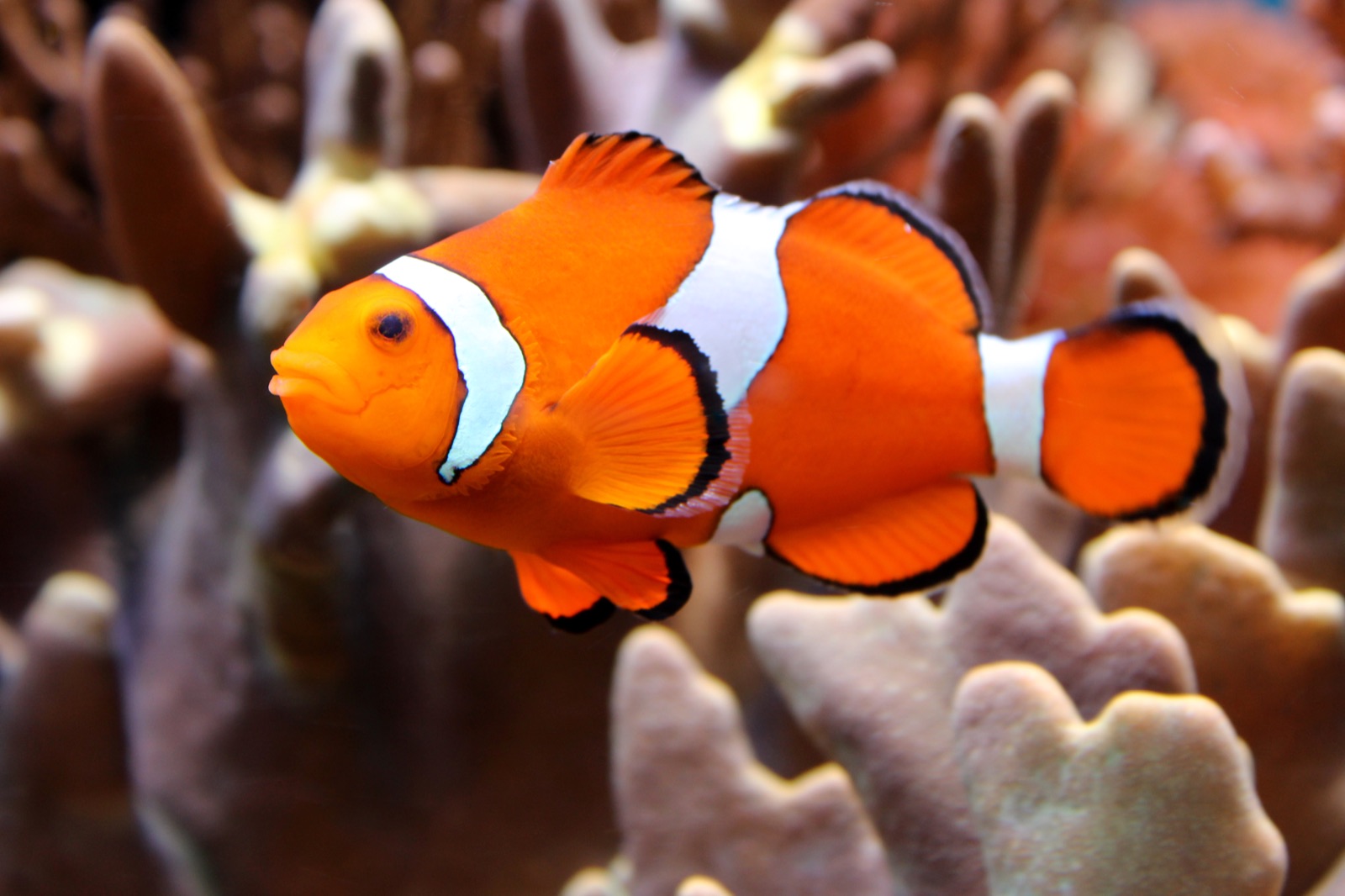
Ocellaris clownfish diseases
The most common aquarium clownfish. Captive-bred fish are hardy; most illness follows stress or an unquarantined new arrival.

Percula clownfish diseases
The "true percula". Wild-caught fish carry more parasites, and Brooklynella has been confirmed in this species.

Tomato clownfish diseases
Larger and aggressive. Many health problems begin as fight injuries that become infected.
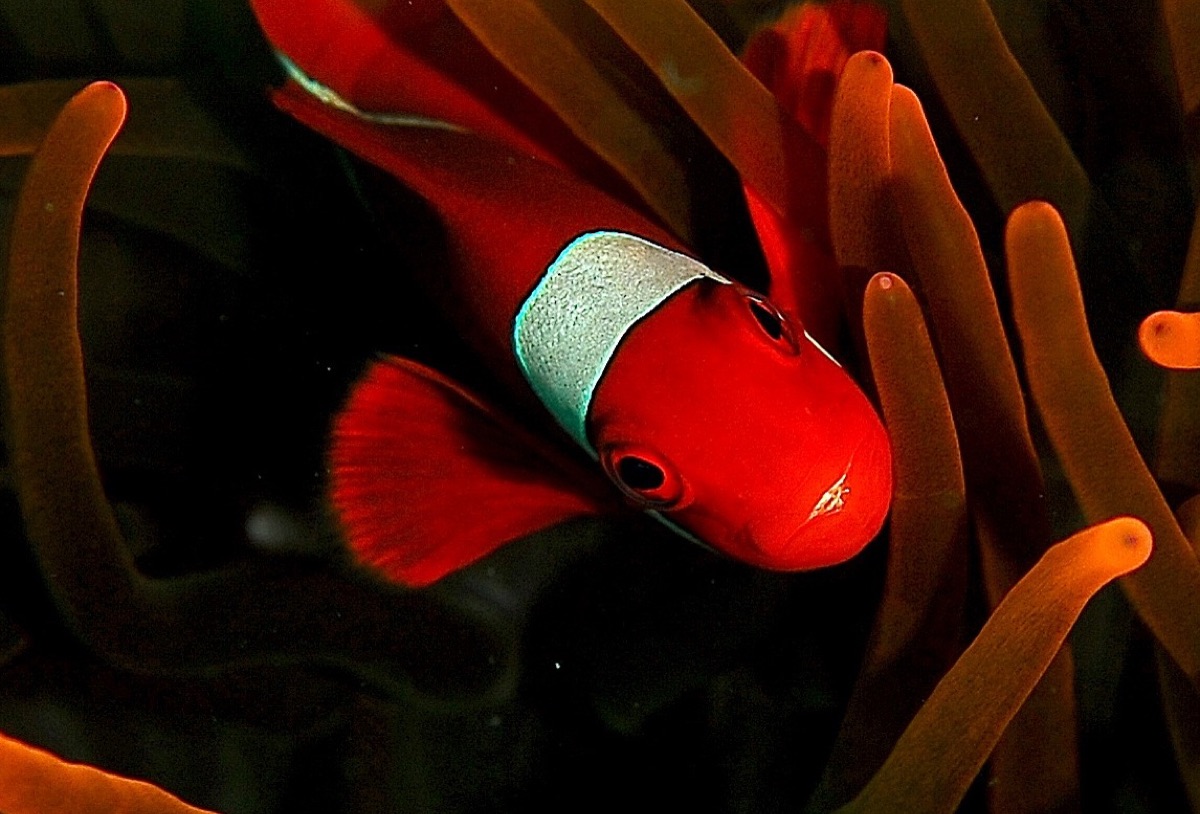
Maroon clownfish diseases
The largest, most aggressive clownfish. Check for bite wounds first, but never ignore fast breathing or slime.
Photos via Wikimedia Commons: Holger Krisp (CC BY 3.0), CrisisRose (CC BY-SA 3.0), Diego Delso (CC BY-SA 4.0), Jenny from Taipei (CC BY 2.0). Image credits
How to treat a sick clownfish safely
- Test the water first. Ammonia and nitrite must read 0; check salinity and temperature. Fix anything off before adding medication.
- Move the fish to a quarantine tank. A bare 10–20 gallon tank with a heater, air stone and a PVC pipe to hide in. Most medications harm corals, invertebrates and the display's biofilter.
- Confirm the diagnosis. Use the table above. If you can't tell ich from velvet, treat it as velvet — it's the faster killer.
- Treat at the full, measured dose. Copper only works while free copper stays at 0.15–0.20 mg/L[3], so measure it with a test kit at least daily.
- Leave the display tank fishless. Parasites need a host to survive. Skip this step and the disease returns as soon as the fish goes back.
Don't: dose copper in a reef tank, mix medications, or use freshwater-aquarium remedies such as aquarium salt or peas — clownfish are marine fish.
Water parameters that keep clownfish healthy
Most outbreaks start with a new fish. Quarantine every new arrival for at least 4 weeks, buy captive-bred clownfish where possible, and keep salinity and temperature steady — sudden swings weaken the slime coat that blocks parasites.
Clownfish disease FAQ
What are clownfish health problems usually caused by?
Most start with stress — a new tank, unstable salinity or temperature, or an aggressive tank mate — which weakens the slime coat and lets parasites such as ich, velvet and Brooklynella take hold. Unquarantined new fish are the most common source.
What is "clownfish disease"?
It's the common name for Brooklynella hostilis, a ciliate parasite that causes thick white slime and peeling skin. It's especially common in wild-caught clownfish and can kill within days, so formalin treatment should start the day you notice it[4].
How do I tell marine ich from velvet?
Ich forms separate white dots about the size of salt grains. Velvet looks like a fine gold or grey powder that's easiest to see with a flashlight from the side, and it comes with much faster breathing. If in doubt, treat as velvet.
Why is my clownfish not eating?
In a new fish it's usually stress and settles in 3–5 days. In an established fish, test water and look for spots, slime or rapid breathing — loss of appetite is often the first sign of a parasite.
Can I treat clownfish diseases in a reef tank?
No. Copper and formalin are toxic to corals and invertebrates, and parasites will survive in the display anyway. Treat in a separate quarantine tank and leave the display fishless.
How long does a clownfish take to recover?
It depends on the disease. Copper treatment for marine ich runs for at least 3–6 weeks[1], and the fish should stay in quarantine for at least two weeks after the last symptom before going back.
Is my clownfish sick or just wiggling?
Clownfish naturally shimmy and "wiggle" near their host anemone or a favorite spot. That's normal if the fish eats well, has clear skin and breathes calmly.
Research sources
- Yanong, R. P. E. Cryptocaryon irritans infections (marine white spot disease) in fish. University of Florida IFAS Extension, EDIS FA164. Read source
- Francis-Floyd, R. & Floyd, M. R. Amyloodinium ocellatum, an important parasite of cultured marine fish. Southern Regional Aquaculture Center Publication No. 4705 (2011). Read source
- Yanong, R. P. E. Use of copper in marine aquaculture and aquarium systems. University of Florida IFAS Extension, EDIS FA165 (revised 2024). Read source
- Blasiola, G. C. (1983). A review of Brooklynella parasitization in marine fishes: diagnosis, pathology and chemotherapy. IAAAM Proceedings. Read source
- Crosbie, P. B. B. & Munday, B. L. (1999). Environmental factors and chemical agents affecting the growth of the pathogenic marine ciliate Uronema nigricans. Diseases of Aquatic Organisms 36: 213–219. Read source
- Cardoso, P. H. M. et al. (2019). Neobenedenia melleni (Monogenea: Capsalidae) in ornamental reef fish imported to Brazil. Revista Brasileira de Parasitologia Veterinária 28(1). doi:10.1590/S1984-296120180076 Read source
- Merck Veterinary Manual. Parasitic diseases of fish. Professional version. Read source
- Cheng, et al. (2022). Lymphocystis disease virus infection in clownfish Amphiprion ocellaris and Amphiprion clarkii in Taiwan. Animals 13(1): 153. doi:10.3390/ani13010153 Read source