Most tang fish behavior that worries new keepers is normal reef behaviour happening in a glass box: the constant patrolling, the pale blotchy colour at night, the blue tang wedged upside-down in a rock, the sudden sideways swipe at a newcomer. Tangs are peaceful with almost every other family and fiercely territorial with their own, they carry a scalpel on the tail that they will use, and they have a short list of stress signals that mean something is wrong. This page reads the signals in order: what is normal, what is aggression, how the scalpel works, hiding and colour change, the stress behaviours, and jumping.
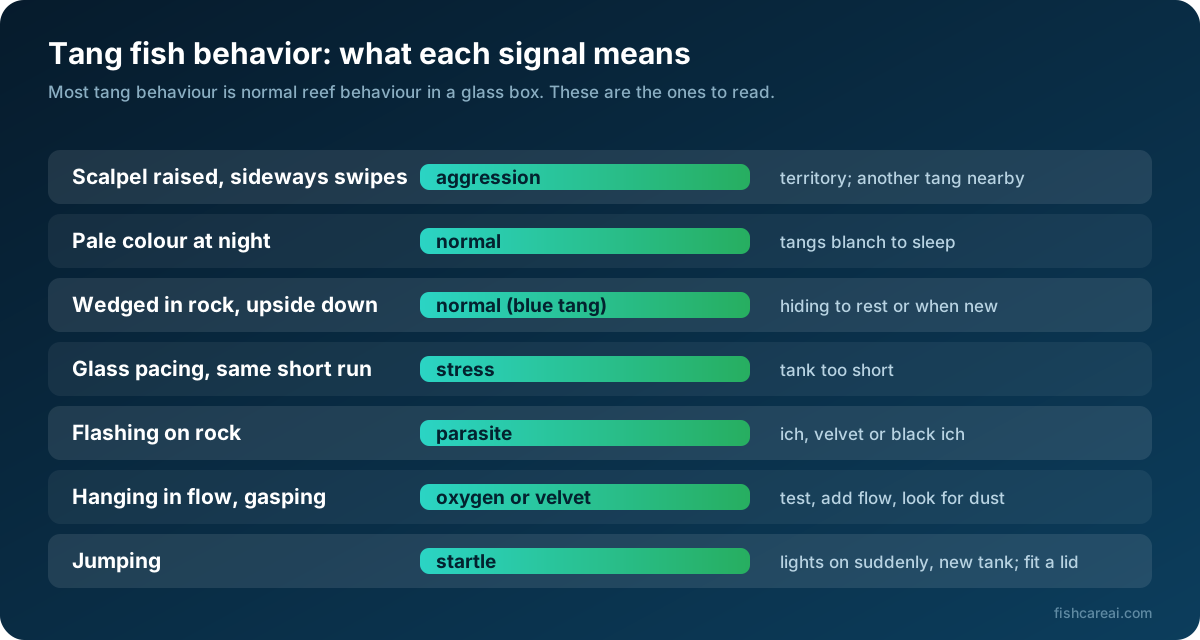
Normal Tang Fish Behavior
- Constant swimming. A healthy tang patrols all day in long runs, pausing to graze rock and glass. A tang that sits still in daylight is the abnormal one.
- Grazing. Picking at rock, glass, the sand surface and any nori clip for hours; tangs feed continuously, not at meals.
- Blanching at night. At lights-out a tang goes pale, blotchy or striped, wedges into a crevice and stays there until dawn. Blue tangs often lie on their side or upside down in a rock hole. Colour returns within minutes of the lights coming on.
- Visiting cleaner shrimp or wrasses and holding still, fins spread, while they pick.
- Fin displays at dusk between tangs in a group — circling with fins raised — which is courtship as often as it is conflict. See tang fish breeding.
Aggressive Tang Fish Behavior
Tangs are aggressive to fish that look like tangs and to almost nothing else. The trigger is a similar body outline in the same grazing territory: another tang, occasionally a foxface or a dwarf angel, very rarely a butterflyfish. The sequence escalates from fin flaring and parallel swimming, to sideways body swipes with the tail scalpel extended, to chasing that keeps the loser pinned in a corner and off the food.
A new tang added to a tank with an established tang gets this for two or three days; if it is still being chased on day five, or is hiding and not eating, separate them. The most aggressive tangs are the sohal, clown, purple and powder blue; the mildest are the kole, tomini, convict and yellow.
Tank length is the other half of the story — two tangs in a 6-foot tank can hold separate territories, two in a 4-foot tank cannot — and the rules for keeping tangs together are on the tang fish tank mates page.
The Tang Scalpel: Can a Tang Fish Sting You?
Every surgeonfish carries one or more sharp, forward-pointing spines on each side of the tail base (the caudal peduncle), which fold flat in a groove and snap out sideways when the fish flicks its tail. Acanthurus and Zebrasoma tangs have a single hinged blade; naso tangs have two fixed keels. The blade is the origin of the names surgeonfish, doctorfish and tang, and of the family name Acanthuridae (“thorn tail”), described on the Acanthuridae page.
Yes, it can hurt you. A netted or hand-caught tang thrashes and the scalpel opens a clean, deep cut; in several species (the achilles, sohal and some Acanthurus) the spine carries a mild venom, and the wound swells and throbs for hours. Tangs are not poisonous to touch or to other fish, and a tang cannot “sting” a tank mate to death, though scalpel swipes leave scratches on rivals. To move a tang safely: herd it into a clear container or an acclimation box rather than a net, keep fingers away from the tail base, and if you must net it, use a fine mesh the spine cannot tangle in. Clean any cut with fresh water and antiseptic; it heals like any other.
Tang Fish Hiding, Colour Change and Sleeping
New tangs hide for a week to three weeks, emerging first at feeding time. That is normal; put the nori clip near the hiding spot and dim the lights. Blue tangs hide more than any other species and keep wedging into rock at rest for life. An established tang that starts hiding is telling you something: it is being bullied (watch the tank for ten minutes), it is sick (look for white spots, a dusty sheen or rapid breathing — see tang fish diseases), or the water has moved (test it). Colour change at night is normal; a tang that is pale, blotchy or washed-out during the day, or that shows dark stress bars, is stressed by one of the same three things. Tangs do sleep, in the wedged-in, blanched state described above; do not disturb a tang at night to check it.
Stress Signals in Tang Fish Behavior
| What you see | Likely cause | What to do |
|---|---|---|
| Pacing the same short run of glass | Tank too short; reflection of a rival | 6-foot tank, open lane; cover the end glass. See tang fish tank size |
| Flashing (rubbing on rock or sand) | Ich, velvet, black ich, flukes | Look for spots or dust; quarantine and treat |
| Hanging in the powerhead flow, gasping | Low oxygen, high temperature, or velvet | Add flow and surface ripple; check for dust; test temperature |
| Lying at the bottom in daylight | Ich in the gills, ammonia, or exhaustion from bullying | Test ammonia; watch for chasing; quarantine |
| Refusing nori | New arrival, disease, bullying or a parameter swing | Garlic, rubble-rock nori, test water. See tang fish food |
| Pale colour and pits around the eyes | HLLE from diet, carbon dust or stress | Daily nori with vitamins, remove carbon, bigger tank |
| Swimming erratically or darting | Startle, parasites, or a chemical spike | Check what changed in the last hour; test |
Tang Fish Jumping
Tangs jump: when the lights snap on in a dark room, when a rival chases them into a corner, when a hand goes in the tank, and for no reason anyone can see in the first week after arrival. A blue tang on the carpet is one of the most common ways a new tang is lost. Fit a lid or a mesh screen before the tang arrives, bring the lights up in stages, and feed before you put your hands in. Species-level notes on the two most-searched behaviours are at blue tang aggressive and blue tang hiding; everything else about the daily routine is in the tang fish care guide.
Tang Fish Care FAQ
Why is my tang fish aggressive?
Tangs are territorial toward fish that look like tangs — same shape, same colour, same feeding niche. A new tang, a same-genus tang, or a tank too small to hold two territories triggers it. Toward other families tangs are peaceful, so aggression is nearly always a tang-on-tang problem.
Can a tang fish sting you?
The tail scalpel can cut deeply, and in some species the wound is mildly venomous and swells and throbs for hours. Never grab a tang by the tail; net it into a container and keep your fingers away from the tail base.
Why is my tang hiding all the time?
New tangs hide for one to three weeks. An established tang that starts hiding is being bullied, is in a tank too short for it, or is sick — check for spots and rapid breathing. Blue tangs also wedge into rock to rest, which is normal.
Do tang fish sleep?
Yes. At lights-out a tang settles into a crevice, goes pale or blotchy, and stays still until dawn. The colour change is normal; a tang that is pale during the day is stressed or ill.
Why does my tang swim up and down the glass?
Glass pacing on the same short run is a stress behaviour that usually means the tank is too short for the fish, or it can see a rival in a reflection. A 6-foot tank and an open swimming lane fix most cases.
Do tangs jump out of tanks?
Yes, especially in the first weeks, when startled by lights or a sudden movement, or when chased by another tang. A lid or mesh screen is part of standard tang fish care.