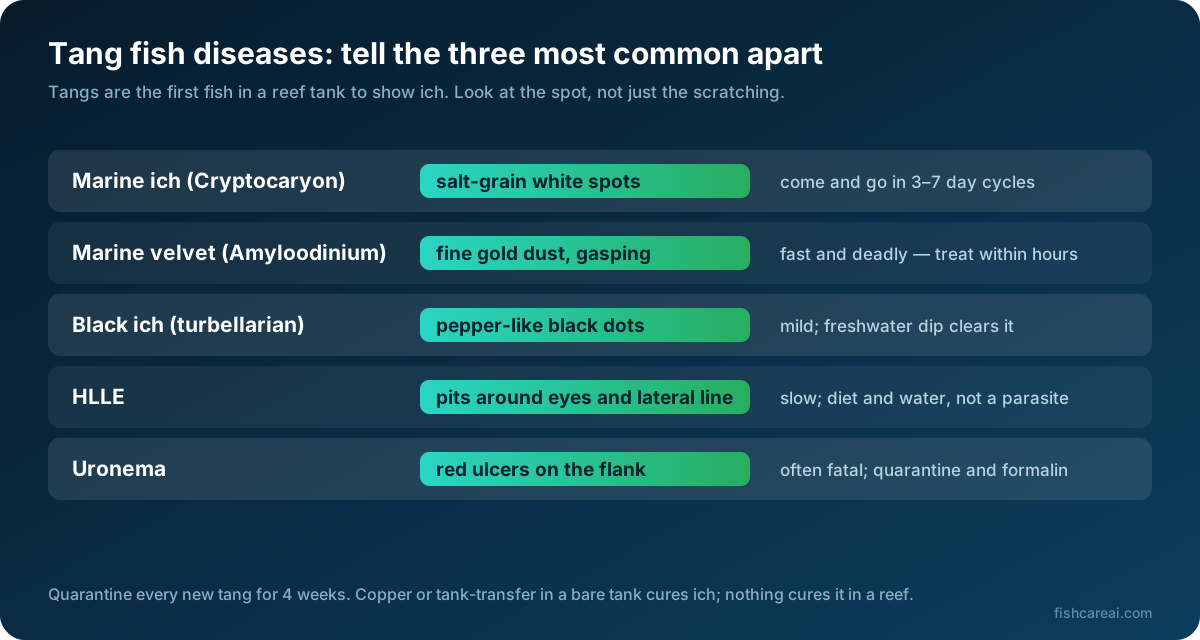
Five tang fish diseases account for almost every sick tang: marine ich, marine velvet, black ich, head and lateral line erosion (HLLE) and Uronema. Tangs get the first two before any other fish in the tank because their skin is thin, their scales are tiny and their slime coat is light, so a tang is the reef's early-warning system — and the fish most likely to die of it. This page tells the five apart by what you see on the fish, gives the treatments that actually work for tangs, and lays out the quarantine routine that stops most of them ever reaching your display.
Why Tang Fish Diseases Strike Tangs First
Every tang keeper hears “tangs are ich magnets”, and it is true for three reasons. Their skin carries little mucus, so the free-swimming stage of Cryptocaryon settles on it easily. Their metabolism is fast and their oxygen demand high, so any stress — shipping, a small tank, a bullying tank mate, a temperature swing — shows up as a suppressed immune system within days. And they are almost all wild-caught, arriving with the parasites of the reef and the shipping bag. None of that makes tang fish diseases inevitable; it makes prevention (space, food, stable water, quarantine) the whole game.
Marine Ich on Tang Fish
What you see: discrete white spots the size of salt grains on the body and fins, flashing (rubbing on rock), and spots that vanish for three to seven days and return in greater numbers. That cycle is the tell — the parasite drops off the fish to reproduce in the substrate and comes back multiplied.
What works: a bare quarantine tank and either copper (chelated copper at the therapeutic level for 30 days, tested daily) or the tank-transfer method (move the fish to a clean, dry-started tank every 72 hours, five times, so the parasite never completes its cycle). Chloroquine phosphate is a third option where it is available. Tangs tolerate copper less well than most fish; ramp it up over three days and feed heavily throughout.
What does not work: every “reef-safe” bottle, garlic, UV alone, and raising the temperature. They may reduce spots on a strong fish; they do not clear the parasite from the tank. Once ich is in a display, the only cure is to remove every fish to quarantine and leave the display fishless for 76 days. That is why quarantine before, not treatment after, is the rule for tang fish diseases. The parasite's life cycle is documented in the Cryptocaryon entry.
Marine Velvet on Tang Fish
What you see: a fine gold or grey dust over the body that dulls the colour, best seen with a torch from the side; rapid breathing; the fish hanging in flow at the surface or near a powerhead; spots far smaller and more numerous than ich. Velvet attacks the gills first, so a tang can die within 24–72 hours of the first sign.
What works: copper at the therapeutic level immediately, in a quarantine tank, plus a 5-minute freshwater dip to knock the parasite load down on the way in. Chloroquine phosphate is often preferred for velvet. There is no time for tank transfer. If a tang is gasping with dulled colour and a dusty sheen, treat today.
Black Ich on Tang Fish
What you see: pepper-grain black dots scattered over the body, especially on yellow and other pale tangs, which shift position slightly between days. The fish flashes but eats and breathes normally. This is not ich at all but a tiny flatworm (Paravortex), and it is the mildest of the tang fish diseases.
What works: a 5-minute freshwater dip (pH- and temperature-matched RO water) drops most of the worms off; praziquantel in quarantine clears the rest. Fixed black patches that do not move — especially on a yellow tang — are usually stress marks or healed ammonia burns, not black ich. Species-level symptom notes: blue tang white spots.
HLLE in Tang Fish
What you see: pale pits and channels that start around the eyes and spread along the lateral line, sometimes down the flank; the tang otherwise eats and behaves normally. HLLE develops over weeks to months and is most common in blue, purple and kole tangs kept in small tanks on a flake-only diet.
What causes it: HLLE is not an infection. The strongest links are a diet without fresh algae and vitamins, activated carbon dust (lignite carbon in particular), stray voltage from a failing heater or pump, and chronic stress. What works: daily nori and vitamin-soaked food (see tang fish food), carbon in a fine bag or none at all, a grounding probe, and a tank of the right length (tang fish tank size). Early pits fill in over two to three months; deep erosion leaves scars but stops spreading. Colour loss without pitting is a different problem — see blue tang losing color.
Other Tang Fish Diseases: Uronema, Fin Rot and Bloat
Uronema marinum shows as red, open ulcers on the flank, often with a white edge, on a fish that stops eating and hides. It is a ciliate that eats tissue, it moves fast, and it is often fatal; formalin baths and a broad antibiotic in quarantine are the treatment, and it is more common in tangs from wholesalers with high nitrate. Fin rot and cloudy eyes in tangs are almost always secondary to water quality or a wound from a fight with another tang; test the water, remove the aggressor, and treat with a marine antibiotic in quarantine if the edges keep receding. Bloating in a tang is usually over-eating frozen food or constipation from a low-fibre diet, and clears with two days of nori only.
| Disease | Key sign | Speed | Treatment (in quarantine) |
|---|---|---|---|
| Marine ich | Salt-grain white spots, cycling | Days to weeks | Copper 30 days or tank transfer ×5 |
| Marine velvet | Gold dust, rapid breathing | 1–3 days | Copper or chloroquine now, freshwater dip |
| Black ich | Moving pepper dots | Weeks, mild | Freshwater dip, praziquantel |
| HLLE | Pits at eyes and lateral line | Weeks to months | Diet, vitamins, remove carbon, bigger tank |
| Uronema | Red ulcers on flank | Days | Formalin baths, antibiotic |
Tang Fish Quarantine Plan
- Set up a 30–40 gallon bare tank with a heater, a sponge or hang-on filter seeded from the display, PVC elbows for hiding, and no substrate or rock.
- Acclimate slowly — 45 minutes of drip to match salinity and temperature — then lights off for the first day.
- Week 1: observe and feed. Nori daily, garlic-soaked mysis. Watch breathing rate, spots, and whether it eats.
- Weeks 2–4: treat prophylactically — copper ramped over three days and held 14–30 days, or tank transfer — plus a single praziquantel course for flukes and black ich.
- Introduce only a fish that has eaten well for two weeks with no spots, at lights-out, on the same day as any other new tang.
Four weeks feels long when the fish is sitting in a bare tank; it is the difference between a tang that lives 15 years and a reef that fights ich forever. The rest of the husbandry that keeps tang fish diseases away — tank length, oxygen, stable water, daily seaweed — is on the tang fish care guide, and the water parameter checker will flag the readings that put a tang under stress in the first place.
Tang Fish Care FAQ
Why do tangs get ich so easily?
Tangs have thin, small-scaled skin with little mucus, a fast metabolism and a strong stress response to shipping and small tanks. Cryptocaryon settles on that skin first, which is why a tang is usually the first fish in a reef to show white spots.
How do I treat ich on a tang fish?
Move the tang to a bare quarantine tank and run copper at the therapeutic level for 30 days, or use the tank-transfer method (a new clean tank every 72 hours, five times). In the display, leave the tank fishless for 76 days to starve the parasite. Reef-safe ich remedies do not cure it.
What is the difference between ich and velvet on a tang?
Ich is discrete white spots the size of salt grains that come and go over days. Velvet is a fine gold-grey dust that dulls the colour, with rapid breathing and flashing, and it kills in one to three days. Treat velvet as an emergency.
What causes HLLE in tangs?
Head and lateral line erosion is linked to poor diet (no fresh algae or vitamins), activated carbon dust, stray voltage and chronic stress in small tanks. It is not contagious and reverses partly with daily nori, vitamin-soaked food and a larger tank.
What are the black spots on my tang?
Pepper-sized black dots that move slightly between days are black ich, a turbellarian flatworm. It is mild: a 5-minute freshwater dip removes the worms, and praziquantel in quarantine clears them. Fixed black patches on a yellow tang are usually stress or ammonia marks instead.
Should I quarantine a new tang?
Always. Four weeks in a bare 30–40 gallon tank with a PVC hide, observation for the first week, then copper or tank-transfer prophylactically. Quarantine is the only reliable way to keep ich out of a reef, because you cannot treat it once it is in.