This tang fish tank size calculator gives you the minimum gallons and the minimum tank length for the tang you want, because tangs are judged by swimming room rather than water volume. Pick the species, say how many tangs you plan to keep and whether the tank is a reef or fish-only, and it returns a number you can take to the shop — along with the reasoning, so you can see why a 55 fails and a 75 passes for the same fish.
🐟 Tang Fish Tank Size Calculator
Choose a tang and press calculate.
Species minimums for one adult, +50% per extra tang, +20% for a reef, rounded up to the next standard tank that also meets the minimum length. Not a stocking calculator for the rest of the community.
How the Tang Fish Tank Size Calculator Works
The calculator does not use the inch-per-gallon rule, which would happily put a 7-inch yellow tang in a 10-gallon tank. It uses species minimums drawn from public aquarium husbandry and the hobby consensus, and then adjusts them in three steps:
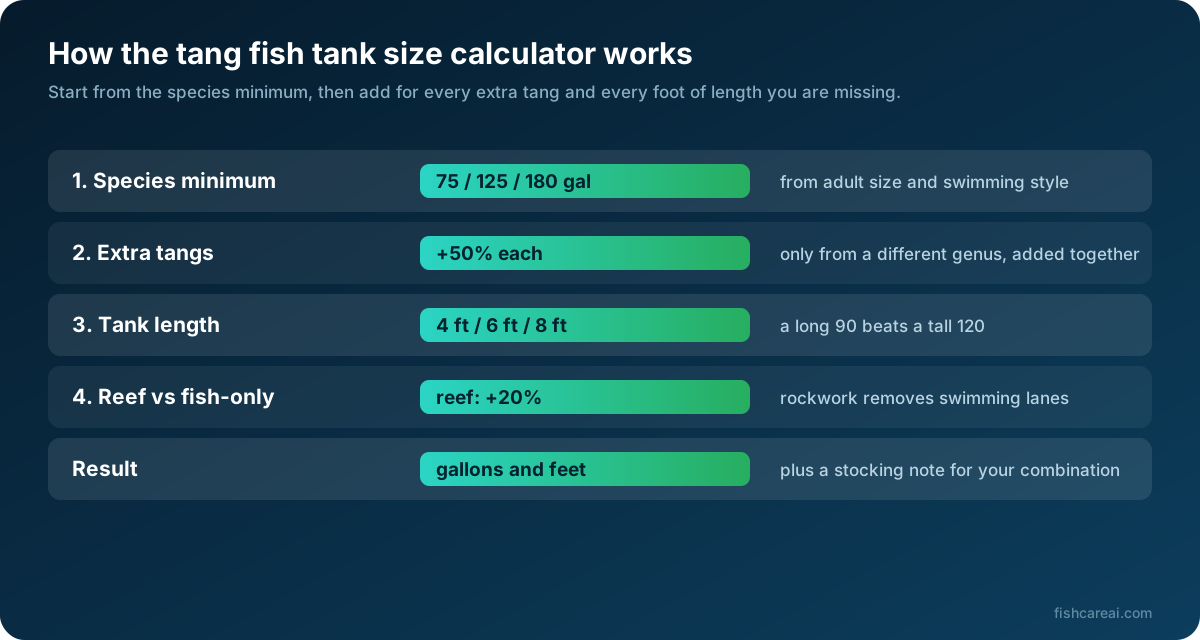
- Species minimum. 75 gallons and 4 feet for the small Zebrasoma and bristletooth tangs (yellow, kole, tomini, scopas); 125 gallons and 6 feet for blue, powder blue, purple and convict tangs; 150–180 gallons for sailfin, achilles and naso; 240–300 gallons and 8 feet for sohal, clown and vlamingi tangs. Adult sizes follow the Acanthuridae family account.
- Extra tangs. Each additional tang adds 50% to the largest species' minimum. Two small tangs therefore need about 113 gallons, which in real tanks means a 125.
- Reef allowance. A reef-scaped tank loses swimming lanes to rockwork, so the calculator adds 20% for a reef and keeps the length requirement unchanged.
- Length check. The gallons are rounded up to the next standard tank that also meets the length: 75 (4 ft), 125 (6 ft), 180 (6 ft), 240 (8 ft), 300 (8 ft). A tank can never pass on volume alone.
The full reasoning — why a 120-gallon 4-foot tank is worse for a tang than a 125-gallon 6-foot tank, and what each common size can hold — is on the tang fish tank size guide.
Which Tang Fits Which Tank
| Tank | Dimensions | Tangs that fit |
|---|---|---|
| 40 gallon breeder | 36 × 18 × 16 in | None — a foot too short |
| 55 gallon | 48 × 13 × 21 in | None — too narrow to turn |
| 75 gallon | 48 × 18 × 21 in | One yellow, kole, tomini or scopas tang |
| 90 gallon | 48 × 18 × 24 in | Same as the 75; extra volume is height |
| 120 gallon | 48 × 24 × 24 in | One small tang; too short for a blue tang |
| 125 gallon | 72 × 18 × 22 in | One blue, powder blue, purple or convict; or two small tangs |
| 150 gallon | 72 × 18 × 28 in | One sailfin; or a blue plus a small tang |
| 180 gallon | 72 × 24 × 24 in | One naso or achilles; or three mixed tangs |
| 240 gallon | 96 × 24 × 24 in | Sohal or clown tang; four mixed tangs |
| 300 gallon | 96 × 30 × 24 in | Vlamingi; a shoal of five yellow or convict tangs |
The aquarium size calculator converts your own tank's dimensions to gallons if it is not a standard size, and the types of tang fish page compares the species themselves.
Using the Calculator for More Than One Tang
Set the species to the largest tang you plan to keep, then the count. The tang fish tank size calculator adds 50% per extra fish and reports the length for the largest species, since that is the fish that sets the run. Two rules the calculator cannot enforce: choose different genera and body shapes (a yellow Zebrasoma, a kole bristletooth and a blue Acanthurus coexist; two Zebrasoma usually do not), and add all the tangs on the same day after quarantine so no fish owns the tank first. Whether the rest of your stock fits alongside is the job of the fish tank stocking calculator.
Signs the Tank Is Too Small for Your Tang
- Glass pacing — swimming the same short run up and down the front pane for hours.
- Colour loss and HLLE pits around the eyes, the classic sign of a stressed tang in a short tank.
- Constant hiding in a tang that used to swim in the open.
- Recurring ich on the tang and nothing else — chronic stress lowers its resistance first. See tang fish diseases.
- Fighting between two tangs that were fine as juveniles: the tank has stopped being big enough for both.
If you see two or more, run the tang fish tank size calculator again with the fish's adult size in mind, and plan the upgrade before it becomes an emergency. Everything else — water, food, quarantine — is in the tang fish care guide.
Tang Fish Care FAQ
How does the tang fish tank size calculator work?
It starts from the species minimum (75, 125 or 180 gallons, tied to adult size and swimming style), adds 50% for each extra tang, adds 20% for a reef-scaped tank, and checks the result against the minimum length: 4 feet for small Zebrasoma and bristletooth tangs, 6 feet for everything else.
What tank size does a yellow tang need?
75 gallons and 4 feet long as a minimum for one adult, 125 gallons if you add a second tang from another genus. A standard 75 (48 × 18 × 21 inches) is the classic single yellow tang tank.
What tank size does a blue tang need?
125 gallons and 6 feet. Blue (hippo) tangs reach 10–12 inches and swim constantly; the calculator will not return anything under 6 feet for them, no matter how you set the other options.
Can I keep two tangs in a 75 gallon tank?
No. The calculator returns 113 gallons for two small tangs, which in practice means a 125. Two tangs in a 75 fight, and the loser stops eating and gets ich.
Does the calculator use inches per gallon?
No. The inch-per-gallon rule fails for active swimmers; a 7-inch yellow tang in a 10-gallon tank would pass it. The calculator uses species minimums drawn from public aquarium and hobby husbandry data instead.