Betta Fish Water Parameters: Ideal Ranges & Free Checker
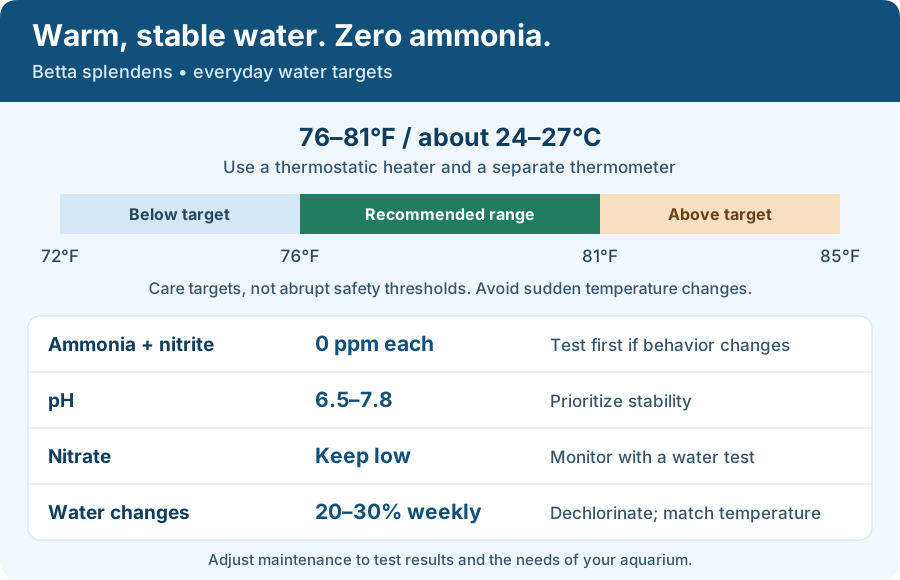
The ideal betta fish water parameters are 76–81 °F (24–27 °C), pH 6.5–7.8, 0 ppm ammonia, 0 ppm nitrite and nitrate under 20 ppm. Enter your own test-kit readings below and this checker scores them against Betta splendens ranges — not generic community-tank ranges — and tells you exactly what to fix first.
Check My Betta's WaterIdeal Betta Fish Water Parameters at a Glance
Every range below is the one this checker scores against. Print it, or keep it open next to your test kit.
| Parameter | Ideal for a betta | Acceptable | Act now |
|---|---|---|---|
| Temperature | 78–80 °F (25.5–26.5 °C) | 76–81 °F (24–27 °C) | Below 74 °F or above 84 °F |
| pH | 6.8–7.4, stable | 6.5–7.8 | Below 6.0 or above 8.2 |
| Ammonia (NH₃/NH₄⁺) | 0 ppm | Trace only, while correcting | 0.25 ppm or higher |
| Nitrite (NO₂⁻) | 0 ppm | Trace only, while correcting | 0.25 ppm or higher |
| Nitrate (NO₃⁻) | Under 20 ppm | 20–40 ppm | Above 40 ppm |
| General hardness (GH) | 3–10 dGH (50–180 ppm) | 1–18 dGH | Above 18 dGH |
| Carbonate hardness (KH) | 3–8 dKH (55–145 ppm) | 1–12 dKH | Below 1 dKH (pH crash risk) |
Betta Water Parameter Checker
Move each slider to your measured value — or type it in the box — then press Check My Betta's Water. Every slider starts at a healthy betta value, so anything you change is a reading you have actually tested.
🌡️ Your Test Kit Readings
📊 Betta Water Score
Enter your water test readings, then press
Check My Betta's Water
How the Betta Water Parameter Checker Works
Test your betta tank
Use a liquid test kit for ammonia, nitrite, nitrate, pH, GH and KH, and read the temperature from a glass or digital thermometer — not the heater dial.
Enter the seven readings
Drag each slider or type the exact value. Every parameter is scored against published Betta splendens ranges rather than a general community-tank range.
Fix the red items first
You get a 0–100 betta water score, a colour-coded badge per parameter, and a specific correction for anything outside range — in priority order.
What Your Betta Water Score Means
Ammonia, nitrite and temperature are weighted most heavily, because those three kill bettas fastest in the small tanks the species is usually kept in.
Every parameter sits inside the betta range. Keep your current water-change routine and retest in a couple of weeks.
Safe and stable. One or two readings are slightly off — worth tightening, but your betta is not in danger today.
Something needs correcting this week. Usually a cool tank, a climbing nitrate level, or the first trace of ammonia.
Act today. Toxic ammonia or nitrite, or water well outside the betta temperature range. Start with a water change and read the per-parameter tips.
Betta Fish Water Parameters Explained
What each number means for Betta splendens, why betta ranges differ from generic community ranges, and how to correct a reading without shocking the fish.
🐠 What Are Betta Fish Water Parameters?
Betta fish water parameters are the measurable properties of aquarium water that determine whether a betta can stay healthy in it: temperature, pH, ammonia, nitrite, nitrate, general hardness (GH) and carbonate hardness (KH).
Betta splendens evolved in warm, shallow, slow-moving water in Southeast Asia — rice paddies, floodplains and roadside ditches. That origin explains the two things bettas care about most: warmth and clean water. It does not, contrary to a persistent myth, mean bettas evolved to live in puddles. Those habitats are seasonal, vastly larger than a bowl, and connected to fresh water.
The labyrinth organ lets a betta gulp atmospheric air, which is why a betta survives in an unfiltered container longer than a tetra would. Surviving is not thriving: ammonia still burns gills, cold water still suppresses the immune system, and both shorten a betta's life well below the 3–5 years it should live.
🌡️ Betta Water Temperature: 76–81 °F
Temperature is the parameter most often wrong in a betta tank, because bettas are so widely sold as fish that "don't need a heater." They do.
- 78–80 °F (25.5–26.5 °C) — the ideal window. Active fish, good appetite, strong colour.
- 76–81 °F (24–27 °C) — the full acceptable range. Fine long-term.
- Below 74 °F — the betta becomes lethargic, rests on the substrate, stops eating and grows vulnerable to fin rot and ich. A room at 70 °F is a cold tank.
- Above 84 °F — metabolism races, oxygen solubility drops, and ammonia becomes more toxic. Chronic overheating shortens lifespan.
Use a thermostatic heater matched to the tank (roughly 25 W for 5 gallons, 50 W for 10 gallons) plus an independent thermometer. Correct a temperature problem at no more than 1–2 °F per hour — a sudden swing is more dangerous than the wrong steady number.
⚗️ Betta pH, GH and KH
pH 6.5–7.8 covers virtually all captive-bred bettas, and most tap water already lands there. Test your tap water first — if it reads 7.6 and holds steady, that is your target. Chasing a "perfect" 7.0 with bottled pH adjusters causes exactly the swings that harm fish.
GH (general hardness) 3–10 dGH supplies the calcium and magnesium a betta needs for healthy fins and osmoregulation. Wild bettas live soft, but captive strains are adaptable and very soft water brings its own risks.
KH (carbonate hardness) 3–8 dKH is the parameter most betta keepers never test and the one that quietly prevents disasters. KH buffers pH. Below about 1 dKH, accumulating organic acids can drop pH several points overnight — a pH crash that kills fish and beneficial bacteria together. If your KH is near zero, add crushed coral or a small amount of buffered remineraliser rather than a pH-up product.
To lower pH naturally, use Indian almond leaves or driftwood: the tannins shift pH gradually and their release slows as the material ages.
☠️ Ammonia, Nitrite and Nitrate in a Betta Tank
These three are the nitrogen cycle, and they are the reason a betta tank needs a cycled filter rather than water changes alone.
- Ammonia — target 0 ppm. Produced by waste, uneaten food and decaying plants. Toxicity rises with temperature and pH, which is why the warm water bettas need makes any ammonia reading more urgent than it would be in a cool tank.
- Nitrite — target 0 ppm. Blocks the blood's ability to carry oxygen. A betta gasping at the surface with nitrite on the test card is not "using its labyrinth organ normally" — it is suffocating.
- Nitrate — target under 20 ppm. The cycle's end product. Not acutely toxic, but chronic exposure above 40 ppm is associated with faded colour, poor appetite and recurring fin problems.
A 5-gallon betta tank swings faster than a 40-gallon community tank: less water dilutes less waste. That is the single strongest argument for 10 gallons over 5, and for a weekly 25–30% water change rather than a monthly one.
🧪 How to Test Betta Water Accurately
Testing is only useful if the numbers are real. Four habits make the difference:
- Use a liquid test kit for ammonia and nitrite. Test strips read poorly at exactly the low values that matter — 0 vs 0.25 ppm — and that is the distinction a betta's gills care about.
- Sample mid-tank, away from the filter outlet, the heater and the substrate.
- Shake nitrate reagent bottle #2 hard for 30 seconds and the filled tube for a full minute. Under-shaking is the most common cause of falsely low nitrate readings.
- Read colours in daylight against the white card, not under aquarium lighting, which tints everything blue.
Test frequency: every 2–3 days while cycling, weekly for the first couple of months after that, then every 2–4 weeks in a stable tank — and immediately whenever your betta clamps its fins, stops eating, or develops new fin damage.
🛠 Fixing Bad Betta Water Parameters
- Ammonia or nitrite above 0 — stop feeding for 24 hours, change 30–50% of the water with dechlorinated water matched to tank temperature, dose a conditioner that detoxifies ammonia, and retest daily until both read 0. Never clean the filter media in tap water; chlorine kills the bacteria you need.
- Tank too cold — add or replace the heater and let temperature rise 1–2 °F per hour. Do not float a bag of hot water or crank a heater dial.
- Nitrate above 40 ppm — increase water changes to 25–30% weekly, cut feeding to what is eaten in 60–90 seconds, remove decaying plant leaves and add fast-growing plants such as hornwort, water sprite or pothos rooted in the tank.
- Unstable pH — test KH first. Low KH is the cause far more often than anything you can fix with a pH bottle. Raise KH gently with crushed coral in the filter and let pH settle where it settles.
- Cloudy water after a change — usually a bacterial bloom in a young tank. Keep testing ammonia, avoid the temptation to change everything at once, and let the filter catch up.
For a step-by-step routine, see the betta fish care guide and the betta tank setup walkthrough.
Betta Water Parameters: Frequently Asked Questions
Related Betta Guides & Tools
Everything else that keeps betta water stable — heating, tank size, feeding and tank mates.