Understanding your aquarium water is the single most important skill in fishkeeping. Most avoidable fish losses trace back to something invisible in the water rather than to disease or bad luck: too much ammonia, the wrong pH, or unstable temperature. A water test kit is the most valuable tool a fishkeeper can own.
This guide explains every key parameter, the safe range for each one, how to test correctly, and exactly what to do when a reading comes back wrong.
Master Quick-Reference Chart
Six numbers cover almost every water problem a freshwater tank will throw at you. Save or print the card below and keep it next to your test kit — if a reading falls outside these ranges, the detailed sections further down explain the fix.
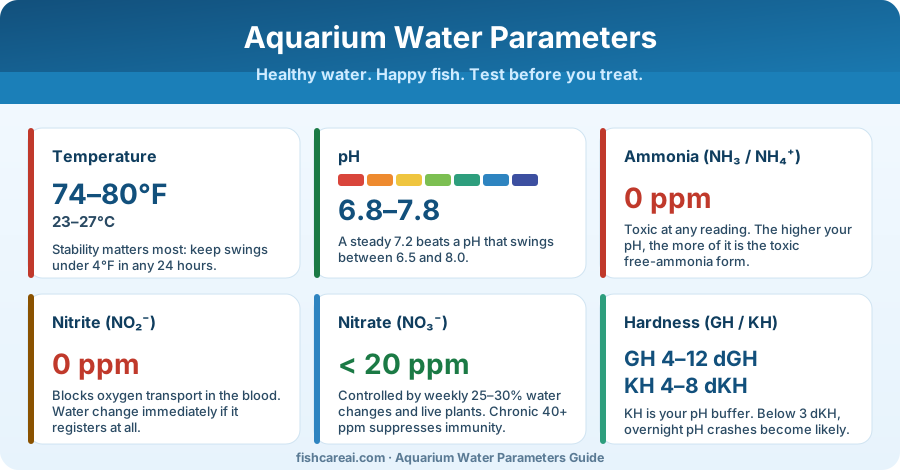
| Parameter | Safe (Community Tank) | Danger Zone | Fix |
|---|---|---|---|
| Ammonia (NH₃/NH₄⁺) | 0 ppm | >0.25 ppm | Water change immediately |
| Nitrite (NO₂) | 0 ppm | >0.25 ppm | Water change immediately |
| Nitrate (NO₃) | <20 ppm | >40 ppm | Weekly 25–30% water change |
| pH | 6.8–7.8 | <6.0 or >8.5 | Adjust slowly, buffer with KH |
| Temperature | 74–80°F (23–27°C) | Fluctuation >4°F/day | Heater with thermostat |
| GH (General Hardness) | 4–12 dGH | <2 or >20 dGH (community mix) | Remineralize or dilute |
| KH (Carbonate Hardness) | 4–8 dKH | <3 dKH (pH crash risk) | Add baking soda or crushed coral |
| Dissolved Oxygen | 6–8 mg/L | <4 mg/L | Increase surface agitation |
Every Parameter Explained
The chart above is the summary. Each parameter below explains what the number actually measures, why it harms fish when it drifts, and the specific correction that works.
🧪 Ammonia (NH₃ / NH₄⁺)
Safe level: 0 ppm at all times.
Ammonia is fish waste. It is produced from gill excretion, uneaten food, and decaying organic matter. In a new or uncycled tank it accumulates rapidly. How much harm a given reading does depends heavily on pH and temperature, as the next section shows — but any reading at all means your filter is not keeping up, so treat it as a fault to correct rather than a number to tolerate.
Causes of elevated ammonia: uncycled tank, overstocking, overfeeding, a dead fish left in the tank, filter failure, or medications that kill beneficial bacteria.
Fix: 25–50% water change immediately. Use a water conditioner that detoxifies ammonia temporarily while your filter processes it. Stop feeding for 24 hours and retest. Never ignore an ammonia reading.
NH₃ vs NH₄⁺: why the same reading is not always equally toxic
A liquid test kit reports total ammonia nitrogen — the sum of two forms. Ammonium (NH₄⁺) is charged and relatively harmless. Free ammonia (NH₃) is uncharged, crosses gill membranes easily, and is the form that actually kills fish. Which form dominates depends on pH and temperature: the higher the pH, the larger the toxic NH₃ share.
| pH | Share as free NH₃ | Free NH₃ at a 1 ppm reading |
|---|---|---|
| 6.5 | ~0.2% | 0.002 mg/L — under the harm threshold |
| 7.0 | ~0.6% | 0.006 mg/L — still under it |
| 7.5 | ~1.8% | 0.018 mg/L — right at it |
| 8.0 | ~5.3% | 0.053 mg/L — about 3× over |
| 8.5 | ~15% | 0.15 mg/L — about 7× over |
Aquaculture guidance generally treats free ammonia above about 0.02 mg/L as harmful over sustained exposure, with acute risk climbing steeply above that. So the same 1 ppm reading is an emergency in an African cichlid tank at pH 8.4 and a slower, milder problem in a soft-water tank at pH 6.6 — and it is why you should never raise pH while ammonia is present. Fix the ammonia first, then address pH.
🧪 Nitrite (NO₂)
Safe level: 0 ppm at all times.
Nitrite is produced when beneficial bacteria (Nitrosomonas) convert ammonia. It is less immediately toxic than free ammonia but still very harmful — it converts the hemoglobin in fish blood into methemoglobin, which cannot carry oxygen. Fish with nitrite poisoning gasp at the surface and have brown gills.
Fix: Water change immediately. Adding aquarium salt (sodium chloride) at 1 tablespoon per 5 gallons temporarily blocks nitrite uptake at the gills while your tank finishes cycling. Note that corydoras, loaches and other salt-sensitive fish tolerate this poorly, so use the lowest effective dose with them and remove the salt through later water changes.
🧪 Nitrate (NO₃)
Safe level: below 20 ppm for sensitive fish, below 40 ppm for hardy fish.
Nitrate is the end product of the nitrogen cycle — far less toxic than ammonia or nitrite, but still harmful at high levels. Chronic high nitrate (above 40 ppm) causes immune suppression, stunted growth, and increased disease susceptibility over time. Sensitive species such as discus and cardinal tetras show it first.
Fix: Weekly 25–30% water changes are the primary control method. Live plants consume nitrate. Reduce feeding and stocking so the tank produces less waste in the first place. Check your tap water too — some municipal supplies arrive at 10–20 ppm nitrate, which caps how low water changes can take you.
🧪 pH (Acidity / Alkalinity)
Safe range: 6.8–7.8 for most community fish.
pH measures hydrogen ion concentration on a logarithmic scale. A pH of 7.0 is neutral; below is acidic, above is alkaline. Each point on the scale represents a 10-fold change, so pH 6 is ten times more acidic than pH 7.
| Species Group | Preferred pH |
|---|---|
| Most community fish | 6.8–7.8 |
| Betta fish | 6.5–7.5 |
| Discus, cardinal tetras | 5.5–7.0 |
| African cichlids | 7.8–8.5 |
| Goldfish | 7.0–8.4 |
| Koi | 7.0–8.0 |
Stability matters more than the exact number. A pH of 7.4 that stays put is better than one that swings between 6.8 and 8.0 daily. Sudden pH swings kill fish faster than a slightly wrong but steady pH.
How to raise or lower pH safely
Change pH by no more than 0.2 units per day, and always change the water the fish will move into rather than dosing the tank they are sitting in.
- To lower pH: blend tank water with RO or distilled water to dilute minerals, add driftwood, catappa (Indian almond) leaves or peat for a slow natural drop, or run CO₂ injection in a planted tank.
- To raise pH: add crushed coral, aragonite or limestone to the filter or substrate so it dissolves gradually, or raise KH with a small dose of baking soda (about ¼ teaspoon per 10 gallons, then retest).
- What not to use: bottled "pH-down" and "pH-up" products fight your KH instead of working with it. They produce a fast drop followed by a rebound swing that is more dangerous than the original pH.
If your pH refuses to move, that is your KH holding it — fix KH first, as described below.
🧪 Temperature
Safe range: 74–80°F (23–27°C) for most tropical fish.
Fish are cold-blooded — their metabolism, immune system, and digestion are all tied to water temperature. Temperature stability is critical. Fluctuations of more than 4°F in 24 hours cause stress and immune suppression that leads to disease. Warmer water also holds less dissolved oxygen, so a tank running at 84°F needs noticeably more surface agitation than the same tank at 76°F.
| Species | Ideal Temperature |
|---|---|
| Goldfish, koi | 65–72°F (18–22°C) |
| Betta, guppy, platy, molly | 74–82°F (23–28°C) |
| Discus | 82–88°F (28–31°C) |
| Neon tetra | 72–78°F (22–26°C) |
| Cardinal tetra | 75–82°F (24–28°C) |
| Angelfish | 76–82°F (24–28°C) |
🧪 GH and KH (Water Hardness)
GH (General Hardness): measures calcium and magnesium ions. Fish from soft-water habitats (discus, cardinal tetras) prefer low GH (1–5 dGH). Fish from hard-water regions (African cichlids, mollies) prefer high GH (12–20 dGH). Snails and shrimp in particular need adequate calcium to build and maintain their shells.
KH (Carbonate Hardness / Alkalinity): measures carbonate and bicarbonate ions. KH acts as a pH buffer — it prevents pH from crashing. A KH below 3 dKH puts your tank at risk of sudden overnight pH crashes that kill fish.
Much of North America has tap water with adequate KH, though soft-water regions are common. If yours is very soft (KH below 3), add a small amount of crushed coral or baking soda to buffer the tank. If you use RO water, you must remineralize it — pure RO has effectively no GH or KH and no buffering capacity at all.
🧪 Chlorine and Chloramine
Safe level: 0 ppm — always treat new tap water before it enters the tank.
Municipal water suppliers disinfect drinking water with chlorine or chloramine. Both are lethal to fish at tap concentrations and both kill the beneficial bacteria living in your filter, which is how a routine water change can trigger an ammonia spike days later.
- Chlorine is volatile — it gases off if water stands uncovered for 24 hours or is vigorously aerated.
- Chloramine (chlorine bonded to ammonia) is stable and does not gas off. Standing water overnight does nothing to it. More than one in five Americans is served water treated with chloramine, and its use is growing — so assume you have it unless your utility’s water report says otherwise.
Fix: dose a conditioner rated for chloramine on every bucket, before the water goes in. Check the label: breaking the chloramine bond releases ammonia, and only some conditioners also bind that ammonia. If you use a python-style hose that fills the tank directly, dose the whole tank volume up front.
🧪 TDS, Phosphate and CO₂
These three are optional for a basic community tank but become important for planted tanks, shrimp and soft-water breeding projects.
- TDS (total dissolved solids): a cheap pen meter reads everything dissolved in the water at once. It will not tell you what is dissolved, but a TDS that climbs week over week is an early warning that you are under-changing water. Shrimp keepers typically target 150–250 ppm; most community tanks run 150–400 ppm without issue.
- Phosphate (PO₄): arrives from food and tap water and fuels algae when it climbs above roughly 1 ppm alongside strong light. If you are fighting persistent algae with nitrate already under control, test phosphate next.
- CO₂: only relevant in injected planted tanks. CO₂ lowers pH as it dissolves, so a daily pH swing of 0.8–1.0 units during the photoperiod is normal and expected in those tanks — do not chase it with buffers.
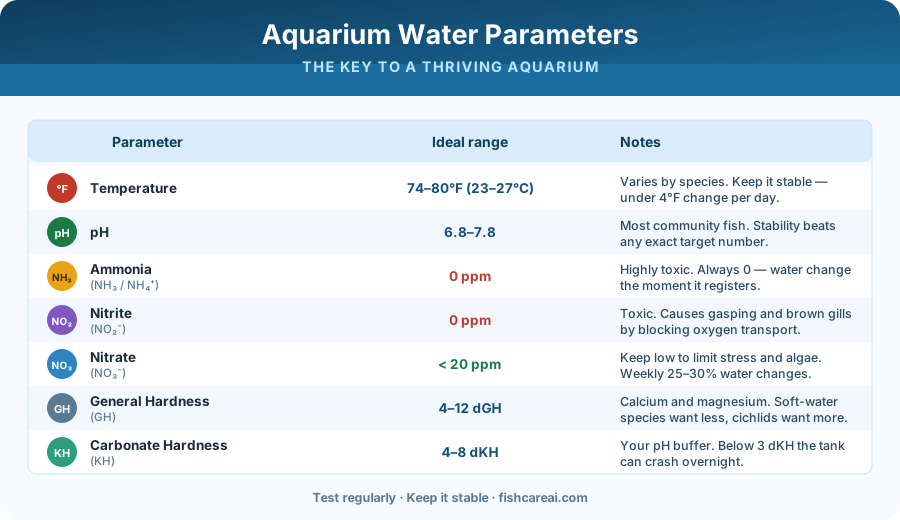
Two habits turn this table into healthy fish: test on a schedule rather than only in a crisis, and change one thing at a time. If you correct temperature, pH and hardness in the same evening, you will never know which change helped — and the combined swing is itself a stressor.
The Nitrogen Cycle — Why It Matters
The nitrogen cycle is the biological process that makes aquarium keeping possible. Without it, fish waste would accumulate as ammonia and kill the fish within days.
- Fish produce ammonia through gill excretion and waste decomposition.
- Nitrosomonas bacteria colonize your filter media and convert ammonia to nitrite.
- Nitrospira bacteria convert nitrite to the far less toxic nitrate. (Older sources name Nitrobacter; genetic surveys of real aquarium filters found Nitrospira does most of this work.)
- Water changes remove accumulated nitrate from the system.
Establishing this cycle (called "cycling the tank") takes 4–6 weeks in a new aquarium. During this period, ammonia and nitrite will spike before the bacteria population catches up. Never add fish to an uncycled tank — or if you already have, test daily and do large water changes to keep ammonia and nitrite below 0.5 ppm. Our tank setup guide walks through a fishless cycle step by step.
How to Test Aquarium Water Correctly
Most "bad readings" that people panic over are actually testing errors. Liquid reagent kits are accurate, but only when used exactly as intended.
- Test before a water change, not after. Testing fresh water tells you nothing about what the fish have been living in.
- Rinse the test vials in tank water and shake them dry. Detergent residue and leftover reagent from the last test both skew results.
- Fill to the line at eye level — 5 mL in most kits. Overfilling dilutes the reagent and reads low.
- Shake reagent bottle #2 for the nitrate test for a full 30 seconds, then shake the filled vial for a full minute. This one step is responsible for most false-low nitrate readings.
- Wait the full development time — usually 5 minutes for ammonia and nitrite. Reading early gives a falsely low result.
- Read against the white card in daylight, looking down through the tube rather than side-on. Yellow kitchen lighting shifts ammonia and pH colors noticeably.
- Write it down. A log of dated readings tells you the direction things are moving, which matters far more than any single number.
How Often to Test Aquarium Water
- New tank (first 6–8 weeks): test every 2–3 days during cycling
- After cycling is complete: test weekly for the first 3 months
- Established tank: test every 2–4 weeks, or whenever fish show signs of stress
- After any change (new fish, medication, large water change): test within 48 hours
- When fish are sick: test immediately — water quality is the first thing to rule out
Troubleshooting: What the Symptoms Point To
When something looks wrong in the tank, the behavior usually tells you which parameter to test first.
| What you see | Test this first | Most likely cause | First action |
|---|---|---|---|
| Gasping at the surface | Ammonia, nitrite, temperature | Low oxygen, nitrite poisoning or overheating | Add surface agitation, 50% water change |
| Red or brown gills | Nitrite, ammonia | Nitrite poisoning (methemoglobinemia) | Water change, add aquarium salt |
| Clamped fins, hiding, no appetite | Ammonia, nitrate, temperature | Chronic poor water quality | Water change, verify heater |
| Sudden death overnight, no warning | pH, KH, chlorine | pH crash from low KH, or untreated tap water | Test KH; buffer if under 3 dKH |
| Cloudy white water in a new tank | Ammonia | Bacterial bloom during cycling | Do not medicate; keep testing, feed lightly |
| Persistent algae despite water changes | Nitrate, phosphate | Excess nutrients plus too much light | Reduce photoperiod to 6–8 hours, cut feeding |
| Fish flicking against decor | Ammonia, pH | Gill irritation or parasites | Confirm water is clean before medicating |
| Ammonia spike after a water change | Ammonia, chlorine | Untreated chloramine killed filter bacteria | Dose chloramine-rated conditioner every time |
Choosing Your Water Source: Tap, Well and RO
Your parameters start with the water you pour in, so it is worth testing the source itself before blaming the tank.
- Tap water suits most freshwater setups. It usually carries useful GH and KH, and only needs a chloramine-rated conditioner. Request your utility's annual water quality report to see pH, hardness, nitrate and which disinfectant is used.
- Well water varies enormously. It contains no chlorine, but can be very hard, low in oxygen, or carry iron and dissolved CO₂ that make the pH read artificially low straight from the tap. Aerate a bucket for an hour, then test — that is your real pH.
- RO / distilled water has no minerals and no buffering, so it must be remineralized before use or blended with tap water. Pure RO in a tank is a pH crash waiting to happen. It is the right choice for soft-water species like discus when you control the mineral content deliberately.
For a full walkthrough of preparing, storing and matching source water, see our fish tank water guide and what kind of water to use in a fish tank.
Frequently Asked Questions
What is the ideal pH for a freshwater aquarium?
Most freshwater community fish do well between pH 6.8 and 7.8. Bettas prefer 6.5-7.5, discus and cardinal tetras 5.5-7.0, and African cichlids 7.8-8.5. Stability matters more than hitting an exact number: a steady pH of 7.2 is safer than one that swings between 6.5 and 8.0.
What should ammonia levels be in a fish tank?
Ammonia must read 0 ppm in an established aquarium. How toxic a reading is depends on pH: the higher the pH, the more of it exists as free ammonia, the form that damages gills. At pH 8 or above even 1 ppm is dangerous within hours. If ammonia shows on a test, do a 25-50% water change immediately, dose a conditioner that detoxifies ammonia, stop feeding for a day and retest.
How often should I test aquarium water?
Test every 2-3 days while a new tank is cycling, which is roughly the first 6-8 weeks, then weekly for the next 3 months, then every 2-4 weeks once readings are consistently stable. Always test after adding fish, after medicating, and immediately if any fish looks unwell.
What is the nitrogen cycle in an aquarium?
Fish waste produces ammonia, ammonia-oxidizing bacteria such as Nitrosomonas convert that ammonia to nitrite, Nitrospira bacteria convert nitrite to far less toxic nitrate, and partial water changes remove the nitrate. Establishing this cycle in a new tank takes 4-6 weeks.
Do I need to remove chlorine from tap water?
Yes. Chlorine and chloramine are added to municipal drinking water and both are toxic to fish and to the beneficial bacteria in your filter. Treat every drop of new tap water with a conditioner that neutralizes chlorine and chloramine before it reaches the tank. Letting water stand overnight removes chlorine but not chloramine.
How do I lower pH in an aquarium safely?
Lower pH slowly, by no more than 0.2 units per day. Blend tank water with RO or distilled water to reduce mineral content, add driftwood, catappa leaves or peat for a gentle natural drop, and increase CO2 in planted tanks. Avoid bottled pH-down products, because they push pH down against your KH and often cause a rebound swing that is more dangerous than the original pH.
References and Further Reading
- Merck Veterinary Manual — Management of Aquarium Fish: clinical reference on water quality, ammonia toxicity and husbandry.
- US EPA — Chloramines in Drinking Water: why municipal water contains chloramine and how it behaves.
- RSPCA — Fish Environment and Welfare: welfare-based guidance on stable aquarium conditions.
Product references on this page describe categories of equipment rather than endorsements. See our editorial policy for how these guides are researched and reviewed.