A successful first aquarium begins before any water goes into the tank. You need to choose fish whose adult size and behavior fit the aquarium, select a level location that can carry the filled weight, install suitable equipment and establish a biological filter before stocking. This guide separates the physical setup—which takes a few hours—from aquarium cycling, which commonly takes several weeks.
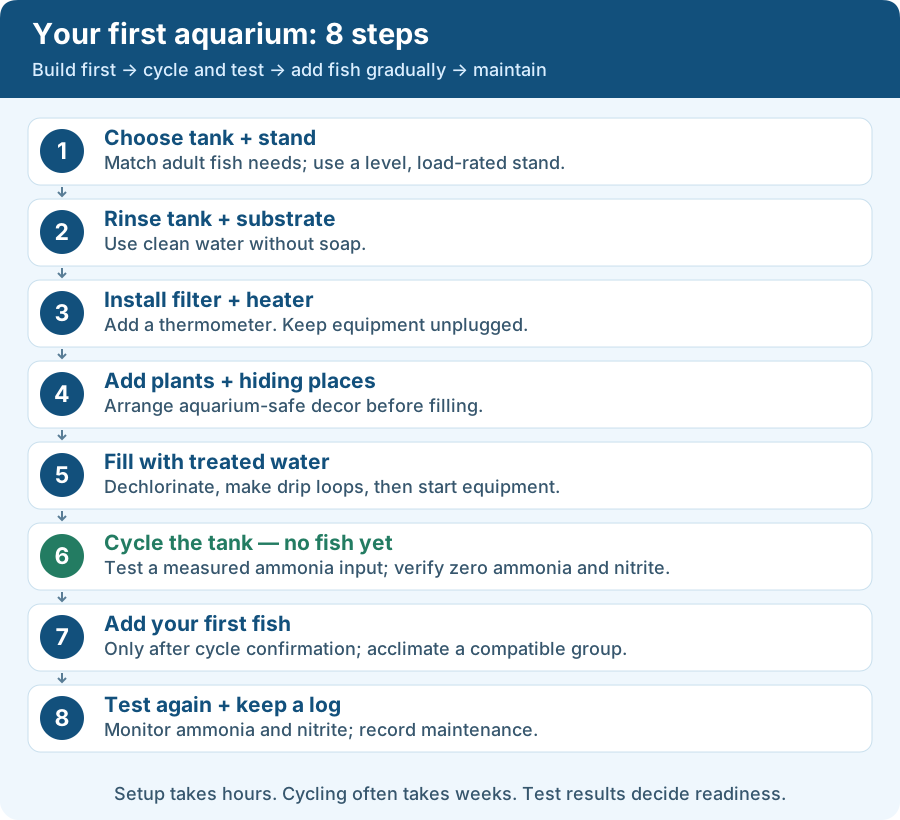
- Choose the tank and level stand.
- Rinse the empty tank and substrate without soap.
- Install the filter, heater and thermometer.
- Add decorations, plants and hiding places.
- Fill with temperature-matched, dechlorinated water.
- Run and cycle the aquarium while testing ammonia, nitrite and nitrate.
- Add a small first group only after the cycle is confirmed.
- Test again and begin a weekly maintenance log.
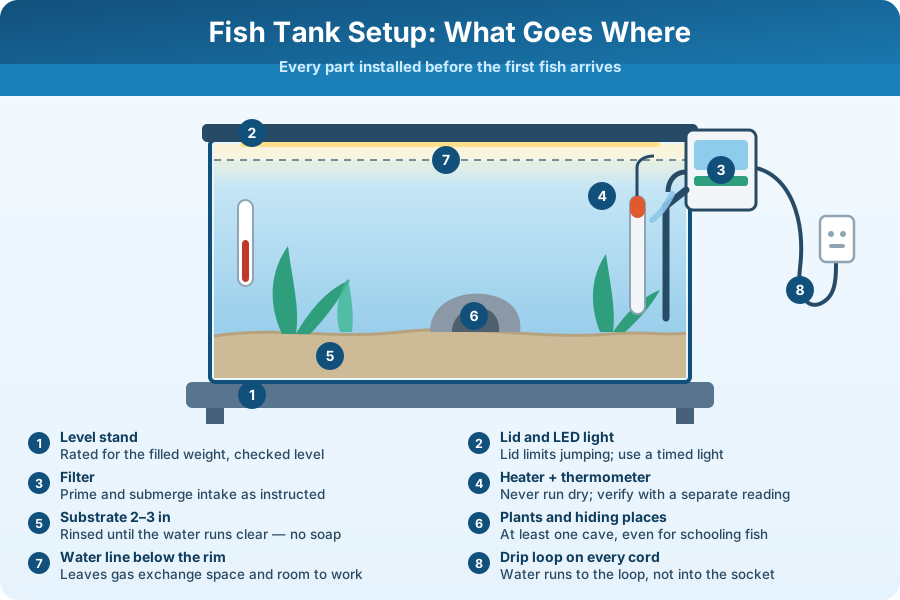
Setting Up a Fish Tank for Beginners
Setting up a fish tank for beginners works best as a planned sequence rather than a shopping-day impulse. Decide which species you want first, then work backward from its adult size, group requirement, temperature range and behavior. A betta setup, a school of small community fish and a goldfish aquarium require different tank sizes, filters and temperatures. Buying the aquarium before researching the livestock often produces an undersized or incompatible setup.
The physical order matters too. Position the empty tank and confirm that it is level before adding substrate. Install—but do not run dry—the heater and filter. Arrange rinsed aquarium-safe materials, fill slowly, treat tap water for chlorine or chloramine and start the equipment. After confirming temperature and flow, begin a fishless nitrogen cycle and record test results. Only then should you purchase and acclimate the first small group of compatible fish.
Patience during this stage prevents the most expensive beginner problem: adding livestock to a tank that has water and working equipment but no mature biofilter. Bottled bacteria or established filter media may help, but neither replaces testing. The goal is not simply to wait a certain number of days; it is to demonstrate that ammonia is being converted without a persistent ammonia or nitrite reading.
What You Need to Set Up a Freshwater Fish Tank
| Equipment | Notes | Required? |
|---|---|---|
| Aquarium tank | 20 gallons recommended for beginners | Yes |
| Tank stand | Must support ~10 lbs per gallon of water | Yes |
| Filter | Appropriate biological and mechanical filtration with safe flow | Yes |
| Heater | Thermostatic model correctly rated for the aquarium and room | For tropical species |
| Thermometer | Digital or stick-on; verify heater accuracy | Yes |
| Substrate | Gravel or sand, 2–3 inches deep | Yes |
| Water conditioner | Neutralizes chlorine and chloramines in tap water | Yes |
| Aquarium light | LED light suitable for tank size | Yes |
| Liquid test kit | Tests ammonia, nitrite, nitrate, pH | Yes |
| Decorations / plants | Hides, driftwood, live or artificial plants | Recommended |
| Fish net | For fish transfers | Recommended |
| Gravel vacuum | For water changes and substrate cleaning | Recommended |
Choosing the Right Tank Size
There is no single best size for every beginner. Choose the tank from the adult requirements of the fish rather than the size of juveniles in the store. A 20-gallon aquarium is a flexible starting point for many small community species because its water temperature and chemistry change more slowly than those of a tiny desktop tank, but it is not large enough for every fish. Confirm adult size, minimum group size, swimming space and waste production before buying equipment, and check the figure against our aquarium size calculator.
Use the aquarium’s real dimensions as well as its volume. A long tank offers more horizontal swimming and bottom area than a tall tank of similar capacity. Check the filled weight—water alone weighs about 8.34 lb per US gallon, before adding glass, substrate and decor—and use a stand designed to support that load continuously. Worked examples of dimensions, operating weight and stocking for popular sizes are in our 50 gallon, 55 gallon and 100 gallon fish tank guides.
Where to Put a Fish Tank Safely
Choose the location while the aquarium is empty. PetMD and Interpet both emphasize a solid, level support with nearby power and enough clearance for filters, hoses and maintenance. Avoid direct sunlight, which can heat the tank and encourage algae, and avoid radiators, exterior doors and air-conditioning vents that create temperature swings. Do not place the aquarium where it blocks a walkway or where doors, toys or furniture can strike the glass.
Keep the tank close enough to a water source that routine water changes remain practical, but protect outlets and electronics from splashes. Every power cord should drop below the outlet before rising to the plug, forming a drip loop so water cannot run directly into the socket. Make sure you can reach the filter, remove the lid and siphon water without moving the aquarium; a filled tank should never be repositioned.
How to Set Up a Fish Tank Step by Step
Step 1: Choose the Tank and Level Stand
Before anything is unpacked, confirm the aquarium suits the adult size and group needs of the fish you intend to keep, and that the stand can carry the filled weight continuously. Run the numbers with our tank size calculator, or map the whole build out first with the aquarium planner. Position the empty tank now and check it with a spirit level in both directions; a filled aquarium should never be moved or shimmed.
Step 2: Rinse the Tank and Substrate
Rinse the empty tank with clean water — no soap or cleaning products. Even trace amounts of soap are toxic to fish. Rinse substrate (gravel or sand) thoroughly in a bucket until the water runs clear. This removes dust and debris that would otherwise cloud your tank for days.
Add 2–3 inches of substrate to the tank bottom. Sand is softer and better for bottom-dwelling fish like corydoras; gravel is easier to clean but can trap waste between pieces. Both work well for planted tanks. To work out how many pounds to buy before you shop, run your tank’s length and width through the aquarium substrate calculator.
Step 3: Install the Filter and Heater
Install your hang-on-back filter on the back rim of the tank according to manufacturer instructions. Do not plug it in yet — the intake tube must be submerged before running. Place your submersible heater near the filter outlet so warm water circulates evenly throughout the tank. Set the heater to your target temperature (typically 76–78°F for tropical fish). If you are unsure which filter turnover or heater wattage your tank needs, size both with the aquarium equipment calculator.
Do not plug in the heater until the tank is filled with water — heaters can crack or burn out if run dry.
Step 4: Add Decorations and Plants
Add decorations, rocks, driftwood, and plants before filling the tank with water. This is much easier than trying to arrange things in a full tank. Create at least one cave or hiding spot for fish — this is important for fish health, not just aesthetics. Schooling fish still need places to retreat when stressed.
If using live plants, rinse them under tap water to remove pests. Beginner-friendly live plants include java fern, anubias, java moss, and hornwort — all tolerate low light and wide water parameter ranges. Live plants consume nitrates, improve water quality, and make the tank look much more natural — see our aquarium plant care guide for lighting and trimming basics.
Step 5: Fill the Tank with Treated Water
Fill slowly over a clean plate or bag so the water does not scatter the substrate. Treat municipal water with a conditioner labeled for both chlorine and chloramine, following the product dose for the actual volume. These disinfectants protect drinking water but can harm fish and the bacteria you are trying to establish. Our fish tank water guide covers tap, RO and well water and when each needs extra preparation.
Once the filter intake and heater are submerged as their manufacturers require, create drip loops and switch on the equipment. Confirm that the filter restarts after a brief power interruption and that its flow reaches the tank without pushing substrate or plants around. Allow the heater to stabilize and verify the temperature with a separate thermometer. Running equipment for 24 hours checks operation; it does not complete the nitrogen cycle.
Step 6: Cycle the Tank (Test Results, Not a Calendar)
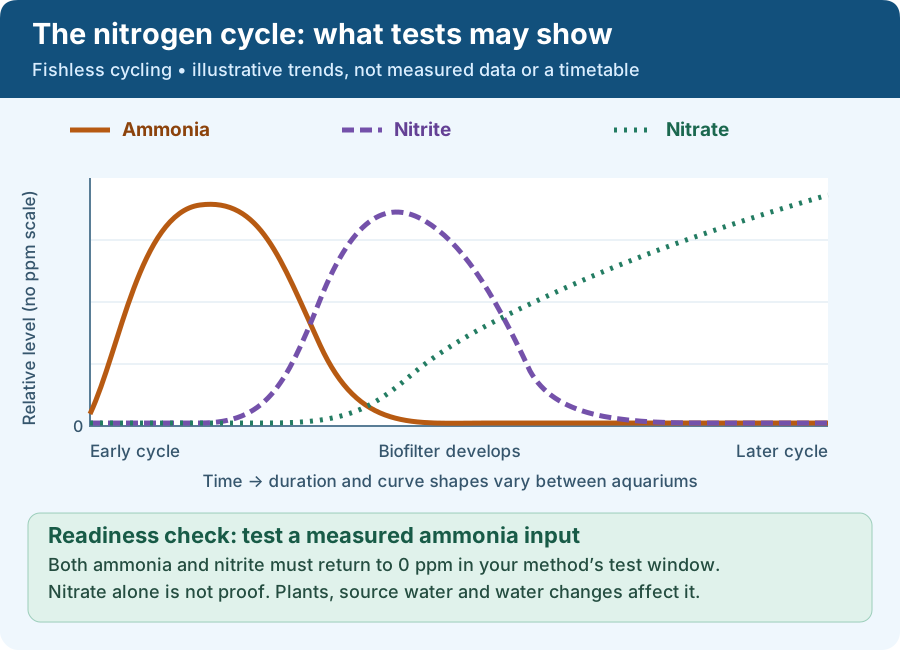
The nitrogen cycle establishes microbes that convert toxic ammonia into nitrite and then nitrate. In a fishless cycle, add a controlled aquarium-safe ammonia source according to its instructions and test ammonia and nitrite regularly with a reliable kit. Keep the filter running continuously and maintain the temperature appropriate for the future livestock.
Cycling commonly takes several weeks, but the calendar alone cannot certify completion. A nitrate reading may support the conclusion, yet tap water and plants can affect nitrate. Confirm that a measured ammonia input is processed and that both ammonia and nitrite return to 0 ppm within the method’s specified test window. Then perform an appropriate water change to reduce accumulated nitrate before adding fish. Do not use household ammonia containing fragrance, surfactants or cleaners. For the target ranges each reading should settle into, see our aquarium water parameters guide.
What Is SafeStart, and Does It Instantly Cycle a Tank?
Products marketed as SafeStart, Quick Start or bottled beneficial bacteria are intended to seed a new aquarium. They may shorten the process when the organisms remain viable and the product is used correctly, but they do not replace water testing and do not make unrestricted same-day stocking safe.
Treat the bottle as an aid, not proof that the cycle is complete. Follow the product label, add fish conservatively if using a fish-in approach, test ammonia and nitrite daily, and be ready to perform a measured water change if either appears. A safer fishless cycle is confirmed when the tank processes an ammonia source and both ammonia and nitrite return to 0 ppm.
Early cycle: Ammonia may rise → processing capacity is still developing
Developing cycle: Nitrite may rise as ammonia is processed
Later cycle: Nitrite falls and nitrate may accumulate → verify with a controlled test
Ready for fish: a controlled ammonia input is processed, ammonia returns to 0 ppm, nitrite returns to 0 ppm, and temperature remains stable
Check your own readings in the water parameter checker →
Step 7: Add Your First Fish
Once the cycle is confirmed, add only a small, compatible first group whose social needs make sense together. A fixed number such as “six fish” is unsafe because six tiny rasboras and six juvenile goldfish create completely different waste loads. Use adult size and species requirements, then increase stocking gradually while monitoring the biofilter. Shortlist candidates in our best freshwater fish for beginners guide and screen the combination with the fish compatibility checker before you buy.
Temperature-acclimate the sealed transport bag, then follow the seller’s instructions for transfer. Avoid prolonged acclimation in an opened shipping bag because its water chemistry can change. Whenever possible, quarantine new livestock in a separate established system. Test ammonia and nitrite daily at first and act promptly with conditioned, temperature-matched water changes if either becomes detectable.
Step 8: Confirm Water Quality and Start a Maintenance Log
The build is not finished when the fish go in. For the first few weeks after stocking, test ammonia and nitrite daily and write down the result, the temperature and any water change you perform. A written log turns isolated readings into a trend, which is what tells you whether the biofilter is keeping up with the stocking you added. If you are unsure how to read a set of results, compare them against our aquarium water parameters guide or run them through the water parameter checker.
Weekly Maintenance After Setup
Use testing and livestock needs to set the maintenance schedule. A weekly partial water change is a useful starting routine for many freshwater aquariums; adjust the percentage from nitrate trend, stocking, feeding and plant growth. Condition replacement tap water and match temperature closely. Siphon accessible debris without tearing apart the entire substrate at every service.
Test ammonia and nitrite frequently during the first weeks after stocking and whenever fish behavior changes. Track nitrate, pH and temperature so trends are visible. Rinse reusable filter media gently in removed tank water when flow declines, and do not replace all biological media at once. Never switch off the filter for days simply because the water looks clean.
Common Beginner Mistakes to Avoid
Adding fish before confirming the cycle: A filter that has run for a day is not automatically biologically mature. Test before stocking.
Overfeeding: Portion food for the species and remove persistent leftovers. Excess food decomposes and adds to the ammonia load.
Using the inch-per-gallon rule: Body mass, behavior, group size and adult dimensions matter more than length alone. Research every species and use the tank’s footprint, filtration and maintenance capacity.
Using soap to clean equipment: Even trace soap residue kills fish and beneficial bacteria. Use only clean water for rinsing.
Ignoring water test results: A test kit is not optional. Visual clarity of water tells you nothing about ammonia, nitrite, or nitrate levels.
Replacing all filter media at once: This destroys your bacterial colony and can crash a cycled tank. Only replace media when it physically falls apart.
Fish Care FAQ
How long does it take to set up a fish tank?
The physical build can take a few hours, while establishing the biological filter commonly takes several weeks. The tank is ready when controlled testing confirms that its ammonia source is processed and ammonia and nitrite return to 0 ppm—not simply when a date arrives.
What do I need to set up a freshwater fish tank?
Essential equipment: tank, stand, filter, heater, thermometer, substrate, water conditioner, light, and a liquid test kit. Recommended: decorations, live plants, gravel vacuum, and fish net.
Can I add fish immediately after setting up a tank?
Not in a standard beginner fishless setup. Filling the tank and turning on the filter does not establish biological filtration. Complete and verify the cycle before stocking.
How often should I change the water in my fish tank?
A weekly partial change is a useful starting point, but the correct amount depends on nitrate trend, stocking, feeding, plants and species. Match temperature and condition new tap water before it enters the aquarium.
What is the easiest fish to keep for beginners?
The best choice is a species compatible with your aquarium’s volume, water, temperature and group size. Review our beginner fish guide before buying; “hardy” does not mean safe in an uncycled or overcrowded tank.
Sources and Editorial Method
This page combines veterinarian-reviewed setup guidance with practical assembly and aquarium-placement instructions. Where the sources differ, FishCare AI prioritizes measured water quality and fishless cycling over calendar-only or same-day stocking advice. Product-specific claims are not treated as proof that a biofilter is established.
- PetMD — Setting Up a Freshwater Aquarium.
- Instructables — DIY: How to Set Up a Fish Tank (physical assembly reference).
- Interpet — Locating and Starting Your New Aquarium.
This guide was reviewed for practical fish care safety, water quality accuracy, and beginner clarity. For severe illness, poisoning, or pond emergencies, contact an aquatic veterinarian or experienced local aquatics professional.