Choosing your first fish is one of the most important decisions a new aquarium owner makes. The wrong choice — a species that needs very precise water chemistry, large tanks, or specialized diet — leads to frustration and fish losses. The right choice leads to a thriving tank and a lifelong hobby. This guide ranks the 10 best freshwater fish for beginners based on hardiness, availability, cost, care simplicity, and how forgiving they are of beginner mistakes.
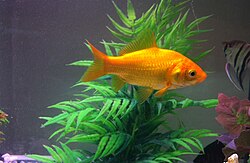
Quick Comparison: Best Beginner Fish
| Fish | Min Tank Size | Difficulty | Keep With |
|---|---|---|---|
| Zebra Danio | 10 gallons | Very Easy | Groups of 6+ |
| Guppy | 10 gallons | Very Easy | Groups, more females than males |
| Platy | 10 gallons | Very Easy | Groups, 2–3 females per male |
| Molly | 20 gallons | Easy | Groups in hard water |
| Betta | 5 gallons | Easy | One male only; no fin nippers |
| Neon Tetra | 10 gallons | Easy | Schools of 8+ |
| Corydoras | 20 gallons | Easy | Groups of 6+ |
| Swordtail | 20 gallons | Easy | Groups with tight lid |
| Cherry Barb | 20 gallons | Easy | Schools of 8+ |
| Bristlenose Pleco | 20 gallons | Easy | With most community fish |
1. Zebra Danio — Best Overall Beginner Fish
Zebra Danio (Danio rerio) Very Easy
Zebra danios are the gold standard for beginner fish. They are nearly indestructible — they tolerate a wide range of temperatures (64–77°F), adapt to most tap water conditions, handle beginner mistakes like minor ammonia spikes better than almost any other fish, and remain active and entertaining throughout. They are also inexpensive and widely available.
Keep them in groups of at least six — they are schooling fish and become stressed alone. A 10-gallon tank works for a small school. Add a tight-fitting lid; they are active jumpers. Danios have bred the iconic zebrafish used in scientific research, which is a testament to how tough and adaptable they are.
Tank: 10 gallons minimum | Temp: 64–77°F | pH: 6.5–7.5 | Group: 6+
2. Guppy — Most Colorful and Easy to Breed
Guppy (Poecilia reticulata) Very Easy
Guppies are the most popular freshwater fish in the world, and for good reason. Males are brilliantly colored with flowing fan tails; females are larger and plainer but equally hardy. They adapt to a wide range of water conditions, accept virtually any food, and are peaceful community fish.
The main challenge with guppies is population management. They are prolific livebearers — a single female can produce 20–60 fry every four weeks. Keep at least two to three females per male, or keep only males for a colorful display tank without breeding. A 10-gallon tank works well for a small group of males or a trio.
Tank: 10 gallons | Temp: 72–82°F | pH: 6.8–7.8 | Group: At least 3, 2–3 females per male
3. Platy — Hardiest Livebearer
Platy (Xiphophorus maculatus) Very Easy
Platies are arguably the hardiest livebearer available. They tolerate cool water (65–77°F), a wide pH range (7.0–8.3), and are extremely disease-resistant compared to guppies. They come in dozens of color varieties including sunset, blue mirror, red wagtail, and salt and pepper platies.
Platies are peaceful, short-bodied fish that don't need as much space as mollies or swordtails. A group of four to six in a 10-gallon tank is a classic beginner setup. Like all livebearers, maintain more females than males to prevent harassment.
Tank: 10 gallons | Temp: 65–77°F | pH: 7.0–8.3 | Group: 4–6, 2 females per male
4. Molly — Best for Hard Tap Water
Molly (Poecilia sphenops) Easy
Mollies are an excellent beginner fish if your tap water is moderately hard. They thrive in hard, alkaline water (pH 7.5–8.5, 15–30 dGH) and can even tolerate a small amount of aquarium salt. Black mollies, dalmatian mollies, and sailfin mollies are all widely available and come in striking color patterns.
The caveat: mollies can be sensitive in very soft, acidic water. If your tap water is soft, consider platies or guppies instead. With the right water, mollies are hardy, active, and entertaining livebearers that breed readily.
Tank: 20 gallons | Temp: 72–82°F | pH: 7.5–8.5 | Group: 4–6, more females than males
5. Betta Fish — Best Solo Fish for Small Tanks
Betta Fish (Betta splendens) Easy
Betta fish are the iconic beginner fish for small tanks. A single male betta in a 5–10 gallon heated, filtered tank is one of the most rewarding beginner setups. Males display brilliant fin colors and have distinct personalities — they recognize their owners and respond to movement outside the tank.
Key rules: never keep two male bettas together (they fight), avoid fin-nipping tank mates, always use a heater (they need 76–82°F), and provide a filtered tank. Despite the common misconception, bettas should not be kept in unheated bowls or small cups — they live 3–5 years in proper conditions.
Tank: 5–10 gallons | Temp: 76–82°F | pH: 6.5–7.5 | Keep: One male only
6. Neon Tetra — Best Schooling Fish
Neon Tetra (Paracheirodon innesi) Easy
The iridescent blue-and-red neon tetra is one of the most recognizable freshwater fish in the world. A school of 10 or more neons moving together in a planted tank is one of aquarium keeping's most beautiful sights. They prefer soft, slightly acidic water (pH 6.0–7.0) and are peaceful with all similarly-sized tank mates.
Keep them in groups of at least 8 — small groups of fewer than six neons are often less active and more prone to stress. They are small (1.5 inches) and suitable for 10-gallon tanks and larger. Do not keep with angelfish or other fish large enough to eat them.
Tank: 10 gallons | Temp: 69–79°F | pH: 6.0–7.0 | School: 8+ minimum
7. Corydoras Catfish — Best Bottom Dweller
Corydoras (Corydoras spp.) Easy
Corydoras are the best bottom-dwelling fish for beginner community tanks. They are peaceful, social, active, and provide useful scavenging behavior by cleaning up uneaten food from the substrate. Pepper corys, bronze corys, and panda corys are the most commonly available species.
Keep corydoras in groups of at least six of the same species — they are schooling fish and become stressed alone. They need a soft, fine substrate (sand is ideal) because barbels on their face are easily damaged by coarse gravel. Corydoras prefer cooler temperatures than many tropical fish: 70–78°F suits most species.
Tank: 20 gallons | Temp: 70–78°F | pH: 6.5–7.5 | Group: 6+ same species
8. Swordtail — Best Active Community Fish
Swordtail (Xiphophorus helleri) Easy
Swordtails are colorful, active livebearers that adapt well to a wide range of water conditions. The distinctive sword-like tail extension on males makes them visually striking. They are slightly larger than guppies and platies, which makes them suitable for tanks with medium-sized community fish.
Always use a tight-fitting lid — swordtails are strong jumpers. Maintain more females than males to reduce harassment. They breed readily in community tanks, so plan for fry management. Red swordtails are the classic variety, but green, black, and pineapple morphs are also widely available.
Tank: 20 gallons | Temp: 65–82°F | pH: 7.0–8.3 | Group: 3 females per male minimum
9. Cherry Barb — Most Peaceful Barb
Cherry Barb (Puntius titteya) Easy
Cherry barbs are one of the few barb species recommended for peaceful community tanks. Unlike tiger barbs (which are notorious fin nippers), cherry barbs are gentle schooling fish that get along with virtually all community species. Males develop a brilliant cherry-red color; females are brownish with a horizontal stripe.
Keep in groups of eight or more for the best coloration and behavior — cherry barbs in small groups can be shy. They prefer heavily planted tanks with some open swimming space, and they are not demanding about water chemistry as long as extremes are avoided.
Tank: 20 gallons | Temp: 73–81°F | pH: 6.0–7.5 | School: 8+ minimum
10. Bristlenose Pleco — Best Algae Eater
Bristlenose Pleco (Ancistrus spp.) Easy
The bristlenose pleco is the best algae-eating fish for beginner community tanks. Unlike the common pleco (which grows to 18+ inches), bristlenose plecos stay small at 4–5 inches and are suitable for tanks as small as 20 gallons. Males develop characteristic bushy tentacles on the snout.
Bristlenose plecos eat algae from glass, rocks, and driftwood, and also benefit from supplemental vegetable feeding (blanched zucchini, cucumber, spinach). They are hardy, peaceful, and nocturnal — provide caves or hiding spots for them to rest during the day. They are compatible with nearly all peaceful community fish.
Tank: 20 gallons | Temp: 60–80°F | pH: 6.5–7.5 | Keep: Usually one; pairs can breed
Fish to Avoid as a Beginner
Goldfish: Goldfish are cold-water fish that produce excessive ammonia and need very large tanks (40+ gallons per fish for fancy goldfish). They cannot live with tropical fish and require very different care than most beginner setups assume.
Common Pleco: Sold tiny in pet stores, they grow to 18–24 inches and need very large tanks. Most end up in pet store surrender bins because owners cannot accommodate their adult size.
Discus: Discus require very warm water (82–88°F), very low nitrate, and expert-level care. They are not suitable for beginners.
Oscar Fish: Oscars grow to 12–14 inches, produce massive amounts of waste, and require 75+ gallon tanks. Their small, cute juvenile size is misleading — they grow fast.
Tiger Barbs: Tiger barbs are notorious fin nippers that shred the fins of bettas, angelfish, and guppies. Avoid in community tanks unless kept in a large school of 10+ with no fin-nipping targets.
Setting Up Your First Beginner Tank
A 20-gallon tank is the best first aquarium for most beginners. It holds enough water volume to buffer beginner mistakes, supports a reasonable number of fish, and is not too heavy to set up in most spaces. Choose a hang-on-back filter rated for 40 gallons or more — more filtration is always better.
Cycle the tank for 4–6 weeks before adding fish. Use a liquid test kit (not strips) to confirm ammonia and nitrite are at 0 ppm and nitrate is present before adding your first fish. Start with a small school of five to six zebra danios, guppies, or platies — these are forgiving of the slight instability present in a newly cycled tank.
Fish Care FAQ
What is the easiest freshwater fish for beginners?
Zebra danios and guppies are consistently the easiest freshwater fish for beginners. Both are hardy, tolerate a wide range of water conditions, and are inexpensive. Platies are a close third, particularly for hard tap water.
What fish can a beginner keep in a 10 gallon tank?
A single betta fish (male, alone), a school of neon tetras (8+), a small group of guppies (males only, or 1 male + 2 females), or ember tetras all work well in a 10-gallon tank. Avoid goldfish, cichlids, and large livebearers in small tanks.
How many fish should a beginner start with?
Start with 4–6 fish maximum in a properly cycled tank. The general rule is 1 inch of adult fish per gallon of water. Add fish gradually over several weeks — adding too many fish at once spikes ammonia.
Do beginner fish need a heater?
Most tropical freshwater fish need a heater to maintain 72–82°F. The exceptions are goldfish, white cloud mountain minnows, and weather loaches, which prefer cooler water. Bettas, guppies, mollies, tetras, and most other popular beginner fish all need a heater.
This guide was reviewed for practical fish care safety, species accuracy, and beginner clarity. For severe illness, poisoning, or pond emergencies, contact an aquatic veterinarian or experienced local aquatics professional.