Fish care for beginners starts before you bring a fish home. Long-term health depends on stable water, suitable equipment, correct food and enough space for the fish at its full adult size. Clear water alone does not prove that an aquarium is safe.
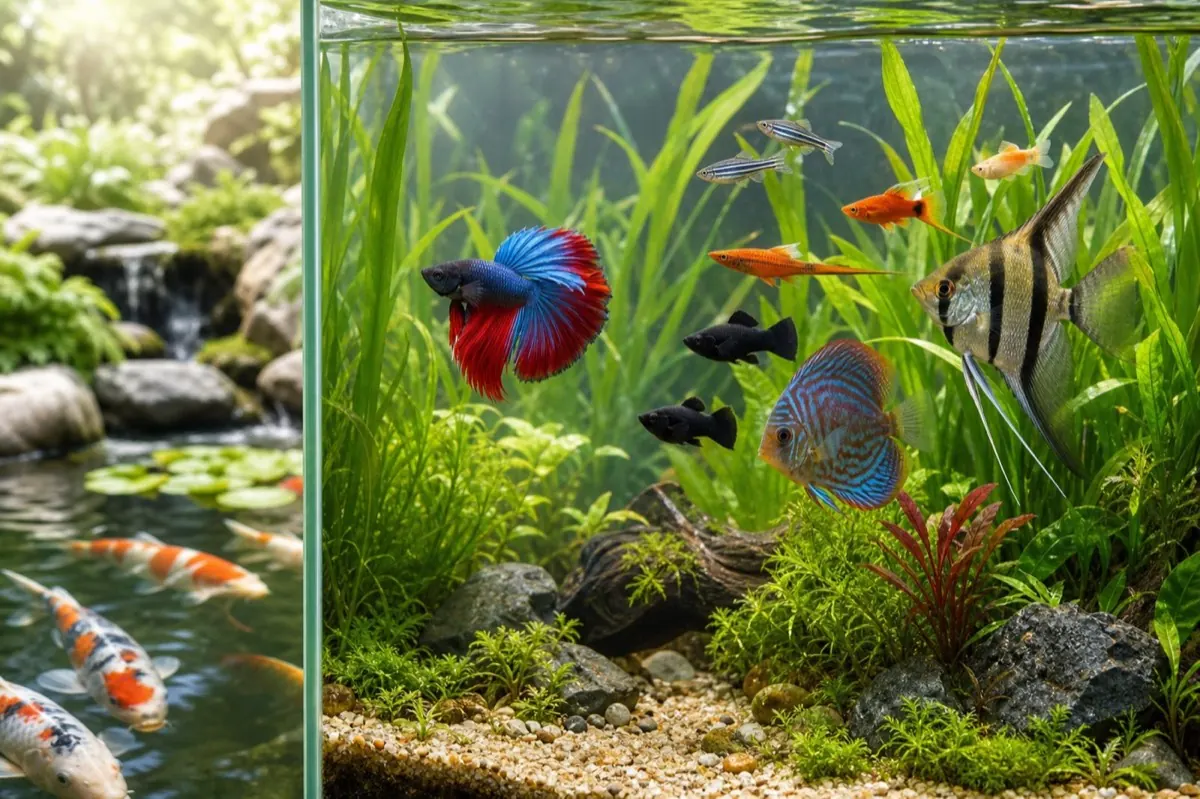
Are Fish Easy to Care For?
Fish can fit into a busy household, but they are not maintenance-free. They live entirely inside the environment you create, so problems with water quality, temperature or oxygen affect them immediately.
Once a tank is mature and correctly stocked, daily care may take only a few minutes. A larger, sensibly stocked aquarium is often easier to manage than a tiny bowl because more water changes temperature and chemistry more slowly.
Choose the Fish Before Choosing the Tank
Research adult size, minimum practical tank size, temperature, pH, hardness, diet, temperament and group requirements before buying equipment. Store fish are often juveniles, and a small fish may still need a long aquarium because it is active, territorial or must live in a school.
The “one inch of fish per gallon” rule is too simplistic for reliable stocking. Body shape, waste production, activity and social needs all matter.
Best Fish for Beginners
A beginner-friendly fish should have understandable care requirements, accept readily available food and fit the aquarium for its entire lifespan. Our ranked list of the best freshwater fish for beginners compares the usual candidates side by side. Test your tap-water pH and hardness first; a species that suits local water is usually easier than one requiring constant chemical adjustment.
Betta Fish
Betta fish can live without a school, but they still need a heated, filtered and cycled aquarium. A five-gallon tank is a practical minimum starting point, while a larger tank provides more stable water. Long-finned bettas generally prefer gentle flow and easy access to the surface.
Guppies
Guppies are active livebearers that readily accept prepared food and often suit moderately hard water. Males and females reproduce quickly, so beginners need a plan for fry or a carefully selected single-sex group.
Platies
Platies are peaceful, colorful livebearers that usually adapt well to a compatible community. They need adequate filtration, swimming space and stable mineral-rich water. Like guppies, mixed-sex groups can produce many fry.
Zebra Danios
Zebra danios are hardy, active schooling fish that tolerate somewhat cooler conditions than many tropical species. Keep them in a proper group and provide horizontal swimming room. Their constant activity may bother slow or long-finned tank mates.
Cory Catfish
Corydoras catfish, commonly called cory catfish, are peaceful bottom dwellers. They need a suitable group, smooth substrate, sinking food and clean oxygenated water. They are not cleaning tools and cannot live entirely on leftovers.
White Cloud Mountain Minnows
White cloud mountain minnows are peaceful schooling fish for cooler freshwater aquariums. They accept common prepared foods but should not automatically be combined with warm-water tropical species.
Fish Beginners Should Research Carefully
Goldfish grow larger and produce more waste than many buyers expect. Plecos are often sold as small algae eaters, but some species grow beyond a foot long. Angelfish need tall aquariums and careful tank-mate selection, while discus require consistently warm, clean water and more advanced maintenance.
Freshwater Fish Care Basics
Freshwater aquariums are generally the easier starting point. Saltwater systems require control of salinity in addition to temperature, filtration and waste. Even within freshwater fish, care varies widely, so use a species-specific guide after learning the basics.
Freshwater fish care is easier to learn when you treat the aquarium as one system rather than a list of products. Water quality, temperature, oxygen, filtration, diet, behavior and compatibility all influence each other: a filter that is too weak raises ammonia, a crowded tank lowers oxygen, and an unsuitable tank mate causes stress that looks like disease. Match every product, routine and recommendation to a specific species, tank size and adult fish size. Good freshwater fish care is specific, not generic.
Essential Fish Tank Equipment
- Correctly sized aquarium and level stand
- Filter rated for the aquarium
- Heater when required and a separate thermometer
- Water conditioner for chlorine and chloramine
- Water test kit
- Secure lid where jumping is a risk
- Species-appropriate substrate and hiding places
- Gravel vacuum and aquarium-only bucket
- Suitable food, light and timer
An air pump can improve surface agitation but does not replace biological filtration. Never use soap, detergent or household sprays on aquarium equipment.
How to Choose the Right Fish Tank Size and Stocking Level
Choosing an aquarium by price or available shelf space can create long-term problems if the fish outgrow it. Start with the adult fish rather than the empty tank. Record each species’ adult length, body shape, activity, social group and waste production, then select an aquarium that supports all of those needs. A long tank may be more useful than a tall tank for danios and other active horizontal swimmers, while angelfish benefit from additional height. Bottom-dwelling groups need enough floor area even when the upper water looks empty.
Species-specific tank size calculators turn those requirements into a minimum volume and footprint. Water volume is important, but gallons alone do not describe usable space. Two aquariums with the same volume can have different lengths, widths and heights. Territorial fish need room to establish separate areas, schooling fish need uninterrupted swimming lanes, and surface-breathing fish need easy access to the top. Decorations, substrate and an internal filter also reduce the space available to fish. Plan the finished layout rather than calculating from the glass dimensions alone.
A larger aquarium is usually more stable because waste and temperature changes are diluted through more water. This does not mean a large tank can be overstocked or maintained less carefully. More fish still create more waste, consume more oxygen and compete for territory. Filter ratings are not permission to exceed a species’ space or social requirements. A powerful filter may process waste, but it cannot create swimming room or stop incompatible fish from fighting.
Avoid using the one-inch-per-gallon rule as a final stocking calculation. It treats a slender one-inch tetra like a deep-bodied fish of the same length and ignores adult behavior. It also fails for large fish, schooling species and fish with heavy waste output. Instead, begin with the minimum group required by each species, check adult dimensions and ask whether the aquarium provides enough space at every swimming level.
Stock a new aquarium gradually. Adding the planned community in one trip can suddenly increase ammonia production before the biological filter adjusts. Begin with a compatible group that the cycled aquarium can support, monitor ammonia and nitrite, and wait for stable results before considering additional fish. Every new addition should have a purpose in the community rather than filling an apparently empty area.
Reassess stocking as fish mature. Warning signs include repeated chasing, fish being trapped in corners, rising nitrate despite regular maintenance, poor growth, damaged fins and oxygen stress. A stocking plan should include a larger future aquarium or a safe rehoming option when keeping juveniles that will eventually need more space.
Leave a safety margin instead of treating the aquarium’s estimated capacity as a target. Live plants can assist with nutrient control and provide cover, but they do not erase waste or territorial pressure. When uncertain, choose the larger tank or the smaller community. Conservative stocking gives beginners more time to notice a missed feeding, blocked filter or changing test result before it becomes an emergency.
How Much Does a Beginner Fish Tank Cost?
A basic freshwater setup in the United States often starts around $150–$400. A standard aquarium may cost $30–$150, a suitable stand $50–$200, filtration $20–$80, and a heater and thermometer about $20–$65. Testing, conditioner, substrate, maintenance tools, plants and décor add to the initial cost.
Budget for continuing food, conditioner, electricity and equipment replacement. Keep an emergency reserve for a failed heater, leak or temporary quarantine setup.
Understanding Aquarium Filtration for Beginners
An aquarium filter does more than remove visible dirt. Its most important role is providing a stable, oxygenated surface where beneficial bacteria can process fish waste. Effective filtration combines biological filtration with mechanical filtration, while chemical media is used only when it serves a specific purpose. Understanding these roles makes it easier to choose a filter and avoid accidentally damaging the aquarium cycle.
Mechanical filtration captures particles such as uneaten food, plant debris and suspended waste. Sponges, pads and filter floss perform this job. They must be cleaned when blocked because reduced water flow also reduces oxygen delivery to the biological media. Rinse reusable mechanical media gently in removed aquarium water or appropriately conditioned water. It does not need to look new; the goal is to restore flow without stripping the entire filter at once.
Biological filtration is performed by microorganisms living on filter media, substrate, plants and other wet surfaces. Porous ceramic media, sponges and bio-balls provide surface area, but bacteria still require flowing oxygenated water. Never allow established biological media to dry while servicing the filter. Avoid replacing every sponge or cartridge at the same time, especially when the aquarium depends on one filter.
Chemical filtration includes activated carbon and specialized resins. Carbon can remove some dissolved compounds, odors and medication residues, but it does not replace cycling, water changes or biological filtration. It may need to be removed when medication instructions say it would absorb the treatment. Beginners do not need to add multiple chemical products simply to make the water appear clearer.
Common filter types include sponge filters, hang-on-back filters, internal filters and canister filters. Sponge filters are inexpensive, provide biological filtration and gentle aeration, and are useful for bettas, shrimp, fry and quarantine tanks. Hang-on-back filters are accessible and combine several media types but may create strong flow for long-finned fish. Internal filters save external space but occupy room inside the aquarium. Canister filters offer substantial media capacity for larger tanks but require careful hose, seal and maintenance checks.
Choose flow based on fish behavior rather than only the manufacturer’s tank rating. Active river fish may appreciate stronger movement, while bettas and slow swimmers need calmer areas. Position the outlet to create surface movement without pushing fish continuously around the tank. If fish gather at the surface or filter flow falls, check oxygen, temperature, blockages and water quality immediately.
Keep a simple maintenance record with cleaning dates and observed flow. Stagger major maintenance when using multiple filters, and keep a spare air pump or sponge filter for emergencies. A reliable filter is one that supports stable water and can be maintained consistently—not necessarily the most expensive model.
After cleaning, verify that the filter restarts and does not leak. Some hang-on-back and canister filters may not resume correctly after a power interruption without priming. Listen for unusual noise and confirm visible flow. If flow remains weak, inspect the intake, impeller and hoses before replacing media. Routine observation often identifies a developing equipment problem earlier than a scheduled deep cleaning.
How to Set Up a Fish Tank
The short version is below; our step-by-step fish tank setup guide walks through each stage in detail.
- Choose a safe location. Use a level stand away from direct sunlight, heating vents and temperature swings.
- Rinse aquarium materials. Use clean water only—never soap.
- Add substrate and décor. Provide hiding places while preserving open swimming room.
- Fill and condition the water. Treat chlorine and chloramine before they contact fish or filter bacteria.
- Install and test equipment. Confirm stable temperature and water flow.
- Cycle the aquarium. Establish the biological filter before normal stocking.
How Long Does It Take to Cycle a Fish Tank?
A fishless cycle commonly takes several weeks, but there is no reliable fixed number of days. Waste produces ammonia; bacteria convert ammonia to nitrite and then nitrite to nitrate. Ammonia and nitrite are both toxic.
A fishless aquarium is generally ready when a controlled ammonia source is processed back to 0 ppm ammonia and 0 ppm nitrite within about 24 hours. Test rather than relying on the calendar. Bottled bacteria or mature disease-free filter media may shorten the process, but neither replaces testing.
Safe Water Parameters for Beginners
| Parameter | General beginner target | Why it matters |
|---|---|---|
| Ammonia | 0 ppm | Toxic waste from fish and uneaten food. |
| Nitrite | 0 ppm | Toxic during cycling and after a filter crash. |
| Nitrate | Keep low; many community tanks aim below 20–40 ppm, but use the species guide for a limit | Managed with water changes, plants and careful feeding. |
| Temperature | Stable and appropriate for the species | Cold stress and overheating both cause illness. |
| pH and hardness | Stable and within the species’ acceptable range | Mollies, discus, bettas and koi do not share one preference. |
| Chlorine/chloramine | 0 after treatment | Harms fish gills and filter bacteria. |
Stability is usually more important than repeatedly using chemicals to chase an exact pH. Record test results so gradual changes are easier to identify. For target ranges, test frequency and what each reading actually means, see the full aquarium water parameters guide.
How to Add New Fish Safely
- Choose alert fish without visible wounds, spots, swelling or abnormal swimming.
- Dim the aquarium light and reduce temperature differences before transfer.
- Acclimate according to the species and water differences.
- Avoid pouring store water into the aquarium when practical.
- Observe breathing, swimming and feeding after introduction.
- Quarantine new fish in a separate cycled aquarium when possible.
Add fish gradually so the biological filter can adjust to increased waste. Avoid buying the equipment and the first fish on the same day unless you already understand cycling and can test water daily — the tank almost never has a working biological filter yet.
How to Plan Fish Compatibility in a Community Aquarium
A community aquarium succeeds when its fish share compatible water, space and behavior requirements. A general compatibility chart can help identify candidates, but it cannot predict every individual fish. Our fish compatibility guides cover specific pairings, and the fish care chart compares tank size, temperature and difficulty across species. Before combining species, compare temperature, pH, hardness, adult size, aggression, group size, swimming level, feeding style and activity. If one species can only tolerate the edge of another species’ range, the combination may be possible but is not an ideal beginner plan.
Start with water requirements. Goldfish and many tropical fish are a poor long-term combination because their preferred temperatures and waste profiles differ. Soft-water species may remain stressed in very hard alkaline water, while livebearers may struggle in extremely soft water. Choosing fish that suit the same stable conditions is safer than constantly adjusting chemistry to maintain a compromise.
Next, compare adult size and predatory behavior. A peaceful fish may still eat anything small enough to fit in its mouth. Juvenile angelfish can appear suitable with tiny tetras but may view them as prey after growing. Fish sold as algae eaters may become large or territorial. Research the scientific or exact common name because broad shop labels can include species with very different adult behavior.
Respect social requirements. Corydoras, danios, tetras and many other fish need groups to display normal behavior. Buying one of each species creates a collection, not a stable community. At the same time, adding several complete schools can exceed the aquarium’s capacity. A beginner tank is usually easier when it contains fewer species in appropriate groups rather than many species in inadequate numbers.
Consider where each fish lives and feeds. Several bottom-dwelling groups may compete even when the middle of the tank looks empty. Fast surface feeders can consume everything before shy or bottom-feeding fish receive food. Use foods that reach each level, observe every fish during feeding and adjust the plan if one species is consistently excluded.
Decorations can reduce conflict by creating separate sight lines. Plants, wood and caves allow shy fish to retreat and territorial fish to establish boundaries. However, décor cannot make a small aquarium suitable for aggressive or incompatible species. Always have a separation or rehoming plan, particularly when adding cichlids, fin nippers or fish with unpredictable personalities.
Introduce new fish only after quarantine when possible. Rearranging some décor before introduction may reduce established territorial claims. Watch the aquarium closely for at least the first several days and continue checking for subtle problems such as one fish eating less, remaining hidden or developing torn fins. Compatibility is an ongoing observation, not a one-time decision made at the store.
Do not depend on a single online stocking calculator or one successful community shown in a video. Individual temperament, aquarium dimensions and local water can change the result. Compare several reputable species profiles and plan around the more conservative recommendation. If sources disagree substantially, pause the purchase and investigate the exact species, because similar common names may refer to different fish.
How Much and How Often Should Fish Eat?
Many adult community fish do well with one or two small meals per day, but species and age matter. Match food size and sinking behavior to where the fish feeds. Bottom dwellers need suitable sinking food rather than random leftovers.
Offer only what can be eaten promptly and remove excess food when possible. A common starting guide is to feed no more than the fish finish in about two minutes, then adjust to the species and to your test results. Overfeeding increases waste, ammonia and algae.
Diet type matters as much as portion size. Herbivores, omnivores, carnivores, livebearers, cichlids and bettas do not all thrive on one generic flake. Use foods matched to each group, and vary them where a species profile recommends it. In many established community tanks an occasional day without food is safer than habitual overfeeding, but this does not apply to fry, very small species or fish with medical needs — follow the species guide instead of a universal fasting rule.
Daily and Weekly Fish Care Routine
Every Day
- Check filter, heater, temperature and leaks.
- Observe breathing, fins, swimming and appetite before feeding — one minute of watching before the food goes in reveals more than a glance afterwards.
- Feed a measured amount and remove obvious waste.
- Count the fish. A missing or dead fish can change water quality quickly in a small tank.
Every Week
- Test water before the water change, not only after something goes wrong, and record the results. A simple log makes it obvious when nitrate or algae is creeping up.
- Replace approximately 20–30% of the water, adjusted to test results and stocking.
- Condition and temperature-match replacement water.
- Vacuum accessible debris and inspect filter flow.
Every Month
- Inspect tubing, impellers and electrical equipment.
- Gently rinse dirty filter sponges in removed aquarium water.
- Trim plants and review whether growing fish have enough space.
How to Clean a Fish Tank Without Harming the Fish
Fish should normally remain inside during routine maintenance. Remove part of the water with a gravel vacuum, clean only accessible substrate, add conditioned temperature-matched water and restart equipment. Do not drain and scrub the entire aquarium or replace all filter media as part of routine cleaning.
What Beginner Fish Keepers Commonly Struggle With
FishCare AI reviewed public aquarium-community discussions to identify recurring beginner questions. These posts are individual experiences, not controlled evidence, so the lessons were checked against veterinary and animal-welfare references.
Confusing Nitrite With Nitrate
A forum discussion showed a beginner describing a tank as cycled while reporting measurable nitrite. A tank is not fully cycled while ammonia or nitrite remains detectable. Record ammonia, nitrite and nitrate separately.
Community example: 20 Gallon First Tank — Aquarium Co-Op Forum
Adding Animals Before Cycling Is Complete
In one public discussion, a new keeper described introducing livestock before cycling, installing filtration late and possibly overfeeding. The combination produced detectable ammonia. Install equipment, complete a fishless cycle and establish a feeding plan first.
Community example: Advice Request for a Newbie Making Mistakes — Reddit
Worrying That Water Changes Remove the Cycle
Most nitrifying bacteria colonize filter media, substrate and other wet surfaces rather than living freely in the water. A properly performed partial water change does not normally remove the biological filter, but replacement water must be conditioned and reasonably matched for temperature and chemistry.
Community example: Water Changes Do Not Crash Cycles — Reddit
Buying Fish Based on Store Size
Community reports frequently describe algae eaters and other juveniles becoming much larger or more territorial. Research the exact species rather than relying on labels such as “cleaner fish” or “community fish.”
Community example: Worst Tank Mate You Were Told Would Be Good — Reddit
Is My Fish Sick? Warning Signs and First Steps
Warning signs include surface gasping, rapid gill movement, clamped fins, refusal to eat, unusual hiding, loss of balance, scraping or flashing against décor, spots, wounds, swelling or continuous bullying. Fish crowding around the filter outlet often means they are seeking oxygen. Water that turns cloudy after overfeeding or after a fish dies is an environmental warning, not a cosmetic one.
Test ammonia, nitrite, nitrate, temperature and pH first, and confirm that equipment is working. If several fish develop symptoms together, an environmental problem is especially likely. Avoid mixing medications without a diagnosis; seek an aquatic veterinarian for severe or persistent symptoms.
Create a Comfortable Aquarium Environment
Provide smooth substrate for bottom dwellers, hiding places for shy fish, visual barriers for territorial species and open water for active schools. Keep décor stable and free of sharp edges. Use a consistent light timer and do not tap the glass or handle fish for entertainment.
Vacation Care and Aquarium Emergency Planning
Prepare for absences and equipment failures before they happen. A mature, stable aquarium is usually safer with a simple plan than with a caretaker making large, unfamiliar changes. Write down the tank size, fish species, normal temperature, feeding amount, water-change routine and emergency contacts. Keep the instructions beside the aquarium and label switches, food and equipment clearly.
Healthy adult fish can often tolerate a short period with reduced feeding better than repeated overfeeding by a well-meaning caretaker. Requirements vary for fry, small species and fish with medical needs, so use the species guide rather than a universal fasting rule. For short trips, measured portions can be placed in dated containers. Do not leave an entire food container beside the tank if the caretaker may guess the amount.
Test automatic feeders for several days before leaving. Confirm that humidity does not clog the opening and that the device releases the correct amount. Vacation blocks can dissolve unpredictably and add unnecessary material to the water, so they should not be treated as a universal solution. Perform normal maintenance several days before departure rather than deep-cleaning the filter or making a major change immediately before leaving.
Power failures are a major concern because filters, heaters and air pumps stop. During a short outage, keep the aquarium covered to slow temperature change and avoid unnecessary feeding. A battery-powered air pump can maintain oxygen and water movement. For longer outages, filter media must remain wet and oxygenated; stagnant sealed filter water can become unsafe. Never restart unfamiliar equipment blindly after an extended shutdown without checking its condition.
Keep essential spare equipment where it can be reached quickly: a thermometer, water conditioner, air pump, airline, check valve, bucket and basic test supplies. A spare heater may be valuable in cold climates. Inspect cords and use drip loops to reduce electrical risk. Know where to shut off power and water if the aquarium leaks.
If a tank leaks, protect people and electricity first. Disconnect power only when it is safe, contain water and move fish to a clean food-safe container with conditioned, temperature-appropriate water and aeration. Preserve established filter media in aquarium water. Do not place fish in containers that previously held soap or household chemicals.
Give a caretaker clear thresholds for action, such as contacting you if the temperature leaves the normal range, the filter stops, fish gasp at the surface or water appears on the floor. Include the contact details of a trusted aquarium shop, experienced keeper or aquatic veterinarian. A short written emergency plan can prevent panic and harmful improvised treatments.
After returning home, inspect the aquarium before resuming normal feeding. Check temperature, equipment, fish behavior and water quality, then review any notes left by the caretaker. Avoid compensating for missed meals with a large feeding. If maintenance was delayed, return to the normal routine gradually unless testing shows an urgent problem. Consistency is safer than making several major corrections at once.
Fish Care Tips That Prevent Most Beginner Problems
Most aquarium emergencies are cheaper and easier to prevent than to treat. The tips below are the habits that separate a stable first tank from one that lurches between problems.
Ammonia and nitrite damage gills long before behavior obviously changes. A test result is an early warning; a sick fish is a late one.
Chlorine and chloramine harm both fish and filter bacteria. Treat replacement water every time, including small top-ups.
A large temperature difference during a water change is a common, avoidable source of stress.
Cartridges and sponges hold most of the biological filter. Stagger replacements and rinse rather than renew.
A small measured portion once or twice a day suits most adult community fish. Uneaten food becomes ammonia.
One generic flake will not feed a bottom-dwelling catfish, a herbivore and a carnivore equally well.
Gasping, clamped fins, hiding, flashing and rapid breathing are the first symptoms you can actually see. Investigate water quality before reaching for medication.
Bullying, fin nipping and territorial stress happen in perfectly maintained tanks when the tank mates are wrong.
A separate cycled tank prevents one purchase from infecting an established community.
Advice that promises a single chemical fix for every problem usually skips the cause: unstable water, overfeeding, crowding or incompatible fish. Fix the cause first, then decide whether medication is genuinely needed.
Common Fish Care Mistakes
- Adding fish before the aquarium is cycled
- Choosing a tank before researching adult fish size
- Adding too many fish at once
- Overfeeding
- Replacing all filter media
- Deep-cleaning everything at the same time
- Mixing incompatible fish
- Treating illness without testing water
- Buying cleaner fish without researching the species
Beginner Fish Care Checklist
A beginner aquarium usually fails for one of three reasons: the tank was never cycled, the fish are incompatible, or nobody tested the water early enough. This printable checklist puts the decisions that prevent those failures in one place.
Only this checklist is printed — in the print window choose Save as PDF to keep a copy, or select a printer.
Before You Buy Fish
Many fish sold small outgrow a beginner tank. Check adult size before buying, especially koi, oscars, plecos, goldfish and angelfish.
Choose species that fit the aquarium long term, not the temporary size shown in the shop.
Most tropical fish need a heater. Bettas, mollies, swordtails, danios, discus and angelfish do not share one temperature range.
Compare temperament, adult size, swimming level, hardness, pH and group behavior. Two peaceful species can still be a poor pairing.
Tank Setup
Small unfiltered bowls swing in temperature and chemistry far too quickly.
A filled aquarium is far heavier than the empty glass suggests.
A sponge filter suits many small beginner tanks; confirm stable temperature before stocking.
Always treat new water before it reaches fish or filter bacteria.
Test until ammonia and nitrite both read 0 ppm within about 24 hours of dosing.
Plants, caves and visual breaks reduce stress for bettas, livebearers, cichlids and schooling fish.
Water Test Targets
| Parameter | Beginner target |
|---|---|
| Ammonia | 0 ppm |
| Nitrite | 0 ppm |
| Nitrate | Low and stable; many community tanks aim below 20–40 ppm |
| Temperature | Species-specific and stable |
| pH and hardness | Stable and species-appropriate |
Every Day
Gasping, hiding, clamped fins, flashing, bullying or fish held near the filter outlet.
Roughly what the fish finish in two minutes. Remove leftovers where you can.
Filter running, heater stable, visible movement at the water surface.
A missing or dead fish changes water quality quickly in a small tank.
Every Week
Testing shows whether the schedule is working and catches ammonia, nitrite or nitrate problems early.
Temperature-match it and condition it. Adjust the percentage to your test results and stocking.
Vacuum accessible debris, wipe the glass, trim dead leaves. Do not replace all filter media at once.
Growing fish may need more space, stronger filtration or fewer tank mates.
Act Immediately If You See
- Fish gasping at the surface or crowding the filter outlet.
- Sudden lethargy, rolling, loss of balance or rapid breathing.
- Ammonia or nitrite above 0 ppm.
- Water turning cloudy after overfeeding or after a fish dies.
- A power outage affecting a warm or heavily stocked tank.
Fish Care FAQ
What do fish need to survive in a tank?
Fish need clean oxygenated water, stable temperature, appropriate filtration, suitable food and enough space. Exact requirements depend on species.
How often should beginners change aquarium water?
A weekly partial change of approximately 20–30% is a useful starting routine for many aquariums, adjusted according to tests, stocking and species needs.
Can fish live without a filter?
Specialized systems can operate without conventional filters, but they require experience. A correctly sized biological filter is the safest recommendation for most beginners.
Should fish be removed when cleaning the aquarium?
No. Fish should normally remain inside during routine partial water changes and substrate cleaning.
How long should a fish tank run before adding fish?
There is no reliable fixed number of days. Add fish only after testing confirms that the biological filter can process ammonia and nitrite back to 0 ppm.
Is freshwater fish care easy?
It can be beginner-friendly when the tank is cycled, stocked conservatively, tested regularly and matched to the species you chose. It is not maintenance-free, and difficulty depends far more on those decisions than on the fish being freshwater.
What is the most important fish care tip?
Test the water and keep conditions stable. Most beginner fish problems trace back to water quality, stocking or feeding rather than to disease that needs medication.
What freshwater fish are best for beginners?
Bettas, guppies, platies, zebra danios, corydoras and white cloud mountain minnows are common beginner choices when their tank size, group size and temperature requirements are actually met.
Can beginners keep fish in a bowl?
Bowls are usually too small and too unstable. Most fish need a filtered, heated, cycled aquarium with room to swim and enough water volume to dilute waste. If a bowl is already in use, see our guide on how to take care of a fish in a bowl for safer handling and better alternatives.
How We Review Fish Care Content
FishCare AI compares husbandry recommendations across veterinary manuals, animal-welfare guidance and university aquaculture resources. Public community discussions may be used to identify recurring questions, but they are treated as anecdotal observations rather than medical or scientific evidence.
Community experiences are paraphrased and linked to the original discussion. FishCare AI does not present third-party stories as its own aquarium tests. Read our editorial policy for more information.
References and Further Reading
- Merck Veterinary Manual: Management of Aquarium Fish
- Merck Veterinary Manual: Providing a Home for Fish
- RSPCA: Choosing an Aquarium for Pet Fish
- University of Florida IFAS: Responsible Aquarium Fish Ownership
- American Veterinary Medical Association: Selecting and Caring for Pet Fish
- PetMD: How to Take Care of Fish
Corrections and Updates
Aquarium-care recommendations may change as veterinary and animal-welfare guidance develops. If you identify an error, outdated recommendation or broken source link, please contact the FishCare AI editorial team.