Corydoras Catfish Care at a Glance
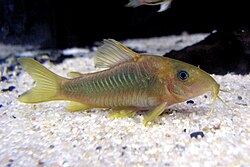
Corydoras catfish—often called Cory cats—are peaceful South American bottom dwellers. They are beginner-friendly once the aquarium is fully cycled, but they are social fish rather than disposable “cleaners.” Keep a real group, feed them directly and give them clean water plus open bottom space.
Quick answer: Most common Corydoras grow to 2–3 inches and need a group of at least six in a 20-gallon long aquarium. Pygmy Corys stay close to 1 inch and can live in a mature 10-gallon tank, although 15–20 gallons is easier to manage.
| Care requirement | General recommendation |
|---|---|
| Adult size | Approximately 1–4 inches, depending on species |
| Lifespan | Commonly 5–10 years |
| Minimum group | At least 6; larger groups are better |
| Tank size | 20-gallon long for most common species |
| Temperature | Usually 72–78°F, adjusted by species |
| pH | Approximately 6.5–7.8 for most captive-bred fish |
| Diet | Varied sinking omnivore foods |
| Substrate | Fine sand or smooth rounded gravel |
New to aquariums? Start with our Fish Care for Beginners guide to understand cycling, testing and routine maintenance before adding Corydoras.
Are Corydoras Catfish Good for Beginners?
Corydoras can be excellent beginner fish when added to a mature, stable aquarium. Their peaceful temperament fits many community tanks and most captive-bred fish accept prepared sinking foods readily.
The most common mistake is buying one or two Corys as cleanup animals. Corydoras are shoaling fish. A lone fish may survive, but it cannot display the confident group foraging and resting behavior seen in a proper school. Keep at least six, preferably of the same species; eight or more often produces even more natural behavior.
They cannot live on algae, fish waste or scraps alone. Food eaten by faster tank mates never reaches the Corys, so provide sinking food in places the group can reach. Corydoras also should not be among the first fish placed in an uncycled aquarium: their barbels and undersides remain close to the substrate, where accumulated waste and bacterial problems can cause damage.
Corydoras Catfish Size: How Big Do Cory Cats Get?
Corydoras catfish size varies widely by species. Tiny Pygmy Corys remain close to 1 inch, while common Bronze, Albino and Sterbai Corys generally reach 2.5–3 inches. Larger Cory-type catfish can approach 4 inches. Females are usually larger and broader than males, particularly when viewed from above.
| Cory type | Approximate adult size | Suggested starting tank |
|---|---|---|
| Pygmy Cory | 0.8–1.2 inches | 10 gallons minimum; 15–20 preferred |
| Dwarf/Salt-and-Pepper Cory | 1.2–1.5 inches | 10–15+ gallons |
| Panda Cory | 2–2.5 inches | 20-gallon long |
| False Julii Cory | 2–2.5 inches | 20-gallon long |
| Sterbai Cory | 2.5–3 inches | 20–30+ gallons |
| Bronze/Albino Cory | 2.5–3 inches | 20–30+ gallons |
| Emerald Cory-type catfish | 3–4 inches | 30+ gallons |
Store labels are not always accurate. Fish sold as Julii Corys are often False Julii or Three-Stripe Corys. Confirm the scientific name before calculating adult stocking.
What Is the Corydoras Catfish Max Size?
The Corydoras catfish max size commonly seen in home aquariums is approximately 3–4 inches, but most popular species remain around 2–3 inches. Maximum length is only part of tank planning: Corys forage horizontally, so a long tank with more bottom area is more useful than a tall tank of equal volume.
Scientific names have also changed. A 2024 phylogenomic revision divided many fish traditionally sold as Corydoras among genera including Brochis, Gastrodermus, Hoplisoma and Osteogaster. Retailers still use “Corydoras” as the familiar trade term. For accurate care, identify the species and verify its adult size and preferred temperature.
Corydoras Catfish Tank Size
A 20-gallon long aquarium is a practical minimum for six small or medium Corydoras. A 30-gallon tank gives the group more bottom space and provides a larger, more stable water volume. The tank must also accommodate every other fish in the community; a heavily stocked 20-gallon tank does not automatically have room for six additional Corys.
Pygmy Corys are the main exception. A mature 10-gallon aquarium can support a carefully managed group, but a 15- or 20-gallon long aquarium is easier to stabilize. Larger Bronze, Albino, Sterbai and Emerald types benefit from 30 gallons or more, especially in a mixed community.
Use a secure lid. Corys occasionally dart upward to swallow atmospheric air as part of their normal intestinal respiration. An occasional surface trip is normal; repeated gasping by the group requires an immediate check of oxygen, temperature, ammonia and nitrite.
Not sure how many gallons your tank actually holds? Use the Aquarium Size Calculator to convert tank dimensions into US gallons, UK gallons and litres before planning a Corydoras group.
Corydoras Substrate and Aquarium Setup
Fine aquarium sand is the preferred substrate because Corydoras can sift through it without encountering sharp edges. Smooth, rounded fine gravel can also work, but jagged material should be avoided. Barbel erosion is often linked to dirty substrate and bacterial exposure as well as physical abrasion, so both surface texture and cleanliness matter.
Provide open sand for group foraging, planted or shaded resting areas, smooth wood and rocks, gentle to moderate water movement, good oxygenation and a covered filter intake. Do not fill the entire bottom with decorations. Corys need shelter, but the group also needs unobstructed space to search for food.
Water Parameters for Corydoras Catfish
Most captive-bred Corydoras adapt to community water, but stability matters more than chasing one “perfect” number. A general starting range is 72–78°F and pH 6.5–7.8, with ammonia and nitrite always at 0 ppm. Keep nitrate as low as practical with testing, appropriate stocking and regular partial water changes.
Adjust the temperature by species. Panda and Peppered Corys often favor the cooler end, while Sterbai Corys are better suited to warmer community aquariums. Avoid sudden changes in temperature, pH or mineral content, and acclimate new arrivals carefully.
What Do Corydoras Catfish Eat?
Corydoras are omnivorous bottom feeders. Feed high-quality sinking catfish pellets, bottom-feeder wafers, insect-based granules and occasional frozen or live foods such as daphnia, brine shrimp or responsibly sourced worms. Rotate foods rather than depending on one product.
Corys do not live on fish waste and should not depend on flakes missed by other fish. Feed after faster fish have eaten or place sinking foods in several locations. Watch every individual: a thin belly, reduced activity or separation from the group may indicate poor access to food. Remove leftovers before they decay in the substrate.
Corydoras Catfish Pygmy Care
The Pygmy Cory is one of the smallest Cory-type fish, reaching about 1 inch. Unlike many larger Corys, it frequently schools in midwater as well as foraging on the bottom. Keep at least six, with eight to twelve preferred when tank size allows.
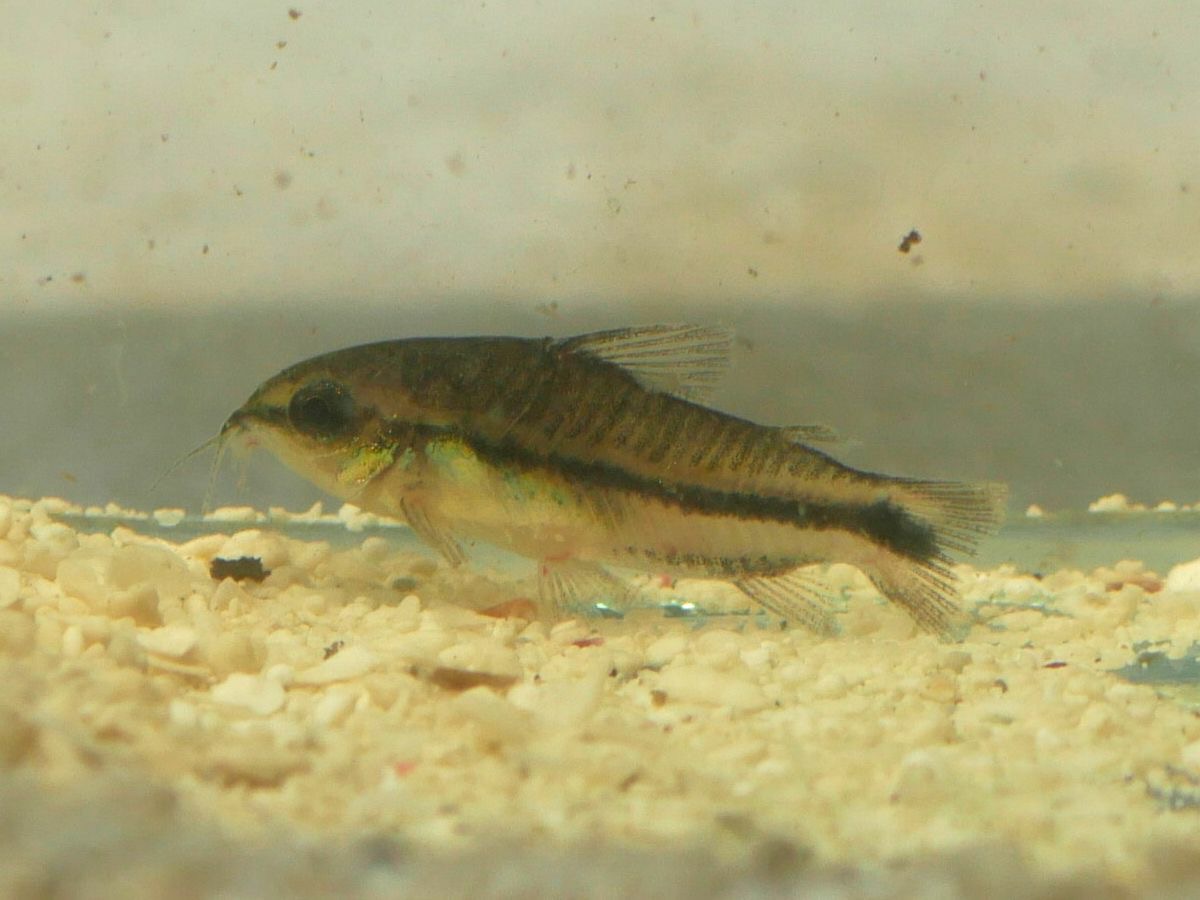
A mature 10-gallon tank is the minimum for a carefully managed group, while 15–20 gallons provides better stability and swimming room. Use a gentle filter with a covered intake, peaceful nano tank mates and tiny sinking foods that fit their small mouths. Larger fish may outcompete or swallow them.
Read the dedicated Pygmy Cory Care Guide for a species-specific setup, feeding plan and tank-mate list.
Corydoras Catfish Albino Care
The Albino Cory sold in most aquarium stores is an albino form of the Bronze Cory, traditionally called Corydoras aeneus and now frequently classified as Osteogaster aenea. Most reach 2.5–3 inches and need a group of at least six in a 20-gallon long aquarium, with 30 gallons preferred for a community.
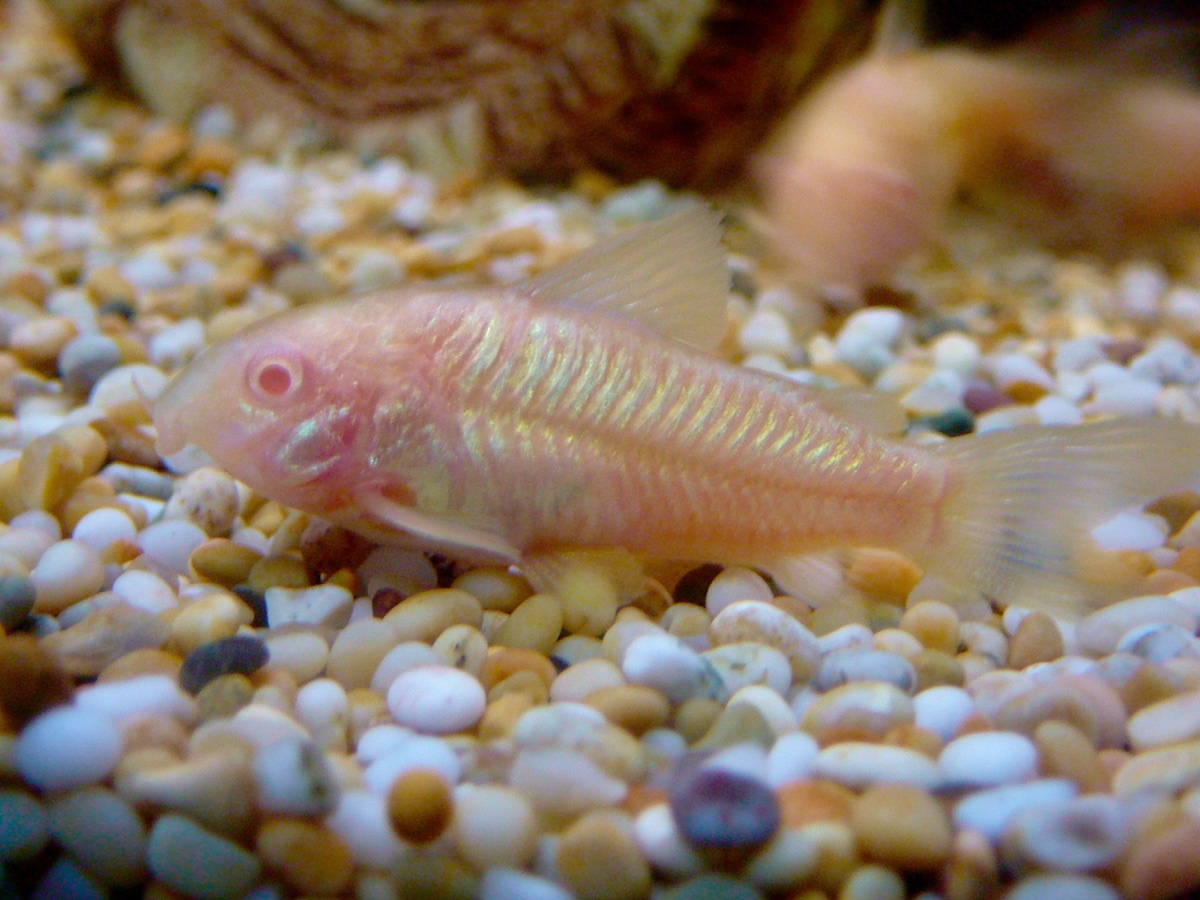
Albino Corys need the same clean water, varied diet and smooth substrate as Bronze Corys. Provide some shaded cover under plants or wood. Do not confuse a standard Albino Cory with the much smaller Albino Pygmy Cory; their adult sizes and tank requirements differ.
Popular Corydoras Catfish Types
Bronze and Albino Cory
Bronze Corys are widely available and adaptable. Albino Corys are normally a pale color form of the same species, with similar adult size and care.

Panda Cory
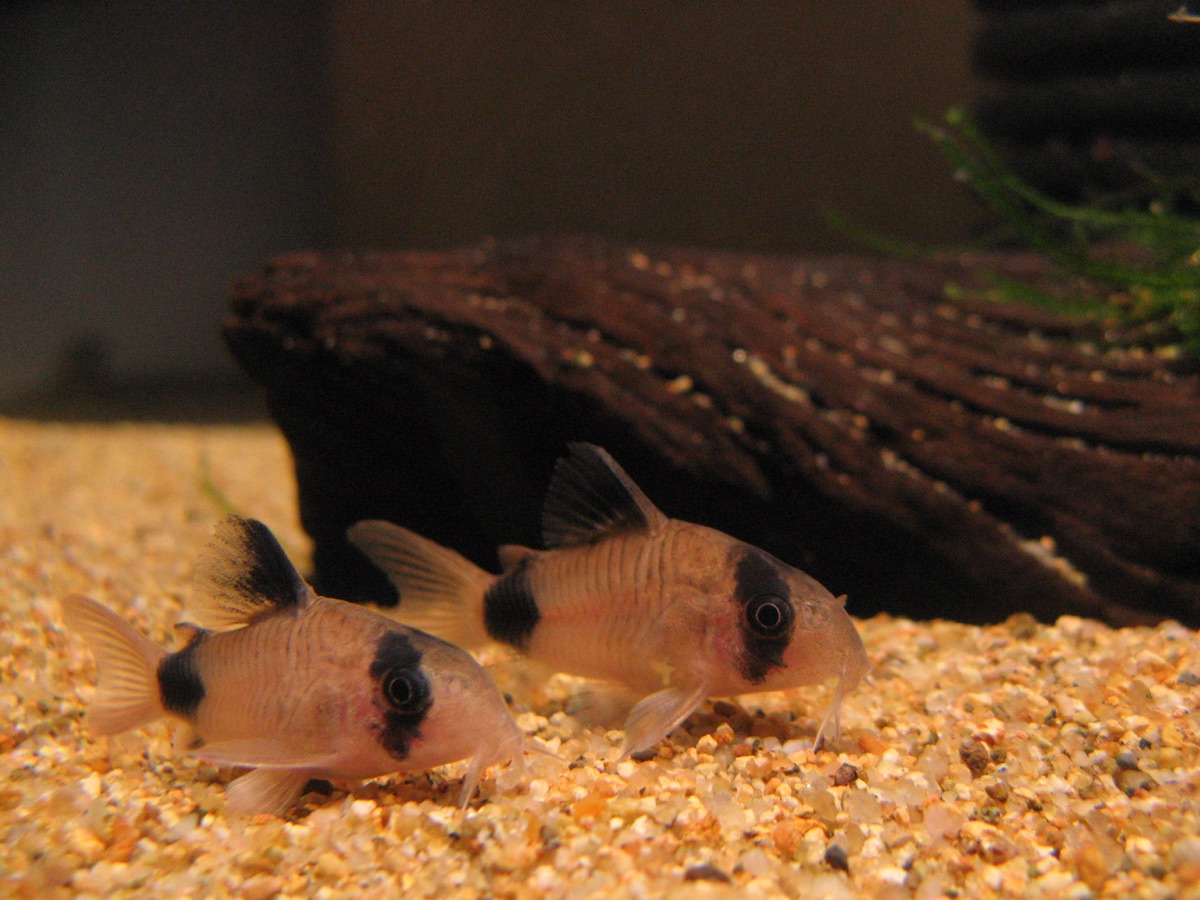
Panda Corys have black markings around the eyes, dorsal fin and tail and often prefer cooler water than Sterbai Corys. See the Panda Cory Care Guide.
Pygmy Cory
This tiny species uses both the bottom and middle of the tank and works well in mature nano communities when kept in a sufficient group.
Peppered and Sterbai Cory
Peppered Corys generally favor cooler community conditions. Sterbai Corys tolerate warmer water and may suit some large discus communities if all conditions match.


Julii and False Julii Cory
True Julii Corys are less common than retail labels imply; many “Julii” are Three-Stripe or False Julii Corys. Compare markings and care needs in the Julii Cory Care Guide.
Corydoras Catfish Price
Corydoras catfish price varies with species, size, rarity, source and local availability. Common Bronze or Albino Corys often cost roughly $4–$10 each in the United States. Panda, Peppered, Pygmy and False Julii Corys commonly fall around $6–$15, while Sterbai and rarer specialty varieties may cost $8–$40 or more.
Calculate the cost of a complete group rather than one fish. A $7 Cory represents at least $42 in livestock when six are required. Online orders may add overnight shipping and insulated packaging. Prices are indicative and should be reviewed periodically rather than treated as a guarantee.
Best Tank Mates for Corydoras Catfish
Corydoras can live with peaceful fish that share their temperature and water requirements. Potential companions include small tetras, rasboras, guppies, platies, danios in suitable temperatures, peaceful gouramis, Otocinclus, shrimp and snails.
Avoid aggressive cichlids, large predators and fish that harass bottom dwellers. Armor and fin spines do not make Corys attack-proof; a predator trying to swallow one can injure both fish. Peaceful behavior alone is not sufficient—temperature compatibility must also match.
Corydoras Compatibility Guides
Each pairing below reviews temperament, temperature overlap and feeding conflicts for that specific combination. Browse every pairing in the Corydoras Tank Mates hub, or run two species through the Fish Compatibility Checker.
Corydoras Catfish Behavior
Healthy Corydoras sift the substrate, rest together, search for food and make occasional quick trips to the surface. Pygmy Corys commonly hover in midwater. Increased group activity after a water change and males following females can be part of breeding behavior.
Constant gasping, rapid gill movement, loss of balance or the whole group remaining near the surface is not normal. Test ammonia, nitrite, temperature and oxygen immediately rather than assuming all surface visits are harmless.
Corydoras Catfish Breeding
Corydoras are egg layers. During spawning, a female holds eggs between her pelvic fins while a male fertilizes them, then attaches the adhesive eggs to glass, plants or spawning material. Condition a mature group with varied protein-rich foods and excellent water quality. A modest, slightly cooler partial water change is often used to simulate seasonal rainfall, but abrupt chilling should be avoided.
Adults may eat eggs, so breeders often transfer eggs or move the adults to a separate aquarium with a sponge filter and gentle aeration. Fertile eggs usually remain translucent and darken as the embryo develops; opaque white eggs are commonly infertile or fungused. Hatching time varies by species and temperature but is often several days.
Once the fry are free-swimming, offer suitably tiny foods such as microworms, newly hatched brine shrimp or commercial fry food. Maintain clean water with small, careful changes and protect fry from filter intakes.
Common Corydoras Health Problems
Warning signs include shortened barbels, a red belly, white patches around the mouth, clamped fins, rapid breathing, weight loss, isolation and continuous surface gasping. Test the water before reaching for medication. Poor water quality, trapped food and dirty substrate frequently contribute to health problems.
Cory-type catfish can be sensitive to some medications. Verify that both the product and dosage are appropriate before treatment, and seek help from a qualified aquatic veterinarian when a fish is seriously ill.
How to Choose Healthy Corydoras
Choose alert fish with complete barbels, clear eyes, intact fins, smooth breathing, normal balance and a rounded but not swollen abdomen. Avoid tanks containing dead fish, mouth erosion, ulcers or unexplained redness. Ask for the scientific name, adult size, current diet and the time the fish have spent in the store.
Quarantine new arrivals whenever possible. Quarantine reduces disease risk and lets shy fish begin feeding without competition before joining the display aquarium.
Frequently Asked Questions
How many Corydoras should be kept together?
Keep at least six, preferably of the same species. Groups of eight or more often display stronger social behavior when space permits.
Can Corydoras live in a 10-gallon tank?
A mature 10-gallon aquarium may house a group of Pygmy or Dwarf Corys under careful management. Most standard-sized Corydoras need a 20-gallon long tank or larger.
Do Corydoras clean the tank?
They may eat some food that reaches the bottom, but they do not replace filtration, substrate cleaning or water changes. They also produce waste and need their own complete diet.
Can different Corydoras types school together?
Different types may associate, but this is not a reliable substitute for a proper same-species group.
How long do Corydoras live?
They commonly live at least five years. With clean water, suitable food and good genetics, some may approach ten years.
Can Corydoras live with a betta?
Sometimes, but only with enough bottom space, compatible temperatures and a betta that does not attack them. A small tank is generally unsuitable for a betta plus a complete Cory group.
How We Reviewed This Corydoras Guide
FishCare AI does not present invented personal experience as evidence. This guide was assembled by comparing established aquarium husbandry references, a specialist Corydoradinae knowledgebase and current taxonomic research. Where sources recommend different tank sizes or water ranges, we use a cautious starting point and explain that the exact species, group size, aquarium footprint and total stocking must guide the final decision.
We prioritize specialist references, established care resources and peer-reviewed research for taxonomy or biological claims.
“Corydoras” covers fish with different sizes and temperature needs. Verify the scientific name before stocking.
Retail prices are approximate U.S. ranges and are marked for review rather than treated as permanent facts.
Water testing is the first troubleshooting step. Serious illness or medication decisions should involve an aquatic veterinarian.
If you find a factual error or have a primary source that improves this guide, please contact the editorial team. We record substantive corrections and update the review date when recommendations change.
References and Further Reading
- Aquarium Care Basics: Cory Catfish Care, Diet, Size and Lifespan
- Aqueon: Corydoras Catfish Care Guide
- Corydoras World: Corydoradinae Knowledgebase
- Dias et al.: Phylogenomic analysis and revised Corydoradinae classification
Care requirements should be adjusted to the exact species and aquarium conditions. Seek advice from a qualified aquatic veterinarian when illness is suspected.
Published July 6, 2026 · Updated September 11, 2026 · Reviewed by the FishCare AI editorial team