🔬 What Is a Fish Compatibility Checker?
A fish compatibility checker is an online tool that tells you whether two or more aquarium fish species can safely share the same tank. Rather than guessing or spending hours reading forum posts, you simply select your fish and get an instant answer backed by species data.
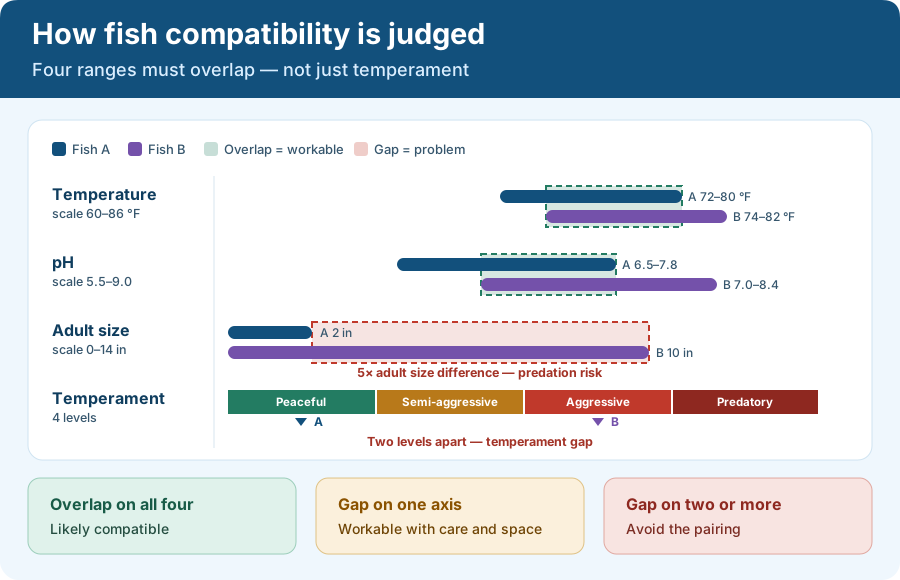
Our aquarium fish compatibility checker evaluates five factors: coldwater versus tropical temperature type, how much of each species' temperature range is genuinely shared, the same for pH, aggression level (low, medium, or high), and whether one fish is large enough to eat the other. A sliver of overlap is not treated as a match — the shared window has to cover a real part of the narrower fish's range.
This is especially valuable for beginner fishkeepers who may not yet know that a guppy's preferred pH range is very different from that of a Discus, or that a Betta fish will attack almost any other species it perceives as a rival — including its own reflection.
⚠️ Why Fish Compatibility Matters
Incompatible fish don't just fight — they suffer. When fish are kept outside their preferred water parameters, their immune systems are suppressed, making them far more susceptible to bacterial infections, parasites, and fin rot. A fish kept at the wrong temperature is essentially living in chronic stress every day of its life.
Aggression is the other major risk. Even a fish labeled "semi-aggressive" can seriously injure or kill smaller or more passive tankmates, particularly during feeding time or when territory is limited. Fish tank compatibility mistakes are the leading cause of unexpected fish loss for new hobbyists.
Using a fish compatibility tool before you buy removes guesswork. It is far easier — and kinder — to plan your community tank correctly upfront than to deal with sick or injured fish after the fact.
📋 How to Use Our Fish Compatibility Tool
Getting started takes about 30 seconds:
- Step 1: Type a fish name into the search box or click one of the quick-add buttons to add it to your list.
- Step 2: Repeat for each species you want to keep. You can add as many fish as you plan to stock.
- Step 3: Click Check Compatibility. The tool evaluates every possible pair simultaneously.
- Step 4: Read each result. Compatible pairs get a green checkmark; caution pairs get an orange warning; incompatible pairs show red with a clear explanation.
- Step 5: Remove a species that causes problems and replace it with a better alternative.
The fish compatibility calculator is free, requires no login, and works on any device. Use it as many times as you like while planning your ideal community aquarium.
📊 Understanding Compatibility Results
The three result categories each mean something specific and actionable:
Compatible (✅): The fish share a solid band of pH and temperature, and neither is aggressive or predatory toward the other. This is the green light to stock them together, provided your tank is appropriately sized. Remember that even compatible fish need sufficient space so territories don't overlap.
Use Caution (⚠️): One thing stands in the way — a medium-to-high aggression level, a predator/prey size gap, or a narrow shared temperature or pH window. Many experienced fishkeepers keep these pairs successfully in spacious, well-planted tanks. The result tells you which factor triggered the warning; hold the stated water range, provide multiple hiding spots, and watch behaviour for the first two weeks.
Not Compatible (❌): One or more critical factors — a coldwater/tropical mismatch, pH or temperature ranges that barely meet, or betta territoriality — make cohabitation unsafe. Forcing these fish together is likely to result in injury, disease, or death. Choose an alternative species instead.
🚫 Common Compatibility Mistakes
Even experienced hobbyists make these mistakes when stocking a new tank:
- Adding Betta fish with anything: Bettas are one of the most commonly misunderstood fish. Pet store displays often show them near community fish, leading buyers to assume they're compatible. They are not — male bettas are highly territorial and will stress or attack nearly any tankmate.
- Mixing tropical and coldwater fish: Goldfish thrive at 65–75°F while most tropicals need 76–82°F or warmer. Keeping them together forces one group to live in temperature stress indefinitely.
- Ignoring pH ranges: A Discus needs soft, slightly acidic water (pH 6.0–7.0) while Mollies prefer alkaline conditions (pH 7.5–8.5). Even if they seem peaceful, chronic pH mismatch suppresses immune function and shortens lifespans.
- Underestimating fin nippers: Tiger Barbs are notorious for nipping the flowing fins of Bettas, Angelfish, and Guppies. Keep them only in schools of 6+ to redirect their energy.
- Buying fish impulsively: Always use a fish tank compatibility checker before purchase, not after.
🌿 Building a Peaceful Community Tank
Once you've confirmed compatibility, thoughtful tank design makes the difference between a thriving community and a stressful one:
Use the water column wisely. Many fish naturally occupy different levels — surface dwellers (hatchetfish, danios), mid-water fish (tetras, rasboras), and bottom feeders (corydoras, plecos). Stocking each layer reduces territorial competition and makes the tank more visually dynamic.
School your schooling fish. Species like Neon Tetras, Cherry Barbs, and Harlequin Rasboras are far more confident and less stressed when kept in groups of six or more. A lone schooling fish is an anxious fish.
Add plants and hardscape. Dense plantings, driftwood, and caves break lines of sight and give subordinate fish refuges to escape to. This alone can mean the difference between a peaceful tank and constant chasing.
Introduce fish gradually. Add new fish in small groups over weeks rather than all at once. This allows your biological filter to keep up and reduces territorial disputes with established residents. Always quarantine new arrivals for two weeks before adding them to the main tank.
A well-planned aquarium using a reliable aquarium fish compatibility checker gives your fish the best possible quality of life — and gives you a display you'll enjoy for years.