How Much Should You Feed Your Fish? (In Seconds)
Find out exactly how much to feed your fish. Select your species, count, and meals per day to get a personalized feeding plan — including portion timing, food type, and waste-control guidance.
🍽 Get Your Feeding Plan
Results are general guidance. Adjust based on your fish's behavior and water quality.
📋 Your Feeding Plan
Select your species and fish count,
then click Calculate Feeding Plan
Three steps to a better feeding routine
The fish feeding calculator uses species-level metabolism data, group size, and meal frequency to calculate safe daily feeding amounts.
Choose your species
Select from 13 fish and invertebrate profiles. Each profile includes adult size, activity level, temperature needs, and social group guidance.
Enter your group size and meals
Enter how many fish you have and how many times per day you feed. The calculator scales portion time for your group, not just a single fish.
Get your feeding plan
Your result shows the recommended feeding duration in seconds, food type, waste removal timing, and target temperature range — all in one view.
What your feeding plan output means
Each result field gives you a different piece of the feeding puzzle. Here is what each one tells you.
Seconds per meal
This is the window of time during which all the food you put in should be eaten. Stop adding food when your fish begin to lose interest. Anything left after this time should be removed.
Food type suggestion
Different species need different food textures and nutrition profiles. The suggestion points you toward an appropriate base diet — pellets, wafers, vegetables, or live and frozen foods.
Waste removal rule
Uneaten food left in the tank decomposes into ammonia within hours. Removing leftovers after two to five minutes is one of the most important habits for maintaining water quality.
Temperature target
Fish metabolism is directly linked to water temperature. Feeding at the wrong temperature causes digestive issues and slows immune function. The range shown is the comfortable zone for your selected species.
Everything you need to know about feeding aquarium fish
Six detailed guides covering portion sizing, frequency, food types, overfeeding signs, and species-specific differences.
What Is a Fish Feeding Calculator?
A fish feeding calculator is a tool that estimates how much food to offer your fish based on species, group size, and daily meal frequency. Instead of guessing, you get a concrete portion guide measured in seconds — the time window during which all food should be consumed.
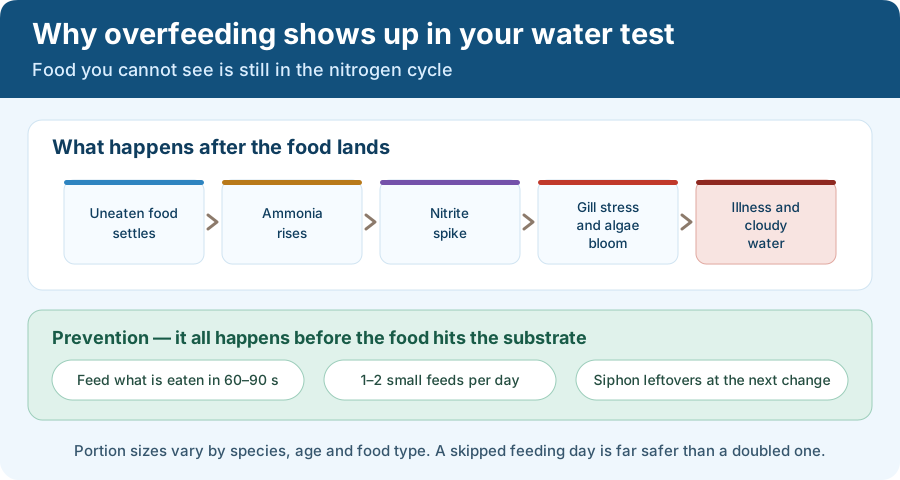
Overfeeding is widely considered the most common mistake in home aquariums. When fish are given more food than they can eat, the excess sinks to the substrate and decomposes, releasing ammonia and nitrite into the water. These compounds are toxic to fish even at low concentrations. A fish food calculator removes the guesswork and helps you build a consistent, safe routine.
The tool is especially useful when you add new fish to your tank, when you are transitioning to a new food brand or type, or when setting up an automatic feeder for vacations. It covers 13 of the most popular aquarium species, including freshwater tropical fish, goldfish, marine species, shrimp, and snails.
How Much Should You Feed Fish?
The traditional rule of thumb — feed only what your fish eat in two minutes — is a useful starting point, but the seconds-based portion guide used in this calculator is more precise. The correct amount depends on three variables:
- Adult body size — larger fish need more food per individual
- Group size — ten fish need proportionally more than two
- Meal frequency — two smaller feedings spread nutrition better than one large daily feeding
A single betta needs only 30 to 40 seconds worth of food per meal. A school of ten neon tetras fed twice daily should each receive a meal lasting about 45 to 55 seconds total. Goldfish, which are larger and more active at cool temperatures, need sinking food for 50 to 70 seconds per group meal.
The how much to feed calculator scales these estimates to your group automatically. If nitrate is rising faster than expected between water changes, or fish look bloated, reduce portion time by 20 to 30 percent before switching foods.
Fish Feeding Frequency Guide
The right feeding frequency depends on the age and type of fish you keep.
- Once daily — suitable for most healthy adult fish, especially slower species like bettas, goldfish, and angelfish. One daily feeding reduces waste and is easiest to maintain consistently.
- Twice daily — recommended for active schooling fish like guppies, neon tetras, and swordtails. Splitting the daily ration into two smaller meals improves nutrient absorption and mimics natural feeding patterns.
- Three times daily (small meals) — used primarily for fry grow-out tanks and juvenile fish that need constant nutrition to support rapid growth. Each meal should be very small — food consumed in under 60 seconds.
- Vacation feeding — healthy adult fish can fast safely for three to five days. For longer periods, use an automatic feeder set to once daily. Avoid vacation feeder blocks; they dissolve slowly and release far too much food.
Invertebrates like cherry shrimp and nerite snails graze constantly on biofilm and algae and need only supplemental feeding two to three times per week, not daily.
Choosing the Right Fish Food
Food type matters as much as quantity. Using the fish food calculator results alongside the right food type improves fish health significantly.
- Pellets — the best staple for most fish. Sinking pellets reduce gulping air (important for goldfish), floating pellets work for surface feeders. Always size pellets to the fish's mouth.
- Flakes — convenient but degrade quickly once opened. Buy smaller containers and store in a cool, dark place. Flakes lose nutritional value within two to three months.
- Frozen foods — brine shrimp, daphnia, bloodworms, and mysis shrimp are excellent protein supplements. Feed once or twice per week alongside a pellet base diet.
- Live foods — daphnia, wingless fruit flies, and microworms trigger strong feeding responses and support conditioning for breeding. Use only from trusted sources to avoid parasites.
- Vegetable foods — blanched zucchini, cucumber, and spinach are important for omnivores like goldfish, mollies, and platies. Snails and some shrimp also benefit from regular vegetable supplementation.
Signs You Are Overfeeding Your Fish
Overfeeding is the most frequent cause of water quality problems in home aquariums. Watch for these warning signs:
- Cloudy water — bacterial bloom caused by decomposing organic matter, usually appearing 24 to 48 hours after overfeeding events.
- Rising ammonia or nitrite — detectable with a liquid test kit. Any reading above 0 ppm indicates excess organic waste, often from uneaten food.
- Algae overgrowth — excess nutrients from decaying food feed green water algae, hair algae, and film algae on glass.
- Bloated fish — visible distension of the abdomen, especially in bettas and goldfish, is a sign of dietary overload or constipation from eating too much at once.
- Foul odor — a strong smell from the tank almost always indicates decomposing food or waste buildup in the substrate.
- Surface foam — persistent protein foam at the water surface can result from high organic load from overfeeding.
If you notice any of these signs, skip one or two feedings, do a 30 to 40 percent water change, and vacuum the substrate thoroughly before resuming normal feeding.
Species-Specific Feeding Notes
Different fish have meaningfully different needs that a feeding chart cannot always capture. Here are the key differences for popular species:
- Betta fish — feed once or twice daily, 30 to 40 seconds per meal. Prone to constipation; offer a fast day weekly and occasional daphnia to support digestion.
- Goldfish — need sinking pellets to prevent swim bladder problems from gulping air. Feed less in winter as metabolism drops with temperature. Offer blanched peas regularly.
- Corydoras — bottom-feeding scavengers that need sinking wafers or tablets. They compete poorly with surface feeders and may be underfed in community tanks if not given dedicated sinking food.
- Cherry shrimp — biofilm grazers. Supplement with shrimp pellets, blanched vegetables, and dried leaves two to three times per week. Remove uneaten portions within 24 hours to prevent ammonia spikes in planted tanks.
- Discus — require high-protein diets with frozen and live foods alongside quality pellets. Feed two to three times daily and maintain pristine water quality, as discus are extremely sensitive to ammonia.
- Nerite snails — primarily algae grazers. If the tank lacks sufficient algae, supplement with algae wafers and calcium-rich foods like cuttlebone to support shell health.
Fish feeding frequently asked questions
Answers to the most common questions about how much to feed fish, overfeeding, food types, and vacation care.
Most aquarium fish thrive on one to two feedings per day. Once daily is fine for adults of most species. Feeding twice a day with smaller portions is better for active fish like guppies, swordtails, and fry grow-out tanks. Avoid feeding more than three times daily unless you are raising fry, as excess food breaks down into ammonia and harms water quality.
Feed a betta fish only what it can eat in 30 to 40 seconds per meal, once or twice daily. That is typically two to four small pellets or a small pinch of flake food per feeding. Remove any uneaten food immediately. Bettas have small stomachs and are prone to bloating and constipation from overfeeding.
Overfeeding causes uneaten food to decompose in the tank, which raises ammonia and nitrite levels, clouds the water, and feeds harmful algae blooms. Fish that eat too much can become bloated, constipated, or develop fatty liver disease over time. Cloudy water, foul odors, and rapid algae growth are all early signs of overfeeding.
Yes. Healthy adult fish can safely go without food for one to three days without any harm. Many experienced fishkeepers schedule one fasting day per week to help fish digest fully and to reduce waste buildup. Skipping a day of feeding is much less harmful than overfeeding. Fry and very small fish should not be fasted for more than one day.
For most community freshwater fish, high-quality sinking or floating pellets sized to their mouths are the best staple food. Supplement with occasional frozen or freeze-dried foods such as brine shrimp, daphnia, or bloodworms, and offer blanched vegetables like zucchini or spinach for omnivores. Avoid low-quality flakes with fillers as a sole diet.
For trips up to five days, healthy adult fish can fast safely without an automatic feeder. For longer absences, use a reliable automatic feeder set to dispense small daily portions, ask a trusted person to feed every two to three days, or use slow-release vacation feeder blocks as a last resort. Overfed fish left in a tank by an inexperienced helper cause more harm than fasting.
Yes. Goldfish are kept at cooler temperatures (65 to 75 degrees Fahrenheit) and their metabolism slows significantly in cold water. Feed less in winter and reduce feeding when water temperature drops below 50 degrees. Goldfish also need sinking pellets rather than floating food to prevent gulping air, and they benefit from vegetable foods like blanched peas to prevent swim bladder issues.
Fish that are genuinely hungry will search for food along the substrate or gather near the feeding area when you approach the tank. However, many fish display food-searching behavior even when well-fed, so do not use this alone as a guide. A better indicator is whether fish eat eagerly within the first 30 to 60 seconds and consume all food offered. If food is left over after two minutes, you are offering too much.
Explore more aquarium care resources
Feeding is one part of keeping healthy fish. These guides and tools cover the full picture.
Betta Fish Care Guide
Tank setup, feeding, health, and solo vs community betta keeping.
Goldfish Care Guide
Tank size, sinking pellets, temperature, and lifespan planning.
Guppy Fish Care
Feeding guppies, breeding fry, and group size recommendations.
Aquarium Encyclopedia
Detailed profiles for 60+ freshwater and marine species.
Water Parameter Checker
Check pH, ammonia, nitrite, and nitrate for tank safety.
Compatibility Checker
See which species can safely share your aquarium.
How to Set Up a Fish Tank
Step-by-step beginner guide to cycling and stocking your first tank.