Swordtail fish need a cycled 20-gallon or larger tank, 72–78°F water, hard alkaline conditions, a tight lid, and at least three females per male. Feed a varied omnivore diet twice daily and provide plants where females and newborn fry can retreat. These swordtail fish care and breeding tips cover the complete tank setup, feeding routine, group ratio, pregnancy signs and fry care needed for long-term success.
- Tank size: 20 gallons for 3–4 fish; 30 gallons for a balanced community
- Temperature: 65–82°F, ideally 72–78°F; pH 7.0–8.3
- Hardness: 12–30 dGH
- Group ratio: at least 3 females per male to reduce harassment
- Lifespan: 3–5 years typically
- Diet: omnivore — flakes/pellets plus vegetables 2–3x weekly
- Breeding: livebearer, 28–42 day gestation, born free-swimming
- Tank mates: platies, mollies, guppies, peaceful tetras, corydoras
Swordtail Fish at a Glance
| Parameter | Recommended Range |
|---|---|
| Tank Size | 20 gallons minimum; 30+ for a group |
| Water Temperature | 65–82°F (18–28°C) |
| pH | 7.0–8.3 |
| Water Hardness | 12–30 dGH (moderately hard) |
| Ammonia / Nitrite | 0 ppm |
| Nitrate | Under 25 ppm |
| Group Size | At least 3 females per male |
| Adult Size | Males 5 in (13 cm) including sword; females 4 in (10 cm) |
| Lifespan | 3–5 years |
Swordtail Varieties
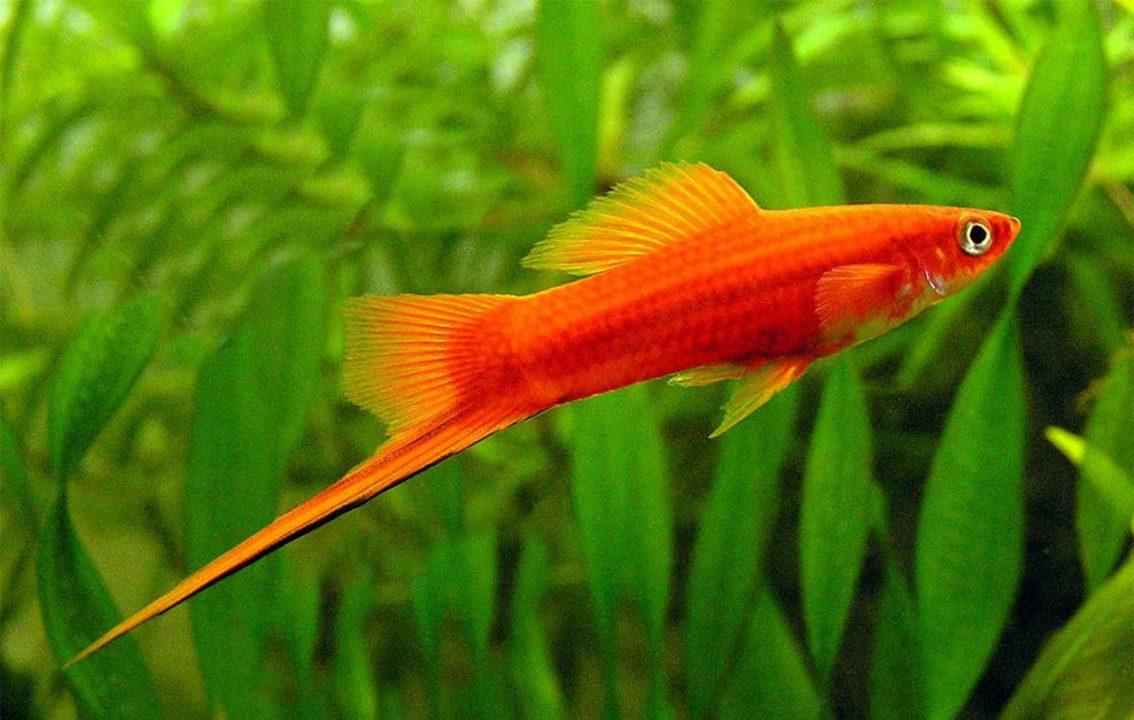
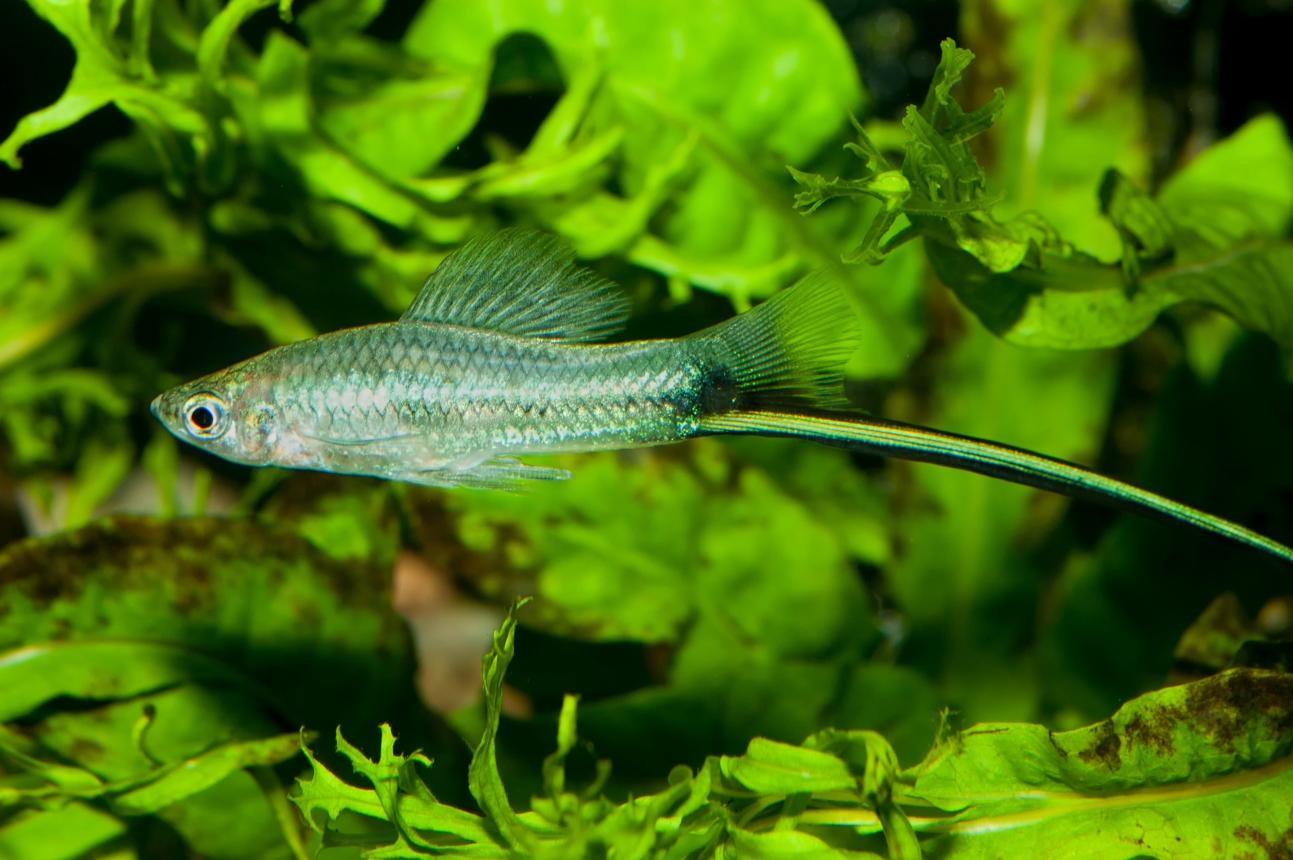
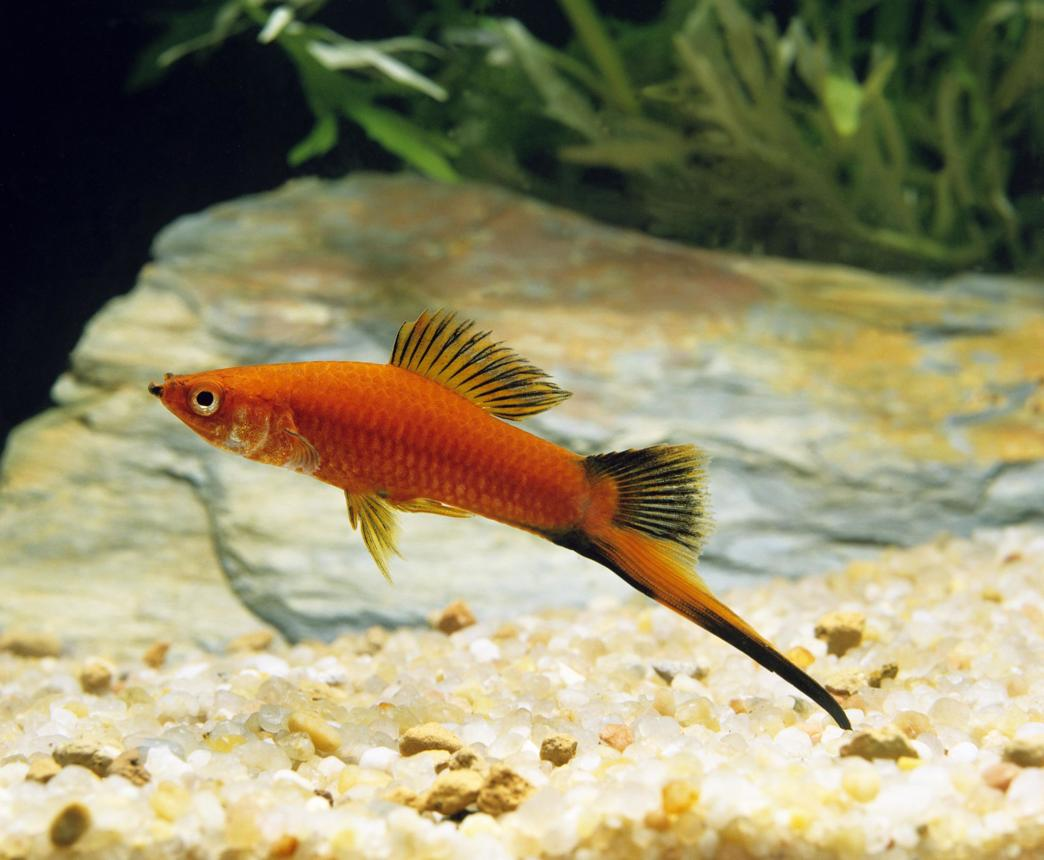
The swordtail gets its name from the elongated lower lobe of the male's tail fin, which forms a distinctive sword-like extension. Wild swordtails are green, but decades of selective breeding have produced a wide range of color varieties.
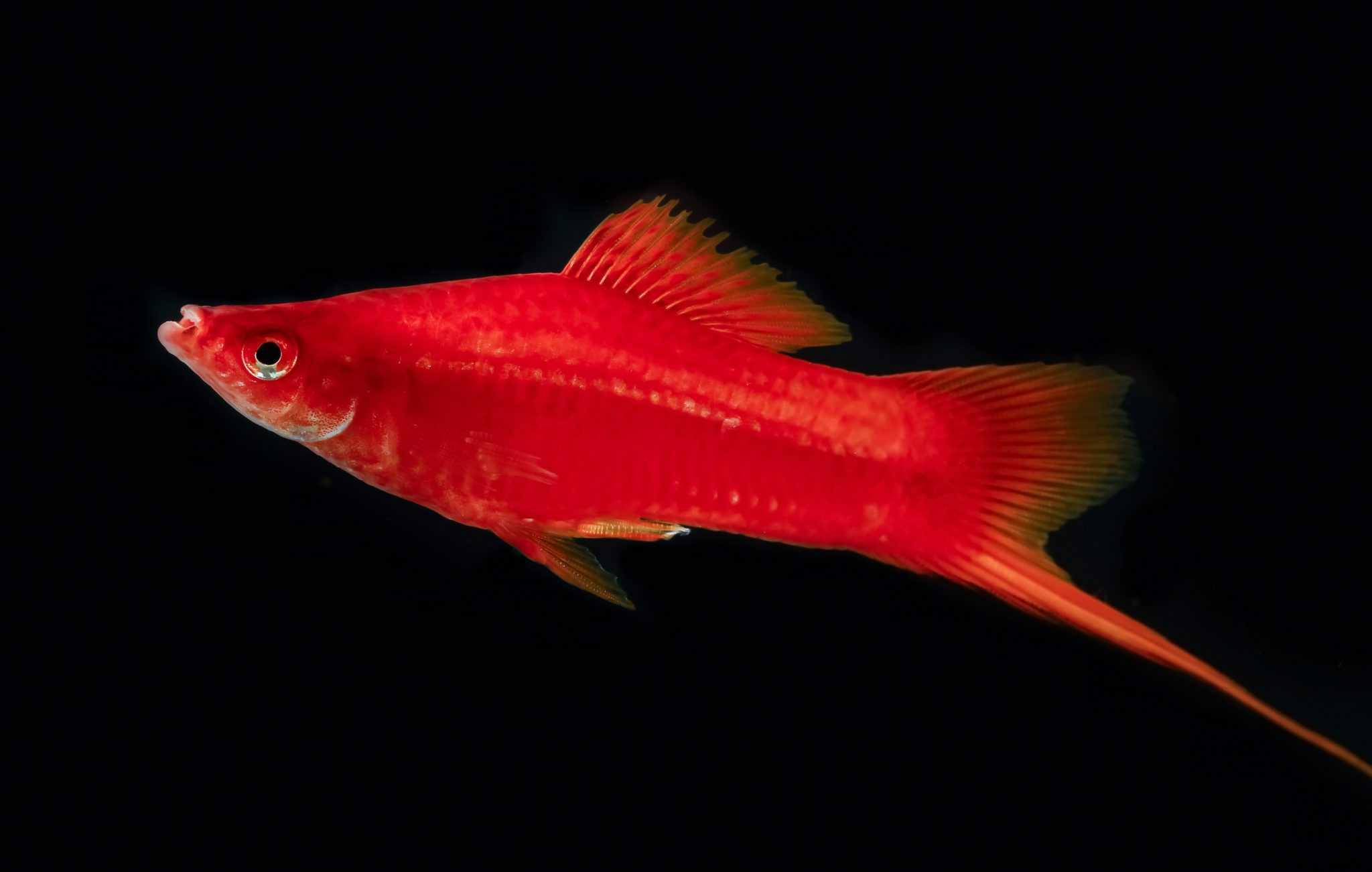
Red Swordtail: The most common variety and what most people picture when they think of swordtails. Vibrant red body with a red or yellow-edged sword. Red swordtail fish care is identical to other varieties — the red color is brightest in clean water with a varied, pigment-rich diet.
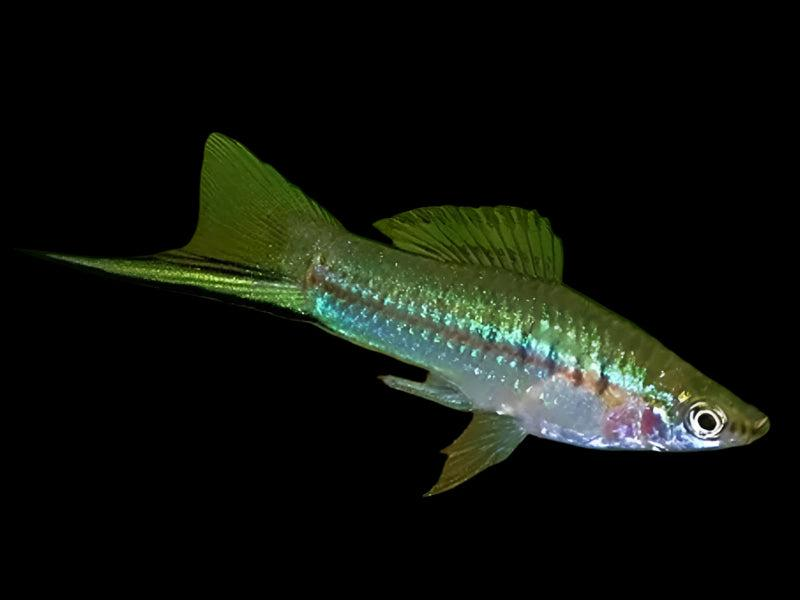
Green Swordtail: Closest to the wild type. Olive-green body with a red horizontal stripe and yellow sword. Slightly hardier than some selectively bred color morphs.
Black Swordtail: Dark body with varying amounts of black pigmentation. Can appear greenish-black or fully black depending on the strain.
Pineapple Swordtail: Yellow-orange body with a dark-edged sword. A popular color morph for community tanks.
Lyretail Swordtail: Both the upper and lower lobes of the tail are extended into points, creating a lyre shape. Requires more swimming room than standard swordtails.
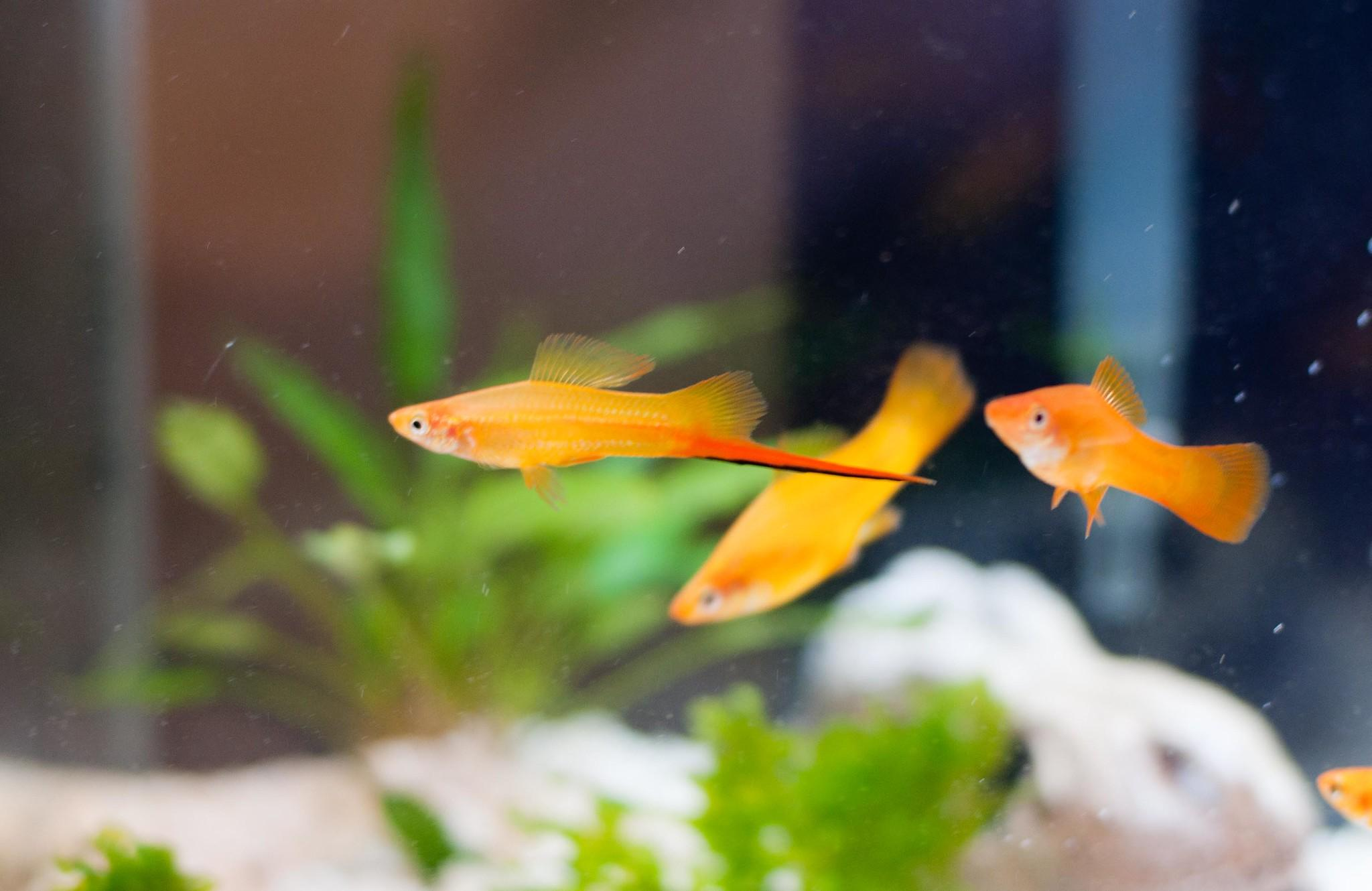
Marigold and Velvet Swordtail: Orange-gold color morphs. Good color payoff in well-maintained tanks.
Swordtail Tank Setup
A 20-gallon tank works for a small group of three to four swordtails, but 30 gallons is better for a balanced community. Choose a longer tank over a tall one — swordtails are horizontal swimmers and need length for their active movement patterns.
A tight-fitting lid is essential. Swordtails are powerful jumpers and will escape through any gap. Use a hang-on-back or canister filter with gentle to moderate flow. Swordtails are not sensitive to current but appreciate some open swimming space.
Plant the sides and back of the tank with medium-height plants like hornwort, java fern, or vallisneria. This provides visual breaks between males, hiding spots for females being chased, and cover for newborn fry. Leave open swimming area in the front and middle of the tank.
Water Parameters
Swordtails are among the most adaptable livebearers in terms of water chemistry. They tolerate a wide pH range from 7.0 to 8.3 and prefer moderately hard water between 12 and 30 dGH. This makes them compatible with many tap water supplies without special treatment.
Temperature is flexible too — swordtails can thrive anywhere from 65°F to 82°F, though the middle of that range (72–78°F) is ideal. At lower temperatures they are slightly less active and breed more slowly; at higher temperatures they are more active but more prone to oxygen depletion.
As with all fish, ammonia and nitrite must be 0 ppm. Perform 25% water changes weekly to keep nitrate below 25 ppm. Test water regularly, especially in a stocked livebearer tank where fry can rapidly increase the bioload.
Swordtail Feeding Guide
Swordtails are omnivores that are not demanding feeders. A quality tropical flake or micro pellet makes a good staple. Supplement two to three times weekly with vegetables (blanched zucchini or spinach) and protein treats (frozen brine shrimp or daphnia).
Feed small amounts twice daily. Overfeeding is common in swordtail tanks because they are enthusiastic eaters — remove uneaten food after three to five minutes to protect water quality. A varied diet brings out the best coloration, particularly in red swordtail varieties.
Swordtail Breeding Tips and Tricks
Swordtails are livebearers that breed readily without any special intervention. A healthy group will produce fry regularly, so plan for population management before buying your first swordtail.
Sex ratio: Keep at least three females per male, ideally more. A single male constantly pursues females for mating, and if females cannot escape or outnumber males, they become exhausted and stressed. A ratio of one male to three or four females reduces harassment significantly.
Identifying pregnant females: Pregnant females develop a rounded belly and a dark gravid spot near the anal fin. Gestation lasts 28–42 days depending on temperature. A female can store sperm from a single mating and produce multiple batches of fry without additional mating.
Protecting fry: Adult swordtails will eat their fry. Heavy planting with floating plants like java moss or water sprite gives newborn fry places to hide. Alternatively, move a pregnant female to a separate tank or breeder box a few days before birth. Return her to the main tank immediately after giving birth — she will also eat fry if left with them.
Raising fry: Swordtail fry are born large enough to eat crushed flakes immediately. Feed four to five times daily in small amounts. They grow quickly and can be moved to the community tank at six to eight weeks when too large to fit in adult mouths.
Sex change in swordtails: Female swordtails can sometimes change sex to male in a female-only tank or when male-to-female ratios are unbalanced. This is a natural hormonal response and does not indicate a health problem.
Compatible Tank Mates
Swordtails are peaceful toward most fish their own size or larger. Good tank mates include other livebearers (platies, mollies, guppies), peaceful tetras, corydoras catfish, dwarf gouramis, and peaceful rainbowfish. Avoid tiger barbs and other fin nippers that target the distinctive sword tail extension of males.
Avoid very small fish that may be accidentally eaten, and very aggressive cichlids. Swordtails can be mildly competitive with each other among males — provide enough visual breaks in the tank to reduce line-of-sight conflicts.
Common Health Problems
Fin Rot: Ragged, eroding fin edges. Almost always caused by poor water quality or bacterial infection. Improve water conditions first; treat with antibiotic if no improvement within a week.
Ich: White spots on body and fins. Raise temperature gradually to 82°F, increase aeration, and treat with ich medication.
Wasting despite eating: Suggests internal parasites. Treat with a broad-spectrum antiparasitic medication like praziquantel or metronidazole.
Aggression injuries: Males can injure each other or harass females excessively. Review male-to-female ratio and consider removing an extra male if fighting is severe.
Natural Habitat
Wild swordtails inhabit fast-flowing mountain streams, river tributaries, and warm springs from Veracruz, Mexico, through Guatemala and Honduras. The water is typically clear, moderately hard to hard, and alkaline — a sharp contrast to the soft, acidic water preferred by Amazonian species. Swordtails have been introduced (and become invasive) in warm waterways across the Americas, Africa, and Australia.
Sex Reversal
Swordtails (like platies) are known for spontaneous sex reversal: apparent females can develop male secondary sexual characteristics — including the sword fin extension — later in life, particularly when no males are present. These sex-reversed females are typically infertile but can cause confusion in single-sex groups.
Fish Care FAQ
Are swordtails good beginner fish?
Yes — swordtails are one of the best beginner livebearers. They are hardy, colorful, adaptable, and easy to feed. The main challenges are managing breeding population and providing a secure lid.
How do swordtail fish breed?
Swordtails are livebearers. Males fertilize females internally using their gonopodium, and females give birth to fully formed, free-swimming fry 28–42 days later.
How many females per male swordtail?
At least three females per male, ideally four or more. More females reduce individual harassment and keep all fish less stressed.
Why is my female swordtail hiding?
Either she is about to give birth and seeking a quiet spot, or she is being harassed by males. Add more plants for cover or check your male-to-female ratio.
Can male swordtails change to female?
No — but females can change to males. This happens when no males are present and is triggered by hormonal changes. The fish that changes sex becomes a functioning male and can fertilize remaining females.
This guide was reviewed for practical fish care safety, water quality accuracy, and beginner clarity. For severe illness, poisoning, or pond emergencies, contact an aquatic veterinarian or experienced local aquatics professional.