Molly Fish Care at a Glance
Mollies are warm-water livebearers in the genus Poecilia. They are colorful, social and often sold as beginner fish, but long-term success depends on a fully cycled aquarium and water with adequate mineral content. Common mollies usually grow larger and produce more waste than their pet-store size suggests.
| Care requirement | Practical starting point |
|---|---|
| Adult size | About 3–5 inches; some sailfins may be larger |
| Life span | Usually 3–5 years |
| Tank size | 20 gallons for a small common-molly group; 30+ for sailfins |
| Social group | At least 5 when space permits; 2–3 females per male |
| Temperature | Approximately 72–82°F (22–28°C), kept stable |
| pH | Approximately 7.5–8.2; avoid unstable correction |
| Diet | Plant-forward omnivore diet with varied prepared and supplemental foods |
Are Molly Fish Easy to Care For?
Mollies can suit an informed beginner, but the word “hardy” is easily misunderstood. They tolerate several habitats in nature, yet captive mollies commonly struggle in newly established tanks, soft acidic water, crowded livebearer communities or tanks where males constantly pursue females.
Before buying them, test tap-water pH, GH and KH, cycle the aquarium and confirm the adult size of the chosen variety. A keeper with naturally soft water may find another species easier than repeatedly altering chemistry. Stable, appropriate water is safer than chasing a recommended number with sudden additives.
Molly Fish Origin, Natural Habitat and Behavior
Different molly species and populations occur in North, Central and parts of South America, including slow-moving rivers, coastal lagoons, mangrove areas and waters influenced by salinity. This diversity explains why broad care ranges appear online, but it does not mean every store-bought molly requires brackish water.
The University of Florida describes common mollies as peaceful shoaling livebearers that consume mostly plant material while also accepting higher-protein foods. In aquariums they browse surfaces, occupy the middle and upper levels, and benefit from companions of their own kind without behaving as a tightly synchronized school.
Molly Fish Size: How Big Do Mollies Get?
Many common short-fin mollies reach roughly 3–5 inches. Sailfin forms can approach 5–6 inches depending on species, sex, genetics and care, while females are generally larger and fuller-bodied than males. Balloon mollies look shorter because selective breeding compresses the body.
Plan around adult size, activity and waste production—not the juvenile seen in a shop. Larger mollies need a longer swimming area, stronger biological filtration and more separation from persistent males. A tank that seems spacious for three young fish can become crowded after growth and repeated births.
Molly Fish Life Span: How Long Do Mollies Live?
The typical molly fish life span is about three to five years. Both A-Z Animals and the University of Florida list this range, while WebMD says well-cared-for mollies can live around five years. These numbers are estimates rather than guarantees because species, selective breeding, age at purchase and previous care all affect the outcome.
Water quality and chronic stress usually matter more than a single “longevity food.” A mature biofilter, zero ammonia and nitrite, suitable hardness, stable temperature, restrained feeding and compatible tank mates give a molly the best chance of reaching its expected life span. Poor transport history or mass-production genetics may still limit an individual fish.
How to Help Molly Fish Live Longer
Quarantine new arrivals, avoid sudden changes, keep an appropriate female-to-male ratio and track water results over time. Watch body condition rather than encouraging rapid growth through heavy feeding. Small regular maintenance is safer than allowing waste to accumulate and then performing dramatic corrections.
Molly Fish Tank Size: Is 20 Gallons Enough?
A 20-gallon aquarium is a practical minimum for a small group of common short-fin mollies, consistent with the WebMD and A-Z Animals guidance. A 30-gallon or larger tank is more forgiving, especially for a mixed-sex group, multiple species or any plan to retain fry. Sailfin mollies need the extra length and volume.
Tank shape matters. Choose a standard or long footprint instead of a narrow tall tank because mollies use horizontal swimming space. Use the tank size calculator to compare dimensions, then subtract room for decor and account for every adult fish rather than relying on a simple inch-per-gallon rule.
How Many Molly Fish Should Be Kept Together?
WebMD recommends at least five mollies and notes that solitary fish can become stressed. The tank must still be large enough for the group. Do not crowd five mollies into a small aquarium merely to meet a social number; group size and water volume have to work together.
For mixed sexes, keep at least two—and preferably three—females for each male to spread mating attention. Avoid an all-male group unless the tank is large, structured and closely observed. Females purchased without a male may already be carrying developing young or may later produce fry from stored sperm.
Molly Fish Tank Setup: Filter, Plants and Swimming Space
Use a mature filter with sufficient biological media, moderate circulation and good surface movement. Arrange hardy plants around the sides and back, leaving an open lane for swimming. Floating roots and dense stems provide retreat areas for females and hiding places for fry without forcing every fish into the same corner.
A heater, thermometer and secure lid complete the basic setup. Choose decor without sharp edges that could damage large fins. The substrate can be sand or smooth gravel; mineral-rich rock may influence chemistry, so test the tank after additions instead of assuming a decorative stone is inert.
Molly Fish Water Parameters: pH, GH, KH and Nitrogen Waste
A practical pH target is about 7.5–8.2, matching WebMD’s published range, with adequate GH and KH to support mineral balance and pH stability. Exact hardness needs vary among stocks, but persistently soft, acidic water is a common stressor. Test both the aquarium and source water before adding buffers or minerals.
Ammonia and nitrite should remain at 0 ppm. Control nitrate through sensible stocking, plant growth, feeding and partial water changes. If a molly clamps its fins, gasps, shimmies or isolates, measure water first. Our water parameter checker can organize the readings, but it does not replace a reliable liquid test or professional diagnosis.
Best Molly Fish Temperature and Heater Settings
Mollies are tropical fish. A stable range around 72–82°F (22–28°C) covers common recommendations, but the correct setting should also suit every tank mate. Stability is more important than moving repeatedly between the extremes of the range.
Use an adjustable heater sized for the aquarium and verify it with a separate thermometer. Keep the tank away from direct sun, exterior doors and air-conditioning drafts. Warmer water holds less oxygen, so maintain surface movement and investigate persistent rapid breathing rather than simply increasing heat.
Do Molly Fish Need Aquarium Salt or Brackish Water?
Not routinely. Some wild populations inhabit coastal or brackish environments, but most captive mollies can live in correctly mineralized freshwater. Salt changes salinity; it does not supply the calcium and magnesium measured by GH and therefore is not a substitute for correcting unsuitable soft water.
A planned brackish aquarium requires measured salinity and compatible inhabitants. Never add salt casually to a community containing sensitive plants, invertebrates or soft-water fish. For illness, diagnose the problem and follow species-appropriate veterinary guidance rather than treating salt as a universal cure.
Molly Fish Food: What and How to Feed Mollies
Mollies are omnivores with a strong plant-grazing component — in the wild they eat algae, plant matter, small invertebrates and biofilm. In the aquarium, a varied diet keeps color vibrant and immune function strong.
Molly Fish Feeding Schedule
Feed adult mollies 1–3 small meals per day, offering only what they consume within 1–2 minutes. Remove any uneaten food immediately — leftover food decays quickly and raises ammonia. Fry need 3–4 smaller feedings per day due to faster growth rates. Use the fish feeding calculator as a starting point, then adjust based on what you observe.
Signs of overfeeding: long strings of waste, cloudy water, uneaten food on the substrate. Reduce portion size and increase water change frequency if this occurs.
Molly Fish Types: Black, Dalmatian, Balloon, Lyretail and Sailfin
Most molly varieties sold in pet stores belong to two species — Poecilia sphenops (short-fin or common molly) and Poecilia latipinna (sailfin molly) — with dozens of color and fin-shape forms bred from them. Core care requirements are similar across varieties, but adult size and swimming needs differ.
| Variety | Key features | Notes |
|---|---|---|
| Black molly | Solid jet-black; 3–4 in | Most widely available; good beginner choice |
| Dalmatian molly | White body with black spots | Same care as common molly |
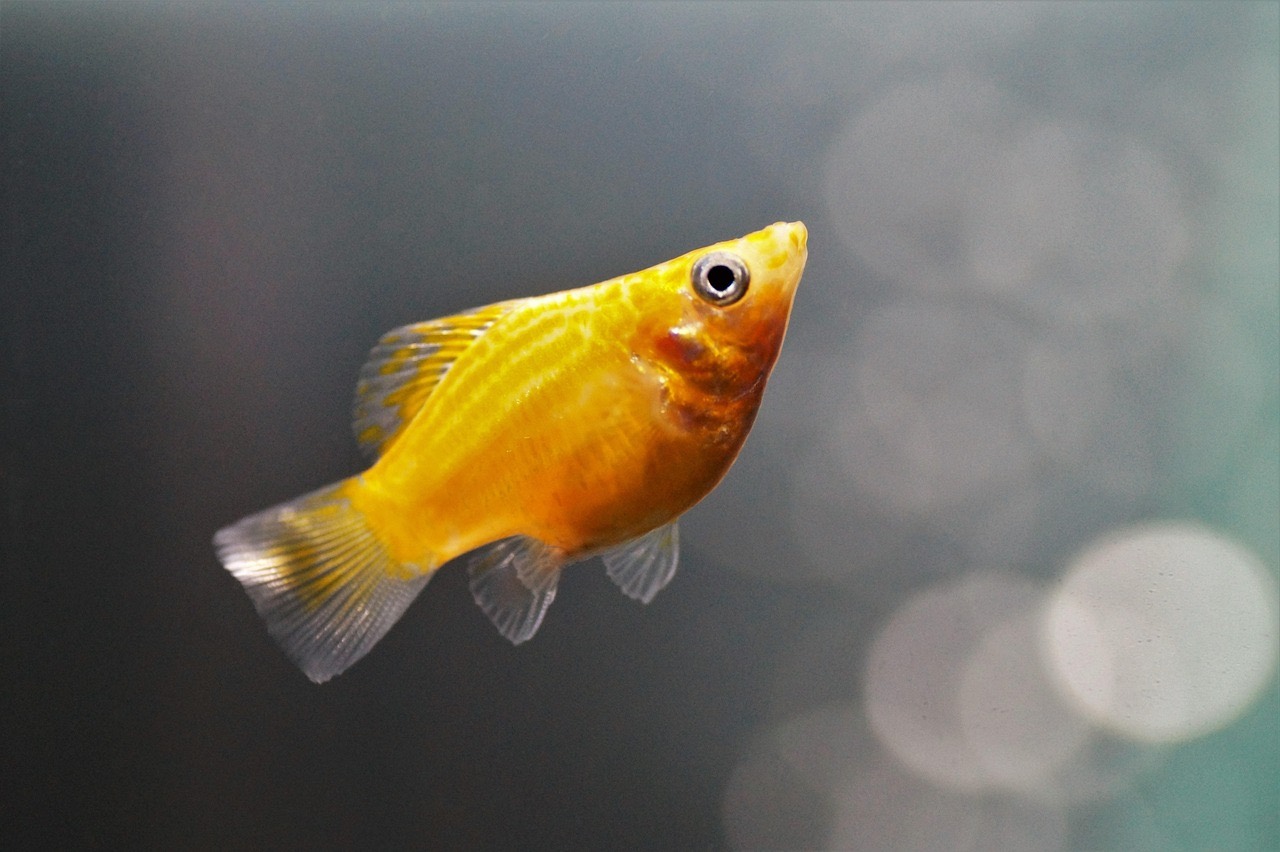
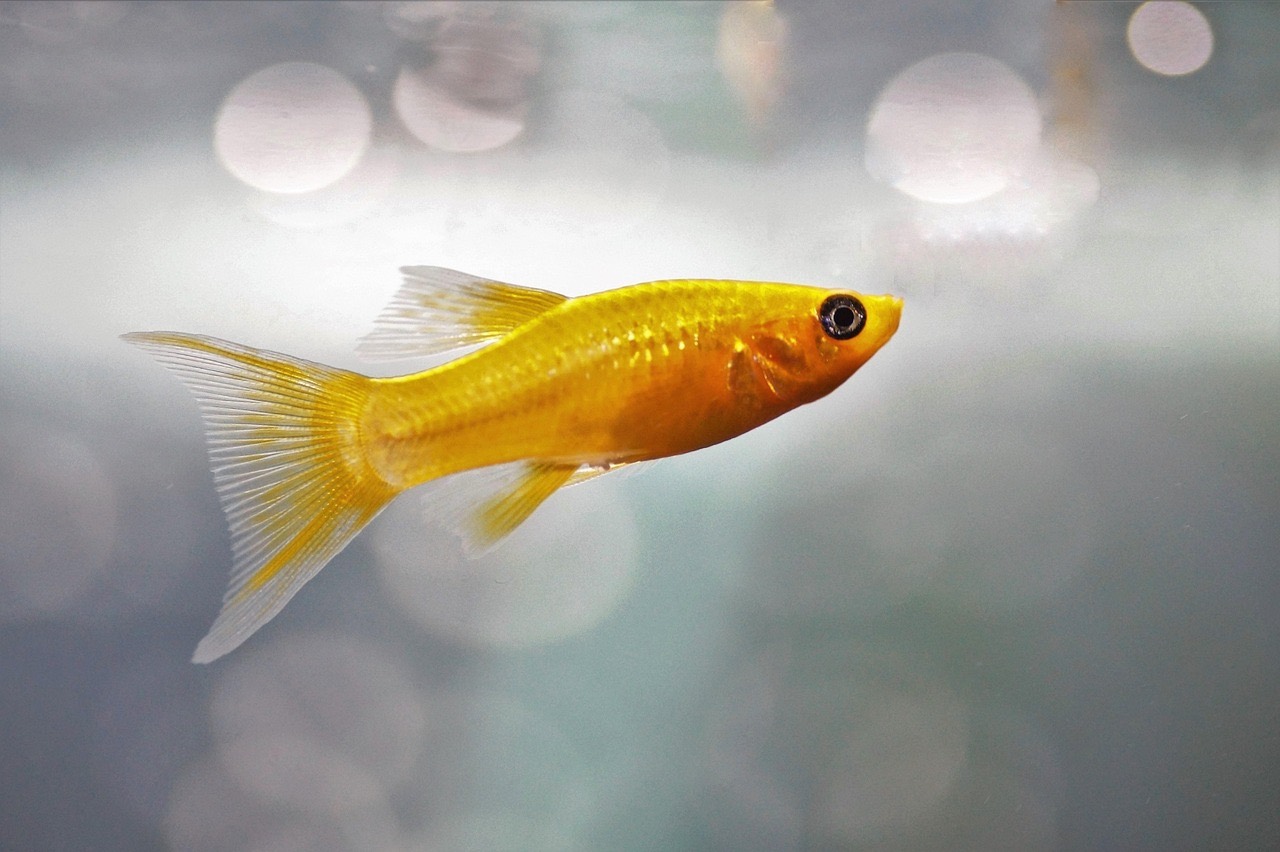
| Gold dust molly | Yellow-gold with black speckles | Color may fade in poor water |
| Marble molly | Multi-color marbling pattern | Pattern varies individually |
| Creamsicle molly | Orange and white coloring | Lyretail form also available |
| Lyretail molly | Extended lyre-shaped tail fin | Fins more vulnerable to nippers |
| Balloon molly | Round, compressed body; 2–3 in | Created by selective breeding; less robust, more prone to swim bladder issues — not ideal for beginners |
| Sailfin molly | Enlarged male dorsal fin; up to 6 in | Needs 30-gallon minimum; more territorial males |
When buying any variety, look for active, alert fish with intact fins, clear eyes and full body condition. Avoid fish with clamped fins, bent spines, sunken bellies, rapid breathing or white spots.
Best Molly Fish Tank Mates
Mollies do well in community tanks with peaceful species that share warm (72–82°F), moderately hard, alkaline water. The best tank mates are fish that won't compete aggressively at feeding time or stress mollies with fin-nipping.
| Good tank mates | Why they work |
|---|---|
| Platies | Fellow livebearers; same water chemistry and temperature |
| Guppies | Same genus family; compatible parameters — watch for hybridization |
| Swordtails | Peaceful livebearers; similar size and needs |
| Tetras (emperor, black skirt, serpae) | Peaceful schooling fish; stay in mid-water |
| Gouramis (honey, pearl) | Calm temperament; share warm water preference |
| Rasboras & rainbowfish | Active but non-aggressive; compatible hardness range |
| Danios (zebra, giant) | Hardy and active; tolerate similar parameters |
| Cory catfish (bronze, emerald) | Peaceful bottom dwellers — confirm hardness tolerance by species |
| Bristlenose pleco | Algae eater; peaceful with mollies |
Avoid: aggressive cichlids, tiger barbs (fin-nippers), long-finned slow fish that attract nibbling, small shrimp (cherry, amano — will be eaten), goldfish (different temperature needs) and any soft-water species sensitive to harder alkaline conditions.
Run a molly fish compatibility check to verify water chemistry, adult size, temperament and group capacity before adding a specific pair to your tank.
Male vs Female Molly Fish
Adult males have a narrow, pointed gonopodium—a modified anal fin—while females have a broader fan-shaped anal fin. Females are usually larger and fuller-bodied. Male sailfins can develop a particularly prominent dorsal fin used in display and competition.
Sex young fish carefully before planning a group, and recheck as juveniles mature. A female kept without males can still give birth if she mated previously. Constant pursuit, hiding, fin damage or weight loss indicates that the ratio, layout or stocking needs attention.
Molly Fish Breeding Time: Gestation and Signs of Pregnancy
Mollies are livebearers — fertilization is internal and females give birth to free-swimming fry rather than laying eggs. Gestation takes 30–60 days depending on species, water temperature and individual variation. Warmer water (closer to 80°F) tends to shorten the cycle. A female can store sperm from a single mating and produce multiple broods without a male being present.
Signs of pregnancy include a progressively rounder, fuller belly and a darkening gravid spot (a dark patch near the anal fin, more visible on lighter-colored fish). Near delivery, the belly may appear squared or boxy. Do not confuse normal late-stage pregnancy with dropsy — raised scales, pinecone appearance or inability to swim normally are health warnings, not birth signs.
Breeding Timeline: Pregnancy → Birth → Fry Care
| Stage | What to look for | What to do |
|---|---|---|
| Before breeding | A cycled tank, stable water and a workable male-to-female ratio. | Plan tank capacity and rehoming before keeping mixed sexes. |
| Pregnancy: 30–60 days | Fuller belly and, on lighter fish, a darkening gravid spot. | Keep water stable; do not use a health problem as a presumed birth sign. |
| Near birth | A late-stage belly can look squared or boxy. | Provide dense floating plants or a separate cycled rearing plan. |
| Birth and first weeks | Free-swimming fry need cover from adults. | Feed small portions 3–4 times daily, use gentle filtration and keep ammonia and nitrite at 0 ppm. |
| Grow-out: 4–9 months | Fry develop into juveniles at different rates. | Monitor crowding and arrange homes before the main tank is overstocked. |
Molly Fish Fry Care and Population Planning
A single brood can contain 10 to over 100 fry. Adults provide no parental care and will eat newborns given the chance. The simplest way to save fry is to add dense floating plants — water sprite, water wisteria and hornwort work well — giving fry places to hide until large enough to avoid predation.
For more controlled fry raising, move the pregnant female to a separate cycled tank a few days before birth and return her after delivery. Feed fry finely crushed flake food or a commercial fry formula in small, frequent portions (3–4 times per day). Add baby brine shrimp as they grow. Use gentle sponge filtration to avoid sucking up fry, keep ammonia and nitrite at zero and plan for where juveniles will go before they crowd the main tank — mollies breed prolifically and population can outpace tank space quickly.
Molly Fish Tank Cleaning and Weekly Maintenance
Check temperature and behavior daily. Test water regularly and use nitrate trends, stocking and feeding to choose a partial water-change schedule; a weekly routine is useful for many established molly tanks. Match replacement water temperature and treat chlorine or chloramine before it reaches fish.
Vacuum accessible debris and rinse reusable filter media in removed aquarium water when flow slows. Do not replace all biological media or deep-clean every surface at once. Record changes in pH, GH and KH, because unexplained chemistry drift can reveal exhausted buffering or unsuitable replacement water.
Common Molly Fish Diseases and Warning Signs
Warning signs include white spots, velvet-like dust, frayed fins, flashing, rapid breathing, clamped fins, loss of appetite, abnormal swelling and isolation. These signs overlap among parasites, bacterial problems and environmental stress, so appearance alone is not always enough for a diagnosis.
First test ammonia, nitrite, nitrate, pH, GH, KH and temperature. Quarantine new fish when practical. Treat only after identifying the likely cause and checking medication safety for every species, plant and invertebrate present. Seek an aquatic veterinarian for persistent, severe or unexplained illness.
Why Is My Molly Fish Shaking or Shimmying?
“Shimmying” describes rocking or trembling with little forward movement. It is a symptom rather than a single disease and is commonly associated with environmental stress—especially unsuitable mineral balance, unstable temperature, ammonia or nitrite, transport shock and other illness.
Test water immediately, increase aeration if breathing is rapid and compare the result with the fish’s established conditions. Correct changes gradually unless a toxin requires an emergency water change. Adding salt without measuring water hardness can hide the real problem and expose tank mates unnecessarily.
Why Are My Molly Fish Dying?
Frequent causes include adding fish to an uncycled aquarium, soft or unstable water, ammonia or nitrite exposure, abrupt acclimation, overcrowding, chronic mating harassment and disease introduced with new livestock. Mollies may also arrive weakened by transport or poor prior conditions.
After a death, remove the fish, test water, document symptoms and recent changes, and avoid immediately buying a replacement. Increase aeration if the group is gasping. Correct verified environmental problems first, isolate affected fish when appropriate and obtain professional diagnostic help when losses continue.
Molly Fish Care FAQ
Molly Fish Price and Where to Buy
Mollies are one of the most affordable and widely available aquarium fish. Common varieties are stocked at most pet stores year-round, making them easy to find locally or online.
| Variety | Typical price (per fish) |
|---|---|
| Black molly, common short-fin | $2–$4 |
| Dalmatian, gold dust, creamsicle | $3–$6 |
| Balloon molly | $3–$6 |
| Lyretail molly | $4–$8 |
| Sailfin molly | $5–$12 |
| Rare or show-quality varieties | $10–$25+ |
Where to Buy Molly Fish
Local fish stores (LFS): Best option — you can inspect the fish in person. Check for active behavior, clear eyes and intact fins before buying.
Chain pet stores (PetSmart, Petco): Carry common varieties reliably. Quality varies by location — ask how long fish have been in-store.
Online retailers: Aquarium Co-Op, LiveAquaria and specialty breeders offer rarer varieties and healthier stock. Fish are shipped overnight with live-arrival guarantees.
Always quarantine new mollies for 2–4 weeks before adding them to an established tank, regardless of where they came from. This prevents introducing disease or parasites to your existing fish.
Related Molly Care Guides and Aquarium Tools
Editorial Method and Care-Safety Notes
This page compares the three requested sources, favors the University of Florida veterinary-college page for its institutional animal-care context, and treats broad tolerances as different from conservative everyday targets. FishCare AI does not claim personal keeping experience or veterinary review that has not been independently documented.
This guide is educational and cannot diagnose disease. Seek an aquatic veterinarian or qualified fish-health professional for severe, persistent or unexplained symptoms.
Reviewed and rewritten: August 1, 2026.
References
- A-Z Animals — Molly Fish Lifespan: How Long Do Mollies Live?
- WebMD — What to Know About Mollies, medically reviewed by Kathleen Claussen, DVM (August 14, 2024).
- University of Florida College of Veterinary Medicine — Small Animal Clinical Sciences Freshwater Tank.
- Aquarium Co-Op — Care Guide for Mollies.
- PetMD — Molly Fish Care Sheet.
White Molly: A Ninth Common Color Morph
White mollies are a pale white or cream color morph commonly sold alongside black, Dalmatian, gold dust, marble, creamsicle, lyretail, balloon and sailfin forms. Color does not change the need for a cycled tank, stable mineral-rich water, an appropriate group and enough adult swimming space. When choosing any variety, prioritize alert behaviour, intact fins, clear eyes and good body condition over a particular color pattern.