Aquarium Substrate Calculator
Calculate how much gravel, sand, soil, or other substrate you need for your aquarium. Enter your tank dimensions and desired substrate depth to get the estimated volume and weight.
🪨 Substrate Calculator
Results update as you type. Substrate is worked out from the tank footprint and bed depth, so tank height is not needed.
Quick tank presets
Selecting a preset fills in the standard footprint for that tank, not its capacity. Tank capacity alone isn't enough to calculate substrate accurately because aquariums with the same volume can have different footprints — a 20 gallon long and a 20 gallon high hold the same water but need noticeably different amounts of gravel.
How to Use the Aquarium Substrate Calculator
Four short steps from tank measurements to a gravel, sand or soil shopping figure.
Enter length and width
Measure the inside of the tank, front to back and side to side, in inches or centimetres. Height is not needed.
Choose a substrate depth
Two inches suits most community tanks. Add a back depth as well if you want a bed that slopes up towards the rear.
Select your substrate
Gravel, fine gravel, sand, aquarium soil, crushed coral or aragonite — or enter a custom density from the bag.
Read volume and weight
You get bed volume in litres, US gallons and cubic inches, an estimated weight in pounds and kilograms, and a suggested purchase amount.
How Much Substrate Do I Need for My Aquarium?
The relationship is simple: tank footprint × substrate depth = substrate volume. The footprint is the inside length multiplied by the inside width — the area of glass the substrate actually covers. Multiply that area by the depth of bed you want and you have the volume you need to buy.
This is why a fish tank substrate calculator asks for dimensions rather than gallons. Substrate lies on the bottom pane, so the tank's height contributes nothing to the amount you need. Two aquariums rated at the same capacity can require very different quantities: a 20 gallon long has a 30 × 12 inch footprint, while a 20 gallon high is 24 × 12 inches. At a 2 inch bed depth that is 11.8 litres versus 9.4 litres — about 25% more substrate for the same nominal tank size.
So when you ask "how much substrate do I need," the honest answer is that it depends on the shape of the bottom of your tank and how deep you want the bed to be. Measure the inside dimensions with a tape measure — outside measurements include the glass thickness and the trim, and on a rimmed tank that can add half an inch or more to each side.
One more practical point: the volume the calculator returns is the volume of the bed after it settles flat. Rocks, driftwood and large decorations displace some substrate, while a sloped or terraced aquascape needs a little more than a flat bed of the same average depth. That is what the 10% purchase buffer in the result panel is for.
Not sure your tank is the right size in the first place? The Tank Size Calculator converts the same dimensions into US gallons and litres of water volume.
Aquarium Gravel Calculator
Used as an aquarium gravel calculator, this tool works out gravel quantity the same way it handles every other substrate: it multiplies the tank footprint by the bed depth to get a volume, then multiplies that volume by gravel's bulk density to estimate weight. Gravel is sold by weight, so the weight figure is the one you take to the shop; the volume figure is the one that stays true no matter which brand you buy.
Typical gravel depths
Most freshwater community tanks run 1–2 inches of gravel. That is enough to anchor decorations, hide the base of the tank and give beneficial bacteria a surface to colonise, without creating pockets deep enough to go anaerobic. Planted tanks with gravel usually go deeper, 2–3 inches, so root systems have somewhere to sit. Below about an inch, gravel tends to shift and expose the glass whenever fish dig or you run a siphon.
Why gravel density varies
Aquarium gravel is usually quartz or river stone with a solid density around 2.6 g/cm³, but a bag of gravel is not solid rock — roughly 40% of it is air between the grains. That gives a bulk density near 1.6 g/cm³ for standard 2–5 mm gravel. Finer grades pack more tightly and come in slightly heavier per litre; large, irregular or coated decorative gravels can be lighter. Damp gravel weighs more than dry gravel straight from the bag.
Treat the number as an estimate
Because bulk density shifts with grain size, shape, coating and moisture, two 20 lb bags of "aquarium gravel" from different manufacturers will not fill the same space. The calculator's weight output is a good planning figure, typically within about 10% for common gravels, and the purchase buffer is there to absorb the rest. If a product lists both weight and volume on the bag, entering that as a custom density gives you the most accurate result.
Aquarium Sand Calculator
The same tool doubles as an aquarium sand calculator — select Sand from the substrate list and the density switches from a gravel value to a sand value of about 1.55 g/cm³. The geometry does not change; only the weight per litre does.
- Shallow beds work better. Sand grains sit tightly together, so 1–2 inches is the usual range. Deep, undisturbed sand can develop anaerobic pockets, which is why sand beds are generally kept shallower than gravel beds unless you are deliberately running a deep sand bed in a marine system.
- Planted tanks. Sand alone holds few nutrients, so planted setups often cap a nutrient-rich soil layer with sand, or use root tabs. If you are layering, run the calculator once for each layer's depth and add the results.
- Compaction. Sand settles and compacts more than gravel, so a freshly poured bed loses a little depth in the first few weeks. Stirring lightly during water changes, or keeping burrowing snails or Malaysian trumpet snails, keeps it turned over.
- Density differences. Fine silica sand, play sand, aragonite sand and black diamond blasting sand all weigh different amounts per litre. Aragonite is around 1.45 g/cm³ and also raises hardness and pH, which suits African cichlid and marine tanks but not soft-water community tanks.
Once your bed is in, keep an eye on the water while it clears — the Water Parameter Checker is a quick way to confirm pH and hardness have not shifted after adding a mineral-based substrate such as crushed coral or aragonite.
What Substrate Depth Should I Use?
Aquarium substrate depth is the input people are least sure about, so here are the ranges most setups fall into.
| Aquarium setup | Typical substrate depth |
|---|---|
| Bare-bottom / minimal | 0–0.5 in (0–1.3 cm) |
| Decorative gravel | 1–2 in (2.5–5 cm) |
| Standard freshwater aquarium | 1–2 in (2.5–5 cm) |
| Planted aquarium | 2–3 in (5–7.6 cm) |
| Deep-rooted planted aquarium | 3–4 in (7.6–10 cm) |
| Sand bed | 1–2 in (2.5–5 cm) |
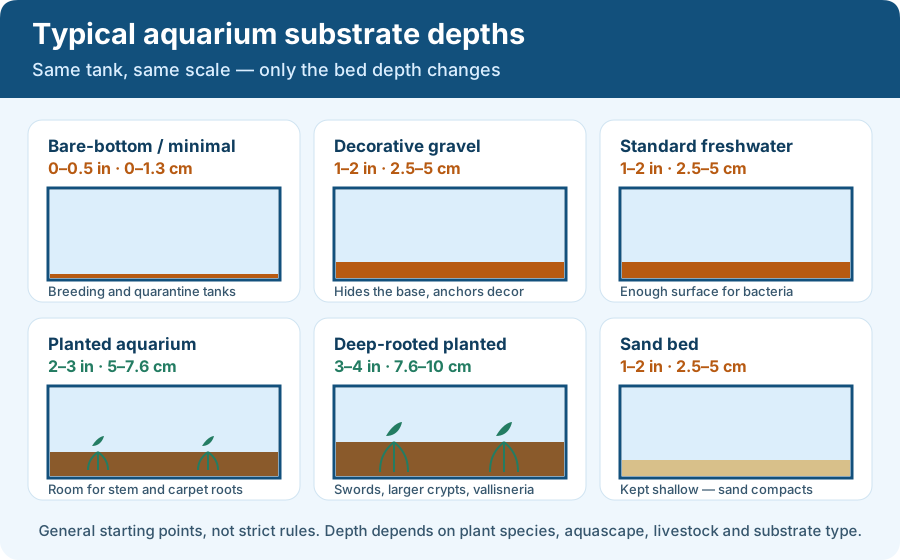
Note: these are general starting points, not strict rules. Substrate depth depends on plant species, aquascape design, livestock, and substrate type. Burrowing fish and loaches need enough depth to dig without hitting glass; bare-bottom setups are common in breeding and quarantine tanks precisely because they are easier to keep clean.
Gravel vs Sand vs Aquarium Soil
Weight is only half the decision. Here is how the four most common substrate families compare in practice.
| Substrate | Best for | Typical depth | Advantages | Considerations |
|---|---|---|---|---|
| Gravel | General freshwater community tanks | 1–2 in | Cheap, easy to vacuum, water flows through it, anchors decorations well | Food and waste fall between grains; inert, so rooted plants need root tabs |
| Sand | Corydoras, loaches, cichlids, natural biotopes | 1–2 in | Safe for barbel-feeding bottom dwellers, natural look, waste stays on top where it is easy to remove | Compacts over time, can cloud the water when disturbed, needs gentle cleaning technique |
| Aquarium soil | Planted and aquascaped tanks | 2–3 in | Holds nutrients for roots, lightweight per litre, often buffers pH downward for soft-water plants and shrimp | Most expensive option, breaks down over 1–3 years, can leach ammonia when new so tanks need cycling |
| Crushed coral | African cichlids, brackish and marine tanks, hard-water species | 1–2 in | Raises carbonate hardness and stabilises pH, durable, does not break down | Unsuitable for soft-water fish and plants; coarse pieces trap debris |
Mixing is normal. A common approach is a nutrient layer capped with 1 inch of sand or fine gravel — calculate each layer separately and add the volumes together.
How Is Aquarium Substrate Calculated?
Nothing here is hidden. These are the exact formulas the calculator runs.
Flat substrate bed
Substrate Volume = Tank Length × Tank Width × Substrate DepthSloped substrate bed
Average Depth = (Front Depth + Back Depth) ÷ 2Substrate Volume = Tank Length × Tank Width × Average Depth
Estimated weight
Estimated Weight = Substrate Volume × Bulk Density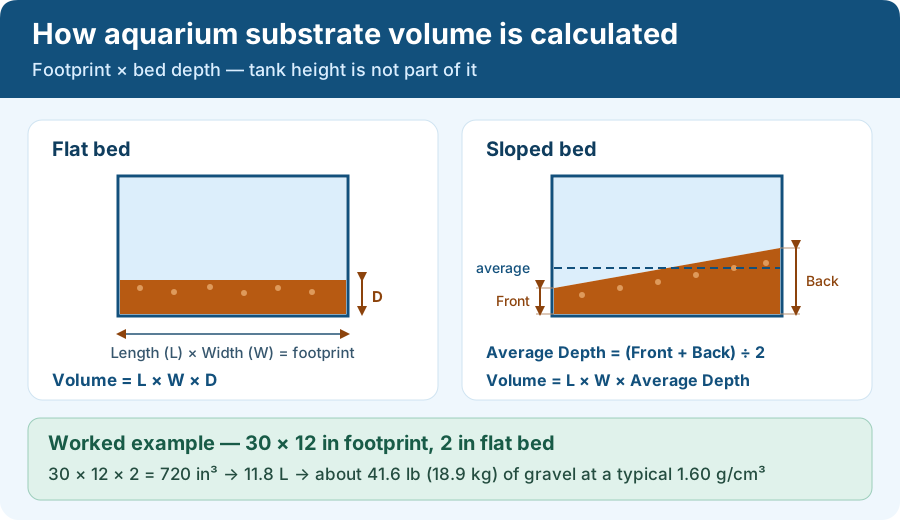
Worked example
A 20 gallon long aquarium with a flat gravel bed:
- Tank footprint: 30 × 12 inches
- Substrate depth: 2 inches
- Volume: 30 × 12 × 2 = 720 cubic inches
- Converted: 720 × 16.387 cm³ = 11,799 cm³ = 11.8 litres (3.12 US gallons)
- Weight at a gravel bulk density of 1.60 g/cm³: 11.8 × 1.60 = 18.9 kg ≈ 41.6 lb
- With a 10% buffer: about 46 lb (20.8 kg) to buy
Change only the substrate and the weight changes with it. The same 11.8 litre bed is roughly 18.3 kg (40.3 lb) in sand, about 15.9 kg (35.1 lb) in crushed coral, and only about 8.8 kg (19.5 lb) in baked aquarium soil. Volume is the constant; weight follows the material.
| Substrate type | Bulk density used | Weight of a 10 L bed |
|---|---|---|
| Gravel (2–5 mm) | 1.60 g/cm³ | 16.0 kg (35.3 lb) |
| Fine gravel (1–3 mm) | 1.65 g/cm³ | 16.5 kg (36.4 lb) |
| Sand | 1.55 g/cm³ | 15.5 kg (34.2 lb) |
| Aquarium soil | 0.75 g/cm³ | 7.5 kg (16.5 lb) |
| Crushed coral | 1.35 g/cm³ | 13.5 kg (29.8 lb) |
| Aragonite | 1.45 g/cm³ | 14.5 kg (32.0 lb) |
| Custom | Your value | Depends on the value entered |
Aquarium Substrate Amount by Tank Size
Volumes below are for standard aquarium footprints. They are shown as volume rather than weight because a litre of aquarium soil and a litre of gravel weigh very different amounts — pick your substrate in the calculator to convert any of these into pounds and kilograms.
| Tank size | Typical footprint | 1-inch bed | 2-inch bed | 3-inch bed |
|---|---|---|---|---|
| 5 gallon | 16 × 8 in | 2.1 L (128 in³) | 4.2 L (256 in³) | 6.3 L (384 in³) |
| 10 gallon | 20 × 10 in | 3.3 L (200 in³) | 6.6 L (400 in³) | 9.8 L (600 in³) |
| 20 gallon long | 30 × 12 in | 5.9 L (360 in³) | 11.8 L (720 in³) | 17.7 L (1,080 in³) |
| 29 gallon | 30 × 12 in | 5.9 L (360 in³) | 11.8 L (720 in³) | 17.7 L (1,080 in³) |
| 40 gallon breeder | 36 × 18 in | 10.6 L (648 in³) | 21.2 L (1,296 in³) | 31.9 L (1,944 in³) |
| 55 gallon | 48 × 13 in | 10.2 L (624 in³) | 20.5 L (1,248 in³) | 30.7 L (1,872 in³) |
| 75 gallon | 48 × 18 in | 14.2 L (864 in³) | 28.3 L (1,728 in³) | 42.5 L (2,592 in³) |
Notice the 29 gallon and the 20 gallon long: same footprint, same substrate requirement, 9 gallons apart in capacity. And the 55 gallon needs slightly less substrate than a 40 gallon breeder despite holding more water, because the breeder is wider front to back.
These estimates are based on standard footprints. Measure your actual aquarium for the most accurate result.
Frequently Asked Questions
Common questions about substrate quantity, gravel weight and bed depth.
Related Aquarium Tools
Use these alongside the substrate calculator to plan the rest of the setup.
Tank Size Calculator
Turn the same length and width measurements into water volume in US gallons and litres.
Aquarium Planner
Build a full setup checklist — equipment, cycling and stocking — before you buy anything.
Water Parameter Checker
Check pH, ammonia, nitrite and nitrate after adding a new substrate or soil layer.
Fish Compatibility Checker
See which species can share the tank once the aquascape and substrate are settled.
Also useful: the Fish Feeding Calculator for portion sizes once your tank is stocked, the Aquarium Equipment Calculator for filter and heater sizing, and the tank setup guide for the order to do everything in.
Methodology and accuracy
Substrate volume is calculated from the aquarium footprint and desired bed depth. Weight estimates use approximate bulk density and may vary by product, grain size, moisture content, and packing.
The volume half of this calculation is pure geometry and is exact for the dimensions you enter — length × width × depth, with unit conversions carried out at full precision internally and rounded only for display (1 in = 2.54 cm, 1 L = 1,000 cm³ = 0.264172 US gal, 1 kg = 2.20462 lb). The weight half is an estimate, because bulk density is a property of the specific product in the bag rather than of "gravel" or "sand" as categories. The densities listed above are typical dry values for common aquarium substrates; if your bag states both a weight and a volume, entering that figure under Custom density will give you a closer answer.
The depth ranges and substrate comparisons on this page are practical recommendations drawn from common freshwater aquarium practice, not measured results. They are starting points to adapt to your own plants, livestock and aquascape.