The discus fish care requirements that matter most are volume, heat and clean water: a practical setup starts with at least 55 gallons, with 75 gallons or more preferred for a group of six. Keep captive-bred discus at a stable 82–86°F, ammonia and nitrite at 0 ppm, nitrate ideally below 10 ppm, and provide mature biological filtration with gentle flow. Stability matters more than chasing a perfect pH; match the breeder's water and avoid sudden changes.
4-Stage Discus Tank Cycling Plan
| Stage | Goal | Do not move on until |
|---|---|---|
| 1. Build the system | Set up the tank, heater, filter, gentle flow and test equipment. | Temperature and equipment operation are stable. |
| 2. Establish biofiltration | Cycle the aquarium before adding the intended adult group. | Ammonia and nitrite test at 0 ppm. |
| 3. Verify water and maintenance | Match the breeder's water as closely as practical and plan water changes. | Readings remain stable over time without abrupt pH correction. |
| 4. Stock gradually | Add a compatible group, feed conservatively and test more often during adjustment. | Fish are eating normally and water quality remains stable. |
For reliable discus fish care, plan the adult group and maintenance schedule before buying juveniles. Use the discus aquascape guide for a planted layout, the water parameter checker for current readings, and the feeding calculator to avoid excess food in warm water.
6 Water Parameters and Discus Requirements at a Glance
| Parameter | Recommended Range |
|---|---|
| Tank Size | 55 gallons minimum; 75+ for a group of 6 |
| Water Temperature | 82–88°F (28–31°C) |
| pH | 6.0–7.0 (soft, slightly acidic) |
| Water Hardness | 1–8 dGH (soft water) |
| Ammonia / Nitrite | 0 ppm (zero tolerance) |
| Nitrate | Under 10 ppm ideally, 20 ppm maximum |
| Group Size | 6+ for a stable social hierarchy |
| Lifespan | 10–15 years with proper care |
How Big Do Discus Fish Get?
Most adult discus reach about 5–7 inches (13–18 cm) from nose to tail and can be nearly as tall as they are long. Genetics, early nutrition, water quality and stocking pressure all affect final size. A juvenile sold at 2–3 inches still needs an adult-sized aquarium; do not choose a permanent tank based on its purchase size.
Because discus have a tall, laterally compressed body, usable tank height and front-to-back depth matter as well as gallon capacity. Allow open swimming space and visual breaks so lower-ranking fish can move away from dominant individuals.
How Long Do Discus Fish Live?
Discus fish commonly live 10–15 years with stable warm water, good nutrition and prompt health care. Chronic nitrate exposure, crowding, repeated temperature swings, poor juvenile growth and untreated parasites can shorten that lifespan. Consistency is more important than repeatedly adjusting the water to chase an exact number.
Is a 2.5-Foot Aquarium Large Enough for Juvenile Discus?
A 2.5-foot aquarium can work temporarily as a grow-out tank for a few small juvenile discus, but it is not a suitable permanent home for an adult group. Juveniles need frequent meals and produce concentrated waste, so a short tank can become unstable quickly even when the fish still look small. Move them before crowding begins rather than waiting for growth to stall.
| Tank | Practical use | Important limit |
|---|---|---|
| 2.5-foot tank | Temporary grow-out for a few small juveniles | Not a permanent group tank; test water frequently |
| 55 gallons | Minimum adult setup for a carefully managed small group | Limited margin for hierarchy and water-quality mistakes |
| 75 gallons | Preferred starting point for about six adult discus | Use strong biological filtration and gentle flow |
| 90+ gallons | Larger group or more layout flexibility | Still requires warm, clean, oxygenated water |
Tank length alone does not determine capacity. Check the actual water volume, front-to-back depth, adult fish count, filtration and maintenance schedule. A tall body shape benefits from vertical clearance, while sufficient width and open swimming space help subordinate fish avoid constant pressure.
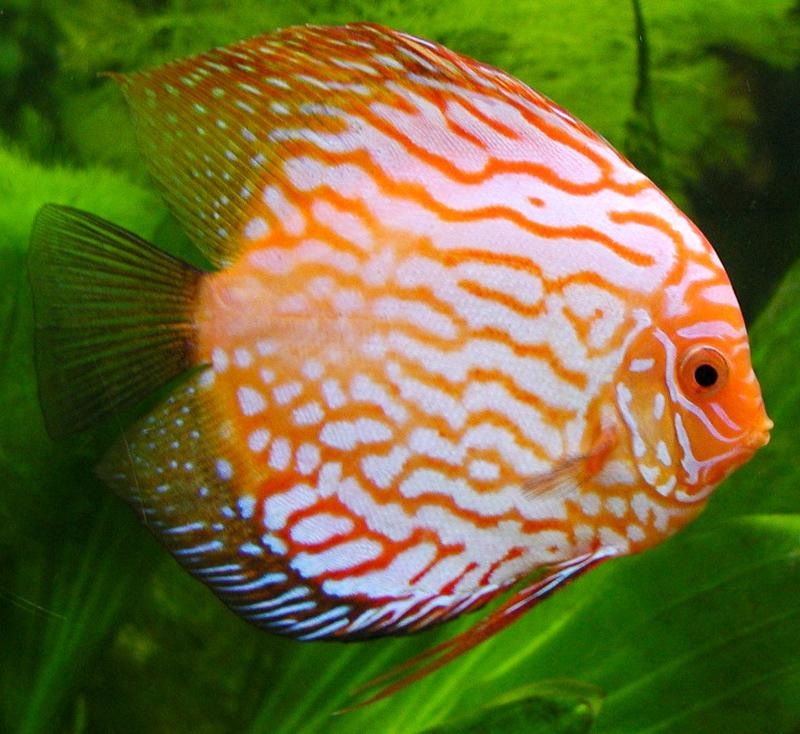
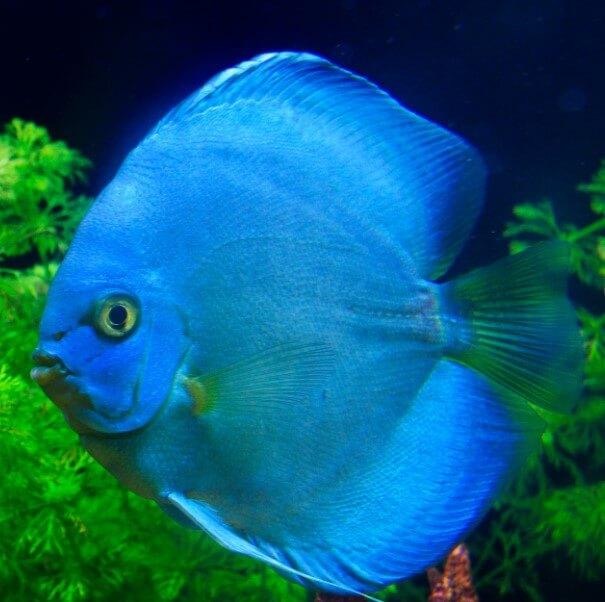
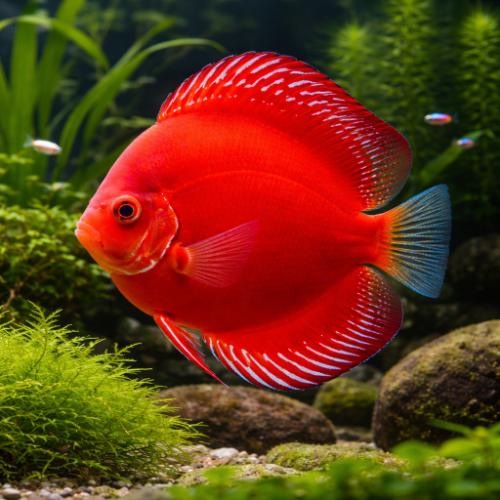
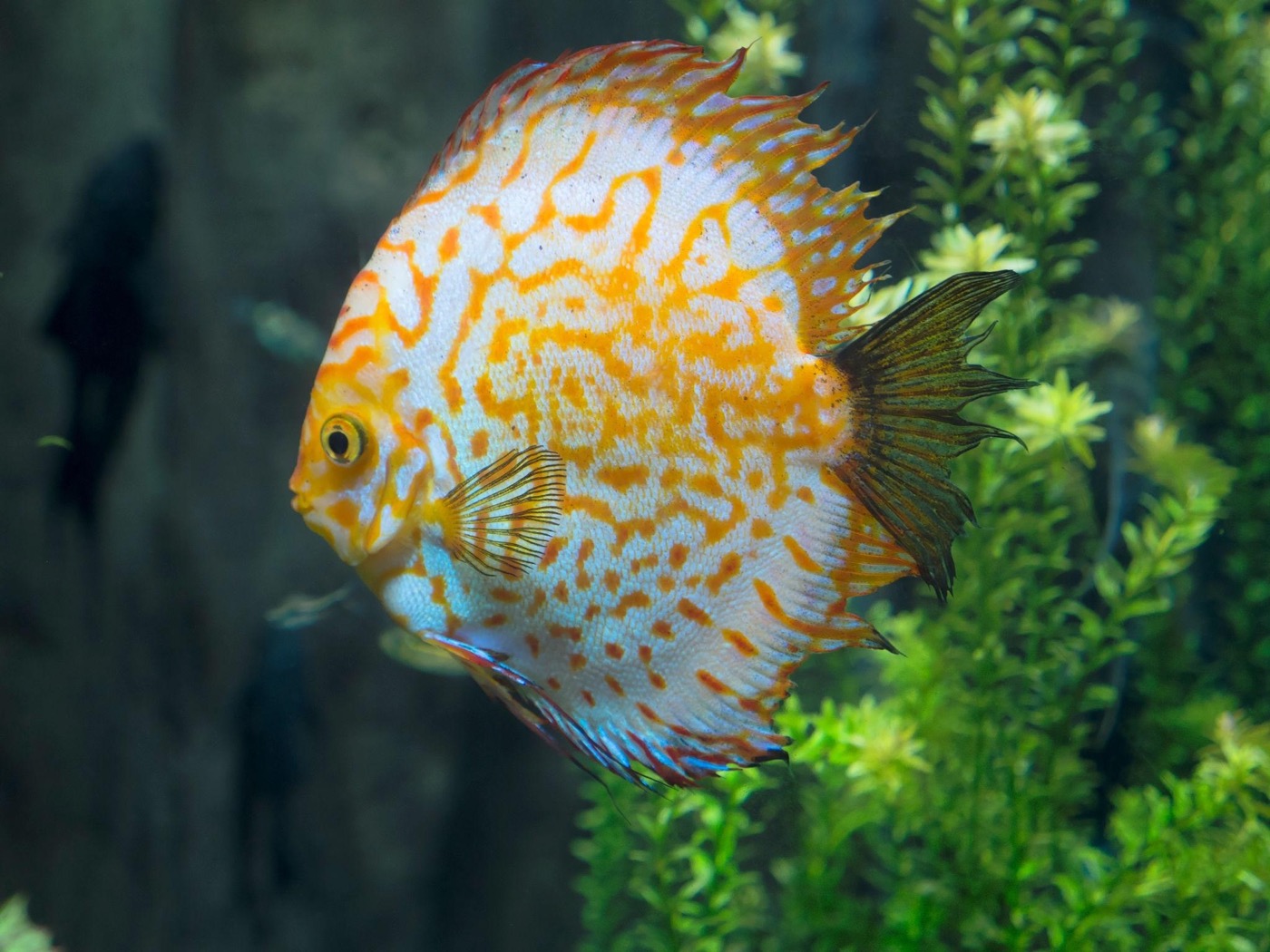
Discus Varieties: 3 Wild Species + 9 Popular Captive-Bred Strains
There are 3 recognized wild discus species: Symphysodon discus (Heckel discus), Symphysodon aequifasciatus (blue and brown discus), and Symphysodon tarzoo (green discus). The vast majority sold for home aquariums are captive-bred color strains, not wild fish.
There is no fixed official total for captive-bred varieties because breeders continually create new color and pattern combinations. For a practical buying comparison, the 9 popular strains below cover the names most hobbyists are likely to encounter:
| # | Popular captive-bred strain | Typical look |
|---|---|---|
| 1 | Pigeon Blood | Orange-red body with pale or white spotting |
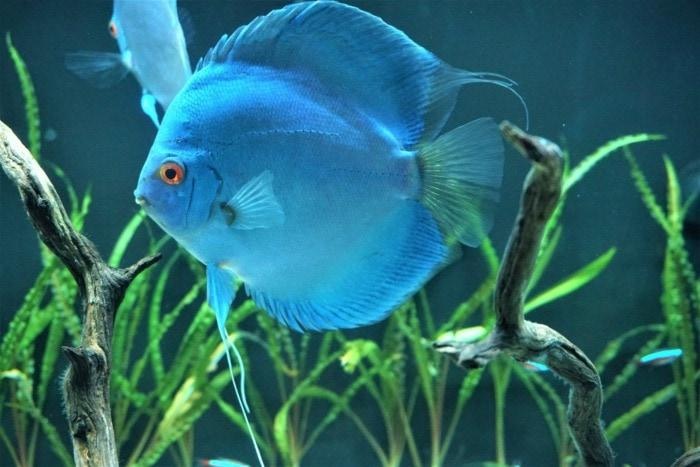
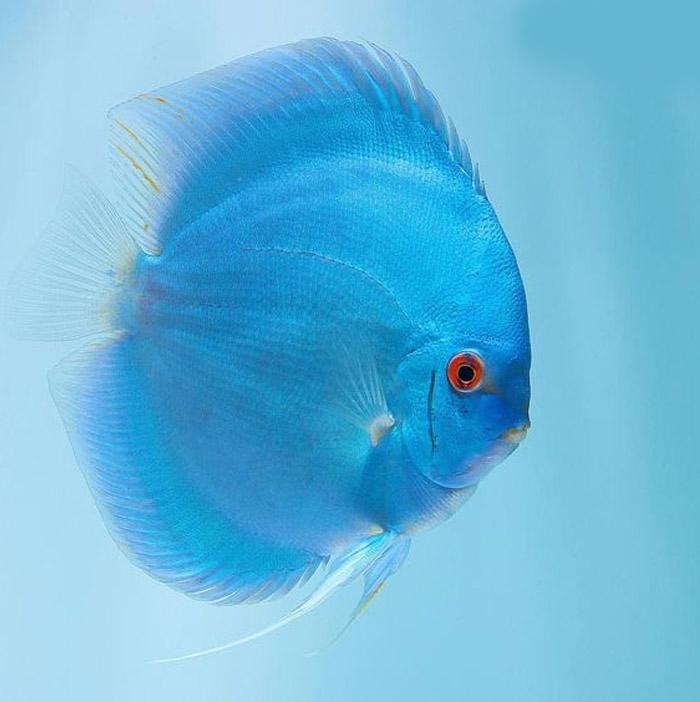
| 2 | Blue Diamond | Solid metallic blue |
| 3 | Red Marlboro | Vivid red-orange body |
| 4 | Checkerboard | Intricate patterned markings |
| 5 | Leopard Snakeskin | Dense spots and fine patterning |
| 6 | Cobalt Blue | Deep blue coloration |
| 7 | White Butterfly | White base with delicate markings |
| 8 | Golden | Yellow-gold coloration |
| 9 | Turquoise | Blue-green wavy stripes |
Captive-bred discus are usually hardier than wild-caught fish and generally adapt more readily to slightly higher pH and harder water. Choose by health, body shape and quarantine history first; color variety does not change the core care requirements.
Tank Setup for Discus
A 55-gallon tank is a constrained minimum for a carefully managed small group, while a 75-gallon or larger aquarium is the more practical starting point for about six adults. Discus establish a social hierarchy and need usable depth, swimming space and room to avoid conflict. Compare footprints, group sizes and grow-out limitations in the Discus Tank Size guide.
Tall tanks suit discus well because they are a tall-bodied species that swims at mid-depth. Avoid wide, shallow tanks. Use a quality canister filter rated for two to three times the tank volume — discus produce significant waste and are extremely sensitive to ammonia spikes. Supplementing with a sponge filter adds biological filtration capacity and provides helpful surface agitation.
Planted discus tanks are beautiful and biologically beneficial: plants help process nitrates and create a calming, naturalistic environment. Amazon swords, anubias, and java fern are popular choices. If keeping a planted tank, ensure the lighting and CO2 requirements of your plants are compatible with discus temperature preferences. Use the dedicated discus aquascape guide to plan the layout, plant zones and cleaning access.
Bare-bottom tanks are also popular among discus breeders because uneaten food and waste is visible and easy to remove, reducing water quality problems. A bare-bottom tank requires more frequent siphoning but gives you better control over cleanliness.
Water Temperature
Temperature is the most critical and non-negotiable discus care requirement. Discus require water between 82°F and 88°F (28–31°C). Most other community fish are kept at 76–78°F, which is too cool for discus and increases their susceptibility to stress and disease.
This temperature requirement limits compatible tank mates significantly. Standard tropical fish that prefer 76–78°F cannot safely be kept long-term with discus. Use a quality heater — two heaters are recommended for large tanks so that if one fails, temperature does not crash overnight. Always use a separate thermometer to verify heater accuracy.
Warm water holds less dissolved oxygen, so surface agitation and filtration flow are especially important in a discus tank. Ensure your filter creates visible surface movement.
Water Quality Requirements
Discus are native to the soft, warm, acidic blackwater rivers of the Amazon basin. Wild-caught discus need water that closely replicates this environment — very soft (1–3 dGH), pH between 5.5 and 6.5, and very low conductivity. Captive-bred discus are more adaptable and can thrive in water with a pH up to 7.0 and moderate hardness up to 8 dGH.
Ammonia and nitrite must be at zero — even brief spikes cause serious stress and immune suppression in discus. Nitrate should be kept below 10 ppm ideally. Achieving this requires large water changes: 25–50% every other day in a heavily stocked discus tank, or at minimum 30% twice weekly.
Use an RO (reverse osmosis) system if your tap water is very hard or high in chloramines. Reconstitute RO water with a remineralization product to add back trace minerals at the correct level. Always dechlorinate tap water before adding it and match the temperature precisely to avoid thermal shock.
Feeding Discus Fish
Discus are carnivores with a high protein requirement. In the wild they eat small invertebrates, crustaceans, and insect larvae. In captivity, a high-protein diet of frozen and prepared foods produces the best coloration and growth.
Excellent discus foods include frozen bloodworms, frozen brine shrimp, discus-specific beef heart paste (a classic discus food), and high-quality discus pellets or granules. Feed three to five small meals daily rather than one or two large ones — frequent feeding maintains growth and condition but requires excellent filtration and regular waste removal.
Remove all uneaten food within 10 minutes. Discus produce rich waste from a protein-heavy diet, and leftover food in a warm tank rots quickly and spikes ammonia. Avoid feeding cheap flake food as a staple — it rarely meets discus nutritional requirements and can cause digestive issues.
Compatible Tank Mates
Finding suitable discus tank mates requires species that tolerate 82–86°F water, are peaceful, and do not out-compete discus for food. Proven compatible species include: cardinal tetras and rummy-nose tetras (which share Amazon habitat), ram cichlids (German blue rams prefer warm water), corydoras sterbai (one of the few cory species that tolerates 82°F+), and small peaceful catfish like otocinclus.
Avoid: any fin-nipping species, fast aggressive feeders that steal food before discus reach it, fish that prefer cooler water, and any large cichlids. Angels and discus are sometimes kept together but angels can become aggressive toward discus — monitor the combination closely.
Before adding another species, run a discus fish compatibility check to compare temperature range, adult size, temperament, feeding speed and long-term tank capacity.
Common Health Problems
Hole in the Head (HITH): Pitting or erosions on the head and lateral line. Associated with poor water quality, nutrient deficiency, and overuse of activated carbon. Improve diet and water quality; remove activated carbon.
Gill Flukes: Rapid breathing, flared gills, and lethargy. Treat with praziquantel. Common in newly purchased discus — quarantine new fish for four to six weeks before introducing to a display tank.
Wasting Disease / Intestinal Parasites: Discus becoming thin despite eating, or passing stringy white feces. Treat with metronidazole (flagyl) in food or water.
Darkening and Hiding: Almost always indicates water quality problems or stress. Test water before treating for any disease.
Daily Discus Care Routine
Observe closely every day. Watch color, breathing rate, posture, appetite, and whether any fish are being excluded from the group. A discus that turns dark, clamps fins, or refuses food should trigger water testing before any medication. Most discus problems are water quality problems first.
Perform 25–30% water changes at least twice weekly, more frequently in heavily stocked tanks or when fish are eating heavily. Siphon waste from the substrate or bare bottom each time. Test pH and temperature weekly at a minimum; test ammonia and nitrite whenever fish show stress signs.
Taxonomy & Species Overview
Three species of discus are currently recognized within the genus Symphysodon: S. discus (the Heckel Discus, distinguished by its bold vertical black bars), S. aequifasciatus (covering the Green, Brown, and Blue discus forms), and S. tarzoo (the Red Discus, from the western Amazon). Debate over species boundaries continues in the scientific literature, but for practical aquarium purposes, all three behave and require similar care.
The vast majority of discus sold in the hobby today are captive-bred specimens, raised primarily in Asia (particularly Malaysia, Hong Kong, and Thailand) and Germany. Captive-bred fish are considerably hardier than their wild-caught counterparts, tolerate a broader range of water chemistry, and adapt more readily to aquarium foods. Wild-caught discus are available but demand much stricter water conditions and are not recommended for beginners.
Through decades of selective breeding, hundreds of color and pattern variants have been developed, so there is no fixed total of captive-bred varieties. For a useful, comparable shortlist, this guide covers 9 popular captive-bred strains in the varieties table above. Show-quality specimens from renowned breeders can sell for $100–$500+ per fish.
| Rank | Classification |
|---|---|
| Order | Cichliformes |
| Family | Cichlidae |
| Genus | Symphysodon |
| Species | S. discus, S. aequifasciatus, S. tarzoo |
Natural Habitat
Wild discus inhabit the calm, oxygen-poor blackwater lakes, flooded forests, and quiet river margins of the central Amazon Basin — particularly around the Rio Negro, Rio Solimões, and their tributaries. These environments are characterized by water that is extraordinarily soft (GH below 1 dGH), highly acidic (pH 4.0–6.0), stained dark brown by tannins from submerged wood and leaf litter, and very warm — approaching 90°F during the dry season when water levels fall and the sun heats shallow pools.
In the wild, discus congregate around submerged tree roots and fallen branches (known locally as "galhadas"), using the vertical orientation of the root mass for camouflage and shelter. They move in loose schools and rarely venture into open water. Understanding this habitat — warm, still, tannin-rich, heavily structured — informs every decision about their aquarium setup.
Buying Discus: What to Look For
Choosing healthy discus from a reputable source sets the foundation for success. Here is what experienced keepers recommend:
- Body shape: A healthy discus should be round — not elongated or "pencil-shaped." A pinched, elongated body indicates stunting from poor juvenile nutrition or chronic stress. Never buy a pencil discus, regardless of price.
- Eyes: Eyes should be proportionally small relative to the body. Large eyes relative to body size ("bug eyes") indicate stunted growth — the eyes grow at a fixed rate while the body fails to keep up.
- Behavior: Healthy discus are alert and curious; they investigate movement at the glass. Fish that hover in corners, clamp their fins, or breathe rapidly are stressed or sick.
- Color: Vibrant, even coloration is a sign of health. Some color fading in a shop environment is normal due to stress, but patchy, blotchy, or extensively darkened coloration is a concern.
- Price range: Avoid both extremes. Cheap discus (under $15–20) often have quality issues from mass farming. Expensive show-quality adults ($200+) require expert-level maintenance. For beginners, $30–80 captive-bred juveniles of 2–3 inches from a reputable seller are the best starting point.
- Group size: Purchase a minimum of 6 discus together, all the same size. Mixing sizes leads to bullying of smaller individuals.
What Affects the Price of a Discus Fish?
Discus prices vary widely, so compare the health and history of the fish rather than judging quality from color or price alone. The figures below are broad planning ranges, not live seller quotes; shipping, location and availability can change the final cost.
| Price factor | Why it changes the cost | Practical buying note |
|---|---|---|
| Size and age | Larger juveniles and proven adults have required more food, space and time to raise. | Small fish cost less but need frequent feeding and careful grow-out. |
| Strain and coloration | Common captive-bred colors are usually less expensive than rare, consistent show strains. | Do not pay a premium for color if body shape, appetite or behavior is poor. |
| Grade and breeder record | Symmetry, pattern quality, lineage and breeder reputation can raise the price. | Ask about age, current water parameters, diet and health guarantee. |
| Captive-bred or wild | Wild discus involve collection, permits, transport and specialized acclimation. | Captive-bred discus are the safer choice for most home aquariums. |
| Shipping and group size | Insulated packing and overnight live-fish delivery can add substantially to an order. | Budget for a compatible group, quarantine space and delivery—not only one fish. |
As a broad reference, small captive-bred juveniles may be listed around $30–80 each, while large adults or show-grade strains can exceed $100–500. Verify current seller pricing and policies before ordering.
Fish Care FAQ
Are discus fish hard to care for?
Yes, discus are considered advanced-level fish. They require stable warm water, very low nitrate, a high-protein diet, and frequent water changes. They are rewarding but not suitable for first-time fishkeepers.
What temperature do discus fish need?
Discus require 82–88°F (28–31°C). This is significantly warmer than standard tropical tanks and limits which other fish can be kept with them.
How often should you change water in a discus tank?
At least twice weekly with 25–30% changes, ideally more. Discus are sensitive to nitrate accumulation and produce substantial waste on a protein-heavy diet.
What do discus fish eat?
Discus eat high-protein foods: frozen bloodworms, frozen brine shrimp, beef heart paste, and quality discus pellets. Feed small portions three to five times daily and remove uneaten food promptly.
Can discus live with angelfish?
Sometimes, but not reliably. Angels can become territorial and aggressive toward discus. If you try the combination, monitor closely and be prepared to separate them if conflict develops.
This guide was reviewed for practical fish care safety, water quality accuracy, and beginner clarity. For severe illness, poisoning, or pond emergencies, contact an aquatic veterinarian or experienced local aquatics professional.
Discus Fish Care Topic Guides
Deep-dive guides for each aspect of discus care: