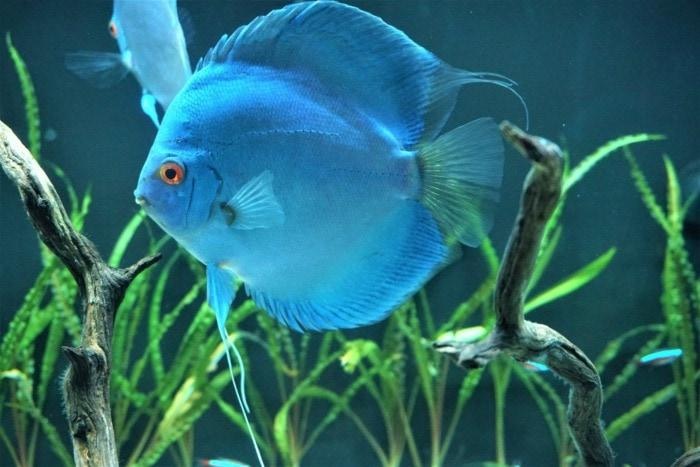
Quick answer: A successful discus aquascape uses a large mature aquarium, an open central swimming area, tall plants and wood around the back or sides, gentle but effective filtration, and enough access to siphon waste. Keep most captive-bred discus at a stable 82–86°F and choose every plant and tank mate for that warmer range.
Best Layout for a Discus Aquascape
Keep a broad central or front swimming lane free of dense stems and sharp hardscape.
Use tall background plants and broad leaves around the sides to create visual security.
Leave space around wood, rocks and the glass so uneaten food and waste can be siphoned.
Discus are tall-bodied schooling cichlids. A balanced layout gives the group room to move together while also providing sight breaks for fish lower in the social hierarchy. Position the largest wood and plants off-center rather than building a solid wall across the aquarium. Avoid narrow gaps where a startled fish could become trapped.
Warm-Water Plants for a Planted Discus Tank
Choose plants that can tolerate the sustained temperature used for your discus. Individual cultivars vary, so confirm the supplier's recommended range and introduce plants gradually.
| Plant | Placement | Why it can work | Care note |
|---|---|---|---|
| Amazon sword | Background or focal point | Broad leaves suit an Amazon-inspired display | Needs root nutrition and room for mature growth |
| Anubias | Attached to wood or rock | Hardy, slow-growing and useful in shaded areas | Keep the rhizome above the substrate |
| Java fern | Attached to hardscape | Provides vertical leaves without deep substrate | Do not bury the rhizome |
| Cryptocoryne | Foreground or midground | Adds lower cover and varied leaf shapes | Some varieties may struggle at the hottest temperatures |
| Vallisneria | Background | Creates tall grassy cover and visual barriers | Thin runners so swimming space remains open |
Avoid choosing a plant only because it appears in a photograph. A plant that prefers cooler water may slowly decline at discus temperatures, adding decaying material to a tank where cleanliness is especially important.
Substrate: Sand, Planted Soil or Bare Bottom?
| Option | Advantage | Tradeoff |
|---|---|---|
| Thin fine sand | Natural appearance and easy planting in selected zones | Food and waste can collect if the layer is deep or flow is poor |
| Planted substrate | Supports rooted plants and stronger growth | Harder to deep-clean; disturbed soil can cloud the water |
| Bare bottom | Fastest visual inspection and waste removal | Less natural appearance and requires pots or attached plants |
For a display tank, a thin sand foreground with planted zones at the back and sides is a practical compromise. Keep the substrate shallow in feeding areas and siphon visible debris during water changes. Breeders and juvenile grow-out systems often favor bare bottoms because frequent feeding creates more waste.
Wood, Rocks and Safety
Use aquarium-safe wood with smooth branches, stable bases and enough clearance for a full-grown discus to turn. Wood can provide useful vertical structure and an Amazonian look, but it should not reduce the tank to narrow corridors. Secure rocks directly and avoid stacks that can shift during maintenance. Sand sharp edges and keep hardscape away from heater surfaces and filter intakes.
Filtration, Flow and Oxygen
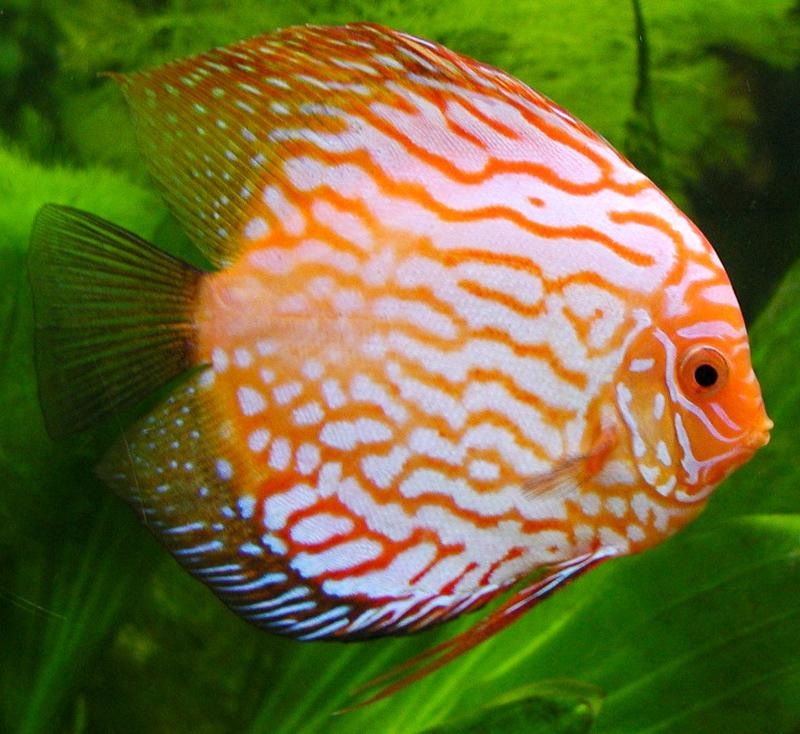
Warm water holds less dissolved oxygen, while planted layouts and hardscape can create dead zones. Use mature biological filtration sized for the actual stock, maintain visible surface movement and direct outlets so circulation reaches behind wood without forcing discus to fight a strong current. A spray bar or baffled return can distribute flow more gently.
Plants produce oxygen while actively photosynthesizing but consume oxygen after the lights go out. Do not rely on plants as the aquarium's only oxygen strategy. Keep filters clean, watch breathing behavior and consider additional aeration when temperature rises or medication reduces oxygen.
Lighting, CO2 and Fertilizer
Start with moderate lighting for roughly 6–8 hours daily and adjust after observing plant growth and algae. Discus appreciate shaded zones, so intense lighting across the whole tank is unnecessary. CO2 is optional; if used, increase it cautiously, maintain surface gas exchange and monitor fish closely. Dose fertilizer for plant demand and water-change routine rather than assuming more nutrients will fix slow growth.
Maintenance Plan for a Planted Discus Aquarium
- Siphon uneaten food and visible waste before it settles behind hardscape.
- Change water consistently and match replacement temperature closely.
- Trim dense plants so circulation reaches the substrate and lower leaves.
- Clean one filter component at a time in removed aquarium water to preserve biological media.
- Test ammonia and nitrite whenever fish breathe rapidly, darken or stop feeding.
- Quarantine new fish and inspect new plants before adding them to the display.
Discus Aquascape Mistakes to Avoid
- Filling the tank with décor and leaving too little open swimming space.
- Using cooler-water plants that deteriorate at 82–86°F.
- Building deep substrate pockets that trap protein-rich food and waste.
- Allowing wood and rocks to block cleaning access or filter circulation.
- Using intense light while neglecting nutrients, carbon balance and algae removal.
- Choosing tank mates for appearance without checking warm-water compatibility.
Frequently Asked Questions
Can discus live in a planted aquarium?
Yes. A planted discus aquarium works when the plants tolerate warm water, the fish retain open swimming room and the layout remains easy to clean. Stable water quality takes priority over plant density.
What is the best aquascape style for discus?
An open Amazon-inspired layout is practical: tall plants and wood around the sides or rear, a clear central swimming area and gentle circulation. The safest style is one that fits the maintenance routine and adult group size.
Is sand or bare bottom better for discus?
Both can work. Thin sand gives a natural display, while bare bottom makes waste removal easier. Avoid deep dirty substrate and choose the option you can maintain consistently.