Quick answer: Healthy aquarium plants need compatible light, steady access to carbon and nutrients, suitable planting, clean moving water and regular pruning. Start with low-demand species, run the light on a timer, remove decaying material and adjust only one major variable at a time.
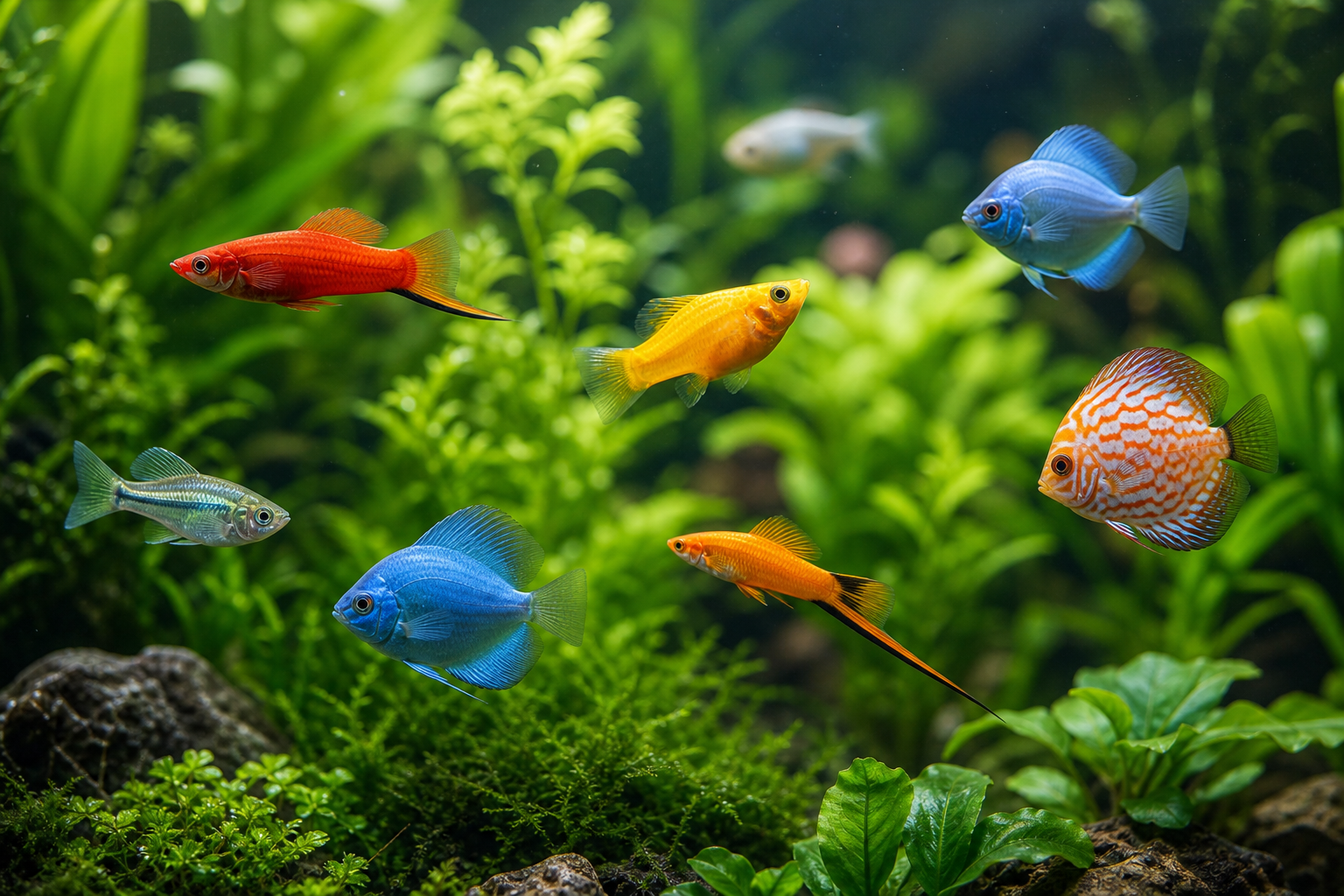
Freshwater planted aquarium image. FishCare AI local media asset.
Aquarium Plant Care
Aquarium plant care begins with matching plants to the actual tank rather than trying to force every species into the same formula. Consider light intensity at the substrate, aquarium depth, temperature, water hardness, substrate type, available space and whether the fish dig, graze or uproot plants. Hardy Anubias, Java fern, Java moss, Cryptocoryne and Vallisneria are useful starting points, but even “easy” plants decline when planted incorrectly or shaded by faster growth.
Identify how each plant feeds and anchors. Rhizome plants such as Anubias and Java fern should be attached to wood or rock with the rhizome exposed; burying it can cause rot. Rooted rosette plants need room in the substrate, while stem plants absorb from the water column and produce new growth from their nodes. Floating plants need open surface space and should not cover the entire tank, especially when fish require access to air or lower plants need light.
Judge success by healthy new growth rather than the appearance of old leaves immediately after purchase. Many commercially grown aquatic plants were raised above water and may shed their original leaves while adapting to submerged growth. Remove tissue that is decomposing, keep conditions stable and watch the new shoots before changing light, fertilizer and CO2 all at once.
| Plant group | Placement | Main care point |
|---|---|---|
| Anubias and Java fern | Wood or rock | Keep the rhizome exposed |
| Cryptocoryne | Substrate, usually midground | Expect possible transplant melt; protect the crown |
| Vallisneria | Background | Leave space for runners and tall leaves |
| Stem plants | Grouped in substrate | Trim and replant healthy tops |
| Floating plants | Water surface | Thin regularly to preserve light and gas exchange |
Aquarium Plant Maintenance
Aquarium plant maintenance is a recurring observation-and-pruning routine, not an occasional deep clean. Each week, inspect leaves for holes, yellowing, algae, melting and physical damage; remove dead material before it breaks down; thin floating plants; and check that dense growth is not blocking circulation. Clean scissors and tweezers make precise cuts and reduce unnecessary damage. Fast-growing stems may need weekly pruning, while slow rhizome plants may go weeks without a cut.
Coordinate plant work with normal aquarium maintenance. Before a partial water change, trim unhealthy leaves and loosen trapped debris so it can be siphoned out. Clean algae from the glass without stripping every surface, and rinse reusable filter media gently only when flow drops. Do not replace all biological media during a major plant trim, because simultaneous disruption can destabilize the aquarium.
Keep a simple record of lighting hours, fertilizer dose, CO2 operation where used, water-change date and visible plant response. This turns troubleshooting into a comparison instead of guesswork. If plants decline, change one major factor, allow time for new growth and reassess. A fixed weekly or monthly product schedule is less useful than a routine adjusted to plant mass, growth speed, livestock load and measured conditions.
Lighting for Aquarium Plants
Choose a light intended for aquarium plants and match its intensity to plant demand and tank depth. Aqueon correctly cautions that watts per gallon is not a reliable modern LED measurement; electrical consumption does not equal useful light delivered to leaves. PAR data, fixture coverage, mounting height and observed plant response are more meaningful.
For a new low-tech planted tank, a consistent six-to-eight-hour photoperiod is a practical starting point. Use a timer. More hours do not compensate for an unsuitable fixture and may encourage algae when plants lack carbon or nutrients. Increase duration or intensity gradually only after growth shows the current level is insufficient.
Substrate and Planting Technique
Fine-to-medium gravel, coarse sand or a planted substrate can support rooted plants when it allows anchoring and water movement. Avoid packing crowns below the surface, and do not bury rhizomes. Heavy root feeders may benefit from aquarium-specific root tabs, while epiphytes and many stems depend more heavily on nutrients in the water column. Never use terrestrial fertilizer sticks unless they are explicitly labeled aquarium-safe.
Aquarium Plant Fertilizer and Nutrients
Plants require nitrogen, phosphorus, potassium and trace elements, but the correct dose depends on plant mass, fish feeding, substrate and water-change routine. Use an aquarium fertilizer with known ingredients and follow its label rather than adding separate products at random. Root feeders may need substrate nutrition; water-column feeders need consistent dissolved nutrients.
Slow growth or yellow leaves do not automatically mean “add more fertilizer.” Shading, damaged roots, unstable CO2, poor circulation and recent transplanting can create similar symptoms. Compare old and new leaves, review the placement and change one variable at a time.
Do Aquarium Plants Need CO2?
Many low-demand plants grow successfully without injected CO2. Supplemental carbon dioxide can improve growth and color in higher-light systems, but faster growth also increases demand for nutrients, pruning and stability. Pressurized CO2 must be regulated carefully, synchronized with the light schedule and monitored around fish and shrimp. Rapid changes or excessive gas can place livestock at risk.
So-called “liquid CO2” products are not equivalent to controlled carbon dioxide injection and may affect sensitive plants or animals. Treat every additive as a chemical product: verify compatibility, follow the label and never improvise concentrated doses.
Water Changes, Circulation and Clean Leaves
Regular partial water changes remove dissolved waste and reset accumulating compounds while supplying fresh water. The appropriate percentage and frequency depend on stocking, fertilizer strategy, source water and plant growth. Always condition tap water and match temperature for the animals in the aquarium.
Gentle circulation distributes nutrients and carbon and prevents debris settling on leaves, but the tank still needs adequate surface exchange for livestock. Clear clogged intakes, prune dense thickets and reposition outlets instead of using extreme flow that uproots plants or exhausts fish.
How to Control Algae Without Damaging Plants
Algae reflects opportunity: light, nutrients and surfaces are available faster than desired plants can use them. Remove visible algae, trim irreversibly damaged leaves, correct excess light, improve circulation and keep feeding and maintenance consistent. Avoid driving nitrate or phosphate blindly to zero, because plants also need nutrients.
When an outbreak appears, review recent changes before purchasing a treatment. Stronger light, declining filter flow, unstable CO2, decomposing plants and increased feeding are common clues. Correct one or two clear causes and track clean new growth. For filamentous outbreaks, see the hair algae aquarium guide.
Aquarium Plant Problems and Diagnosis
| Visible symptom | Possible explanations | First checks |
|---|---|---|
| Yellow older leaves | Natural aging, shading or nutrient limitation | New growth, fertilizer history and light penetration |
| Melting after planting | Transition from emersed to submerged growth or damaged roots | Firm crown/rhizome and presence of new shoots |
| Pinholes or damaged edges | Nutrient issue, grazing or physical damage | Livestock behavior and pattern on new versus old leaves |
| Long weak stems | Insufficient light at depth or overcrowding | Fixture coverage and shading |
| Algae on slow leaves | Excess light, slow growth, debris or unstable conditions | Photoperiod, flow, CO2 stability and maintenance |
Frequently Asked Questions
Can aquarium plants grow without CO2?
Yes. Many beginner plants grow in low-tech tanks with stable moderate light, nutrients and circulation. Injected CO2 is an optional method for faster or more demanding growth, not a requirement for every planted aquarium.
Why are my aquarium plants turning yellow?
Yellow leaves can result from natural aging, transplant stress, shading, nutrient limitation or damaged roots. Compare old and new growth, confirm the plant is positioned correctly and adjust one factor at a time.
How often should aquarium plants be trimmed?
Trim according to growth rather than a rigid date. Remove decaying leaves promptly; prune stems when they shade lower growth or reach the surface; thin floating plants before they block most light.
Sources and Editorial Method
This guide compares general aquatic-plant requirements from Aqueon with planted-tank methodology from 2Hr Aquarist and the maintenance categories described by Interpet. Commercial product claims and rigid schedules were not treated as universal evidence; recommendations were adapted around plant growth, livestock safety and measurable aquarium conditions.
- Aqueon — Aquatic Plant Basics.
- 2Hr Aquarist — Freshwater Aquarium Plants Guide.
- Interpet — Aquarium Maintenance.
Related FishCare AI Guides and Tools
FishCare AI provides educational aquarium information. Confirm species-specific requirements before adding plants, fertilizers or CO2 equipment.