
Zebra Danio Care at a Glance
Zebra danios (Danio rerio) are small, fast schooling fish native to South Asia. Their reputation for toughness is deserved, but good zebra danio care still depends on a cycled aquarium, a real group and room to swim. They use the upper and middle water levels constantly, so footprint and tank length matter more than a tall column of water.
| Care requirement | Practical recommendation |
|---|---|
| Adult size | About 2–2.5 inches (5–6 cm) |
| Lifespan | Usually 3–5 years with stable care |
| School size | 6 minimum; 8–10 preferable |
| Tank | 20-gallon long recommended; secure lid |
| Temperature | 68–75°F (20–24°C) as a stable target |
| pH | Approximately 6.5–7.5; stability matters |
| Diet | Omnivore; flakes or micro-pellets plus small frozen/live foods |
Are Zebra Danios Good Beginner Fish?
Zebra danios are among the better beginner fish because they adapt to a broader temperature range than many tropical species, accept common prepared foods and remain active in many community setups. That flexibility gives a new keeper some margin while learning, but it does not protect fish from ammonia, nitrite, chlorine or abrupt temperature changes.
Set up and cycle the aquarium before adding a full school. Test ammonia and nitrite until both remain at zero, then manage nitrate through sensible stocking, feeding and water changes. Beginners should also plan for the fish’s speed: a tiny desktop tank may hold enough water on paper but still deny a school the long swimming path it needs.
Zebra Danio Origin, Habitat and Schooling Behavior
Wild zebra danios occur across parts of South Asia in streams, channels, pools and seasonally changing waters. This varied habitat helps explain their adaptability and preference for oxygenated water with some movement. The familiar horizontal blue-and-gold stripes visually break up the body when a group turns together.
They are active shoaling fish rather than solitary display fish. Within a group they chase, display and establish a loose social order. Normal short chases become a welfare concern when one fish is continually cornered, loses weight, clamps its fins or cannot reach food. More group members and more swimming room usually distribute social pressure better.
Zebra Danio Size and Lifespan
Most adult zebra danios reach roughly 2–2.5 inches, although body size varies with sex, genetics, diet and conditions. Their small adult length can be misleading because these fish cover much more distance than similarly sized, slower species. Judge their space by activity, not body length alone.
A reasonable lifespan expectation is about three to five years. Consistent water quality, moderate temperature, varied food and low chronic stress are more useful than trying to maximize growth. Persistent high heat accelerates metabolism and may shorten lifespan, while unstable cold conditions can weaken fish.
Zebra Danio Tank Size: Is 10 or 20 Gallons Better?

Some care sheets name 10 gallons as a minimum. It can physically house a carefully managed small school, but it leaves little margin for territorial chasing, water-quality mistakes or additional fish. A 20-gallon long aquarium is a better default because its footprint provides substantially more horizontal swimming room and more stable water volume.
Choose the long version of a tank when comparing equal volumes. A tall aquarium adds litres without adding the lane these surface-to-midwater swimmers use most. Use our fish tank size calculator to compare dimensions, but treat the result as planning support rather than a stocking guarantee.
How Many Zebra Danios Should Be Kept Together?
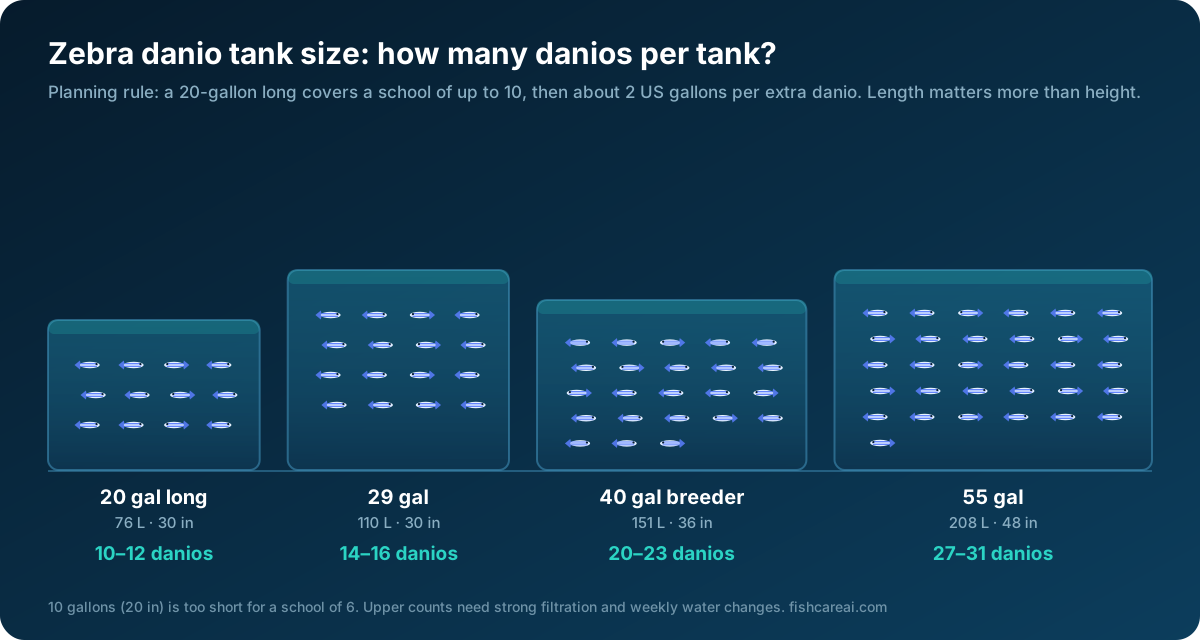
Six is the common minimum school size, while eight to ten often produces more natural group movement and spreads chasing among more individuals. Do not solve aggression by isolating a zebra danio: keeping only one or two removes the social structure the species depends on and can increase fear or pestering of other fish.
Group size and tank size must rise together. Ten fish in a cramped aquarium is not automatically better than six in adequate space. Add the entire group only after the biofilter is established, or expand slowly while testing water so the filter can handle the increased waste load.
Zebra Danio Tank Setup: Plants, Substrate and a Secure Lid
Build the aquarium around an open central or front swimming lane, with hardy plants and wood concentrated along the back and ends. Dark substrate can make the stripes stand out, but substrate color has less importance than smooth, easy-to-clean materials and stable water. Fine-leaved plants or moss also provide cover if breeding is planned.
A tight-fitting lid is essential because zebra danios can jump, especially during feeding, chasing or sudden lights-on events. Cover filter cutouts and cable gaps without blocking ventilation. Add subdued cover near the edges, but avoid filling the entire upper level with hardscape.
Zebra Danio Water Parameters: pH, Hardness and Nitrogen Waste
A practical pH range is about 6.5–7.5, with moderate hardness acceptable. Exact published ranges vary because captive zebra danios are adaptable; chasing a perfect number with chemical adjusters is often riskier than maintaining a stable value that suits the fish. Test the source water before choosing tank mates.
Ammonia and nitrite should remain at 0 ppm. Keep nitrate controlled with restrained feeding, plant growth and regular partial water changes. If a test result suddenly changes, confirm it and investigate livestock, filter flow, decaying food and recent maintenance before adding medication. The water parameter checker can help organize readings.
Zebra Danio Temperature: Do They Need a Heater?
Zebra danios tolerate cooler water than many community fish. A stable target around 68–75°F (20–24°C) works for many home aquariums, while sources may list a broader tolerance extending from the mid-60s to upper-70s Fahrenheit. A tolerance range is not a reason to allow rapid daily swings.
A heater may be unnecessary in a reliably climate-controlled room, but it becomes useful when nighttime temperature falls, the tank sits near a window, or seasonal swings are large. Select tank mates whose long-term preferred temperature overlaps—not species that merely survive the same extremes.
Zebra Danio Filter, Water Flow and Oxygen Requirements
Use a filter sized for the aquarium that provides biological media and moderate circulation without pinning fish against the current. Zebra danios often enjoy moving water, but they also need calmer edges where they can rest. A spray bar, adjustable outlet or plants can break up an overly forceful jet.
Good surface movement supports gas exchange. An air stone is optional when the filter already agitates the surface, but can provide extra circulation in warm weather or a heavily planted tank at night. Never replace all filter media at once, and rinse reusable media in removed aquarium water rather than untreated tap water.
Zebra Danio Diet: What and How Often Should They Eat?
Zebra danios are omnivores. Use a quality small flake or micro-pellet as the staple, then rotate appropriately sized frozen or live foods such as daphnia, baby brine shrimp and small insect larvae. Food should float or sink slowly through the upper and middle water column where the fish feed most readily.
Offer small portions once or twice daily and watch every fish eat. A useful portion is consumed quickly without settling into the substrate. Fast danios may appear permanently hungry; adding more food in response increases waste rather than welfare. Use the feeding calculator as a starting point and adjust from body condition and leftovers.
Best Zebra Danio Tank Mates
Suitable companions are peaceful, robust fish that accept similar cooler-to-moderate temperatures and are not intimidated by constant movement. Depending on tank dimensions and water chemistry, options can include other danios, some rasboras and barbs, white cloud mountain minnows, and bottom-dwelling Corydoras species whose temperature needs overlap.
Compatibility is about more than temperament. Check adult size, school requirements, water hardness, feeding speed and the space used by every species. Avoid overcrowding several schooling species into one short tank. Compare a proposed community with the compatibility checker before purchasing.
Are Zebra Danios Fin Nippers?
They can nip fins, particularly when kept in too small a group, confined in a short tank or paired with slow, long-finned fish. Bettas, fancy guppies and other elaborate-finned varieties are risky companions because their movement and finnage can attract repeated chasing.
First improve the school size, layout and swimming space rather than assuming one fish is simply “mean.” Separate an injured or persistently targeted fish when necessary and test the water. More decorations alone will not solve a mismatch between a hyperactive school and a slow companion.
Male vs Female Zebra Danio: How to Tell the Difference
Mature females are generally fuller-bodied, especially through the abdomen, while males tend to be slimmer and may show stronger golden coloration between the blue stripes. Sexing juveniles is unreliable, and body shape can also reflect feeding or illness.
A rounded abdomen does not prove pregnancy because zebra danios lay eggs and do not become pregnant like guppies. Sudden swelling, raised scales, abnormal buoyancy or refusal to eat should be treated as a health warning rather than assumed to be reproductive condition.
Zebra Danio Breeding Setup and Spawning Behavior
Zebra danios are egg scatterers. Condition healthy adults with varied food, then use a separate mature breeding tank with marbles, mesh, spawning mops or dense fine-leaved plants that let eggs fall beyond the adults’ reach. Spawning commonly follows a light transition, with males pursuing females.
Adults readily eat eggs, so remove the breeders after spawning if fry production is the goal. Use water from a stable system and gentle sponge filtration rather than creating a sterile, uncycled container. Breeding should only be attempted with a plan for dozens of juveniles and suitable future homes.
Zebra Danio Eggs and Fry Care
Fertile eggs develop quickly under appropriate stable conditions, but timing varies with temperature. Remove opaque or fungused eggs carefully and keep water movement gentle. Once fry become free-swimming, their mouths are too small for standard flakes.
Begin with infusoria or a verified commercial fry food, then transition to microworms and newly hatched brine shrimp as the fish grow. Feed tiny portions more frequently while protecting water quality with gentle, frequent maintenance. A sponge over any intake prevents fry from being pulled into the filter.
Zebra Danio Types: Longfin, Golden, Leopard and GloFish
The classic zebra danio has horizontal blue stripes. Common captive varieties include golden zebra danios, longfin forms and leopard-pattern danios; fluorescent GloFish danios descend from the same species. Color and fin variants share broadly similar core care, school and swimming-space needs.
Do not assume longfin fish are ideal with every standard-fin group: flowing fins may be damaged in an overly intense school. Buy active fish with straight spines, open fins, clear eyes and no white spots or sunken bellies, then quarantine new arrivals before introducing them to the display tank.
Zebra Danio Tank Cleaning and Weekly Maintenance
Test water regularly and perform partial water changes based on measured nitrate, stocking and feeding rather than following a percentage blindly. For many established community tanks, a weekly check and partial change is the backbone of routine zebra danio care. Match replacement water temperature, use conditioner and avoid exposing fish to untreated chlorine or chloramine.
Vacuum accessible debris, wipe viewing panes and confirm the filter is flowing normally. Preserve beneficial bacteria by avoiding simultaneous deep cleaning of the substrate and filter. Record test results and maintenance dates so gradual trends become visible before fish show symptoms.
Common Zebra Danio Diseases and Warning Signs
Watch for white spots, flashing, frayed fins, fuzzy growths, rapid breathing, clamped fins, abnormal swelling, wasting and isolation from the school. These signs do not identify one disease by themselves. First test ammonia, nitrite, nitrate and temperature, then review recent additions and injuries.
Quarantine new fish and equipment when practical. If treatment is needed, diagnose from the complete pattern and use a product appropriate for the confirmed condition and tank inhabitants. Avoid mixing medications or treating the main aquarium “just in case”; consult an aquatic veterinarian for persistent, severe or unexplained losses.
Why Are My Zebra Danios Dying?
Common underlying causes include adding fish before the nitrogen cycle is established, undetected ammonia or nitrite, abrupt acclimation, temperature swings, chronic aggression, contaminated water and disease introduced with new livestock. Their hardiness can delay visible symptoms, so a fish may decline only after exposure has continued; most zebra danio care failures trace back to water, not disease.
When a death occurs, remove the body, test the water immediately, increase aeration if fish are gasping and document symptoms. Do not automatically replace the fish or medicate the aquarium. Correct an environmental problem first, and quarantine or seek professional help when signs suggest an infectious condition.
Zebra Danio Care FAQ
How many zebra danios should be kept together?
Keep at least six zebra danios; eight to ten is better when the aquarium provides enough horizontal swimming room.
What size tank do zebra danios need?
A 20-gallon long aquarium is the practical recommendation for a full school because tank length matters more than height. A 10-gallon tank is a constrained minimum for a small group and requires careful stocking.
Can they live in a 5-gallon tank?
No. It does not provide adequate swimming length for a proper school.
Can zebra danios live alone?
No. They should live in a school of at least six.
Do zebra danios need a heater?
A heater is not always required in a climate-controlled room, but use one when room temperature fluctuates or falls outside the chosen stable range.
Can zebra danios live with bettas?
Usually not recommended because speed, fin-nipping risk and temperature preferences can conflict.
How long do zebra danios live?
Commonly around three to five years with stable care.
Do they need live plants?
No, but plants add cover, improve the layout and help protect eggs.
Why are they chasing each other?
Brief chasing is normal social behavior; relentless targeting signals inadequate space, group structure or another stressor.
Related Fish Care Guides and Aquarium Tools
Editorial Method and Care-Safety Notes
This page compares the three requested care resources, separates broad tolerance from a conservative day-to-day target, and resolves tank-size disagreement by prioritizing horizontal swimming behavior and group welfare. It does not claim hands-on experience or veterinary review that FishCare AI has not independently documented.
Fish health advice is educational and cannot replace diagnosis by an aquatic veterinarian. Product labels, local water chemistry and the needs of every tank inhabitant must be checked before treatment or major parameter changes.
Reviewed and expanded: September 19, 2026.
References
- Spence R, Gerlach G, Lawrence C, Smith C. The behaviour and ecology of the zebrafish, Danio rerio. Biological Reviews 83(1):13–34, 2008. Wild habitat, shoaling, diet and spawning behavior.
- Froese R, Pauly D (eds). FishBase — Danio rerio (Hamilton, 1822). Distribution, adult size, temperature and water-chemistry ranges.
- Westerfield M. The Zebrafish Book: A Guide for the Laboratory Use of Zebrafish (Danio rerio), 5th ed. University of Oregon Press; ZFIN. Husbandry, breeding, egg and fry rearing.
- Seriously Fish — Danio rerio. Aquarium care, tank size, compatibility and varieties.
- FishLore — Zebra Danio Profile. Hobbyist profile retained for comparison.