There are about 80 species of surgeonfish, but the types of tang fish you will actually see for sale come down to fifteen, in four groups: the tall-finned Zebrasoma tangs (yellow, purple, sailfin), the round bristletooth Ctenochaetus tangs (kole, tomini), the oval Acanthurus tangs (powder blue, achilles, and the blue “hippo” tang) and the big Naso unicornfish. The group tells you more about the fish than the colour does: how big it gets, how much tank it needs, how likely it is to catch ich, and whether it will fight the tang you already have.
The Four Groups of Tang Fish
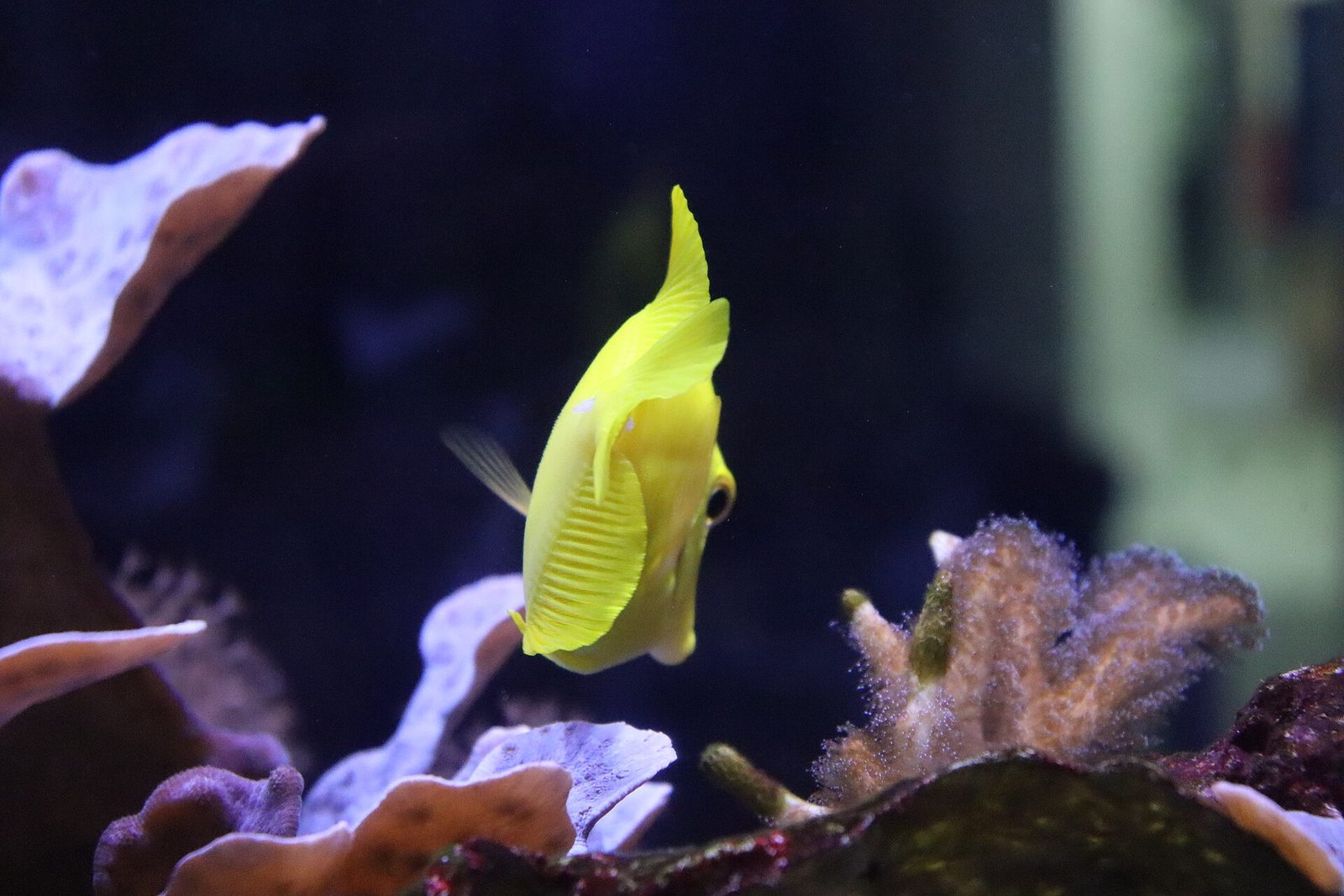
- Zebrasoma (sailfin tangs) — disc-shaped with a tall dorsal and anal fin and a pointed snout. Hardy, greedy, quick to accept food. Yellow, purple, scopas, sailfin and desjardini.
- Ctenochaetus (bristletooth tangs) — smaller, rounder, with comb-like teeth for scraping film algae off rock. The best algae cleaners and the most peaceful. Kole, tomini, chevron, striped bristletooth.
- Acanthurus (true surgeonfish) — oval, fast, thin-skinned. The most spectacular colours and the most ich-prone. Powder blue, achilles, convict, sohal, clown, mimic; the blue tang (Paracanthurus hepatus) belongs here in practice.
- Naso (unicornfish) — large, torpedo-shaped, with blades rather than single spines on the tail. Hardy but 15–24 inches. Naso (lipstick), blonde naso, vlamingi.
Types of Tang Fish Compared
| Tang | Scientific name | Adult size | Min. tank | Hardiness | Temperament |
|---|---|---|---|---|---|
| Yellow tang | Zebrasoma flavescens | 7–8 in | 75 gal | Hardy | Semi-aggressive to tangs |
| Purple tang | Zebrasoma xanthurum | 9–10 in | 125 gal | Hardy | Aggressive |
| Scopas tang | Zebrasoma scopas | 8 in | 75 gal | Very hardy | Semi-aggressive |
| Sailfin tang | Zebrasoma veliferum | 12–15 in | 150 gal | Hardy | Peaceful for a tang |
| Desjardini sailfin | Zebrasoma desjardinii | 12–15 in | 150 gal | Hardy | Peaceful for a tang |
| Kole tang | Ctenochaetus strigosus | 7 in | 75 gal | Hardy | Peaceful |
| Tomini tang | Ctenochaetus tominiensis | 6 in | 75 gal | Hardy | Peaceful |
| Chevron tang | Ctenochaetus hawaiiensis | 8–10 in | 125 gal | Moderate | Peaceful |
| Blue (hippo) tang | Paracanthurus hepatus | 10–12 in | 125 gal | Ich-prone | Peaceful, skittish |
| Powder blue tang | Acanthurus leucosternon | 9 in | 125 gal | Delicate, ich-prone | Aggressive |
| Achilles tang | Acanthurus achilles | 9–10 in | 180 gal | Expert only | Aggressive |
| Convict tang | Acanthurus triostegus | 8 in | 125 gal | Hardy | Peaceful, shoals |
| Sohal tang | Acanthurus sohal | 15–16 in | 240 gal | Hardy | Very aggressive |
| Clown tang | Acanthurus lineatus | 12–14 in | 240 gal | Delicate | Very aggressive |
| Naso tang | Naso lituratus | 15–18 in | 180 gal | Hardy | Peaceful |
Sizes and ranges follow the family account on Wikipedia's Acanthuridae page and public aquarium husbandry sheets. Minimum tanks are for one adult; the tang fish tank size page explains the length rule behind them.
Zebrasoma Tang Fish: Yellow, Purple, Scopas and Sailfin
The yellow tang is the most-sold saltwater fish after the clownfish and the tang most people picture: solid lemon yellow, tall-finned, 7–8 inches, and content in a 4-foot 75-gallon reef. It eats within days, grazes hair algae hard, and lives 20 years. Hawaiian collection was closed in 2021, so most yellow tangs now come from Fiji or captive breeding and cost three times what they did. Full profile: yellow tang.
The purple tang is the Red Sea version: deep violet with a yellow tail, slightly larger, noticeably more aggressive — it should be the last tang added to a tank and only in 125 gallons or more. The scopas tang is the drab brown cousin nobody photographs, and the hardiest of all the types of tang fish; it is the sensible choice for a first tang in a tank you are still learning. The sailfin and desjardini tangs are the giants of the genus, reaching 15 inches with fins that double their apparent size, and need a 6-foot tank despite being sold at 2 inches.
Acanthurus Tang Fish: Blue, Powder Blue, Achilles and Convict
The blue tang (hippo, regal, palette or “Dory” tang) is the most famous fish in the group and the most often mis-kept. It reaches 12 inches, needs 125 gallons and 6 feet, wedges itself into rock crevices at night and when scared, and is usually the first fish in a tank to show marine ich. It is a fine fish for an established, quarantined reef and a poor first fish. Profile: blue tang.
The powder blue tang and the achilles tang are the beauties of the family and the two that die most often in home tanks. Both ship badly, both break out in ich at the slightest stress, and both need strong flow, very high oxygen and a tank of 125–180 gallons that has been running for a year or more. The convict tang is the opposite: hardy, cheap, peaceful and one of the few tangs that can be kept in a group. The sohal and clown tangs are big, fast and mean; they belong in 8-foot fish-only systems.
Naso Tang Fish and the Bristletooth Types
The naso (lipstick) tang is hardy, peaceful and beautiful, with orange lips and, in males, streaming tail filaments. It is also 15–18 inches long as an adult and needs a 180-gallon tank at the very least. The blonde naso and the vlamingi are larger still. Profile: naso tang.
At the other end of the size range, the kole tang (yellow-eye bristletooth) and the tomini tang are the smallest types of tang fish sold, at 6–7 inches. Their comb-like teeth are built to scrape film algae and diatoms off rock and glass, which makes them the most useful clean-up fish in the family and the easiest to feed. Profile: kole tang.
Best Tang Fish for Beginners
- Yellow tang — hardy, 75 gallons, eats anything, the standard.
- Kole tang — hardy, 75 gallons, peaceful, superb algae grazer, cheaper than the yellow.
- Scopas tang — the hardiest tang, if you can live with brown.
- Tomini tang — the smallest tang, quiet, good in a 75.
- Convict tang — hardy and peaceful, but needs 125 gallons.
Skip the blue, powder blue and achilles tangs until you have run a reef for two years, kept parameters stable through a summer, and have a quarantine tank you actually use. Whichever type you choose, the daily routine is the same and is on the tang fish care guide: seaweed every day (food and feeding) and a four-week quarantine (diseases).
Tang Fish Care FAQ
What is the best tang fish for beginners?
The yellow tang or the kole (yellow-eye) tang. Both stay under 8 inches, accept a 75-gallon 4-foot tank, eat prepared food within days and resist ich better than Acanthurus species. Avoid the powder blue and achilles tang until you have run a reef for a couple of years.
What is the smallest tang fish?
The tomini tang (Ctenochaetus tominiensis) at about 6 inches, followed by the kole tang at 7 and the yellow tang at 7–8. None is a nano fish; the smallest tang still needs 4 feet of swimming length.
Which tang is the hardiest?
Zebrasoma tangs (yellow, scopas, purple, sailfin) and the bristletooth Ctenochaetus tangs (kole, tomini) are the hardiest. Acanthurus tangs, especially the powder blue and achilles, are the most ich-prone and the most sensitive to shipping.
How many types of tang fish are there?
Around 80 species in the family Acanthuridae. About 15 are regularly sold for aquariums, split across three groups: Zebrasoma, Acanthurus and Ctenochaetus, plus the larger Naso unicornfish.
Is a blue tang a good beginner fish?
Not really. The blue (hippo) tang grows to 12 inches, needs 125 gallons and 6 feet, and is one of the first fish to break out in marine ich. It is a good second tang for an established, quarantined reef.
Are there captive-bred tangs?
Yes, in small numbers. Yellow tangs were first bred at the Oceanic Institute in Hawaii in 2015 and blue tangs in Florida in 2016. Captive-bred fish cost more but arrive eating and free of wild parasites.