Tang fish care comes down to four things: a long tank, stable reef water, seaweed every day, and a quarantine habit, because tangs are the first fish in any saltwater aquarium to break out in marine ich. Get those right and a tang is one of the hardiest, longest-lived and most active fish you can keep — ten to twenty years of constant swimming and algae-grazing. Get one wrong and it is the first fish you lose.
This guide is the hub of the tang fish care series. It covers what a tang is, the numbers that apply to every species, and the decisions that matter, with a dedicated page for each: tank size, water parameters, types of tang, food and feeding, tank mates, behavior, diseases, size, lifespan and breeding. If you are choosing an aquarium, start with the tang tank size calculator.
What Is a Tang Fish?
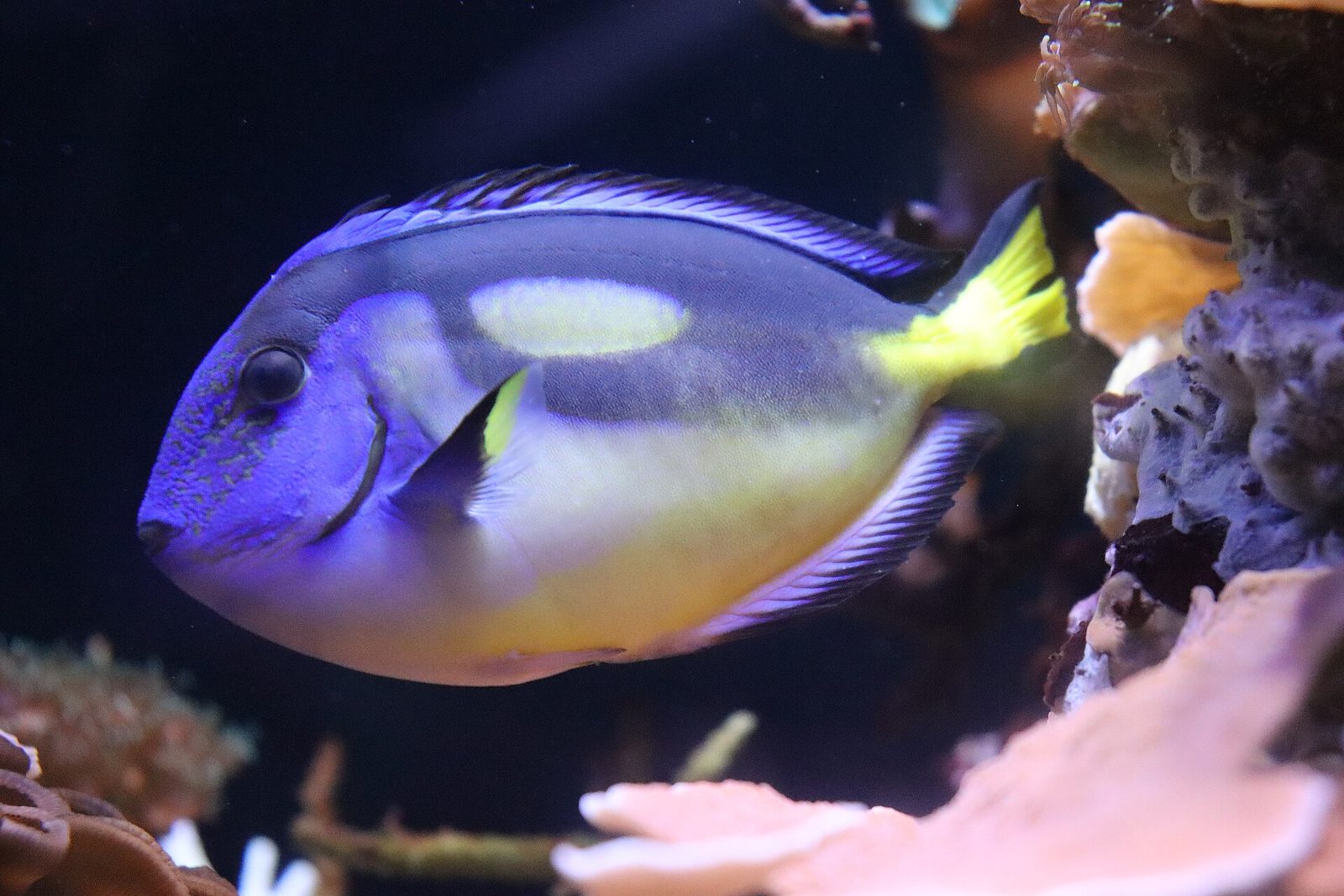
Tang, surgeonfish and doctorfish are three names for one family, Acanthuridae — about 80 species of laterally compressed, oval reef fish found on every tropical reef in the world. The family name means “thorn tail”: every tang carries a sharp, retractable spine on each side of the tail base, the “scalpel” that gives the surgeonfish its name. The fish flicks it sideways when threatened, and it cuts skin (see the Acanthuridae entry on Wikipedia for the anatomy).
In the wild, tangs are grazers. They spend the entire day cropping filamentous algae from rock and coral, often in shoals of hundreds, covering kilometres of reef. Three facts from that life shape tang fish care in a glass box:
- They never stop swimming. A tang cruises in long straight lines. Tank length, not gallons, is the first number in tang fish care.
- They graze constantly. A tang fed once a day is a hungry, stressed tang. Algae has to be available for hours.
- They have thin skin. Small scales and little slime coat make tangs the family most vulnerable to marine ich (Cryptocaryon) and velvet. Every tang keeper is, by necessity, a quarantine keeper.
Tangs are strictly marine. There is no freshwater tang; the blue “Dory” tang sold after the film is a 12-inch reef fish that needs a 125-gallon saltwater aquarium, which is why so many were returned to shops within a year.
Tang Fish Care at a Glance
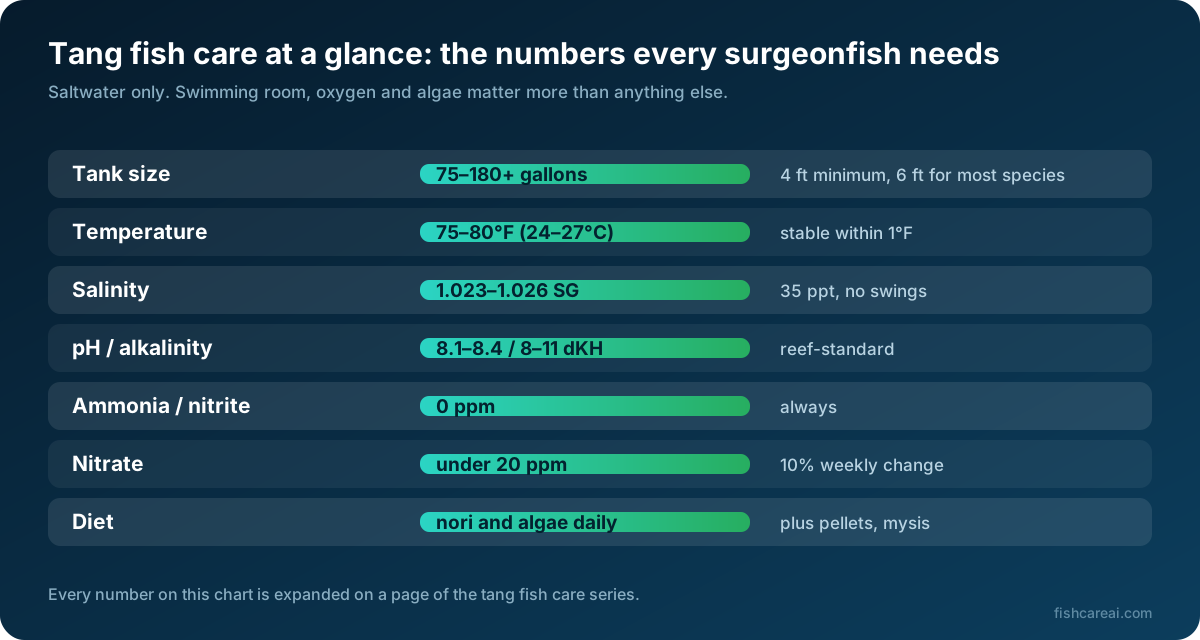
| Care factor | Requirement |
|---|---|
| Water type | Saltwater, reef parameters |
| Adult size | 6–8 in (small Zebrasoma, Ctenochaetus) to 12–24 in (Acanthurus, Naso) — size by species |
| Lifespan | 10–20 years in the aquarium (lifespan); 30+ in the wild |
| Minimum tank | 75 gal / 4 ft (small species); 125 gal / 6 ft (most); 180+ gal (naso, sohal) |
| Temperature | 75–80°F (24–27°C), stable |
| Salinity | 1.023–1.026 specific gravity (33–35 ppt) |
| pH / alkalinity | 8.1–8.4 / 8–11 dKH |
| Ammonia / nitrite / nitrate | 0 / 0 / under 20 ppm |
| Diet | Herbivore: nori daily, spirulina pellets, occasional mysis |
| Temperament | Peaceful with other families; aggressive to other tangs |
| Reef safe | Yes (rarely nips LPS or clams when underfed) |
| Care level | Intermediate — hardy fish, demanding setup |
Tang Fish Tank Size: Length First
The most common tang fish care mistake is buying the fish before the tank. Every tang, including a 2-inch juvenile, needs a tank at least 4 feet long, and most need 6 feet. The working minimums by group:
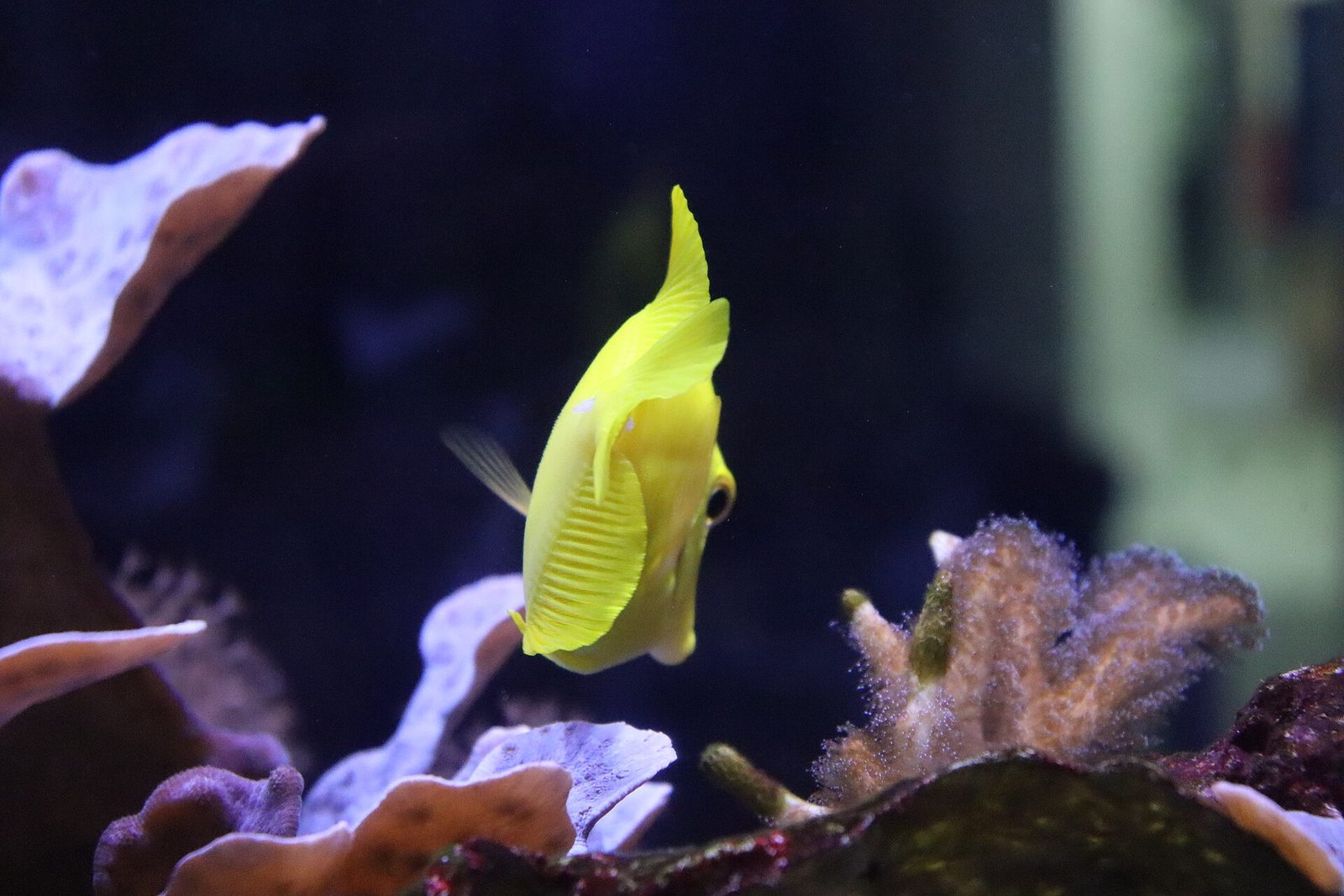
- 75 gallons, 4 ft — yellow, purple, scopas, kole, tomini tangs (adult 6–8 in).
- 125 gallons, 6 ft — blue (hippo), powder blue, achilles, convict, sailfin tangs (adult 8–15 in).
- 180 gallons or more, 6–8 ft — naso, unicorn, sohal, clown tangs (adult 12–24 in).
A 55-gallon tank is 4 feet long but only 13 inches deep front to back; a 6-inch tang cannot turn in it comfortably, and a 40-gallon breeder is a foot too short for any tang. Keep an open swimming lane along the front glass in a reef tank, because rockwork removes the straight runs a tang lives for. The full reasoning, species by species, is on the tang fish tank size page.
Tang Fish Water Parameters
Tangs want ordinary reef water, held steady: 75–80°F, specific gravity 1.023–1.026, pH 8.1–8.4, alkalinity 8–11 dKH, ammonia and nitrite at zero and nitrate under 20 ppm. None of those numbers is unusual. What tangs punish is movement: a 2°F swing overnight, salinity creeping up as water evaporates, a pH crash after a big water change. Stress from swings is what lets ich take hold, so an auto top-off and a heater controller do more for tang fish care than any medication.
Change 10% of the water weekly, or 20% every two weeks, with salt mixed to the same salinity and temperature as the tank. Run carbon in a bag rather than loose — carbon dust is one of the suspected causes of head and lateral line erosion (HLLE) in tangs. The full targets, and how to hold them still, are on the tang fish water parameters page; use the water parameter checker if a reading is drifting.
Tang Fish Food and Feeding
A tang's stomach is small and its gut is long, built for a slow, continuous intake of algae. Tang fish care therefore means seaweed available for hours every day, not one pinch of flake in the morning:
- Nori on a clip, daily. A half sheet of plain dried seaweed (green or purple), rubber-banded to a rock or in a veggie clip, left for 2–4 hours.
- Herbivore pellets or flakes, once or twice a day. Spirulina-based, small enough to swallow whole.
- Frozen mysis or brine shrimp, two or three times a week. Protein for growth and colour; rinse the thawed cube first.
- Live rock algae, always. The film and turf algae a tang grazes between meals is why reef keepers add them.
A well-fed tang is a fat-backed, bright, ich-resistant tang; a thin one with a pinched belly behind the head is the one that gets sick. Species notes, the nori trick for new arrivals and what to do when a tang refuses food are on the tang fish food page.
Types of Tang Fish
Around 15 species are common in the trade, and they sort into three groups that behave differently enough to change your tang fish care plan:
| Group | Examples | Adult size | Minimum tank | Hardiness |
|---|---|---|---|---|
| Zebrasoma | Yellow, purple, scopas, sailfin, desjardini | 7–15 in | 75–125 gal | Hardy, good first tangs |
| Ctenochaetus (bristletooth) | Kole, tomini, chevron | 6–8 in | 75 gal | Hardy, best algae grazers |
| Acanthurus | Blue (hippo)*, powder blue, achilles, convict, sohal | 8–16 in | 125–180 gal | Ich-prone, for established reefs |
| Naso | Naso (lipstick), unicorn, vlamingi | 12–24 in | 180+ gal | Hardy but enormous |
*The blue tang is technically Paracanthurus, but it behaves like an Acanthurus in every way that matters. Comparisons of all 15 species, and which tang suits a beginner, are on the types of tang fish page. Individual profiles: yellow tang, blue tang, kole tang, naso tang.
Tang Fish Tank Mates and Keeping Tangs Together
With other families, tangs are easy: clownfish, wrasses, gobies, blennies, cardinalfish, dwarf angels and most damsels all work. With each other, tangs are the most territorial fish in the reef hobby. Two tangs of the same species, or the same body shape, will fight until one stops eating. The rules that hold:
- One tang per genus, added at the same time so no fish owns the tank first.
- Different shapes: a Zebrasoma (tall sail) with a Ctenochaetus (round bristletooth) with an Acanthurus (oval) coexist far better than two Zebrasoma.
- Add the calmest species first and the boldest last; a sohal or purple tang goes in last, or not at all in under 180 gallons.
- Two tangs need 50% more tank than one; three need 180 gallons; a shoal of yellow tangs needs 300+.
The full list of safe and unsafe companions, and the order to add them, is on the tang fish tank mates page; species pairings are on the blue tang and yellow tang compatibility hubs. How to read a scalpel display, hiding and night colour is under tang fish behavior.
Ich, Velvet and Tang Fish Health
If there is one thing that defines tang fish care, it is marine ich. Cryptocaryon irritans shows up as salt-grain white spots that appear, vanish for a few days and return heavier; tangs get it first and worst. Its cousin marine velvet (Amyloodinium) looks like gold dust and kills in days. Neither can be treated in a reef tank — the medications that work (copper, chloroquine, tank transfer) kill invertebrates, and the “reef-safe” bottles do not cure the parasite.
So the treatment is prevention: quarantine every new fish for four weeks in a bare tank, watch for spots, and treat there. Other tang problems — black ich (small flatworms, cleared with a freshwater dip), head and lateral line erosion (diet and water, not a parasite), and Uronema ulcers — are compared with photos-worth of detail on the tang fish diseases page. Species-level symptom pages: blue tang white spots, blue tang losing color.
Common Tang Fish Care Mistakes
- Buying the tang first. A juvenile in a 40-gallon “for now” stunts, stresses and gets ich before the big tank is ever bought.
- Skipping quarantine. One un-quarantined tang puts ich in a reef for 76 days minimum.
- Feeding once a day. Grazers need hours of access to seaweed; a hungry tang is a thin, pale, HLLE-prone tang.
- Two of the same tang. Same species or same shape equals a fight in anything under 180 gallons.
- Chasing pH. Stable 8.1 beats a pH bounced between 7.9 and 8.4 with additives.
- Handling by the tail. The scalpel cuts deep and can be mildly venomous. Net into a container.
Follow the series page by page and none of these will happen to your fish. Start with the tank: tang fish tank size.
Tang Fish Care FAQ
Are tang fish hard to care for?
Tang fish care is intermediate. The fish themselves are hardy eaters and long-lived; the difficulty is the setup they demand: a 4–6 foot saltwater tank, stable reef parameters, a strict quarantine routine because tangs catch marine ich first, and seaweed every day.
Can tang fish live in freshwater?
No. Every tang and surgeonfish is a marine reef fish and dies within hours in freshwater. The blue tang from Finding Nemo is a saltwater fish that needs a 125-gallon reef aquarium, not a bowl.
What size tank does a tang fish need?
A minimum of 75 gallons and 4 feet for the small Zebrasoma tangs (yellow, purple, kole), 125 gallons and 6 feet for blue, powder blue and achilles tangs, and 180 gallons or more for naso and sohal tangs. Length matters more than volume.
Are tangs and surgeonfish the same thing?
Yes. Tang, surgeonfish and doctorfish are common names for the same family, Acanthuridae. The names refer to the scalpel-like spine on each side of the tail, which the fish raises when threatened.
Why are tang fish so expensive?
Almost all tangs are wild-caught by hand on reefs in Hawaii, the Indo-Pacific and the Red Sea, then shipped alive. Hawaiian collection has been restricted since 2021, which is why yellow tang prices tripled. Captive-bred yellow and blue tangs exist but remain limited.
How long do tang fish live?
Ten to twenty years in a well-run aquarium, and several wild surgeonfish species are documented past 30. A tang bought as a juvenile is a two-decade commitment.
Can tang fish sting you?
The tail spine can cut skin deeply and some species carry mild venom, so the cut hurts more than its size suggests. Never handle a tang by the tail; net it in a container or a fine net with the spine folded.