Choosing grouper fish tank mates comes down to a single measurement: the grouper's mouth. A grouper swallows prey up to half its own length, whole, usually at night, and it does not distinguish between a fish it has lived with for a year and a fish that arrived yesterday. So the good companions are fish that are too big to swallow and too tough to bully — lionfish, large tangs, large angelfish, big wrasses, triggers, puffers and eels — and the bad ones are everything under about half the grouper's adult length, plus every shrimp, crab and snail in the tank. This page lists both, answers the common pairings (clownfish, lionfish, tang, eel, trigger), and settles whether groupers are reef safe.
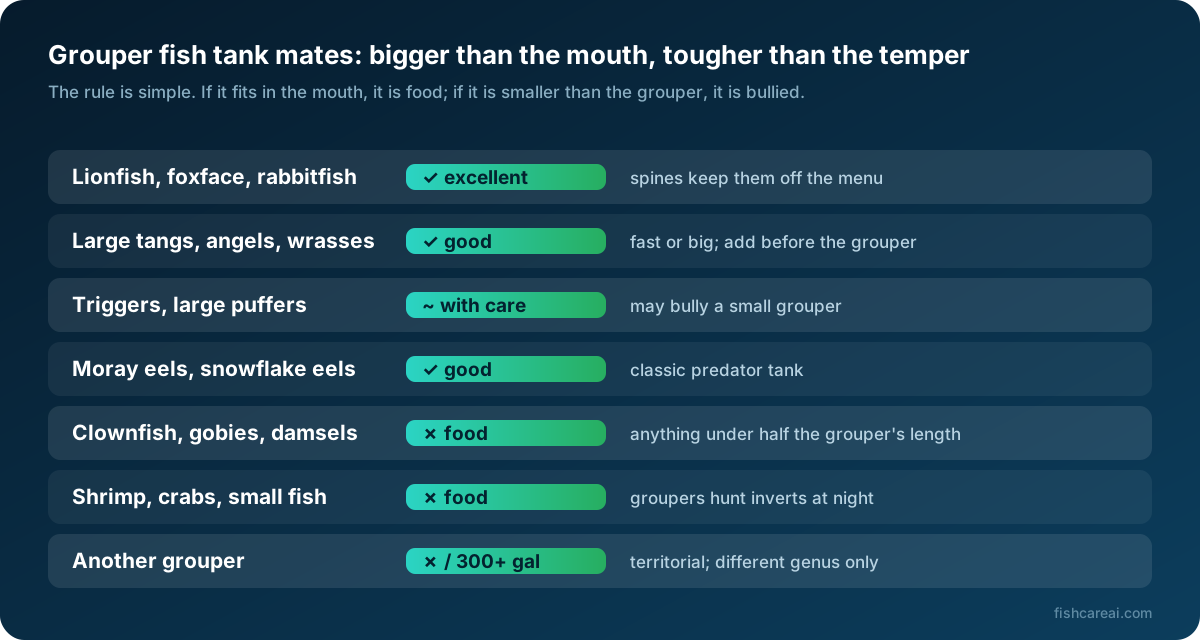
The Mouth Rule
Measure the grouper's adult length from the size page, halve it, and nothing under that length goes in the tank. A 14-inch miniatus eats a 6-inch wrasse; a 24-inch panther grouper eats a 10-inch tang. A grouper's mouth opens far wider than the head suggests and the strike is a suction gulp that takes a fish sideways; keepers are routinely surprised by what disappears. The rule holds regardless of temperament (the panther grouper is “peaceful” and eats damsels), familiarity (fish raised together are eaten once the size is right) and feeding (a well-fed grouper still hunts at night). Grouper behaviour around prey is on the behavior page.
Safe Grouper Fish Tank Mates
| Tank mate | Verdict | Why it works |
|---|---|---|
| Lionfish (volitans, radiata) | Excellent | Venomous spines; slow, same food, same tank style. The classic pairing |
| Foxface and rabbitfish | Excellent | Venomous dorsal spines; fast, herbivorous |
| Large tangs (naso, sailfin, sohal, blue) | Good in 180+ gal | Fast and big; add before the grouper |
| Large angelfish (emperor, koran, queen) | Good in 180+ gal | Big, bold, different food |
| Big wrasses (harlequin tusk, banana, lunare) | Good | Too fast and too big to catch |
| Moray and snowflake eels | Good | Share caves on the reef; neither can eat the other as adults |
| Triggerfish (niger, Picasso, clown) | With care | May bully a smaller grouper; fine when the grouper is the larger fish |
| Large puffers (dogface, porcupine) | With care | Big enough; keep the grouper well fed |
| Large hawkfish, squirrelfish, soldierfish | Good | Nocturnal cave fish that hold their own |
The common thread is a fish-only or coral-only predator tank of 125–300 gallons where everything is large. Run any specific pairing through the fish compatibility checker.
Common Grouper Fish Pairings Answered
- Grouper with lionfish: yes, the best grouper tank mate there is. Both are slow ambush predators, both eat frozen seafood from a stick, and the lionfish's spines take it off the menu. Size the tank for both (see the tank size page).
- Grouper with clownfish: no, beyond a few months. A 3-inch grouper and a clownfish coexist until the grouper is about 7 inches; then the clownfish is food. Maroon clownfish last longest and are still eaten.
- Grouper with tang: yes for large tangs in 180 gallons or more — a naso or sailfin is too fast and too big to catch. Yellow and kole tangs are at risk with any grouper over a foot. See tang fish tank mates.
- Grouper with eel: yes. Moray and snowflake eels are classic grouper companions; feed the eel with a stick so the grouper does not take its share, and give each its own cave.
- Grouper with triggerfish: yes when the grouper is the larger fish; a big trigger bullies a small grouper and nips its fins.
- Grouper with another grouper: only in 300 gallons or more, different genera (a panther with a miniatus), added together. Two of the same species fight until one is dead.
Grouper Fish Tank Mates to Avoid
- Anything under half the grouper's adult length: clownfish, damsels, gobies, blennies, cardinals, dwarf angels, small wrasses, small tangs, firefish. Food.
- Shrimp, crabs, snails, urchins, starfish: groupers hunt invertebrates at night and dig them out of rock. A cleaner shrimp lasts a week.
- Slow, delicate fish that are large enough: a mandarin or a seahorse is too small anyway; a large batfish or a copperband butterfly is too fragile for a predator tank.
- A second grouper of the same species in anything under 300 gallons.
- Sharks and rays in home tanks: the grouper is bullied or the ray is eaten, depending on size.
Are Groupers Reef Safe?
Half yes. Groupers ignore corals, anemones, clams (except as something to hide behind) and coralline algae; a grouper in a coral-only reef with large fish is a legitimate and striking display, and its waste even feeds the corals. What a grouper cannot share is the reef's clean-up crew and small fish: shrimp, crabs, snails, urchins, gobies and every damsel are eaten within weeks. A “reef-safe grouper” means coral-safe, never invertebrate-safe, and the dwarf hinds are only slightly better than the large species because their mouths are smaller. Rockwork also takes the grouper's striking lane, so add 15% to the tank size for a reef-scaped grouper tank.
Order of Introduction
Add the large tank mates first — tang, angel, wrasse, eel — so they settle before the grouper arrives, or add everything together as juveniles into a tank sized for the adults and let them grow up at the same rate (which fails if one species grows faster; a panther grouper outgrows a tang in a year). A lionfish can go in before or after. Feed the grouper before adding anything, and feed the whole tank from two sticks so the grouper does not take everything. Quarantine every new fish four weeks; the grouper is the fish that shows ich last and is hardest to catch. Everything else about the grouper itself is in the grouper fish care guide, and the clownfish you cannot keep with it has its own care guide. The reef fish family account on Wikipedia's grouper page covers the wild diet behind all of this.
Grouper Fish Care FAQ
What fish can live with a grouper?
Fish too large to swallow and too tough to bully: lionfish, foxface and rabbitfish, large tangs, large angelfish, big wrasses, triggerfish, large puffers and moray eels. The classic grouper tank is a predator or fish-only-with-live-rock system.
Can a grouper live with clownfish?
Only while the clownfish is bigger than the grouper's mouth, which is never for long. A 3-inch grouper juvenile and a clownfish coexist for a few months; by the time the grouper is 8 inches, the clownfish is a meal.
Can groupers live with lionfish?
Yes — the most reliable grouper tank mate. Venomous spines keep the lionfish off the menu, both are slow, both eat the same frozen food, and neither bothers the other. Size the tank for both.
Can groupers live with tangs?
Large tangs (naso, sailfin, sohal, blue) in 180 gallons or more, yes; they are fast and too big to eat. Small tangs and juveniles are at risk. Add the tang before the grouper.
Can a grouper live with an eel?
Yes. Moray and snowflake eels share caves with groupers on the reef and in tanks, and neither can eat the other once both are adult. Feed the eel with a stick so the grouper does not take everything.
Are groupers reef safe?
Corals and anemones, yes. Shrimp, crabs, snails, urchins and every small fish, no. A grouper in a reef tank is a coral-only reef.