Grouper fish care in a home aquarium is easy in every respect but one: size. Groupers are hardy, long-lived, quick to tame and almost never sick, and they will eat anything meaty you offer — including every tank mate that fits in a mouth that opens wider than the head suggests. The whole discipline is choosing a species that stays under 16 inches, buying the adult's tank before the 3-inch juvenile, running filtration for a predator's waste, and stocking only fish it cannot swallow. Do that and a grouper is a 15-year pet that learns your face and takes food from a stick.
This guide is the hub of the grouper fish care series. It covers what a grouper is, which species belong in an aquarium, and the numbers that apply to all of them, with a dedicated page for each decision: tank size, water parameters, food, types of grouper, tank mates, behavior, diseases, size and lifespan and breeding, plus species guides for the miniatus grouper and the panther grouper. Size the tank with the grouper fish tank size calculator.
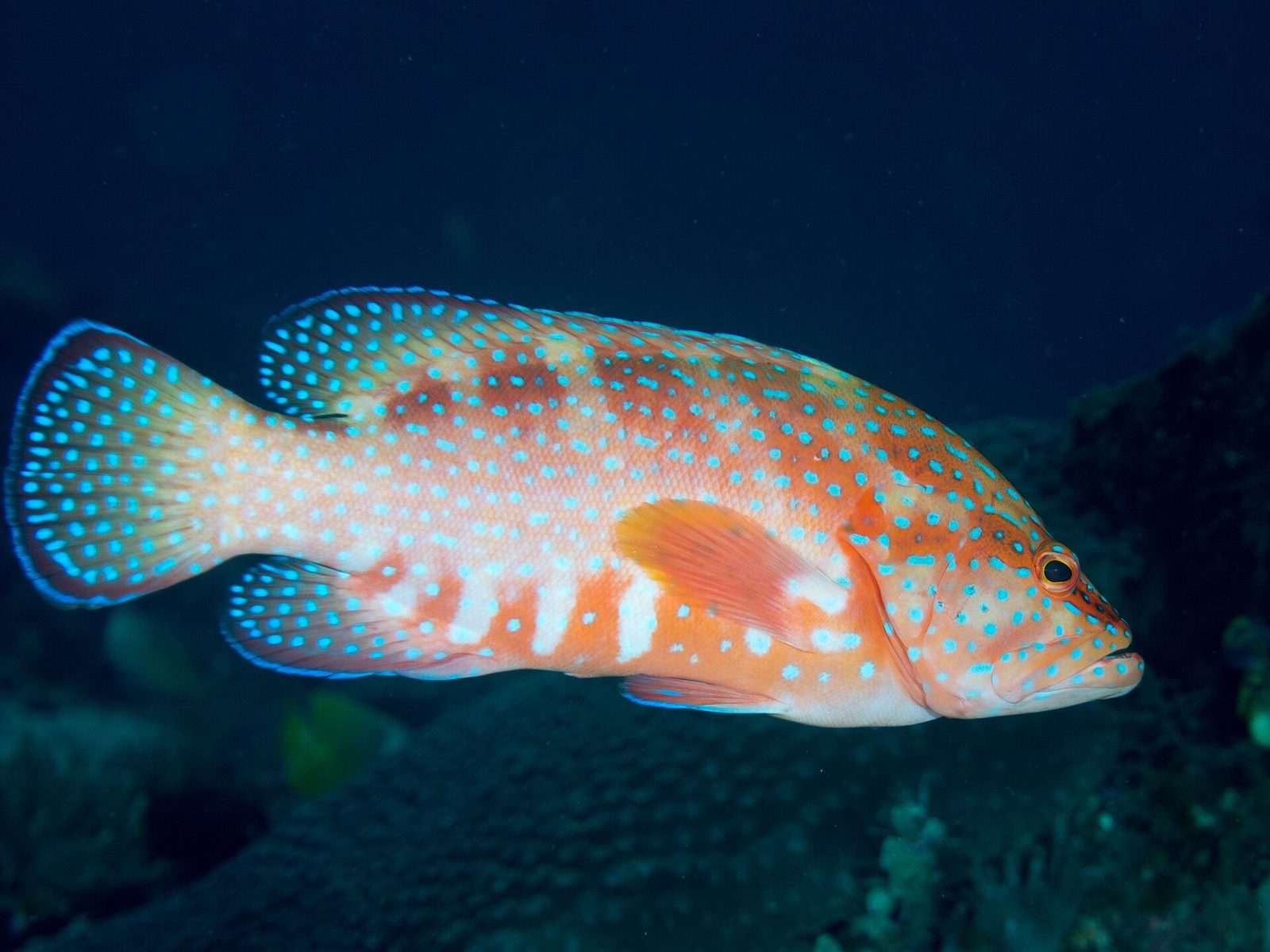
What Is a Grouper Fish?
Groupers are the subfamily Epinephelinae of the sea bass family: around 160 species of heavy-bodied, big-mouthed ambush predators found on reefs and rocky coasts in every warm sea. They range from the 8-inch blue-line hind to the goliath grouper at 8 feet and 800 pounds, which is why “grouper” on a shop tank tells you nothing until you know the species. The genera that matter for grouper fish care are the small hinds and coral groupers (Cephalopholis), the humpback or panther grouper (Cromileptes), the lyretail groupers (Variola) and a few small Epinephelus; the family account on Wikipedia's grouper page covers the rest.
Three facts about their biology shape everything that follows:
- They are ambush hunters. A grouper spends the day in a cave or under a ledge, watches, and swallows prey whole with a strike measured in milliseconds. It does not chase; it needs a cave and open water in front of it.
- They swallow whole. The mouth and gill covers flare to take prey half the grouper's own length. Every tank mate is judged by that measurement.
- They grow fast and live long. A 3-inch juvenile is a foot long inside 18 months, and a grouper lives 10–20 years. They also start life female and can turn male (see grouper breeding).
All groupers are marine. There is no freshwater grouper for the aquarium, and a grouper in fresh water dies within hours.
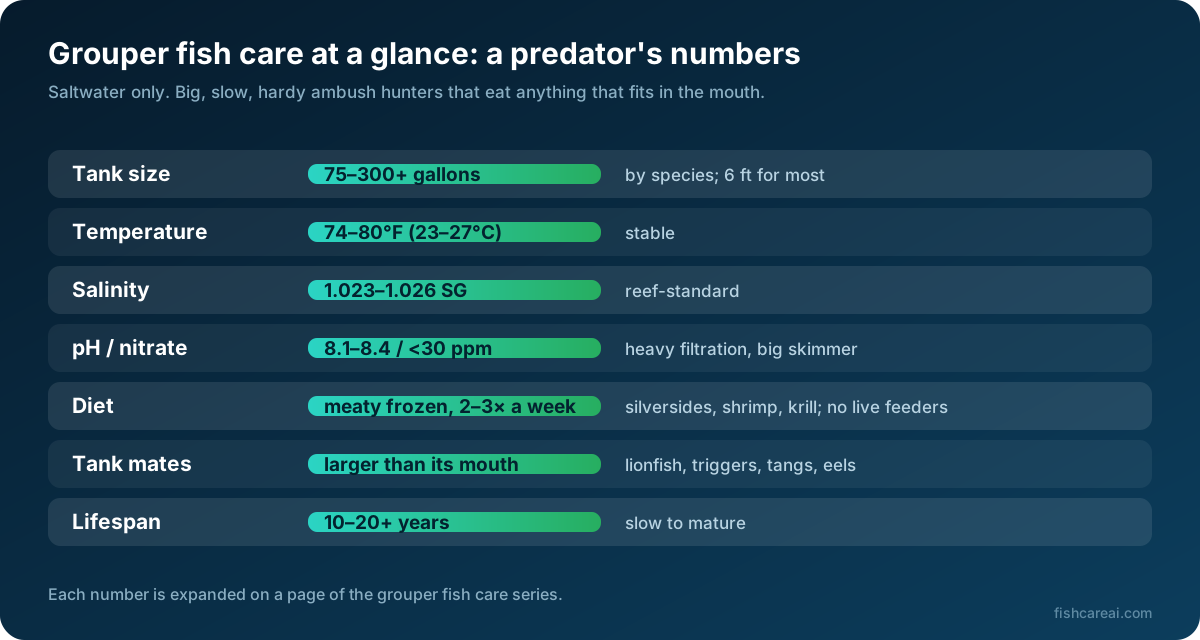
Grouper Fish Care at a Glance
| Care factor | Requirement |
|---|---|
| Water type | Saltwater, reef parameters, heavy filtration |
| Adult size | 8–12 in (dwarf hinds), 12–16 in (miniatus, leopard), 20–30 in (panther, bluespotted, lyretail) — size by species |
| Lifespan | 10–20 years |
| Minimum tank | 75–100 gal (dwarf); 100–125 gal / 5–6 ft (medium); 180–300 gal / 6–8 ft (large) |
| Temperature | 74–80°F (23–27°C) |
| Salinity / pH | 1.023–1.026 SG / 8.1–8.4 |
| Nitrate | Under 30 ppm; skimmer rated 2× the tank |
| Diet | Carnivore: frozen silversides, shrimp, krill, squid, clam; carnivore pellets |
| Feeding | Adults 2–3× a week; juveniles daily |
| Temperament | Predatory; peaceful with fish too big to eat |
| Reef safe | Corals yes; shrimp, crabs and small fish no |
| Care level | Easy fish, demanding tank |
Which Grouper Belongs in a Home Aquarium?
The first decision in grouper fish care is made in the shop, and it is the one most often got wrong, because every grouper is sold at 2–4 inches and the bumblebee grouper juvenile is prettier than the miniatus. Three bands:
| Band | Species | Adult size | Minimum tank |
|---|---|---|---|
| Dwarf hinds | Blue-line hind, V-tail grouper, bluespotted hind | 8–12 in | 75–100 gal |
| Medium | Miniatus (coral hind), leopard hind, harlequin grouper | 12–16 in | 100–125 gal |
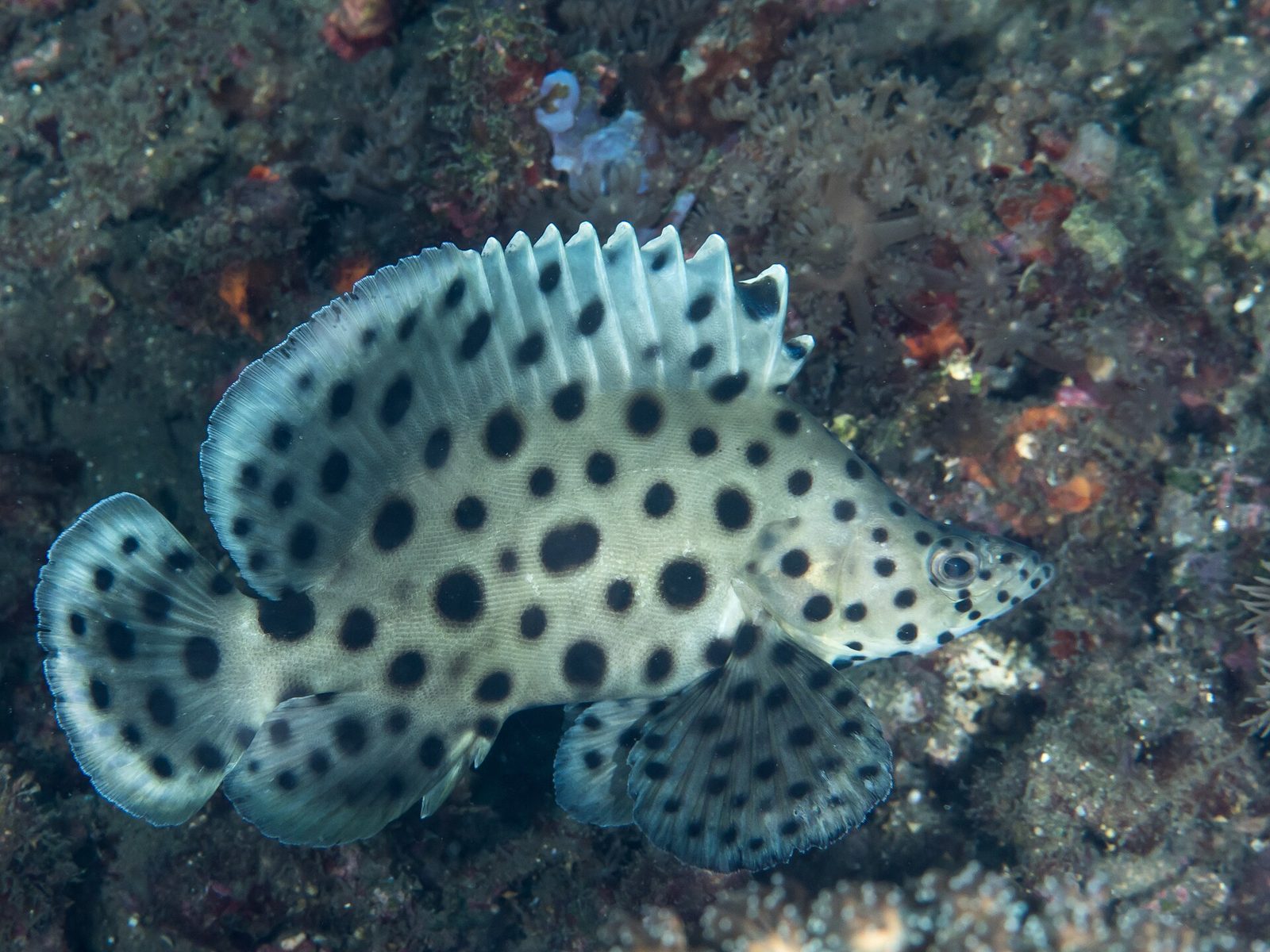
| Large | Panther, bluespotted grouper, lyretail, red grouper | 20–30 in | 180–300 gal |
| Not for aquariums | Bumblebee, giant, goliath, Nassau, black grouper | 3–8 ft | Public aquariums |
The miniatus grouper is the best first grouper — hardy, spectacular, 100 gallons — and the panther grouper is the most popular and the most outgrown. Both have their own pages: miniatus grouper care and panther grouper care. All twelve aquarium species are compared on the types of grouper fish page.
Grouper Fish Tank Size
Size the tank for the adult, not the fish in the bag. A miniatus needs 100–125 gallons and 5 feet; a panther grouper 180 gallons and 6 feet; a lyretail 300. Add 25% for each large tank mate and 15% for heavy rockwork. The layout is simple and non-negotiable: a cave the grouper fits its whole body into, an open sand area in front of it, and rock that is stable enough not to shift when a 2-pound fish barges through it. A lid matters less than for a tang — groupers rarely jump — but a sump and a big skimmer matter more. Species-by-species figures and the 55/75/125/180 answers are on the grouper fish tank size page.
Grouper Fish Water Parameters
Groupers want ordinary reef water — 74–80°F, 1.023–1.026, pH 8.1–8.4, ammonia and nitrite at zero — and they are more forgiving of the numbers than almost any other marine fish, which is why they were the first saltwater fish kept in the hobby. What they are not forgiving of is filtration that cannot keep up. A grouper eating whole silversides produces the waste of a dozen small fish, and nitrate creeping past 30 ppm is where cloudy eyes, HLLE and a sulky fish begin. A skimmer rated for twice the tank volume, a sump with plenty of biological media, and 20–25% weekly water changes are the standard. Targets and the filtration plan are on the grouper fish water parameters page; check readings with the water parameter checker.
Grouper Fish Food and Feeding
Feed a grouper like the predator it is: large, meaty, rare. Adults get frozen silversides, lancefish, shrimp, krill, squid or clam two or three times a week, soaked in a vitamin supplement, to a slightly rounded belly — then nothing until the belly flattens. Juveniles under 5 inches eat daily in smaller pieces. Most groupers learn to take a large carnivore pellet within a month, which fills the vitamin gap. The one rule of grouper fish care that keepers break most: no live freshwater feeder fish. Goldfish and rosy reds cause fatty liver disease and vitamin B1 deficiency and shorten a grouper's life by years. Schedules, pellet training and a grouper that refuses food are on the grouper fish food page.
Grouper Fish Tank Mates
One rule: if it fits in the mouth, it is food, and the mouth fits fish half the grouper's length. Good tank mates are large and tough — lionfish (venomous, so never eaten), foxface, large tangs, large angelfish, big wrasses, triggerfish, large puffers and moray eels — in a fish-only or coral-only system. Clownfish, gobies, damsels, dwarf angels, shrimp, crabs and snails last until the grouper is big enough to take them, which is soon. Groupers ignore corals entirely, so a coral reef with big fish works; a reef with a clean-up crew does not. Two groupers need 300 gallons and different genera. The list, and the common pairings (lionfish, tang, eel, clownfish), are on the grouper fish tank mates page; test a combination in the fish compatibility checker.
Grouper Fish Health and Behavior
Groupers are among the hardiest marine fish, but most are wild-caught and arrive with flukes and, often, marine ich. A four-week quarantine with copper or praziquantel is the whole health plan; treating a 12-inch fish in a display tank later is miserable. Beyond that, the problems are self-inflicted: HLLE from a frozen-only diet without vitamins, fatty liver from feeder goldfish, cloudy eyes from nitrate. All are covered on the grouper fish diseases page. And most “is my grouper sick?” questions are normal grouper fish behavior — sitting in a cave all day, changing colour in seconds, barking, gaping, following your hand — decoded on the behavior page.
Common Grouper Fish Care Mistakes
- Buying the juvenile for the tank you have. A 3-inch panther grouper is a 2-foot fish in three years. Buy the adult's tank or plan the upgrade before the fish.
- The wrong species. Bumblebee, giant and Nassau groupers are sold small and outgrow every home tank.
- Feeder goldfish. Fatty liver, thiaminase, parasites. Frozen marine food is cheaper and safer.
- Small tank mates “that it grew up with”. Familiarity does not protect a clownfish from a hungry grouper.
- A skimmer sized for the tank, not the fish. Size filtration for a predator's waste.
- Skipping quarantine on a wild-caught fish that will be too big to catch later.
- Hand-feeding. Tame groupers bite, hard. Use a feeding stick.
Follow the series page by page and none of these will happen. Start with the species: types of grouper fish, then the tank: grouper fish tank size.
Grouper Fish Care FAQ
Can you keep a grouper fish in a home aquarium?
Yes, if you pick the right species and the right tank. Miniatus, leopard and blue-line hinds stay at 8–16 inches and live well in 100–125 gallon tanks; panther, bluespotted and lyretail groupers reach 2 feet and need 180–300 gallons. Bumblebee, giant and goliath groupers grow to 3–8 feet and belong in public aquariums only.
Are grouper fish hard to care for?
Grouper fish care is easy in every way except size. They are hardy, eat readily, tolerate a range of water and rarely get sick. The difficulty is a tank of 100 gallons or more, a skimmer that handles a meaty bioload, and tank mates too big to swallow.
What do pet grouper fish eat?
Meaty frozen seafood: silversides, lancefish, shrimp, krill, squid and clam, fed two or three times a week to adults and daily in small pieces to juveniles, soaked in a vitamin supplement. Never live freshwater feeder fish, which cause fatty liver and vitamin deficiency.
Are groupers reef safe?
With corals, yes — they ignore corals and anemones. With reef inhabitants, no: a grouper eats every shrimp, crab, small fish and goby it can fit in its mouth, usually at night. They suit a fish-only-with-live-rock or predator tank, or a coral-only reef with large fish.
How big do aquarium groupers get?
Dwarf hinds 8–12 inches, miniatus and leopard groupers 12–16, panther and bluespotted groupers 20–27, lyretail groupers up to 30 inches. Most are sold at 3–4 inches and reach a foot within 18 months.
Can grouper fish live in freshwater?
No. Every aquarium grouper is a marine reef fish and dies within hours in fresh water. A few wild groupers enter estuaries, but there is no freshwater grouper for the aquarium.
How long do grouper fish live in an aquarium?
Ten to twenty years for the medium and large species, and wild groupers of the same genera are documented past 30. A grouper is a long commitment that outgrows two or three tanks on the way.