Six grouper fish diseases account for almost every sick grouper in an aquarium, and only two of them arrive with the fish: marine ich and velvet, and flukes, which most wild-caught groupers carry. The rest — HLLE, fatty liver and bloat, cloudy eye and popeye — are made in the tank by diet and water. Groupers are otherwise among the hardiest marine fish there are, which makes this a short list, but a 12-inch grouper is a difficult patient: it cannot be treated in a reef, it is hard to catch, and it needs a hospital tank of 75 gallons or more. This page tells the six apart, gives the treatments that work for large predators, and lays out the four-week quarantine that prevents most of it.
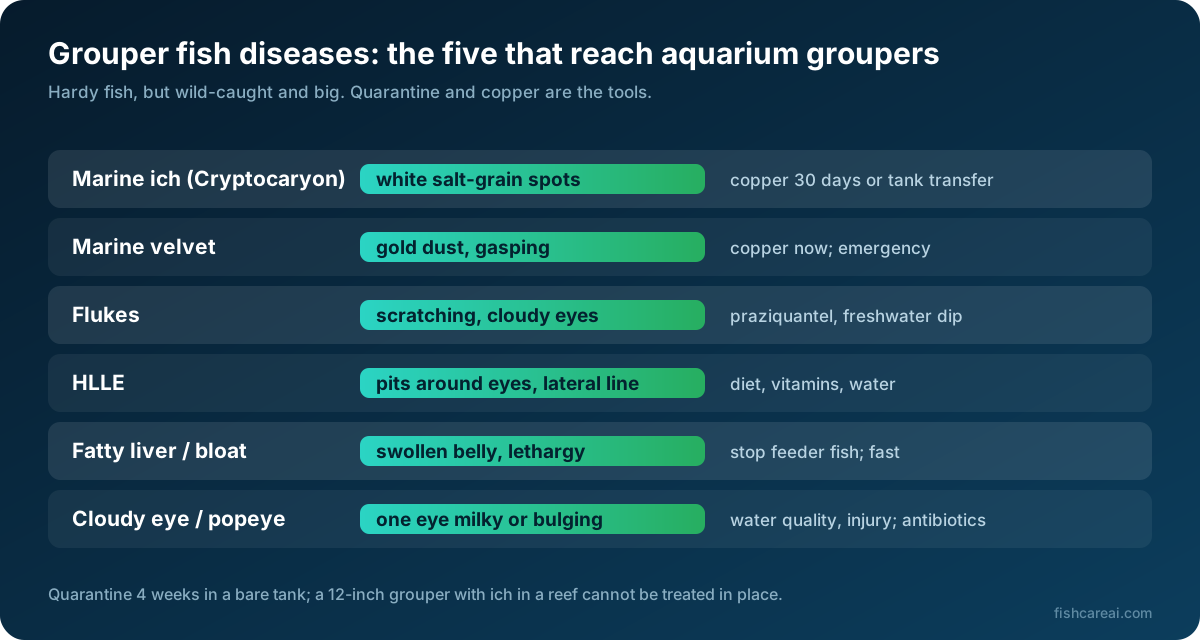
Grouper Fish Diseases at a Glance
| Disease | Key sign | Source | Treatment (hospital tank) |
|---|---|---|---|
| Marine ich (Cryptocaryon) | Salt-grain white spots, cycling | Arrives with the fish; stress | Copper 30 days, or hyposalinity 4 weeks |
| Marine velvet (Amyloodinium) | Gold dust, rapid breathing | Arrives with the fish | Copper immediately; freshwater dip |
| Flukes (Neobenedenia) | Scratching, cloudy eyes, fin clamping | Nearly universal in wild groupers | Praziquantel; 5-minute freshwater dip |
| HLLE | Pits around eyes and lateral line | Diet, carbon, voltage, stress | Vitamin-soaked food, pellets, bigger tank |
| Fatty liver / bloat | Swollen belly, lethargy, pale | Feeder goldfish, daily feeding | Fast, lean marine food |
| Cloudy eye / popeye | One or both eyes milky or bulging | Nitrate, injury, flukes | Water change; praziquantel; antibiotics |
Grouper Fish Diseases That Arrive With the Fish: Ich and Velvet
Ich shows as discrete white spots the size of salt grains that appear, vanish for a few days and return heavier, with flashing against rock. Groupers get it later and milder than tangs but still get it, usually within two weeks of arrival or after a temperature swing. Velvet is a finer gold or grey dust, seen with a torch from the side, with rapid breathing and the fish hanging in the flow; it kills in one to three days.
Both are treated in a bare hospital tank — for a large grouper, 75 gallons or more with a PVC pipe to hide in — with chelated copper at the therapeutic level for 30 days, tested daily; groupers tolerate copper well. For ich alone, hyposalinity at 1.009 specific gravity for four weeks is the gentler option and groupers, being euryhaline, take it easily. Neither parasite can be cured in a display tank with invertebrates, and reef-safe remedies do not clear them. The parasite life cycle is on the Cryptocaryon entry.
Flukes and Cloudy Eye
Almost every wild-caught grouper carries skin and gill flukes (Neobenedenia, Benedenia) — flat, transparent worms a few millimetres long that are invisible on the fish but show as scratching on rock, clamped fins, cloudy eyes and rapid breathing. A 5-minute freshwater dip (RO water matched to tank pH and temperature) makes them drop off as visible white specks, which confirms the diagnosis; praziquantel in the quarantine tank, two courses a week apart, clears them. Flukes are the reason the quarantine below includes praziquantel by default.
Cloudy eye on one side is usually a fluke on the cornea or a scrape against rock; on both sides it is nitrate, a bacterial infection or both. Popeye (a bulging eye) follows an injury or gas behind the eye; both clear with a large water change and, if not, a broad-spectrum antibiotic in the hospital tank.
Grouper Fish Diseases Made in the Tank: HLLE
Head and lateral line erosion — pale pits and channels around the eyes that spread along the flank — is the commonest of the chronic grouper fish diseases in fish kept for years, and it is made in the tank. The links are a frozen-only diet without vitamin supplements (silversides alone lack vitamins A, C and the fatty acids the fish needs), activated carbon dust, stray voltage from a failing heater or pump, and the chronic stress of a tank that is too small. It is not infectious. Early pits fill in over two or three months with vitamin-soaked food, a carnivore pellet in the rotation, carbon in a bag or removed, a grounding probe and, if the fish is cramped, a bigger tank. Deep erosion scars but stops spreading. Feeding to prevent it is on the grouper fish food page.
Bloat and Fatty Liver Disease
A grouper with a permanently swollen belly, growing lethargic and pale, is almost always suffering from fatty liver disease: the result of live freshwater feeder fish (goldfish, rosy reds) and of feeding an adult every day because it begs. The liver fills with fat, the fish loses condition and dies at half its lifespan. There is no medication; the treatment is a week's fast, then lean marine food (silversides, squid, shrimp, clam) with a vitamin soak two or three times a week, and no feeders ever again. A belly that swells suddenly after a meal and flattens in two days is normal digestion. A swollen belly with raised scales is dropsy, a sign of internal infection, treated with Epsom salt and a broad antibiotic in the hospital tank and often fatal. Feeder goldfish also carry thiaminase, which destroys vitamin B1 and shows as loss of appetite and twitching — reversible early with vitamin-soaked marine food.
The Grouper Quarantine Plan
- Set up a bare tank of 40–75 gallons (larger for a panther grouper), heater, a sponge or hang-on filter seeded from the display, PVC pipe or a ceramic cave, no substrate.
- Acclimate slowly, then lights off for the first day. Offer a live ghost shrimp on a stick on day two.
- Day 3: freshwater dip for 5 minutes to confirm and knock down flukes.
- Week 1: praziquantel, repeated after seven days.
- Weeks 2–4: copper ramped over three days and held for 14–30 days (or hyposalinity for the full four weeks), feeding well throughout.
- Introduce only a fish that has eaten for two weeks with no spots, and add it to a display with tank mates it cannot swallow.
Four weeks in a bare tank is tedious for a fish that looked healthy in the shop; treating a 2-foot grouper in a 240-gallon reef with corals and a moray eel is far worse. The water that keeps a healthy grouper healthy is on the water parameters page, the behaviour that looks like illness but is not is on the behavior page, the same parasites in a more susceptible fish are on the tang fish diseases page, and the routine that prevents most of this is in the grouper fish care guide. Check any suspicious reading with the water parameter checker.
Grouper Fish Care FAQ
What diseases do grouper fish get?
Marine ich and velvet after shipping or a temperature swing; gill and skin flukes, which show as scratching and cloudy eyes; HLLE from a poor diet; fatty liver and bloat from feeder goldfish; and cloudy eye or popeye from poor water or an injury. Groupers are otherwise hardy.
How do I treat ich on a grouper?
In a bare hospital tank with copper at the therapeutic level for 30 days, tested daily, or with hyposalinity at 1.009 for four weeks, which groupers tolerate well. Reef-safe remedies do not clear it. A 12-inch grouper needs a hospital tank of 75 gallons or more.
Why does my grouper have a cloudy eye?
One cloudy eye is usually an injury against rock or a fluke on the cornea; both eyes cloudy points to poor water quality or a bacterial infection. Test nitrate and ammonia, do a large water change, and treat with praziquantel if the fish also scratches.
Why is my grouper bloated?
Most often fatty liver from a diet of feeder goldfish or too much fatty food, or simple over-feeding. Fast the fish for a week, then feed lean marine food (silversides, squid, shrimp) with a vitamin soak. A swollen belly with raised scales is dropsy and needs antibiotics.
What causes HLLE in groupers?
Head and lateral line erosion — pits around the eyes and along the flank — comes from a diet lacking vitamins (frozen-only, no soak), activated carbon dust, stray voltage and chronic stress in a small tank. Vitamin-soaked food, a grounding probe and a bigger tank reverse early cases.
Do groupers need quarantine?
Yes, four weeks in a bare tank with a PVC hide, observation, then prophylactic copper or praziquantel. Most groupers are wild-caught and arrive with flukes and ich; treating a large fish in a display tank later is far harder.