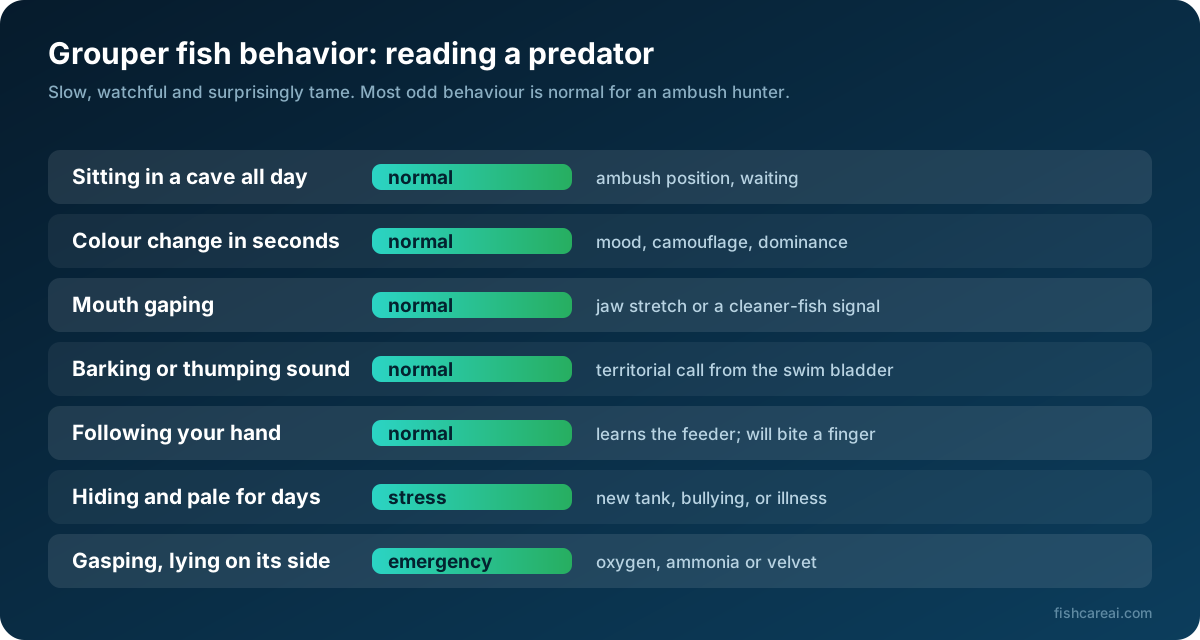
Most grouper fish behavior that worries a new keeper is a healthy ambush predator doing what it does: sitting motionless in a cave for hours, changing colour in seconds, gaping its mouth, making a low barking sound through the glass, and following a person along the front pane with the intent of a dog at dinner time. Groupers are among the most intelligent and tameable marine fish, and also among the most misread. This page decodes the ambush habit, colour change, sounds and gaping, tameness and biting, real aggression, and the short list of signals that mean something is wrong.
Grouper Fish Behavior Is Ambush Behavior
A grouper hunts by waiting. On the reef it spends most of the day in a cave, under a ledge or wedged in a crevice, head out, watching, and takes prey with a suction strike so fast — a few hundredths of a second — that the fish is inside before it has turned. In the aquarium the same fish sits in its cave from the moment the lights come on, comes out to patrol at dusk and dawn, and rushes to the front only when it has learned that a person means food. A grouper that “never does anything” is fine; a grouper with no cave, forced to hover in the open, is stressed. The family's ecology is described on the grouper page. Give it a den it fits and a clear line of sight across the sand, and it will use both exactly as designed — see the tank size page for the layout.
Can Groupers Change Colour?
Yes, faster than almost any other aquarium fish. A miniatus can go from bright red to a pale, blotched pink in seconds; a panther grouper darkens its white ground to grey; many species add or drop dark bars and a pale saddle. The changes signal mood (dark or barred when threatened, pale when resting or startled), dominance (a displaying male brightens), camouflage against the cave, and sleep (most groupers blanch at night). Colour that reverses within minutes is normal grouper fish behavior. Colour that stays dull or blotchy for days is stress — a new tank, a bully, high nitrate, a diet without vitamins — and a grouper that turns pale and stops eating needs the water tested today.
Barking, Thumping and Gaping
Do grouper fish bark? Yes. Groupers make a low thump or boom by drumming muscles against the swim bladder, loud enough to hear through the glass of a quiet room and, from a large fish, to feel through the stand. It is a territorial warning — at a tank mate near the cave, at a reflection, sometimes at the keeper's hand — and it is often paired with a gaping display: the mouth opened wide and the gill covers flared to look larger. Gaping without a rival is a jaw stretch or an invitation to cleaner wrasses and shrimp, which groupers visit on the reef and will let into the mouth in a tank. Constant gaping with fast gill movement is different: that is breathing difficulty, and it means low oxygen, high temperature, ammonia or velvet.
Why Are Groupers So Friendly? Tameness and Biting
Groupers are curious, learn fast, and quickly connect a person with food. Within weeks an aquarium grouper will rush the front glass when its keeper enters the room, follow a hand along the pane, take food from a stick, and hold still to be looked at from an inch away; divers describe wild goliath and potato groupers following them around for the same reason. It is intelligence and appetite, not affection, and it has one consequence: a tame grouper bites. A finger dipped in the water at feeding time looks exactly like food, the strike is faster than a reflex, and a 14-inch grouper has jaws that will break skin and bruise to the bone. Groupers have teeth — small, rasp-like bands rather than fangs — but the crushing force of the jaw is the injury. Feed from a stick or long tongs, from above the surface, every time.
Grouper Fish Aggression
Toward prey, a grouper is not aggressive but predatory; it eats what fits (see grouper fish tank mates). Toward fish too large to eat, most groupers are mildly territorial around the cave — a bark, a gape, a short rush — and otherwise indifferent; the panther and the blue-line hind are the mildest, the bluespotted grouper (C. argus) and the lyretail the most aggressive. Toward another grouper, especially of the same species, aggression is serious in anything under 300 gallons: sustained chasing, torn fins and, eventually, a dead fish. A grouper chasing a tank mate it cannot eat is usually defending the cave; add a second cave at the other end of the tank. A grouper chasing everything, all day, is in a tank too small for it.
Grouper Fish Stress Signals That Mean Something
| What you see | Likely cause | What to do |
|---|---|---|
| Pale or blotchy for days, eating less | New tank, bullying, nitrate, poor diet | Test water; check for a bully; add vitamins to food |
| Hiding and refusing food for over a week | Ich, velvet or flukes; a trigger or larger grouper | Look for spots, dust, scratching; see grouper fish diseases |
| Gasping at the surface, gill covers pumping | Low oxygen, high temperature, ammonia after a feed, velvet | Add surface flow; test; look for gold dust |
| Lying on its side on the sand | Emergency: ammonia, velvet, or a swallowed object | Large water change; hospital tank; copper if velvet |
| Scratching on rock, cloudy eyes | Flukes | Praziquantel; freshwater dip |
| Permanently swollen belly | Fatty liver from feeder fish or daily feeding | Fast a week; lean marine food. See grouper fish food |
| Swimming in circles near the surface | Tank too small, or looking for a cave | Build a den; see tank size |
Sitting still, changing colour, barking, gaping and following your hand are not on that table because they are what a healthy grouper does. The social biology behind the dominance behaviour — groupers change sex when they become the largest fish in a group — is on the breeding page, and the rest of the routine is in the grouper fish care guide.
Grouper Fish Care FAQ
Why does my grouper just sit in its cave?
Because that is how groupers hunt. They are ambush predators that rest in a cave or under a ledge for most of the day, watch, and strike in a fraction of a second. A grouper that sits still and comes out at feeding time is behaving normally.
Do grouper fish bark?
Yes. Groupers produce a low thump or bark by contracting muscles against the swim bladder, usually as a territorial warning or when startled; in a quiet room you can hear a large grouper through the glass.
Can groupers change colour?
Yes, within seconds. Groupers darken, pale, add bars or blotches with mood, dominance, light and camouflage. A colour change that reverses in minutes is normal; a fish that stays pale for days is stressed.
Why are groupers so friendly?
They are intelligent, curious and quick to learn that a person means food. An aquarium grouper will follow your hand, take food from a stick and let itself be watched from inches away. It will also bite a finger that looks like food, and the bite is strong.
Are grouper fish aggressive?
Toward prey, absolutely; toward fish too big to eat, mildly territorial around the cave; toward another grouper, very aggressive in anything under 300 gallons. They are not aggressive to people beyond a feeding-time bite.
Why does my grouper open its mouth wide?
Gaping stretches the jaw, signals to cleaner fish, and is a threat display to a rival. Constant gaping with rapid gill movement is different — that is breathing difficulty and needs a water test.