Panther grouper care has one problem, and it is the reason this is the most rehomed fish in the marine hobby: the adorable 3-inch, black-polka-dotted juvenile in the shop becomes a 20–27 inch, 5-pound fish that needs a 180-gallon, 6-foot tank, and it gets there in about three years. Everything else about the humpback grouper (Cromileptes altivelis) is easy: it is hardy, usually captive-bred, the mildest of the large groupers, takes frozen food from a stick within days, and lives 15–20 years. Buy the adult's tank and it is a superb fish.
About the Panther Grouper
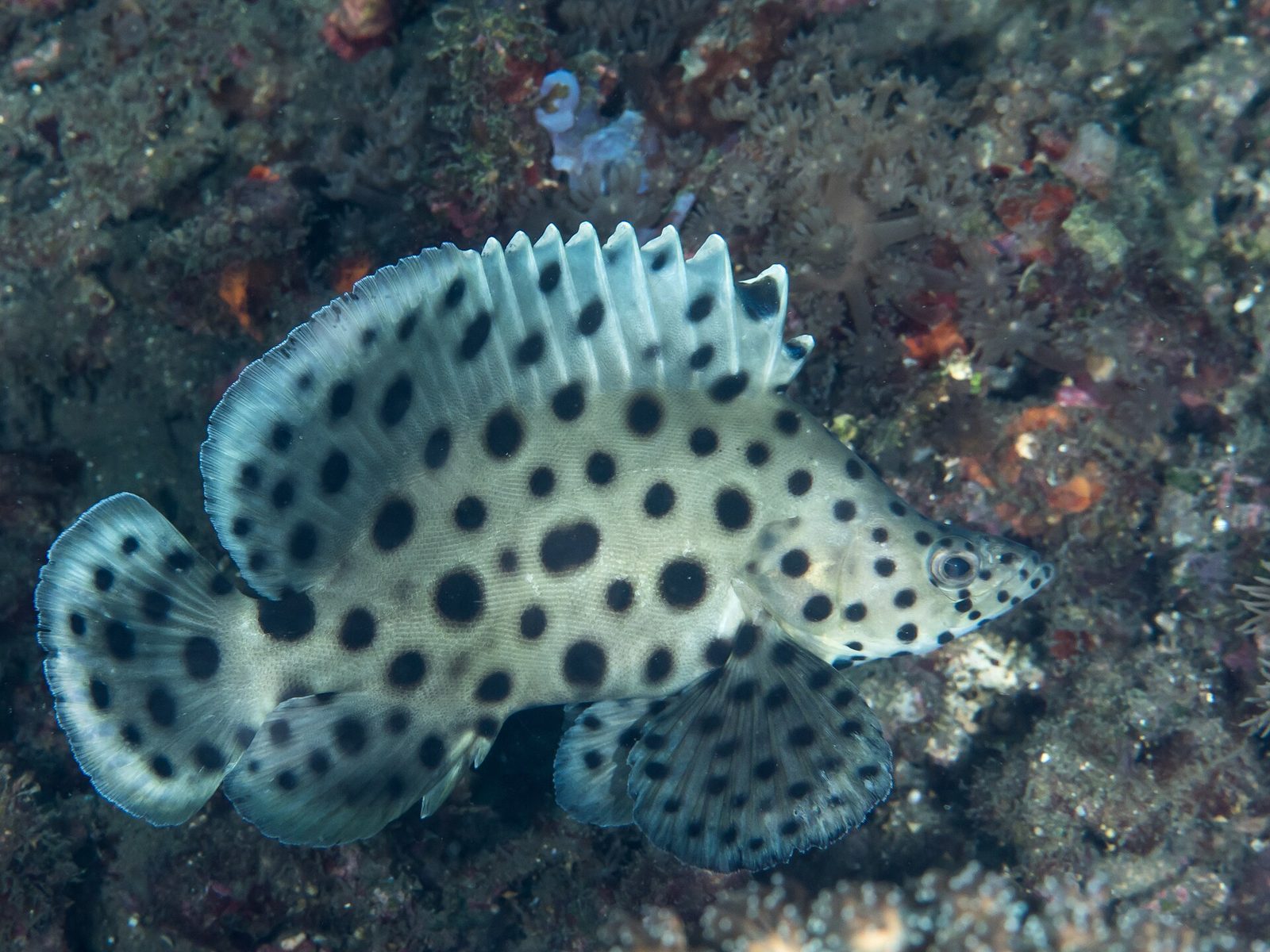
Cromileptes altivelis — panther grouper, humpback grouper, polka-dot grouper, barramundi cod in Australia — is the only member of its genus, found on reefs and silty lagoons from Japan to Australia, as the species entry describes. The shape is unmistakable: a tiny, concave head on a deep, humped body, cream to grey-white with black spots that get smaller and more numerous as the fish grows. Juveniles swim head-down with a strange rocking motion that mimics a drifting flatworm. It reaches 28 inches in the wild and is a valuable food fish, which is why it has been farmed in Asian hatcheries since the 1990s and why most aquarium specimens are captive-bred and free of wild parasites.
Panther Grouper Care at a Glance
| Care factor | Requirement |
|---|---|
| Adult size | 20–27 in (28 in wild) |
| Lifespan | 15–20 years |
| Minimum tank | 180 gal / 6 ft alone; 240–300 gal with tank mates |
| Temperature | 74–80°F (23–27°C) |
| Salinity / pH | 1.023–1.026 / 8.1–8.4 |
| Nitrate | Under 30 ppm; skimmer rated 2× the tank |
| Diet | Frozen silversides, shrimp, squid, clam; carnivore pellets |
| Feeding | 2–3× a week (adult); daily (juvenile) |
| Temperament | Predatory; the mildest large grouper |
| Reef safe | Corals yes; inverts and small fish no |
| Care level | Easy fish, very large tank |
Panther Grouper Growth: The Number That Matters
A 3-inch panther grouper fed daily reaches 10–12 inches in its first year, 16–18 in the second, and 20 inches by year three, then slows toward 24–27. That is the fastest growth of any common aquarium grouper, and it means the 55-gallon tank the juvenile looks lost in is too small within twelve months. Plan the 180 before the fish, or buy the fish with a dated upgrade plan and the money set aside. A panther grouper kept in a small tank stunts, develops a bent body and HLLE, and dies at five; sized properly it lives twenty years. Growth figures by species are on the grouper size and lifespan page.
Panther Grouper Tank Size and Water
180 gallons and 6 feet for one adult alone; 240–300 gallons with the large tank mates most people want. Width matters as much as length for a fish this deep-bodied — a 24-inch-wide 180 or 240 lets a 2-foot grouper turn. Build a cave or overhang the whole fish fits under, glued stable, with open sand in front; a panther grouper rests on the sand more than most groupers. Water is standard reef water — 74–80°F, 1.023–1.026, pH 8.1–8.4 — and the species is famously tolerant of it. The filtration is not optional: a skimmer rated for 400 gallons on a 180, a sump with heavy biological media, and 20–25% weekly water changes to keep nitrate under 30 ppm. See the grouper fish tank size and water parameters pages.
Panther Grouper Food
Juveniles eat daily: chopped shrimp, krill, small silversides. Adults eat two or three times a week: whole silversides or lancefish, shell-on shrimp, squid, clam, on a feeding stick, soaked in a vitamin supplement, to a slightly rounded belly. Panther groupers take large carnivore pellets readily and captive-bred fish often arrive on them. Never feed live goldfish — fatty liver disease is the leading cause of death in this species — and never hand-feed: a 2-foot panther grouper's strike is fast and its mouth opens wider than its head suggests. Schedule and pellet training are on the grouper fish food page.
Panther Grouper Tank Mates
The panther is the mildest large grouper and rarely bothers anything it cannot eat, so the question is only what fits in the mouth — and that is anything under about 10 inches once the grouper is adult. Good companions in a 240–300: lionfish, large tangs (naso, sailfin), large angelfish (emperor, queen), harlequin tusk and other big wrasses, a trigger, a large puffer, a moray eel. Add them before the grouper or as juveniles together. A clownfish, damsel or dwarf angel that “grew up with” the grouper is safe only until the grouper is big enough. Two panther groupers fight; a panther and a miniatus coexist in 300 gallons. Full list on the grouper fish tank mates page.
Common Panther Grouper Problems
- Outgrowing the tank — the only common problem, and entirely predictable.
- Head-down swimming and rocking in juveniles is normal mimicry, not a swim-bladder problem.
- Colour darkening with age is normal; the white ground turns grey-brown as spots multiply.
- Swollen belly, lethargy: overfeeding or feeder fish. Fast a week, feed lean marine food.
- HLLE pits: vitamin-poor diet or a small tank. Reversible early.
- Ich in wild-caught fish: quarantine four weeks with copper. Captive-bred fish still get four weeks. See grouper fish diseases.
How the panther compares with the other eleven aquarium species is on the types of grouper fish page; the smaller and more forgiving miniatus grouper has its own guide; and the routine that applies to all groupers is in the grouper fish care guide.
Grouper Fish Care FAQ
How big do panther groupers get?
20–27 inches in the aquarium and 28 in the wild. The 3-inch spotted juvenile in the shop reaches a foot in its first year and 20 inches by year three.
What tank size does a panther grouper need?
180 gallons and 6 feet for one adult; 240–300 gallons with other large fish. Nothing smaller works for more than a year.
Are panther groupers aggressive?
Less than most groupers toward fish they cannot eat; they are slow, curious and often tame. Anything small enough to swallow — and the mouth opens wider than the head suggests — is eaten.
Are panther groupers reef safe?
They ignore corals and eat every mobile invertebrate and small fish. Suitable for a coral-only reef with large fish or a fish-only predator tank.
What do panther groupers eat?
Frozen silversides, lancefish, shrimp, squid and clam two or three times a week for adults, daily for juveniles, with a vitamin soak. Most take large carnivore pellets within a month.
How long do panther groupers live?
Fifteen to twenty years in a tank large enough for the adult. Most are captive-bred, which makes them hardy and free of wild parasites.