The right grouper fish tank size depends entirely on which grouper: 75–100 gallons for the dwarf hinds that stop at 8–12 inches, 100–125 gallons and 5 feet for the miniatus and leopard groupers at 12–16 inches, and 180–300 gallons and 6–8 feet for the panther, bluespotted and lyretail groupers that reach 2 feet or more. Every figure is for one adult, and every grouper is sold as a 2–4 inch juvenile that will reach most of its adult size within two years, so the tank to buy is the adult's tank — not the one the juvenile fits today.
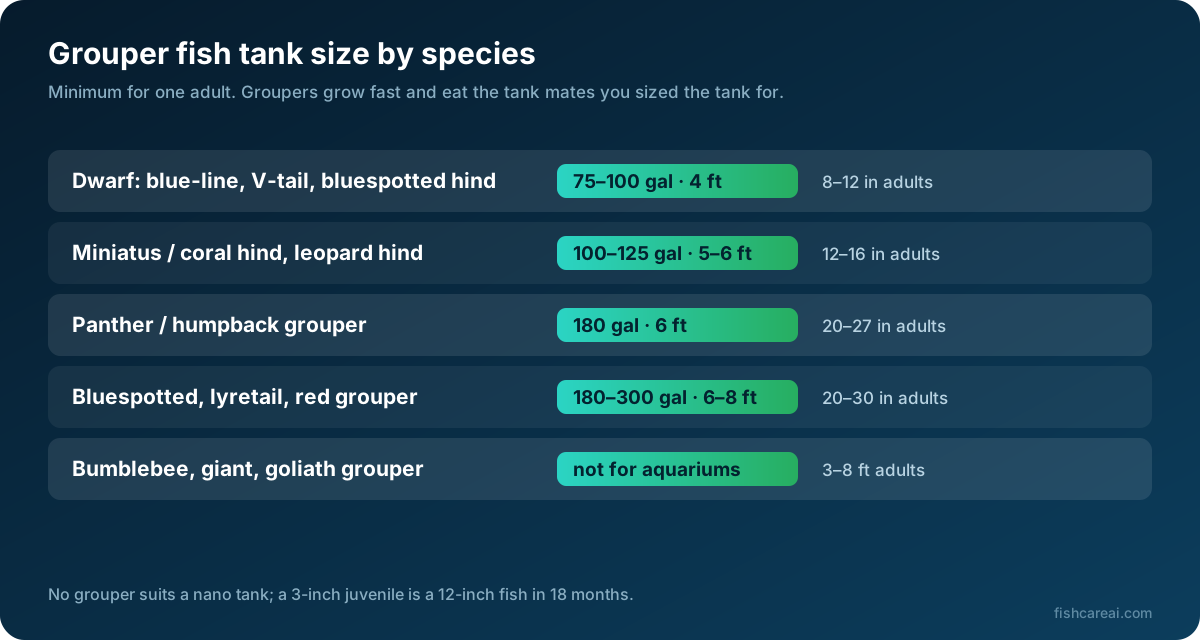
Grouper Fish Tank Size by Species
| Grouper | Adult size | Minimum tank | Minimum length |
|---|---|---|---|
| Blue-line hind (Cephalopholis formosa) | 8–10 in | 75 gal | 4 ft |
| V-tail grouper (C. urodeta) | 8–10 in | 75 gal | 4 ft |
| Bluespotted hind (C. cyanostigma) | 10–12 in | 100 gal | 4–5 ft |
| Miniatus / coral hind (C. miniata) | 12–16 in | 100–125 gal | 5–6 ft |
| Leopard hind (C. leopardus) | 12–14 in | 100 gal | 5 ft |
| Harlequin grouper (C. polleni) | 14–16 in | 125 gal | 6 ft |
| Panther / humpback grouper (Cromileptes altivelis) | 20–27 in | 180 gal | 6 ft |
| Bluespotted grouper (C. argus) | 20–24 in | 180 gal | 6 ft |
| Lyretail grouper (Variola louti) | 24–30 in | 300 gal | 8 ft |
| Red grouper (Epinephelus morio) | 24–30 in | 300 gal | 8 ft |
| Bumblebee, giant, goliath, Nassau | 3–8 ft | Public aquarium only | — |
Adult sizes follow the species accounts on the grouper family page; aquarium fish usually reach 80–90% of the wild maximum. Shops quote the juvenile's tank; this table quotes the adult's. For a specific combination of grouper, tank mates and rockwork, use the grouper fish tank size calculator.
Why Groupers Need So Much Tank
A grouper does not swim much, so the argument for a big tank is not the swimming room a tang needs. It is three other things. Body volume: a 14-inch grouper is a deep, thick fish of two or three pounds that needs to turn, rest and strike without touching the glass. Bioload: a fish that eats whole silversides produces as much waste as a dozen small community fish, and water volume is what keeps the nitrate from that within range between water changes. The cave: a grouper needs a rock cave or ledge it can fit its whole body into, with open water in front of it to ambush from, and that structure alone takes a third of a 75-gallon tank. Grouper fish tank size is really a question of how much water it takes to dilute a predator and still leave room for its den.
Can a Grouper Live in a 55, 75, 125 or 180 Gallon Tank?
- 55 gallon (48 × 13 in): a juvenile for a few months. Too narrow for any adult grouper; the smallest hinds outgrow it in a year.
- 75 gallon (48 × 18 in): one blue-line hind or V-tail grouper for life. A miniatus for its first year.
- 90–100 gallon: one bluespotted hind, leopard hind or a small miniatus, alone.
- 125 gallon (72 × 18 in): one miniatus or harlequin grouper with a lionfish and a large tang. The classic medium-grouper tank.
- 180 gallon (72 × 24 in): one panther or bluespotted grouper with two or three large tank mates.
- 240–300 gallon (96 in): a lyretail or red grouper; or a panther grouper with a full predator community; or two groupers of different genera.
Grouper for a Reef Tank
Groupers ignore corals, anemones and coralline algae completely, so a grouper in a coral-only reef with large fish is a fine display. What it cannot share is a reef's clean-up crew: shrimp, crabs, snails, urchins and small fish are eaten, mostly at night, and a grouper will dig out a cleaner shrimp from under a rock. Two adjustments for a reef-scaped grouper tank: add 15% to the tank size because rockwork removes the open striking lane, and build the rock so a cave the grouper's size sits at the bottom with a clear view across the sand. A grouper barging through a stack of unglued rock also topples it; epoxy or acrylic rods hold the structure. Who else can share the tank is on the grouper fish tank mates page.
Grouper Fish Tank Setup
- The adult's tank, first. From the table above, plus 25% per large tank mate.
- A cave the fish fits. Stacked live rock or a ceramic cave with a 6–10 inch opening, glued stable, at the back; open sand in front.
- Filtration for a predator. Sump, protein skimmer rated at twice the tank volume, mechanical filter socks changed twice a week. Targets on the water parameters page.
- Moderate flow across the open area, calm water in the cave zone.
- Sand or bare bottom. Coarse sand is easy to siphon; large groupers churn fine sand.
- Subdued lighting. Groupers are shade-loving; strong reef lighting keeps them in the cave.
- A feeding stick and a quarantine tank of 40–75 gallons for the four-week treatment on arrival (see grouper diseases).
Which species suits the tank you can afford is the next decision: the types of grouper fish page compares all twelve, the adult sizes are under grouper size and lifespan, and the daily routine is in the grouper fish care guide.
Grouper Fish Care FAQ
What is the minimum tank size for a grouper fish?
75–100 gallons and 4 feet for the dwarf hinds (blue-line, V-tail, bluespotted hind); 100–125 gallons and 5–6 feet for miniatus and leopard groupers; 180 gallons and 6 feet for a panther grouper; 180–300 gallons for bluespotted, lyretail and red groupers. All figures are for one adult.
Can a grouper live in a 55 gallon tank?
Only a 3-inch juvenile, for a few months. Every aquarium grouper outgrows a 55 within a year; the smallest adult hinds need a 75, and most need 125 or more. Buy the adult tank first.
What size tank does a miniatus grouper need?
100 gallons minimum, 125 preferred, at least 5 feet long, for one adult at 12–16 inches. It needs a cave it can sit in and swimming room in front of it.
What size tank does a panther grouper need?
180 gallons and 6 feet minimum for an adult of 20–27 inches; 240–300 gallons if it shares the tank with other large fish. The 3-inch spotted juvenile in the shop is a 2-foot fish in three years.
Do groupers need a cave?
Yes. Groupers are ambush predators that spend the day in a rock cave or overhang and hunt from it. A cave the fish can fit its whole body into, with an open sand area in front, is the core of a grouper tank setup.
Can groupers go in a reef tank?
In a coral-only reef, yes — they ignore corals. In a reef with shrimp, crabs, snails and small fish, no; those are food. Rockwork also takes swimming room, so add 15% to the tank size for a reef-scaped grouper tank.