There are about 160 grouper species, but the types of grouper fish that belong in a home aquarium come down to a dozen, in three size bands: the dwarf hinds at 8–12 inches (blue-line hind, V-tail, bluespotted hind), the medium coral groupers at 12–16 inches (miniatus, leopard hind, harlequin), and the large species at 20–30 inches (panther, bluespotted grouper, lyretail, red). A fourth group — bumblebee, giant, goliath and Nassau groupers — is sold in the same shops at the same 4-inch size and grows to 3–8 feet. The band tells you the tank; the species tells you the colour and temper.
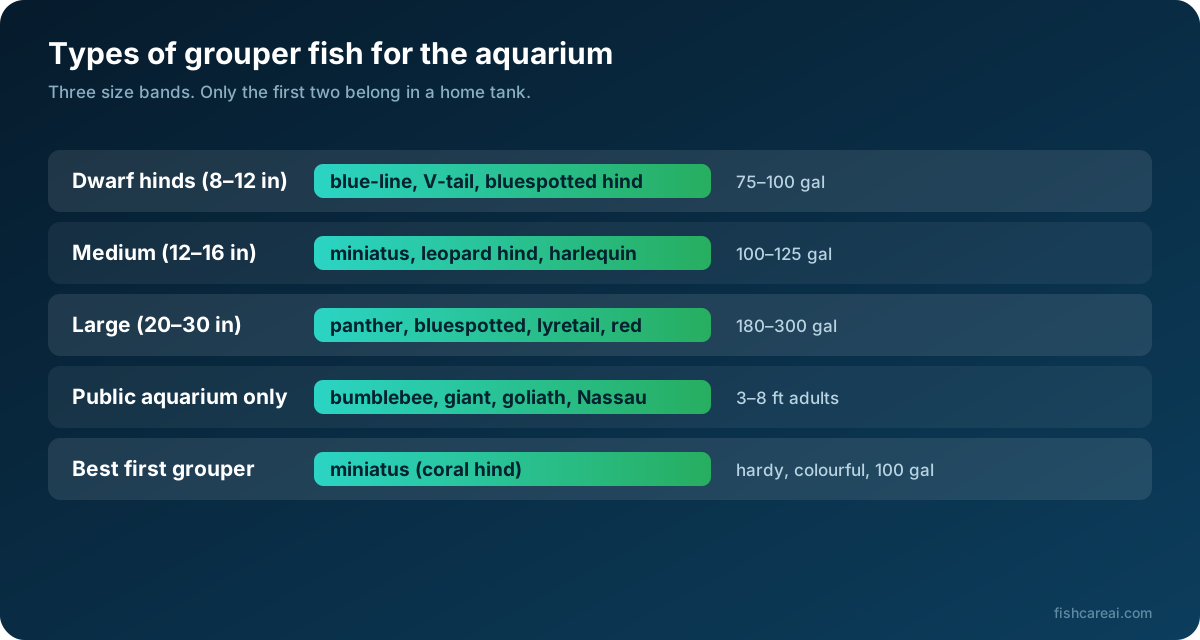
The Three Size Bands of Aquarium Grouper
- Dwarf hinds (Cephalopholis) — 8–12 inches, 75–100 gallons. Blue-line hind, V-tail grouper, bluespotted hind. Small mouths for groupers, but still predators.
- Medium coral groupers (Cephalopholis) — 12–16 inches, 100–125 gallons. Miniatus (coral hind), leopard hind, harlequin grouper. The best types of grouper fish for most keepers.
- Large (Cromileptes, Cephalopholis argus, Variola, small Epinephelus) — 20–30 inches, 180–300 gallons. Panther, bluespotted grouper, lyretail, red grouper. Showpieces for very large tanks.
- Public aquarium only (Epinephelus giants) — bumblebee, giant, goliath, Nassau, black grouper. 3–8 feet.
Types of Grouper Fish Compared
| Grouper | Scientific name | Adult size | Min. tank | Colour | Temperament |
|---|---|---|---|---|---|
| Blue-line hind | Cephalopholis formosa | 8–10 in | 75 gal | Brown with blue lines | Mild for a grouper |
| V-tail grouper | Cephalopholis urodeta | 8–10 in | 75 gal | Red-brown, white tail bars | Mild |
| Bluespotted hind | Cephalopholis cyanostigma | 10–12 in | 100 gal | Brown with blue spots | Moderate |
| Miniatus / coral hind | Cephalopholis miniata | 12–16 in | 100–125 gal | Red-orange with blue spots | Moderate; the standard |
| Leopard hind | Cephalopholis leopardus | 12–14 in | 100 gal | Orange, blue spots, cream tail bar | Moderate |
| Harlequin grouper | Cephalopholis polleni | 14–16 in | 125 gal | Yellow with blue lines | Moderate; deep-water, expensive |
| Panther / humpback | Cromileptes altivelis | 20–27 in | 180 gal | White with black polka dots | Mildest large grouper |
| Bluespotted grouper | Cephalopholis argus | 20–24 in | 180 gal | Dark brown, blue spots | Aggressive |
| Lyretail grouper | Variola louti | 24–30 in | 300 gal | Violet-red, blue spots, yellow lyre tail | Aggressive |
| Red grouper | Epinephelus morio | 24–30 in | 300 gal | Red-brown | Moderate; Atlantic |
| Bumblebee grouper | Epinephelus lanceolatus (juv.) | 3–8 ft | None | Yellow and black juvenile | Public aquarium only |
| Nassau / black grouper | Epinephelus striatus, Mycteroperca bonaci | 3–4 ft | None | Barred brown | Public aquarium only |
Sizes follow the species accounts on the grouper family page; minimum tanks are for one adult, from the grouper fish tank size page.
Dwarf Hinds: Blue-Line, V-Tail and Bluespotted Hind
The smallest types of grouper fish are the hinds of the genus Cephalopholis that stop at 8–12 inches. The blue-line hind is a chocolate-brown fish with electric blue lines and the mildest temper in the family, happy alone in a 75-gallon tank with a lionfish. The V-tail grouper (flagtail grouper) is red-brown with white bars on the tail and equally manageable. The bluespotted hind grows a little larger and is bolder. All three are wild-caught, ship well, eat frozen food within days and live 10–12 years; they are the groupers for a keeper with a 4-foot tank, and the only ones that can be kept with fish as small as a 4-inch wrasse for any length of time.
Miniatus, Leopard and Harlequin Groupers
The miniatus grouper (coral hind) is the best aquarium grouper for most people: 12–16 inches, red-orange covered in blue spots, hardy, colourful, and content in a 100–125 gallon tank with a cave. It is the species most shops mean by “grouper” and has its own page: miniatus grouper care. The leopard hind is a slightly smaller cousin with the same spots on an orange body and a cream bar on the tail. The harlequin grouper is a deep-water yellow-and-blue-lined fish that costs several times as much and needs the same tank. All three are ambush predators with a mouth that takes a fish half their own length.
Panther, Bluespotted, Lyretail and Red Groupers
The panther grouper (humpback or polka-dot grouper) is the most popular grouper in the trade — a white 3-inch juvenile with black spots and a comically small head — and the most outgrown, at 20–27 inches in a 180-gallon tank. It is also the mildest large grouper and the one most likely to be captive-bred; profile on the panther grouper care page. The bluespotted grouper (C. argus, the peacock hind) is dark with blue spots, reaches 2 feet, and is one of the most aggressive fish in the hobby. The lyretail grouper is arguably the most beautiful — violet-red with blue spots and a yellow-edged lyre tail — and needs a 300-gallon tank at 30 inches. The Atlantic red grouper is similar in size and occasionally sold. None of these four is a fish for a 125.
Types of Grouper Fish to Avoid
The bumblebee grouper is the fish that fills the “my grouper outgrew my tank” posts: a yellow-and-black 4-inch juvenile that is the same species as the giant grouper and reaches 3 feet in three years and 8 feet eventually. The Nassau, black, gag and goliath groupers are the same story. Public aquariums take them in when they can; most cannot. If the shop cannot tell you the scientific name, do not buy the fish. For a first grouper, choose the miniatus, the blue-line hind or the panther, sized to the tank on the tank size page, and read the grouper fish care guide for the routine that applies to all of them. Adult sizes and lifespans are under grouper size and lifespan; who each can live with is under grouper fish tank mates.
Grouper Fish Care FAQ
What is the best grouper for a home aquarium?
The miniatus grouper (coral hind, Cephalopholis miniata): hardy, bright red with blue spots, 12–16 inches, happy in a 100–125 gallon tank. The blue-line hind is the pick for a 75-gallon; the panther grouper is the most popular but needs 180 gallons.
What is the smallest grouper fish?
Among aquarium species, the blue-line hind (Cephalopholis formosa) and V-tail grouper (Cephalopholis urodeta) at 8–10 inches. There is no grouper for a tank under 75 gallons.
Are panther groupers good aquarium fish?
Yes, with a 180-gallon tank. Panther (humpback) groupers are peaceful for groupers, hardy, and captive-bred, but the 3-inch spotted juvenile reaches 20–27 inches, and it eats anything smaller than itself.
Which groupers are not suitable for aquariums?
Bumblebee, giant, goliath, Nassau, red and black groupers of the genus Epinephelus reach 3–8 feet. They are sold as cute 4-inch juveniles and outgrow every home tank within two years.
Are any groupers reef safe?
All aquarium groupers leave corals alone; none leaves shrimp, crabs or small fish alone. The dwarf hinds are the least destructive because their mouths are smaller, but even they take cleaner shrimp.
Which grouper is the most colourful?
The miniatus grouper (red with blue spots), the leopard hind (orange with blue spots and a cream tail bar) and the lyretail grouper (violet with blue spots and a yellow-edged lyre tail). Panther groupers are black-and-white spotted.