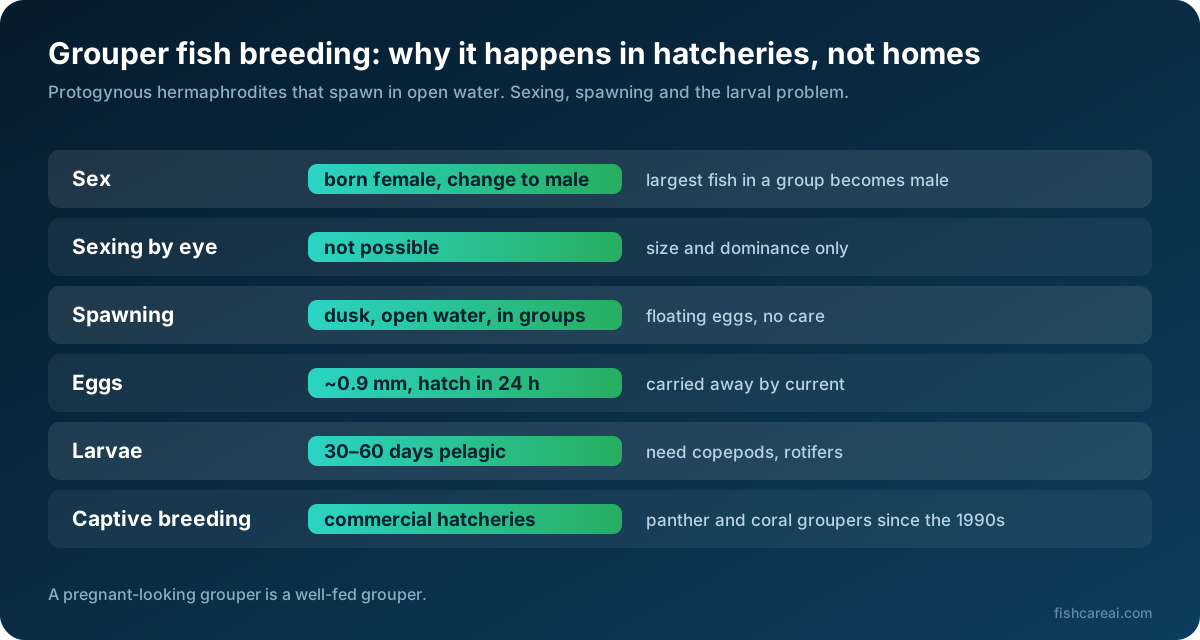
Grouper fish breeding in a home aquarium does not happen, and the reasons are more interesting than most fish biology: groupers are protogynous hermaphrodites that are all born female and change into males when they become the largest fish in a group; they cannot be sexed by eye; they spawn in open water at dusk, often in aggregations of hundreds; and the eggs float away to hatch into larvae that drift for a month or two eating plankton no hobbyist can supply. Everything that can be said about breeding groupers at home — sex change, sexing, recognising a spawn, why the fry are impossible — is on this page, along with how the hatcheries that supply captive-bred panther groupers actually do it, and what a “pregnant” grouper really is.
Can Groupers Change Gender?
Yes — it is the defining fact of grouper fish breeding. Almost every grouper matures first as a female, and later in life, if it becomes the largest and most dominant fish in its social group, it changes into a male over a few weeks: the ovaries regress and testes develop in the same organ. On the reef a male miniatus or lyretail grouper holds a territory with several females; remove the male and the biggest female takes his place. The trigger is social, not age, which is why a lone aquarium grouper of any size is almost always still female, and why two groupers in a big tank sometimes end up as a pair after the larger one changes. The pattern is described on the grouper family page. A few species (some Epinephelus) can also go the other way or be born male, but none of the aquarium species does.
Male vs Female Grouper Fish
| Feature | Male | Female |
|---|---|---|
| Colour and pattern | Identical | Identical |
| Fins | Identical | Identical |
| Size | The largest fish in the group | All the others |
| Behaviour | Holds territory, displays, patrols at dusk | Subordinate; fills out with eggs seasonally |
| A lone aquarium fish | Rarely | Almost always |
There is no external difference at all in the aquarium groupers, and the sex of a given fish is not even fixed. If you keep two groupers of one species in a 300-gallon tank and they settle rather than fight, the larger has probably become male; a rounder belly on the smaller one at dusk is eggs.
How Grouper Fish Spawn
Groupers are broadcast spawners. Small species like the coral hind spawn in pairs within the male's territory, at dusk, rising a metre or two off the reef to release eggs and sperm; large species like the Nassau grouper gather in aggregations of thousands at the same reef promontory on the same moon each winter. There is no nest, no guarding and no care. In a very large public-aquarium tank with a settled group, dusk spawning rushes are occasionally seen — two fish shooting upward together as the lights dim — and the overflow takes the eggs by morning. A pair in a 300-gallon home tank may do the same once the larger fish has changed sex; the eggs are lost to the skimmer.
Grouper Fish Eggs and Larvae
- Eggs: about 0.9 mm, clear, buoyant, with a single oil droplet; hundreds of thousands per spawn from a large female. They hatch in 20–30 hours.
- Larvae: hatch at 1.5–2 mm with no mouth or fins, live on the yolk for two or three days, then need live prey far smaller than rotifers — copepod nauplii and oyster trochophores — and are notoriously fragile; they develop long, spiny dorsal and pelvic fins mid-way through.
- Pelagic stage: 30–60 days in open water before settling onto a reef at about an inch.
That larval stage is why grouper fish breeding took aquaculture decades to solve and why it is out of reach at home: a dedicated larval tank, live copepod and rotifer cultures scaled up daily, greenwater, and a survival rate measured in single percent even in a professional hatchery.
Can You Breed Grouper Fish at Home?
Practically, no. The possible parts — keeping a compatible pair or group in a very large tank and occasionally witnessing a spawn — need 300 gallons or more and a lot of patience. The impossible parts are collecting floating eggs before the overflow takes them and raising larvae that need a month or two of live copepods. A hobbyist who wants to support grouper fish breeding buys captive-bred stock, which takes pressure off the reef and arrives eating and parasite-free. How an adult should be kept is the same whichever way it was born; see the grouper fish care guide.
Captive Grouper Fish Breeding: How the Hatcheries Do It
| Milestone | Where and when | What it took |
|---|---|---|
| First hatchery-reared groupers | Taiwan, Japan, 1980s | Hormone-induced spawning of wild broodstock |
| Panther (humpback) grouper farmed | Indonesia, Taiwan, Australia, 1990s | Copepod-first larval diets; the species now common as captive-bred aquarium stock |
| Coral and lyretail groupers farmed | Southeast Asia, 2000s | Same protocol for the live-food trade |
| Hybrid groupers (giant × tiger) | Malaysia, 2010s | Fast-growing food fish; occasionally leak into the aquarium trade and reach 3 ft |
The panther grouper is the aquarium beneficiary: most sold today are hatchery-bred, hardy, and pellet-trained on arrival — see the panther grouper care page. Miniatus and the hinds remain wild-caught, which is why quarantine matters for them (grouper fish diseases).
Is My Grouper Fish Pregnant?
No grouper is ever pregnant; they carry nothing. A rounded belly is one of three things: a full stomach after a large feed, which flattens in two days; eggs, in a female in breeding condition, which is rare in a lone aquarium fish; or fatty liver from a diet of feeder goldfish and daily feeding, which is the usual answer for a grouper whose belly never flattens. A swollen belly with raised scales, or a fish that stops eating, is dropsy or an infection — see grouper fish diseases. What a healthy grouper of each species should look like at each size is on the grouper size and lifespan page; the social behaviour behind sex change is on the behavior page; and how to feed without a permanent belly is under grouper fish food.
Grouper Fish Care FAQ
Can groupers change gender?
Yes. Almost all groupers are protogynous hermaphrodites: every fish matures as a female, and the largest, most dominant fish in a group later changes into a male. Remove the male and the biggest remaining female takes over within weeks.
How do you tell a male grouper from a female?
You cannot by colour or shape. The male is the largest and most dominant fish in a group; a lone aquarium grouper of any size is almost certainly female, since the change is triggered by social position.
Do grouper fish breed in aquariums?
Spawning is occasionally seen in very large public-aquarium groups; raising the young is not possible at home. Eggs float, larvae drift for a month or two and need cultured copepods and rotifers.
Do grouper fish lay eggs?
Yes, in open water at dusk, in pairs or groups, often around the full moon. The eggs are about 0.9 mm, float, and hatch in about 24 hours into helpless larvae.
Can a grouper fish be pregnant?
No. Groupers do not carry young. A rounded belly is a full stomach, a female ripe with eggs before a spawn, or fatty liver from feeder fish; a belly that stays swollen with raised scales is dropsy.
Are captive-bred groupers available?
Yes. Panther groupers have been hatchery-bred in Asia for the food trade since the 1990s and most aquarium specimens are captive-bred; coral groupers and some Epinephelus are also farmed. Captive-bred fish arrive eating and parasite-free.