50 Gallon Fish Tank at a Glance
50 Gallon Fish Tank Dimensions
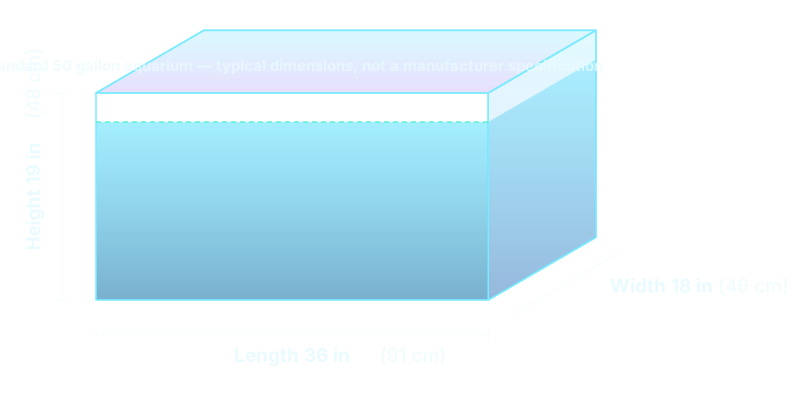
The 50 gallon aquarium is the size where shape matters most, because three quite different tanks share the label. The standard version is a 36-inch tank with a generous 18-inch front-to-back depth. Some manufacturers also sell a 48-inch “50” that is basically a 55 with a lower water line, and aquascapers routinely call the metric 90 × 45 × 45 cm rimless tank a 50 even though it holds closer to 48 US gallons. Always check the actual measurements before you buy a stand, lid or light.
| Tank type | Length | Width (front to back) | Height | Best for |
|---|---|---|---|---|
| Standard 50 gallon (3-ft) | ≈ 36 in (91 cm) | ≈ 18 in (46 cm) | ≈ 19 in (48 cm) | Planted layouts, dwarf cichlids, angelfish pairs, communities that hover rather than sprint |
| 50 gallon long (4-ft) | ≈ 48 in (122 cm) | ≈ 13 in (33 cm) | ≈ 19 in (48 cm) | Schooling fish and active swimmers; behaves like a slightly shallower 55. Less common — confirm the spec |
| Rimless 90P-style (metric) | 90 cm (≈ 35 in) | 45 cm (≈ 18 in) | 45 cm (≈ 18 in) | ≈ 182 L / 48 gal. Nature-style aquascapes; low-iron glass, open top |
| Rimless 120 × 40 × 40 cm (metric) | 120 cm (≈ 47 in) | 40 cm (≈ 16 in) | 40 cm (≈ 16 in) | ≈ 192 L / 51 gal. Long, shallow planted layouts with rasbora or tetra schools |
Same volume, different tank: why footprint changes the stocking
Put a standard 50 (36 × 18 in) next to a 50 long or a 55 (48 × 13 in) and the floor areas are almost identical — about 648 versus 624 square inches — but the fish experience them completely differently. The 3-foot tank offers an 18-inch depth: room for a pair of dwarf cichlids to hold a cave and a spawning site with tetras passing well in front of them, room for a rock pile with real caves behind it, and room for a planted layout with a true foreground, midground and background. The 4-foot tank offers a 48-inch run instead: what rainbowfish, Denison barbs and other cruisers need, and what a 36-inch tank cannot provide however many gallons it holds.
Surface area, which drives gas exchange, is close to equal in both, so oxygenation is not the difference. Swimming length and turning depth are. That is why this page's stocking recommendations assume the standard 36 × 18 footprint and lean toward fish that hover, hold territories or school in a compact group — and why, if you buy a 4-foot 50, the 55 gallon fish tank guide is the better stocking reference.
How Much Does a 50 Gallon Fish Tank Weigh?
Freshwater weighs about 8.34 lb per US gallon (3.78 kg per gallon), so 50 gallons of water would be 417 lb — but the tank never holds its rated volume once substrate and hardscape are in and the water line sits below the rim. The standard 50 also has a larger floor than its gallon count suggests, which means more gravel, and its taller, thicker glass panels make it heavier empty than a 55 despite holding less. The total is what matters for the stand and floor.
| Component | Estimated weight | Basis |
|---|---|---|
| Empty glass tank | ≈ 90–110 lb (41–50 kg) | Typical for a rimmed 36 × 18 × 19 in tank; rimless low-iron tanks are similar, acrylic about half |
| Water | ≈ 365 lb (166 kg) | ≈ 44 gal actual × 8.34 lb after displacement and fill line |
| Substrate (2 in gravel) | ≈ 70–80 lb (32–36 kg) | 36 × 18 in floor × 2 in ≈ 0.75 cu ft; gravel ≈ 90–100 lb per cu ft. Aquasoil weighs less |
| Rock, wood and décor | ≈ 20–40 lb (9–18 kg) | Aquascapes with large stones can double this |
| Light, filter, heaters | ≈ 10–15 lb (5–7 kg) | Canister filters sit in the stand and load the floor, not the tank |
| Estimated operating weight | ≈ 550–620 lb (250–280 kg) | Before the stand, which adds 50–120 lb |
Example calculation
Call it about 580 lb — within a few pounds of a running 55, even though the 50 holds five gallons less. The reason is the substrate: an 18-inch-deep floor needs about a third more gravel than a 13-inch one for the same depth. A rimless aquascape with a sloped 4-inch aquasoil bank and several large stones can pass 650 lb; a bare-bottom quarantine or breeding setup comes in well under 500.
How Many Fish Can Live in a 50 Gallon Tank?
A standard 50 gallon tank supports roughly 18–30 small-to-medium community fish, or a pair of medium centerpiece fish with a supporting cast, or one very large school of tiny fish. “50 gallons equals 50 inches of fish” is not a reliable formula: it would sanction a single 10-inch cichlid that cannot turn in the tank while forbidding forty ember tetras that would thrive in it.
What actually sets the limit
- Adult size and body mass. Buy for the fish it becomes. A 2-inch juvenile severum is a 3-inch-deep, 8-inch fish within two years, with roughly sixty times the mass.
- Swimming zone and activity. In a 36-inch tank, sprinting species run out of room; hovering, gliding and darting species do not. Choose fish whose “gait” fits a 3-foot run.
- Territorial behaviour. The 18-inch depth lets one pair of dwarf cichlids own the back of the tank while a school uses the front — but two pairs will fight over a floor this size.
- Schooling requirements. Groups of six to fifteen are the unit of stocking for tetras, rasboras, barbs and corys; a “pair” of schooling fish is a welfare problem, not a saving.
- Bioload and filtration. A fish's waste output tracks its mass and diet. Ten 1-inch fish produce a fraction of what one 5-inch fish does.
- Oxygenation. A 36 × 18 inch surface is generous for the volume — one reason the standard 50 handles a lively community well. Heavy planting adds oxygen by day and consumes it at night.
- Maintenance you will actually do. Weekly 25% changes let you stock toward the upper figure; fortnightly changes mean stocking toward the lower one.
- Footprint. Length and depth, discussed above, decide which fish fit — the gallon count only decides how many of them.
Practical examples for a standard 50
- Works well: 1 trio of cockatoo dwarf cichlids, 12 cardinal tetras and 8 pristella tetras — about 23 fish, with the floor reserved for the cichlids.
- Works well: 1 pair of angelfish, 10 diamond tetras and 6 emerald catfish — fewer fish but more mass, a moderate bioload, three zones filled.
- Works, low bioload: 40 ember tetras, 15 celestial pearl danios and 20 cherry shrimp in a heavily planted tank — 55 small bodies whose combined mass is less than two angelfish.
- Does not work: 6 Denison barbs. They fit the volume but need a 4-foot run; in a 36-inch tank they pace the glass.
- Does not work: a school of silver dollars or a single oscar — both outgrow the footprint quickly.
Run any combination through the Aquarium Planner to check adult sizes, group minimums and total bioload before you buy.
Best Fish for a 50 Gallon Tank
These species fit the standard 36 × 18 × 19 inch footprint as adults. Several of them — the dwarf cichlids, the gouramis, the angelfish pair — actually do better here than in the longer, narrower 55, because they value depth and cover over swimming length. Group sizes are minimums for natural behaviour.
Cockatoo dwarf cichlid (Apistogramma cacatuoides)
- Adult size
- Males 3–3.5 in, females 2 in
- Group
- 1 male with 2 females
- Temperament
- Peaceful; females guard fry
- Zone
- Floor and lower mid-water
The 18-inch depth gives each female a cave of her own at the back while the male patrols the front. The hardiest Apistogramma and the best introduction to dwarf cichlids.
German blue ram
- Adult size
- 2–2.5 in
- Group
- 1 pair
- Temperament
- Peaceful, shy
- Zone
- Lower mid-water
A stunning alternative centerpiece for a warm (82–84°F), soft-water planted 50. Sensitive to nitrate, so it rewards the stable volume. See the German blue ram care guide.
Honey gourami
- Adult size
- 2 in
- Group
- Trio or small group
- Temperament
- Very peaceful
- Zone
- Upper water
Gentle enough for shrimp and nano fish, colourful enough to be the focal point of a planted 50. Uses the surface zone that most community fish ignore.
Angelfish (pair)
- Adult size
- 6 in long, 8–10 in tall
- Group
- 1 bonded pair
- Temperament
- Semi-aggressive
- Zone
- Mid-water
A 19-inch water column and 36-inch length suit one pair comfortably; the extra depth over a 55 gives tank mates room to stay out of the way. Groups belong in a longer tank. See the angelfish care guide.
Cherry barb
- Adult size
- 2 in
- Group
- 8 or more
- Temperament
- Peaceful (unlike most barbs)
- Zone
- Mid-water
Hardy, tolerant of cooler and harder water, and one of the few barbs that never nips. Males glow deep red when kept with several females.
Lambchop rasbora
- Adult size
- 1.25 in
- Group
- 12–15
- Temperament
- Peaceful
- Zone
- Mid-water
A smaller, tighter-schooling cousin of the harlequin that suits a 3-foot tank perfectly and never competes with dwarf cichlids for the floor.
Cardinal tetra
- Adult size
- 1.75–2 in
- Group
- 10–15
- Temperament
- Peaceful
- Zone
- Mid-water
The definitive soft-water school. In a 50 you can afford a group large enough to shoal properly alongside apistos or rams. See the cardinal tetra care guide.
Diamond tetra
- Adult size
- 2.25–2.5 in
- Group
- 8–10
- Temperament
- Peaceful, robust
- Zone
- Mid-water
Big enough to live with angelfish and glittering under good light. Grows into its colour slowly, which suits a tank you plan to keep for years.
Julii cory
- Adult size
- 2–2.5 in
- Group
- 6–8
- Temperament
- Peaceful
- Zone
- Floor
A small, patterned cory ideal for the 36 × 18 inch floor of a community 50 that has no floor-holding cichlid. Prefers sand. See the julii cory care guide.
Emerald catfish (Brochis)
- Adult size
- 3–3.5 in
- Group
- 6
- Temperament
- Peaceful
- Zone
- Floor
A chunkier cory relative that stands up to angelfish and larger tetras better than pygmy species do, and stays bold in a group.
Otocinclus
- Adult size
- 1.5–2 in
- Group
- 6 or more
- Temperament
- Peaceful
- Zone
- Glass and leaves
The algae grazer for planted 50s — tiny bioload, tireless on soft biofilm. Add only to a mature tank. See the otocinclus care guide.
Clown pleco
- Adult size
- 3.5–4 in
- Group
- 1
- Temperament
- Peaceful
- Zone
- Driftwood
A dwarf pleco that rasps wood rather than plants, so it is safe in an aquascape. A better fit for the 50's footprint than a bristlenose in a heavily planted tank.
Celestial pearl danio
- Adult size
- 1 in
- Group
- 12 or more
- Temperament
- Peaceful, shy
- Zone
- Lower mid-water among plants
A nano jewel that gets lost in a 10 but shows off in a densely planted 50 where a big group can spread out and males display.
Hillstream loach
- Adult size
- 2.5–3 in
- Group
- 3–6
- Temperament
- Peaceful
- Zone
- Glass and smooth stones
For a cool, high-flow river-style 50: the 36 × 18 inch footprint suits a flat cobble bed and a powerhead, and the flat body clings where others cannot.
Species profiles in the encyclopedia list temperature, pH and hardness ranges; the compatibility guides cover most of these fish in pairs.
50 Gallon Fish Tank Stocking Ideas
Seven stocking plans for a standard 36 × 18 × 19 inch 50 gallon fish tank. They deliberately favour species that hover, hold small territories or school compactly — the fish that a deep 3-foot tank serves better than a narrow 4-foot one — and none of them repeats the combinations on our 55 or 100 gallon pages.
Nature-Style Planted Community
Why it works: Every species here is small, gentle and shrimp-safe, so the layout can be the star. Gouramis take the surface, rasboras the open middle, pygmy corys hover just above the sand and the otos work the leaves. Soft-to-moderate water at 75–78°F suits all of them, and the total bioload is low enough for a CO₂-injected, high-light scape without nitrate creeping up.
Watch for: Pygmy corys are sometimes bullied by larger corys — keep them as the only cory species. Otocinclus should go in months after the plants have established.
Apistogramma Dwarf-Cichlid Tank
Why it works: This is the layout the 18-inch depth was made for. Each female claims a cave toward the back, the male holds the open front, and two tetra species keep the middle busy — their presence makes the cichlids bolder. Skipping corys avoids the floor squabbles that plague apisto tanks. Soft, slightly acidic water at 78–82°F suits everyone.
Watch for: Two females need caves at opposite ends or the dominant one will claim both. Cardinals prefer a mature, stable tank — add them after the cycle has settled for a month.
Angelfish Pair Centerpiece
Why it works: A 36-inch tank suits one angelfish pair rather than a group, and the deep footprint gives the tetras room to stay out of reach when the pair spawns. Diamond tetras are too large to eat and robust enough to ignore a display; emerald catfish are bulkier than corys and untroubled by cichlid neighbours. Angelfish and diamond tetra compatibility is covered separately.
Watch for: Buy a proven pair or accept that two random angelfish may fight. Provide a broad leaf or slate for spawning at the back, away from the tetras' lane.
Beginner Cool-Water Community
Why it works: All four species tolerate 68–76°F and moderately hard tap water, so in many homes this tank needs little or no heating. Danios own the surface, barbs the middle, corys and pleco the floor, and none of them nips or hides. Cherry barb and zebra danio and cherry barb and peppered cory are both easy pairings. See our best fish for beginners guide.
Watch for: Zebra danios are relentless; in a 36-inch tank keep the group at ten or fewer and give the barbs plant cover to retreat into.
Lake Tanganyika Rock Community
Why it works: The standard 50's footprint lets you build a stable pile with caves front and back — impossible in a 13-inch-deep tank — and two rock-dwelling pairs each take one end. Both species want the same hard water (pH 8–9, GH 12+) at 76–79°F and both are slow, deliberate fish that a 3-foot tank does not confine.
Watch for: Add both pairs young and at the same time; established Julidochromis will attack newcomers. Do not add a third cichlid species to a tank this size.
Nano-Fish Mega School (Low Bioload)
Why it works: Ember tetras and celestial pearl danios are both under an inch, peaceful and shrimp-safe, so this tank runs a huge headcount on a bioload lighter than a single gourami. The 50's depth lets the school stretch into a real cloud rather than a line, and the shrimp colony breeds freely with no predators.
Watch for: Tiny fish need tiny, frequent meals; the feeding calculator helps avoid overfeeding fifty mouths. Filter intakes need a sponge guard for shrimplets.
Hillstream River Tank
Why it works: All three species come from cool, oxygen-rich streams and thrive at 65–74°F with strong flow — conditions that exclude most tropical fish, which is exactly the point. The wide 36 × 18 inch floor gives the loaches a large cobble field to graze, minnows shimmer in the current above, and gold barbs add mass in the middle. Usually unheated.
Watch for: Hillstream loaches starve in a sterile tank; run the light hard and let algae grow on the stones before adding them. Cover the powerhead intake.
Fish That Are Not Suitable for a 50 Gallon Tank
Most of the fish that fail in a 50 gallon tank fail because of the 36-inch length rather than the volume: they are cruisers that need a run, or large-bodied species that cannot turn in an 18-inch depth once grown. The alternatives below are general ranges rather than absolute minimums — the hobby argues about exact figures, but not about the direction.
Oscar
A 12–14 inch, heavy-bodied cichlid with a large appetite and waste output. A 3-foot tank is shorter than three body lengths for an adult.
75 gallons and a 4-foot footprint for one oscar; see the oscar tank size guide.
Denison barb
Grows to 5–6 inches and swims constantly at speed in a school; in a 36-inch tank the group paces the glass. The footprint, not the gallons, disqualifies it.
A group of six in a 4-foot 55 at minimum, better a 75.
Silver dollar
A 6-inch, plate-shaped schooling fish that needs a group of five or more and open swimming length. Also eats plants, which undermines the planted layouts a 50 suits.
A 6-foot tank — see the 100 gallon guide.
Boeseman's rainbowfish (and other large rainbows)
Rainbowfish cruise end to end all day. A school of 4-inch rainbows in a 3-foot tank is workable for some keepers but visibly short of room.
A 48-inch 55 is where these fish start to shine.
Common pleco
Reaches 18–24 inches and outgrows the tank within two years, producing enormous waste along the way.
150+ gallons; choose a clown or bristlenose pleco instead. See the pleco care guide.
Bala shark
A schooling fish that reaches 12–14 inches and startles easily; even one adult cannot turn comfortably in a 50.
A group in a 6-foot, 125+ gallon tank.
Clown loach
Charming at 2 inches, 10–12 inches and highly social at maturity. The 50 is a temporary home at best, which is unfair to a fish that lives 15+ years.
A group of five or more in 100–125+ gallons.
Single-tail goldfish and koi
Comets, commons and koi grow to a foot or more and foul water quickly. Two or three fancy goldfish, by contrast, can do well in a cool 50.
A pond, or 100+ gallons for single-tails; see the goldfish care guide.
Pacu, iridescent shark, tinfoil barb
All three are sold small and reach 1.5–3 feet. No home aquarium of this size is appropriate at any stage past a few months.
Public aquaria or very large ponds; there is no household substitute.
Borderline: a group of five discus is possible in a standard 50 for an experienced keeper willing to run warm, very clean water, but the 19-inch height and 3-foot length make a 55 or 75 easier — see the discus tank size guide. A single blood parrot or severum fits the depth but wants a longer tank as an adult.
How to Set Up a 50 Gallon Fish Tank
Setting up a 50 gallon fish tank follows the standard freshwater sequence — our how to set up a fish tank guide covers the fundamentals. The steps below add what changes for a deep 3-foot tank, and for the rimless versions many 50-gallon buyers choose.
- Choose the location and standA 36-inch footprint fits spaces a 4-foot tank cannot, but it is 18 inches deep — measure alcoves and check you can reach the back glass. Use a stand rated for a 36 × 18 inch aquarium and a floor that can take roughly 650 lb including the stand.
- Position and level the empty tankLevel side to side and front to back. Rimless tanks must sit on a flat foam or rubber mat with no grit beneath; a single pebble under a rimless base is a crack waiting to happen. Shim the stand, never the tank.
- Add substrateThe 36 × 18 inch floor takes about 70–80 lb of gravel or sand for 2 inches. For a planted scape, bank aquasoil from 1.5 inches at the front to 4 inches at the back — the depth of the standard 50 is what makes that slope worthwhile.
- Install filter and heaterA canister with an intake at one back corner and the return at the other circulates a 36-inch tank evenly. Place the heater in the flow path or in the canister line. Rimless tanks with glass lily pipes hide equipment but need weekly cleaning to keep flow up.
- Add hardscape and plantsBuild hardscape first, leaning heavy stones against each other and onto the glass rather than balancing them on substrate. Use the depth: a foreground carpet, a midground of stone and wood, and background stems. Our plant care guide lists species by light demand.
- Fill and condition the waterFill slowly over a plate or plastic bag laid on the substrate so the slope survives. Expect about 44 gallons of actual water; dose dechlorinator for that volume — see preparing water for a fish tank.
- Start the nitrogen cycleAdd an ammonia source and let the filter build bacteria over 4–6 weeks. Planted tanks with aquasoil often leach ammonia for the first weeks, which helps the cycle but rules out adding fish early.
- Confirm water parametersAmmonia and nitrite at zero within a day of dosing, nitrate rising, pH stable: that is a cycled tank. Check GH and KH too if you plan soft-water species like rams or apistos. See aquarium water parameters.
- Introduce livestock graduallyStart with the school or the hardy bottom crew, wait one to two weeks, then add the centerpiece pair once territories can be observed. Add shrimp and otocinclus last, after algae and biofilm appear.
- Monitor the aquariumTest weekly for the first two months. In a planted 50 also watch for melting plants and algae blooms, which signal light or nutrient imbalances long before fish show stress.
Equipment for a 50 Gallon Aquarium
A 50 gallon aquarium needs mid-size equipment, but the right sizes depend on which 50 you own and what you keep in it. A planted rimless 50 and a Tanganyikan rock tank of the same volume want quite different gear.
🌀Filter
Plan on four to six times the volume per hour — around 200–300 GPH of rated flow — from a canister or a hang-on-back filter labelled for 50–75 gallons, and go higher for cichlids, goldfish or heavy feeding. Filtration is a bioload decision, not a gallon decision: the nano-school plan above could run on half the flow the Tanganyikan plan needs. In a 36-inch tank a single well-placed outlet reaches both ends, so a spray bar is optional; in a 48-inch 50 long, treat flow like a 55 and spread it.
🌡️Heater
Wattage depends on volume, room temperature and target temperature. A 50 in a 70°F living room heated to 77°F needs roughly 150 W; the same tank kept at 84°F for German blue rams, or sitting in a cool room, may need 250 W. Two smaller heaters give redundancy, and an inline heater on a canister keeps the glass clear in a rimless scape. The cool-water and hillstream plans above may need no heater at all in a heated home.
💡Lighting
For a fish-only 50, any decent 36-inch LED shows colour. Low-light planted tanks (anubias, java fern, cryptocorynes, mosses) need a mid-range fixture spanning the full 36 inches. The 18-inch depth is where lighting gets serious: a high-light carpet or red stems at the back of a 19-inch-tall, 18-inch-deep tank needs a strong fixture, CO₂ injection and a fertiliser routine — which is precisely why the standard 50 is beloved by aquascapers and demanding for beginners.
🪨Substrate
Two inches of gravel or sand across 36 × 18 inches is roughly 70–80 lb. Planted scapes with sloped aquasoil typically use 2–3 bags of 9 liters. Sand suits corys and apistos; coral sand or aragonite buffers the hard, alkaline water Tanganyikan cichlids need.
🪵Stand
A running 50 weighs close to 600 lb, so the stand must be built for a 36 × 18 inch aquarium and must be dead level. Rimless tanks additionally require a flat top with a foam or rubber mat. Because 50s come in several footprints, stands are less interchangeable than for a 55 — measure before buying, and never substitute household furniture.
Water Parameters for a 50 Gallon Aquarium
A 50 gallon tank has no “correct” water chemistry of its own. Temperature, pH, GH and KH are set by the fish you choose: the Apistogramma plan above wants soft, slightly acidic water at 78–82°F; the Tanganyikan plan wants hard, alkaline water at pH 8+; the hillstream plan wants 65–74°F and does not care much about hardness. All three are 50 gallon aquariums, and none of their parameters transfers to the others.
What the volume contributes is inertia. Forty-odd gallons cools slowly if the heater fails, dilutes an over-feeding, and resists the pH crash that can hit a 10 gallon tank overnight. That is a safety margin, not a parameter, and it applies equally to every 50 regardless of stocking. Ammonia and nitrite at zero, and nitrate kept low through water changes, are the only truly universal targets.
Start from your tap water: test GH, KH and pH with a liquid kit, then pick species whose ranges overlap with what comes out of the pipe. Fighting hard water to keep soft-water fish, or vice versa, is the most common cause of unstable parameters in mid-size tanks. Our fish tank water guide and what kind of water for a fish tank explain the options.
50 Gallon Fish Tank Maintenance
Maintenance on a 50 gallon fish tank scales with the stocking, not the label. A nano-school scape and a Tanganyikan cichlid tank of identical volume can sit at opposite ends of the effort range. Use this framework and let your nitrate readings adjust it.
- Partial water changes. A common starting point is 25% (10–12 gallons) weekly, but measure rather than assume: if nitrate creeps above about 20–40 ppm between changes, increase the volume or frequency; if a lightly stocked planted tank holds nitrate low, you can ease off. High-tech planted 50s often run larger changes to reset dissolved fertiliser.
- Substrate cleaning. Gravel-vacuum open areas each week and leave planted sections alone — roots and the bacteria around them do the work. In an aquasoil scape avoid deep vacuuming altogether; skim the surface.
- Filter maintenance. Rinse sponges and floss in a bucket of tank water every 3–4 weeks; leave biological media undisturbed. Clean lily pipes and hoses when flow visibly drops — on a rimless tank that is often the first sign of trouble.
- Algae management. Scrape the front glass weekly and adjust light duration before adding algae eaters. Six to eight hours of strong light is plenty for most planted 50s; eight to ten invites green hair algae.
- Testing. Ammonia, nitrite and nitrate weekly for the first three months; after that, nitrate weekly and a full test whenever fish behave oddly. Interpret results with the water parameter checker.
- Temperature. Check daily. Rimless, open-top 50s evaporate quickly — top up with dechlorinated water a couple of times a week to keep both the level and the concentration of minerals stable.
Feeding is the input that drives everything above; the fish feeding calculator sizes portions for the species in your tank.
Is a 50 Gallon Fish Tank Right for You?
The 50 is a size people arrive at from two directions: aquascapers who want the 90P-style footprint, and keepers whose space simply will not take a 4-foot tank. It rewards both — with a few specific trade-offs against the 55.
✅ Advantages
- Footprint flexibility. The standard 36 × 18 inch version fits a 3-foot space that excludes every 4-foot tank, yet holds almost as much water as a 55.
- Depth for aquascaping. Eighteen inches front to back allows a genuine foreground, midground and background — the reason the 90P proportions dominate planted-tank competitions.
- Territory for dwarf cichlids. Caves at the back and a school in front is only possible with depth. Apistos, rams and Tanganyikan pairs are at home here.
- Water stability. Forty-plus gallons buffers temperature and chemistry far better than the 20–29 gallon starter sizes.
- Versatility of stocking. Seven plans above range from an unheated hillstream tank to a warm dwarf-cichlid biotope.
⚠️ Considerations
- No single standard shape. Stands, lids and lights are less interchangeable than for a 55; measure everything.
- Three-foot length. Rainbowfish, Denison barbs, silver dollars and other cruisers are better served by a 4-foot tank.
- Weight per gallon. Expect roughly 580 lb running — about the same as a 55 — because the deep floor takes more substrate.
- Rimless costs. Low-iron glass, glass lily pipes, a dedicated cabinet and a high-light fixture with CO₂ add up fast.
- Water-change volume. A 25% change is 10–12 gallons weekly; a hose-fed changer is worth having.
Choose a standard 50 if you have a 3-foot space, want to aquascape with depth, or plan around dwarf cichlids, gouramis or an angelfish pair. Choose a 55 gallon instead if your favourites are active schooling fish that need a 4-foot run. Look at a 100 gallon if your list includes 6-inch-plus species or schools of twenty or more.
Plan Your 50 Gallon Aquarium
Not sure which fish can live together in your 50-gallon tank? Build your aquarium and check stocking, compatibility and care requirements before adding fish.
50 Gallon Fish Tank FAQ
What are the dimensions of a 50 gallon fish tank?
It depends on the version. The most common standard 50 gallon tank is about 36 inches long, 18 inches front to back and 19 inches tall (91 × 46 × 48 cm). Some brands sell a 48 × 13 × 19 inch “50 long”, and metric rimless tanks such as 90 × 45 × 45 cm (about 48 gallons) are often called 50s. Check the actual measurements before buying a stand or lid.
How many fish can I put in a 50 gallon tank?
Roughly 18–30 small-to-medium community fish spread across zones — for example a trio of cockatoo dwarf cichlids, 12 cardinal tetras and 8 pristella tetras — or a pair of angelfish with 10 diamond tetras and 6 emerald catfish. A planted tank can carry 50 or more nano fish because their combined mass is tiny. Adult size, bioload, behaviour and the tank's 36-inch length matter far more than an inches-per-gallon figure.
What fish are best for a 50 gallon aquarium?
For the standard 36 × 18 inch footprint: cockatoo dwarf cichlids, German blue rams, honey gouramis, a pair of angelfish, cherry barbs, lambchop rasboras, cardinal tetras, diamond tetras, julii corys, emerald catfish, otocinclus, clown plecos, celestial pearl danios and, for a cool river tank, hillstream loaches. The depth suits fish that hover or hold small territories better than fish that sprint.
Is a 50 gallon or a 55 gallon tank better?
They hold similar water and weigh about the same, so choose by footprint. A standard 50 (36 × 18 in) is deeper — better for aquascaping, dwarf cichlids and spaces under 4 feet wide. A 55 (48 × 13 in) is longer — better for rainbowfish, larger tetras, barbs and any fish that swims constantly. If you buy a 4-foot 50 long, treat it like a 55.
How much does a 50 gallon fish tank weigh when full?
About 550–620 lb (250–280 kg) running: roughly 100 lb of glass, 365 lb of water (44 actual gallons at 8.34 lb), 70–80 lb of gravel and 20–40 lb of hardscape, plus 50–120 lb for the stand. That is nearly identical to a 55, because the deeper floor needs more substrate.
How often should I change the water in a 50 gallon tank?
Start at 25% (10–12 gallons) weekly and let nitrate readings adjust it. Lightly stocked planted tanks may hold nitrate low with less; cichlid tanks, goldfish or heavy feeding may need 30–40%. High-light planted tanks often change more to reset fertiliser levels. There is no single correct percentage for every 50.
What size heater do I need for a 50 gallon tank?
Typically 150–250 W in total. A 50 in a 70°F room heated to 77°F needs around 150 W; a cold room or a warm soft-water tank at 82–84°F for rams or apistos may need 250 W. Two smaller heaters add redundancy. Cool-water setups such as a hillstream or danio tank may need no heater in a heated home.
What size filter do I need for a 50 gallon tank?
Aim for 4–6 times the volume per hour — about 200–300 GPH of rated flow — from a canister or a hang-on-back filter rated for 50–75 gallons, sizing toward the top for cichlids or goldfish. A single outlet circulates a 36-inch tank well; on a 48-inch 50 long spread the flow like a 55.
Can I keep angelfish in a 50 gallon tank?
Yes — one bonded pair with companions too large to eat, such as diamond tetras and emerald catfish. The 19-inch height suits their tall fins and the 18-inch depth gives tank mates room to avoid a spawning pair. A group of four or more angelfish is better suited to a 4-foot 55 or a 75.
Is a 50 gallon tank good for a planted aquarium?
It is one of the best sizes for it. The 18-inch depth of the standard 50 — the same proportion aquascapers use in 90P rimless tanks — allows a real foreground, midground and background. Low-light planted 50s are easy; high-light scapes need a strong 36-inch fixture, CO₂ injection and regular fertiliser.
Compare Other Aquarium Sizes
A 50 gallon aquarium sits between the popular 40 breeder and the ubiquitous 55, and the practical differences are about shape as much as volume. Here is how it stacks up against its neighbours.
A foot longer and 5 inches shallower. The 4-foot run suits rainbowfish, Congo tetras and angelfish groups, but the narrow floor limits aquascaping and dwarf-cichlid territories. Similar weight and cost; far more stands and lids available.
The same 36 × 18 inch footprint, three inches shorter. Almost the same stocking options at lower weight and cost; the 50's extra height mainly helps angelfish and taller aquascapes.
Keeps the 50's 18-inch depth and adds a foot of length — the tank that resolves the 50-versus-55 dilemma if you have the space and can handle about 850 lb.
Double the water in a 6-foot footprint. Opens the door to large schools, discus groups and bigger cichlids, with filtration, heating and floor loading to match.
Browse every size in the fish tank size guide, or enter your own dimensions in the aquarium size calculator.
How FishCare AI Makes Tank Recommendations
The species, group sizes and stocking combinations on this page are based on the same factors the Aquarium Planner and Fish Compatibility Checker weigh for every species in our database:
- Adult size — we plan around the fish an animal becomes, not the juvenile sold in stores.
- Swimming behaviour — cruising, hovering and darting species need different lengths and depths.
- Territorial requirements — cichlids and some catfish claim floor space that has to exist in the footprint.
- Schooling needs — shoaling species are counted as groups, never as individuals.
- Bioload — body mass, diet and messiness drive the filtration and water-change budget.
- Aquarium footprint — length, width and surface area, not just gallons.
- Compatibility — temperament, size difference and fin-nipping risk between species.
- Water requirements — temperature, pH and hardness overlap across every fish in a combination.
For the 50 gallon fish tank specifically, recommendations assume the standard 36 × 18 × 19 inch footprint. Species that need a long swimming run were excluded even where their gallon minimum is often quoted at 50 or below, while species that value depth, cover and small territories were favoured. Owners of a 4-foot 50 long should follow the 55 gallon guide.
Dimensions and empty weights are typical figures for the size class, not specifications for any particular product; filled weights are estimates built from the assumptions shown. Husbandry ranges are general guidance drawn from mainstream aquarium practice and our editorial policy, not veterinary or scientific advice. Individual fish, tank layouts and local water vary — check any plan against your own parameters before buying fish.