The right rainbow fish water parameters are the opposite of what most community-fish advice gives you: hard, alkaline and steady. Target 74–79°F, pH 7.0–8.0, 8–15 dGH and 5–12 dKH, ammonia and nitrite at zero, nitrate under 20 ppm and moderate flow. Melanotaenia rainbowfish come from limestone rivers and lakes in Australia and New Guinea, and in the soft, acidic water that tetra and discus keepers chase, their colour fades, spawning stops and they slowly decline. Most tap water suits them as it comes out of the pipe.
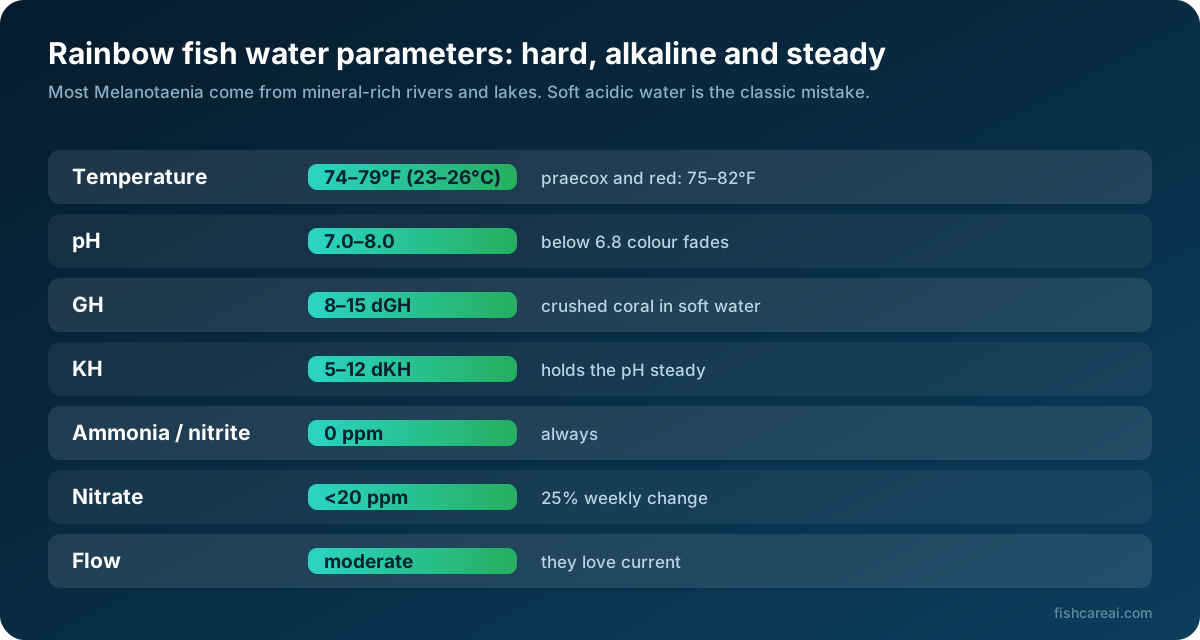
Rainbow Fish Water Parameters at a Glance
| Parameter | Target | Tolerated | Notes |
|---|---|---|---|
| Temperature | 74–79°F (23–26°C) | 72–82°F | Dwarf neon and red rainbowfish: 75–82°F |
| pH | 7.0–8.0 | 6.5–8.5 | Colour fades and breeding stops below 6.8 |
| GH (general hardness) | 8–15 dGH | 5–20 dGH | Raise with crushed coral or aragonite |
| KH (carbonate hardness) | 5–12 dKH | 3–15 dKH | Holds the pH steady |
| Ammonia / nitrite | 0 ppm | — | Rainbowfish gasp and fade at low levels |
| Nitrate | <20 ppm | 40 ppm | Colour is the early warning |
| Flow | Moderate; 6–10× turnover | Gentle to strong | They play in current |
The ranges match the habitat data summarised on the Melanotaenia genus page and the general freshwater guidance in the aquarium water parameters guide.
Rainbow Fish Temperature
Keep most rainbowfish at 74–79°F; 76°F is a good all-round setting for a boesemani, turquoise or Australian school. Two groups run warmer: the dwarf neon (M. praecox) and the red rainbowfish (Glossolepis incisus) come from lowland New Guinea and do best at 75–82°F, so a community of dwarf neons and boesemani meets at 78°F. Rainbowfish are not fussy about the exact number but they are about swings: a heater on a controller, and a room that does not cool 8°F overnight, matter more than the last degree. Cooler water (70–72°F) slows them and dulls the colour; above 84°F the oxygen drops and they hang at the surface.
pH, GH and KH: Why Rainbow Fish Want Hard Water
This is the parameter people get wrong. Rainbowfish evolved in mineral-rich water, and in an aquarium at pH 7.0–8.0 and 8–15 dGH they hold their colour, spawn readily and resist disease. Below pH 6.8 and 5 dGH the same fish look washed out and stop breeding, and in very soft water they become prone to bacterial infections like columnaris. If your tap water is soft:
- Put a bag of crushed coral or aragonite in the filter; it dissolves slowly and raises both GH and KH.
- Or add a remineralising salt (a GH/KH booster) to water-change water to reach 8 dGH.
- Skip driftwood, peat and almond leaves, which push the pH down.
KH is what holds the pH still between water changes; at 5 dKH or more the pH will not crash overnight. Test both once a month. Rainbowfish do not need salt in the water and should not be kept brackish; a few Australian species tolerate estuaries in the wild, but aquarium stock is freshwater.
Ammonia, Nitrite and Nitrate for Rainbow Fish
Ammonia and nitrite must read zero. Rainbowfish show ammonia stress fast — gasping at the surface, red gill edges, fading colour — and a school of eight added to a new tank is a heavy load, which is why they belong in a mature, cycled aquarium and are best added in two batches a week apart. Nitrate under 20 ppm is the target; rainbowfish tolerate 40 ppm without obvious harm, but their colour is the early warning that the water is going stale, and chronic high nitrate goes with the bloat and fin problems that shorten their lives. Weekly 25% water changes with matched water, a filter rated above the tank volume, and not overfeeding a school that begs constantly keep nitrate where it belongs. See rainbow fish food for how much is enough.
Flow: Do Rainbow Fish Like Current?
Yes. Rainbowfish come from flowing rivers and streams and will spend hours playing in the outflow of a filter or powerhead, swimming into it, drifting back and doing it again. Aim for 6–10 times the tank volume per hour of total flow from a canister or hang-on filter, with a small powerhead across the length of tanks over 4 feet. What they do not like are dead spots where waste settles, or a current so strong across the whole tank that there is nowhere calm to rest at night; angle the outflow along the front so the back half of the tank is quieter. Good flow also keeps oxygen up, which matters for a fast fish at 78°F.
Water Changes and Keeping Rainbow Fish Water Parameters Stable
- 25% weekly, siphoning the substrate, with new water matched to the tank's temperature and hardness.
- Heater on a controller set to 76–78°F.
- Crushed coral in the filter if GH is under 8, replaced when it dissolves.
- Test pH, GH and KH monthly; ammonia, nitrite and nitrate weekly in a new tank.
- Watch the colour. A school that fades mid-week is telling you the nitrate or the pH has moved before a test kit will.
Rainbowfish that go pale, hide or flash on the decor after a water change have usually met a temperature or hardness mismatch; the signals are decoded on the rainbow fish behavior page, and the infections that follow chronic bad water are on rainbow fish diseases. Use the water parameter checker to flag any reading outside the safe band, and see the rainbow fish tank size page for the tank that holds these parameters most easily — a larger one. The rest of the routine is in the rainbow fish care guide.
Rainbow Fish Care FAQ
What temperature do rainbow fish need?
74–79°F (23–26°C) for boesemani, turquoise, Australian and most Melanotaenia; 75–82°F for dwarf neons and red rainbowfish, which come from warmer lowland streams. Keep it within 2°F of the setpoint.
What pH is best for rainbow fish?
7.0–8.0. Rainbowfish come from alkaline rivers and lakes, and below pH 6.8 their colour fades and breeding stops. Most tap water in the 7.2–7.8 range is ideal without adjustment.
Do rainbow fish need hard water?
They do best at 8–15 dGH and 5–12 dKH. In soft water (under 5 dGH) add crushed coral or aragonite to the filter, or a small amount of a remineralising salt, to raise GH and hold the pH.
Do rainbow fish like current?
Yes. They come from flowing rivers and swim into the outflow for fun. Moderate flow from a hang-on or canister filter, plus a small powerhead in a long tank, suits them; avoid dead spots more than strong current.
How often should I change water for rainbow fish?
25% weekly. Rainbowfish are heavy feeders and active, and they show nitrate stress as fading colour before anything else. Match the new water's temperature and hardness.
Can rainbow fish live in brackish water?
No, and they do not need salt. A few Australian species tolerate slightly brackish estuaries in the wild, but every aquarium rainbowfish is a freshwater fish; keep salt for treating ich in a hospital tank.