Choosing rainbow fish tank mates is mostly a question of who can keep up. Rainbowfish are peaceful with anything they cannot swallow, so the good companions are the fish that share their hard, neutral-to-alkaline water at 74–79°F and can compete with a fast, greedy school at feeding time: tetras, rasboras, danios, barbs, corydoras, plecos, loaches, livebearers, gouramis and rams, with angelfish for the medium and large species. The poor companions are the slow or fragile fish that a school of rainbowfish outpaces and stresses — bettas, discus — and the cold-water fish that want a different tank altogether. The second half of the page covers the question that catches people out: keeping two rainbowfish species together.
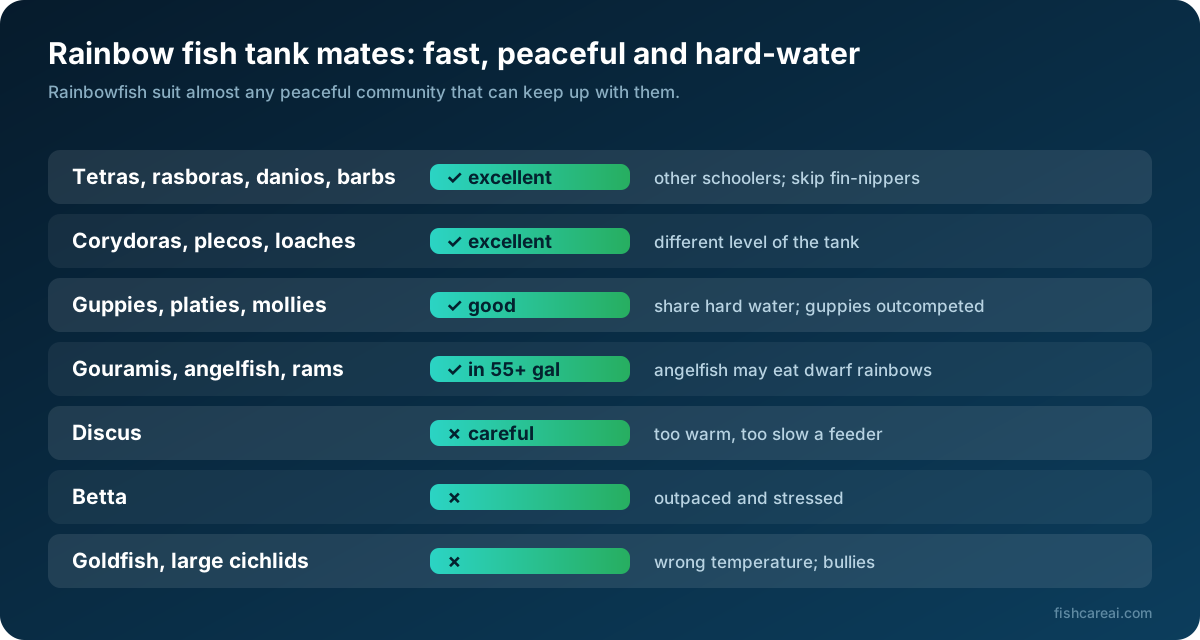
Best Rainbow Fish Tank Mates
| Tank mate | Verdict | Why it works |
|---|---|---|
| Tetras (rummy-nose, black skirt, lemon, congo, diamond) | Excellent | Other midwater schoolers; congo tetras are the classic partner for boesemani |
| Rasboras and danios (harlequin, zebra, giant danio) | Excellent | Fast enough to feed alongside |
| Peaceful barbs (cherry, gold, rosy, denison) | Excellent | Share hard water; denison barbs and rainbowfish are a showpiece 75 |
| Corydoras, bristlenose plecos, kuhli and clown loaches | Excellent | Bottom level; no competition |
| Platies, mollies, swordtails, guppies | Good | Same hard water; fry get eaten; guppies get outcompeted |
| Gouramis (pearl, honey, three-spot), rams, kribensis | Good | Different niche; keep the tank 40+ gal |
| Angelfish, severums, keyhole cichlids | Good in 55+ gal | With medium and large rainbowfish only; angels eat dwarf species |
| Rainbow sharks, bala sharks | Fine in 75+ gal | Fast bottom or midwater fish that hold their own |
Every good pairing has one thing in common: a fish that feeds quickly or on a different level, so the rainbowfish school does not eat everything first — rainbowfish are peaceful, active shoalers by nature, as the rainbowfish family account describes. Run any specific combination through the fish compatibility checker; the species-level pairings are on the boesemani, neon rainbowfish and threadfin compatibility hubs.
Common Rainbow Fish Pairings Answered
- Rainbow fish with guppies: yes; same hard water and temperature. Rainbowfish outcompete guppies for food and eat guppy fry, so feed at both ends of the tank and do not expect a guppy colony.
- Rainbow fish with angelfish: yes for boesemani, turquoise and Australian rainbowfish in 55 gallons or more at 78°F; no for dwarf neons and threadfins, which angelfish eat.
- Rainbow fish with tetras: yes; the best pairing of all. Choose tetras that tolerate pH 7–7.5 (rummy-nose, black skirt, congo) over blackwater species like cardinals.
- Rainbow fish with cichlids: dwarf cichlids (rams, kribensis, apistogramma) and peaceful medium cichlids (angelfish, keyhole, severum) yes; African rift-lake cichlids share the hard water but are too aggressive; oscars and large Central Americans no.
- Rainbow fish with gourami: yes, especially pearl and honey gouramis. A slow-feeding dwarf gourami can be outcompeted; feed it sinking food.
- Rainbow fish with shrimp: adult cherry and amano shrimp usually survive with dwarf neons and often with boesemani; shrimplets never do; large rainbowfish take molting adults.
- Rainbow fish with betta: not recommended. See below.
- Rainbow fish with discus: not recommended. See below.
- Rainbow fish with goldfish: no. Goldfish need 65–72°F; rainbowfish are sluggish and colourless there.
Rainbow Fish Tank Mates to Avoid
- Betta. A school of rainbowfish is too fast and too busy; the betta stops eating and hides, and may flare at or attack a red-finned dwarf neon male. Both fish do better elsewhere.
- Discus. Discus want 84°F, soft acidic water and slow, quiet feeding; rainbowfish want 76°F, hard water and eat everything in seconds. The turquoise rainbowfish is sometimes kept with discus at 80°F, but both are compromised.
- Goldfish and other cold-water fish. Wrong temperature in both directions.
- Fin nippers — tiger barbs, serpae tetras — with the long-finned threadfin and with male boesemani in display.
- Large predators and bullies: oscars, jack dempseys, arowanas, red-tailed sharks in small tanks.
- Very small or slow fish with the large species: a 5-inch Australian rainbowfish will swallow a chili rasbora.
Keeping Rainbow Fish With Other Rainbow Fish
Two or three rainbowfish species in one tank look spectacular and are the natural way to fill a 55 or 75, with two rules. First, each species must have its own school of six; one boesemani, one turquoise and one Australian is not a school of three but three lonely fish. Second, Melanotaenia species hybridise readily, and males will spawn with any female of the genus when their own species is short. The hybrids are drab and should never be passed on. So: two schools of six or more each in a 55, three in a 75 or 125, ideally pairing species of different colours and sizes (boesemani with turquoise; dwarf neon with threadfin; Australian with red). The tank arithmetic is on the rainbow fish tank size page and in the tank size calculator.
Shrimp and Snails With Rainbow Fish
Snails of every kind are safe; rainbowfish ignore them. Shrimp depend on size: dwarf neons and threadfins leave adult cherry and amano shrimp alone and only take shrimplets; boesemani and turquoise rainbowfish usually leave adults alone but will pick at a freshly molted one; Australian and red rainbowfish eat any shrimp they can catch. A dense moss carpet keeps a colony ticking over under a dwarf rainbowfish school.
A Rainbow Fish Community Plan for a 75 Gallon
- 8 boesemani rainbowfish and 8 turquoise rainbowfish (midwater, two schools)
- 10 rummy-nose or congo tetras (midwater, faster feeders)
- 8 sterbai corydoras and 2 bristlenose plecos (bottom)
- 1 pearl gourami (surface)
Check the total against the fish tank stocking calculator, add the rainbowfish schools last in two batches, and expect the tank to settle in a fortnight; the dawn chasing between the males is normal and is decoded on the rainbow fish behavior page. Everything else about the fish themselves is in the rainbow fish care guide.
Rainbow Fish Care FAQ
What fish can live with rainbow fish?
Peaceful, active fish that share hard, neutral-to-alkaline water: tetras, rasboras, danios, barbs (not tiger barbs with threadfins), corydoras, bristlenose plecos, loaches, platies, mollies, swordtails, gouramis, rams and angelfish in a 55 or larger.
Can rainbow fish live with guppies?
Yes, they share the same hard water and temperature. In practice rainbowfish outcompete guppies for food and may eat guppy fry, so feed at both ends of the tank and expect few surviving fry.
Can rainbow fish live with angelfish?
Yes for medium and large rainbowfish (boesemani, Australian) in 55 gallons or more; angelfish will eat dwarf neons and threadfins. Keep the temperature at 78°F, the overlap of both ranges.
Can rainbow fish live with a betta?
Not recommended. A school of rainbowfish is too fast and busy for a betta, which becomes stressed and stops eating, and a betta may attack a red-finned dwarf neon. Choose calmer tank mates for the betta.
Can rainbow fish live with discus?
Poorly. Discus want 84°F and soft acidic water and eat slowly; rainbowfish want 76°F, hard water and eat everything in seconds. The turquoise rainbowfish is sometimes kept with discus at 80°F, but it is a compromise for both.
Can rainbow fish live with goldfish?
No. Goldfish need cooler water (65–72°F) and produce far more waste; rainbowfish at those temperatures are sluggish and colourless. Keep them in separate tanks.