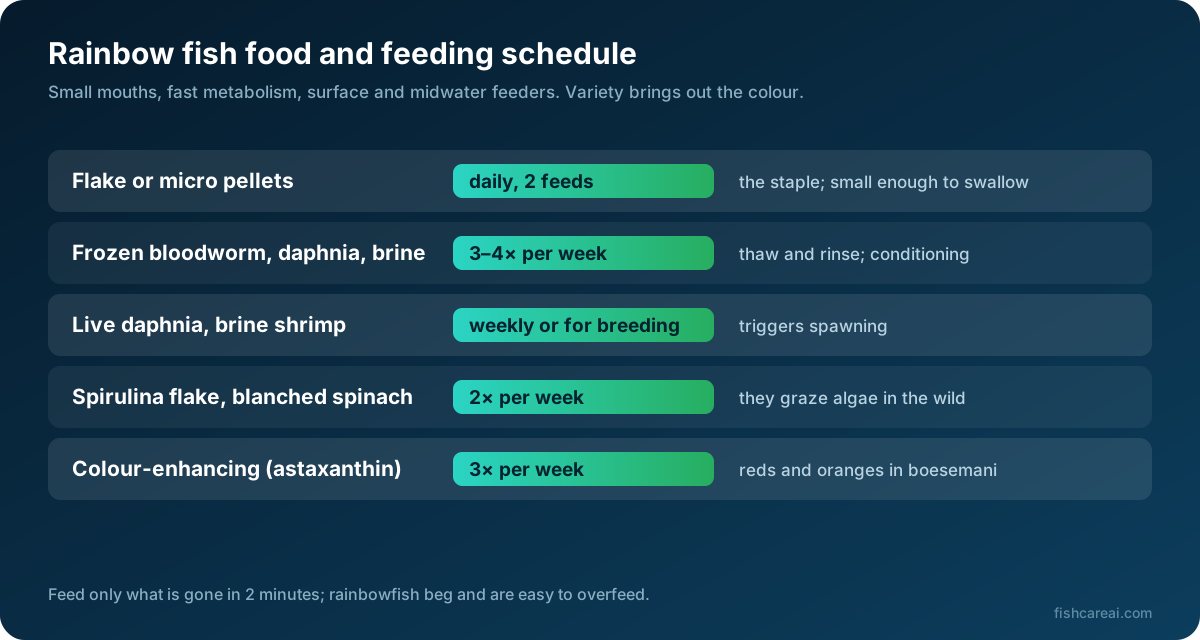
The best rainbow fish food is a small-particle staple — crushed flake or 1 mm micro pellets — fed twice a day, with frozen daphnia, bloodworm and brine shrimp three or four times a week, spirulina or blanched vegetables twice a week, and live food when you want them to spawn. Rainbowfish are omnivores with big appetites and small throats: they will beg at the glass all day, spit out any pellet they cannot swallow whole, and colour up or fade according to what is in the diet. This page covers what rainbow fish eat in the wild, the foods that work, how often to feed, feeding for colour, and what to do when one stops eating.
What Do Rainbow Fish Eat in the Wild?
Rainbowfish are surface and midwater feeders. In the rivers of Australia and New Guinea they eat insects that land on the water — ants, flies, mosquitoes — aquatic insect larvae, tiny crustaceans, and a fair amount of algae and plant matter scraped off rock and wood. Gut studies summarised on the rainbowfish family page describe them as opportunistic omnivores, roughly two-thirds animal and one-third plant. The upturned mouth is built for taking food from the surface, and the throat is narrow for the size of the fish, which is why big pellets designed for cichlids come straight back out.
Best Rainbow Fish Food, Ranked
| Food | Role | How often | Notes |
|---|---|---|---|
| Quality flake (crushed) or 0.5–1 mm micro pellets | Staple | Twice daily | Slow-sinking suits them; 40%+ protein |
| Frozen daphnia, bloodworm, brine shrimp, cyclops | Conditioning, colour | 3–4× weekly | Thaw in tank water and rinse |
| Live daphnia, brine shrimp, wingless fruit flies, mosquito larvae | Spawning trigger, enrichment | Weekly, daily when breeding | Fruit flies on the surface are the wild diet |
| Spirulina flake, blanched spinach or zucchini, algae wafers | The plant third | 2× weekly | Improves digestion; they graze algae anyway |
| Colour-enhancing flake or krill | Red and orange | 3× weekly | Astaxanthin; makes boesemani orange glow |
| Powdered fry food, microworms, baby brine shrimp | Threadfins, blue-eyes, fry | Daily for tiny species | Threadfin rainbowfish starve on flake |
The mistake to avoid is a single large-pellet food. Rainbowfish take a 2 mm pellet, chew, spit it out, chase it, and repeat until it dissolves and fouls the water, while slowly losing condition. Crush flake between your fingers, choose micro pellets, and for threadfin and celebes rainbowfish use powdered or fry-grade food.
How Often to Feed Rainbow Fish
- Morning: flake or micro pellets, as much as the school clears in two minutes.
- Evening: the same, or a frozen cube (daphnia, bloodworm, brine) on alternate days.
- Twice a week: spirulina flake or a slice of blanched vegetable, removed after an hour.
- Weekly: live daphnia or brine shrimp; daily for two weeks when conditioning to breed (see rainbow fish breeding).
- One fast day a week does no harm and helps with bloat.
Rainbowfish beg every time someone walks past the tank, and a school of ten begging at once is persuasive. Feed to the two-minute rule, not to the begging. Overfeeding shows as bloated fish, cloudy water and rising nitrate before anything else, and it is the single most common rainbow fish food problem. Portion sizes for the whole community are in the fish feeding calculator.
Feeding Rainbow Fish for Colour
Colour in rainbowfish is two-thirds environment — a school of six or more, hard water, a dark background — and one-third diet. The diet part: foods rich in astaxanthin and carotenoids (colour-enhancing flake, krill, cyclops, red-coloured daphnia) fed three times a week, spirulina for the blues and greens, and live food to bring males into display condition. Feed these for six weeks and compare: the orange rear half of a boesemani deepens, the blue on a turquoise rainbowfish goes electric, and the red fins on a dwarf neon stand out. If the colour does not improve, the problem is not food; check the group size and the water on the water parameters page.
Rainbow Fish Not Eating
- New fish: a day or two of refusing food is normal. Try frozen daphnia or live brine shrimp, and feed with the lights low.
- Food too big: the commonest cause in an established fish. Crush it smaller.
- Bullying: a single dominant male, or a larger tank mate, can keep a fish off the food. Feed at both ends of the tank; check the school is six or more.
- Water: ammonia, a pH swing or a temperature drop after a water change all stop rainbowfish eating. Test.
- Disease: a fish that hangs back from food and loses weight over weeks, especially with a curved spine, may have fish tuberculosis; one with a white saddle on its back has columnaris. See rainbow fish diseases.
Do Rainbow Fish Eat Plants or Shrimp?
Rainbowfish graze algae and pick at soft, dying leaves but leave healthy aquarium plants alone; a rainbowfish tank can be fully planted, and Java moss is where they spawn. They are not vegetarian enough to control algae, though. Shrimp are a different matter: adult cherry or amano shrimp usually survive with dwarf neons and threadfins, and often with boesemani, but every rainbowfish eats shrimplets on sight and the large Australian and red species will take a molting adult. Snails are safe. The species that graze hardest and feed most easily are compared on the types of rainbow fish page; which tank mates compete for food is under rainbow fish tank mates; and the rest of the routine is in the rainbow fish care guide.
Rainbow Fish Care FAQ
What do rainbow fish eat?
In the wild, insects that fall on the water, aquatic insect larvae, small crustaceans and algae. In the aquarium, the best rainbow fish food is a small-particle flake or micro pellet as the staple, frozen daphnia, bloodworm and brine shrimp for conditioning, and spirulina or blanched vegetables for the plant part of the diet.
How often should I feed rainbow fish?
Twice a day, only as much as they finish in two minutes. They have small stomachs and a fast metabolism, and they beg constantly, which makes overfeeding the commonest rainbowfish feeding mistake.
What is the best food for rainbow fish colour?
Foods with astaxanthin and spirulina — colour-enhancing flakes, krill or cyclops — fed three times a week bring out the reds and oranges. Live daphnia and brine shrimp do the same and trigger spawning.
Can rainbow fish eat large flakes or pellets?
Rainbowfish have small mouths and throats for their size and will spit out large pellets. Crush flakes between your fingers and choose 1 mm or smaller pellets; threadfin and celebes rainbowfish need powdered food.
Do rainbow fish eat plants?
They graze algae and soft plant matter but leave healthy aquarium plants alone. A rainbowfish tank can be fully planted; they even spawn in Java moss.
Will rainbow fish eat shrimp?
Adult cherry shrimp are usually left alone, but rainbowfish eat shrimplets and will pick at a molting shrimp. Dwarf neons are the safest with a shrimp colony; Australian and red rainbowfish are not.