Six rainbow fish diseases account for nearly every sick rainbowfish, and two of them — columnaris and fish tuberculosis — are the ones that actually kill. Rainbowfish are hardy: they shrug off the ich, velvet and bloat that trouble other community fish as long as you catch them early. But columnaris moves through a warm, crowded tank in days, and fish TB arrives with the fish, incubates for months, and has no cure. This page tells the six apart by what you see, gives the treatments that work for rainbowfish, explains fading colour, and sets out the quarantine habit that prevents most of it.
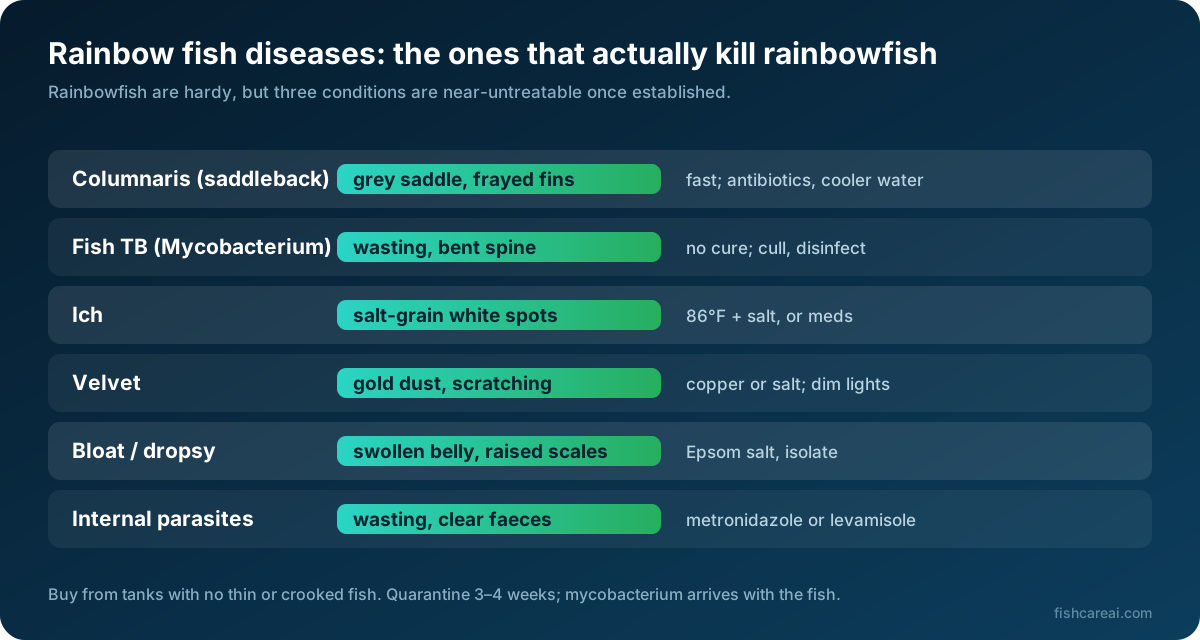
Rainbow Fish Diseases at a Glance
| Disease | Key sign | Speed | Treatable? |
|---|---|---|---|
| Columnaris (saddleback) | Grey-white saddle behind the dorsal, frayed fins, pale mouth | Days | Yes, if caught early |
| Fish tuberculosis (Mycobacterium) | Slow wasting, bent spine, hollow belly, one fish at a time | Months | No |
| Ich | Salt-grain white spots, flashing | Days to weeks | Yes |
| Velvet | Gold dust, scratching, clamped fins | Days | Yes |
| Bloat / dropsy | Swollen belly, raised scales | Days to weeks | Sometimes |
| Internal parasites | Wasting with appetite, white stringy faeces | Weeks | Yes |
Columnaris in Rainbow Fish
What you see: a grey or white patch over the back behind the dorsal fin (the “saddle”), fraying fin edges, a pale or eroded mouth, sometimes cottony tufts that look like fungus but are flat rather than fluffy. The fish hangs at the surface or sits on the bottom and stops eating. Columnaris (Flavobacterium columnare) is a bacterium that thrives in warm, dirty, crowded water and it is the commonest killer of rainbowfish in the first weeks after purchase, when a stressed school arrives in a new tank. It spreads fish to fish and can wipe out a school in a week.
What works: act on the day you see the saddle. Move affected fish to a hospital tank, drop the temperature to 74°F (the bacterium grows fastest above 80°F), and treat with kanamycin, nitrofurazone or a combined kanamycin-nitrofurazone course for the full length of the pack instructions; a salt bath (1 tablespoon per gallon for 15 minutes) helps in mild cases. Large water changes and a clean substrate in the main tank slow the spread. Warm-water “ich cures” and raising the temperature make columnaris worse. The biology is on the columnaris entry.
Fish Tuberculosis: Wasting and a Bent Spine
What you see: a fish that gets thinner over weeks or months while still eating, a hollow belly behind the head, a spine that curves or kinks in an adult that was straight, pale colour, sometimes pop-eye or small skin ulcers. One fish declines, dies, and a few months later another starts. This is Mycobacterium marinum, and rainbowfish — especially farm-bred dwarf neons and boesemani from crowded tanks — are among the fish most often affected.
What works: nothing, for the affected fish. There is no reliable treatment; euthanise a fish that is wasting with a bent spine, disinfect nets and equipment, and remove the body so it is not eaten. The rest of the school may carry the bacterium for years without symptoms, so good water, low stress and good food are the management. The prevention is all at purchase: buy from a tank where every fish is plump and straight, and quarantine for a month. Wear gloves in the tank if you have cuts on your hands; the same bacterium causes a slow-healing skin infection in people. A spine that has been bent since the fish was small is a birth defect and harmless. Species notes: rainbow fish losing color.
Ich and Velvet on Rainbow Fish
Ich shows as salt-grain white spots on the body and fins, with flashing on the gravel; it usually follows a temperature drop or new fish. Rainbowfish tolerate all three standard treatments well: raise the temperature slowly to 86°F for ten days with extra aeration, add aquarium salt at 1 tablespoon per 5 gallons, or use a malachite green/formalin medication at the pack dose. Treat the whole tank, because the parasite is in the substrate, not just on the fish. Velvet is finer — a gold or rust dust seen best with a torch from the side — with scratching, clamped fins and rapid breathing, and it kills faster. Treat with copper or salt at the pack dose, dim the lights (the parasite photosynthesises), and raise the temperature to 82°F. Species notes: rainbow fish white spots.
Bloat, Dropsy and Internal Parasites
A rainbowfish with a swollen belly and normal scales is usually overfed — a school that begs constantly is easy to overfeed — or constipated on a dry-food-only diet. Fast the tank for two days, then feed daphnia or blanched pea; Epsom salt at 1 tablespoon per 5 gallons in a hospital tank helps. Dropsy is a swollen belly with raised scales that give a pine-cone look, and is a symptom of internal organ failure, usually bacterial; isolate, treat with Epsom salt and a broad antibiotic, and accept that most cases are lost. Internal parasites show as a fish that eats but wastes, with white, stringy faeces; treat with metronidazole or levamisole mixed into food for a week. Tell parasites from TB by the spine: parasites do not bend it.
Losing Colour: Disease or Not?
Fading colour is the commonest rainbowfish complaint and is rarely a disease. Rainbowfish are pale at night, pale for a day after a move, pale as juveniles for up to a year, and pale for life in a school under six, in soft acidic water, over a light substrate, or on a plain flake diet — see the rainbow fish behavior page. Colour loss with weight loss, a bent spine, a saddle mark, spots or dust is the disease signal; colour loss on a fat, straight, active fish is husbandry. Fix the school, the hardness and the food (water parameters, rainbow fish food) and give it six weeks.
Preventing Rainbow Fish Diseases
- Buy well. Every fish in the shop tank plump, straight-spined and coloured; no dead or wasting fish in the system.
- Quarantine three to four weeks in a bare tank with a seeded sponge filter; watch for saddles, spots and wasting; treat there, not in the display.
- Add the school to a mature tank, in two batches a week apart, so ammonia never spikes.
- Hard, stable water at 74–79°F, 25% weekly changes, nitrate under 20 ppm. Columnaris is a disease of warm dirty water.
- Small, varied food and the two-minute rule; bloat is a feeding problem.
- A school of six or more in a long tank. Chronic stress is what lets every one of these diseases in.
The symptom index for the species is at rainbow fish diseases and symptoms; readings outside the safe range can be checked with the water parameter checker; and the daily routine that keeps rainbowfish healthy is in the rainbow fish care guide.
Rainbow Fish Care FAQ
What diseases do rainbow fish get?
Columnaris (a bacterial saddleback infection), fish tuberculosis (Mycobacterium, showing as wasting and a bent spine), ich, velvet, bloat and dropsy, and internal parasites. The first two are the ones that actually kill rainbowfish; the rest are treatable.
Why does my rainbow fish have a bent spine?
A curved or kinked spine in an adult that was straight is the classic sign of fish tuberculosis (Mycobacterium marinum), usually with slow wasting and a hollow belly. There is no cure; remove the fish and disinfect nets. A spine bent from birth is a genetic deformity and harmless.
What is the white patch on my rainbow fish's back?
A grey-white saddle behind the dorsal fin, often with frayed fins and a pale mouth, is columnaris (Flavobacterium). It kills within days in warm water. Lower the temperature to 74°F, treat with kanamycin or nitrofurazone in a hospital tank, and improve water quality.
How do I treat ich on rainbow fish?
Raise the temperature slowly to 86°F for ten days with extra aeration, add 1 tablespoon of aquarium salt per 5 gallons, or use a malachite green/formalin medication. Rainbowfish tolerate all three well. Treat the whole tank; ich is in the water, not just on the fish.
Why are my rainbow fish wasting away?
Slow wasting with a normal appetite points to internal parasites (treat with metronidazole or levamisole in food); wasting with a bent spine or no appetite points to fish TB. Either way, isolate the fish and check the rest of the school.
Can fish TB from rainbow fish infect humans?
Rarely, through a cut in the skin, causing a slow-healing sore ('fish tank granuloma'). Wear gloves if you have open cuts when handling a tank that has had a wasting fish, and see a doctor about a persistent lump on the hand.