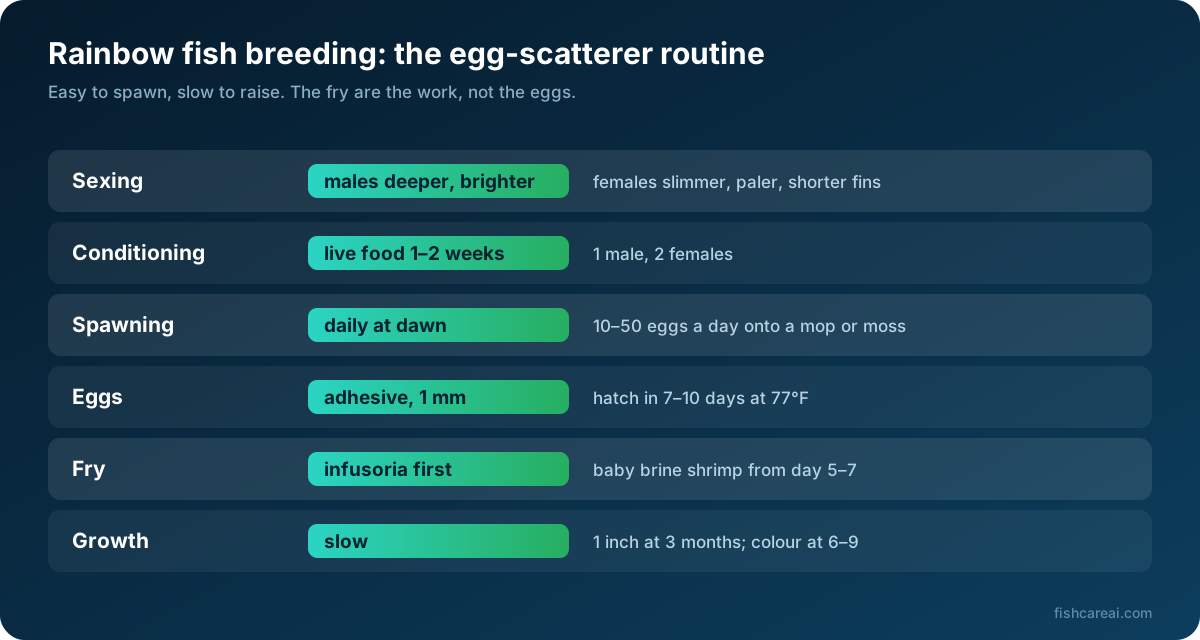
Rainbow fish breeding is the easiest part of keeping them and raising the fry is the hardest. A conditioned trio in hard water at 77°F will scatter adhesive eggs onto a spawning mop every morning for weeks, with no persuasion beyond good food; the eggs hatch in 7–10 days into fry so small they need infusoria before they can manage baby brine shrimp, and they take three months to reach an inch and up to a year to colour. This page covers telling males from females, the breeding setup, conditioning, collecting and hatching the eggs, raising the fry, and the species differences — and why a “pregnant” rainbowfish is not.
Male vs Female Rainbow Fish
Rainbowfish are sexually dimorphic, which makes sexing the easy part of rainbow fish breeding once the fish are six months old:
| Feature | Male | Female |
|---|---|---|
| Body | Deeper, taller, arched back in adults | Slimmer, torpedo-shaped, rounder belly with eggs |
| Colour | Brighter; full species colour; display bar on the forehead | Paler, more silver; a hint of the colour |
| First dorsal fin | Longer and pointed; tip reaches past the start of the second dorsal | Shorter and rounded; does not reach |
| Anal fin | Longer, pointed, extends further back | Shorter, rounded |
| Dwarf neon fins | Red | Yellow or orange |
| Threadfin | Long trailing black filaments | Short plain fins |
| Behaviour | Chases, flares and displays at dawn | Is chased; deposits eggs on the mop |
The dorsal-fin test is the reliable one for Melanotaenia: fold the first dorsal back and see whether it overlaps the second. Juveniles under 1.5 inches cannot be sexed, so buy eight and let the ratio sort itself out. The dimorphism is described in the Melanotaenia genus account.
The Rainbow Fish Breeding Tank
- Tank: a bare 10–20 gallon (10 for dwarf species, 20 for boesemani and larger), sponge filter, heater at 77–79°F, no substrate.
- Water: hard and alkaline, pH 7.2–7.8, 10–15 dGH. Rainbowfish will not spawn well in soft water.
- Spawning mop: a bundle of dark green acrylic yarn tied to a cork so it floats, or a clump of Java moss. Two mops let you rotate them.
- Fish: one male and two females, or two males and three females for a busy tank. Choose the deepest, brightest male.
- Light: on a timer; spawning happens in the first hours after dawn.
Conditioning Rainbow Fish for Breeding
Separate the sexes for a week if you can, and feed both groups live or frozen food two or three times a day for seven to fourteen days: daphnia, brine shrimp, bloodworm, cyclops and, for the surface-feeding species, wingless fruit flies. The females fill out visibly and the male's colour and display intensify. Then put the trio together in the breeding tank in the evening; spawning usually starts the next morning. Feeding for condition is covered on the rainbow fish food page.
Spawning and Rainbow Fish Eggs
Rainbow fish breeding happens in the first hours of light. At dawn the male displays — fins spread, forehead stripe blazing — and drives a female into the mop, where the pair quiver side by side and release a few eggs and sperm at a time. A female lays 10–50 eggs a day for a week or more, rather than one large batch. The eggs are clear, about 1 mm, and hang from the mop by a fine sticky thread; you can see them by lifting the mop against the light. Infertile eggs turn white and fuzzy within 48 hours and should be picked off.
Because the adults eat any egg or fry they find, move the mop (or pick the eggs off into a hatching container of tank water) every one to two days, and replace it with the second mop. Eggs hatch in 7–10 days at 77°F, faster for dwarf neons (6–8 days) and slower in cooler water. Gentle aeration and a drop of methylene blue in the hatching container prevent fungus.
Raising Rainbow Fish Fry After Breeding
- Days 1–2: the fry hang at the surface absorbing the yolk. Do not feed.
- Days 3–10: they are tiny and can only take infusoria, green water, a liquid fry food or a powdered fry food rubbed to dust on the surface, three or four times a day. This is the stage that fails: baby brine shrimp are too big for most rainbowfish fry in the first week.
- Days 7–14 onward: introduce baby brine shrimp and microworms; keep offering powder for the smallest.
- Weeks 3–12: baby brine shrimp twice a day, crushed flake, small daily water changes with matched water. Fry stay at the surface, so keep the water level low and the flow gentle.
- 3 months: about an inch; move to a grow-out tank. Colour appears at 4–6 months (dwarf neon) to 12–18 months (boesemani).
Fry are sensitive to ammonia and to sudden changes; a mature sponge filter and a floating plant cover help more than anything. Expect to raise a few dozen from a week's spawning.
Rainbow Fish Breeding by Species
- Boesemani: the standard method above; fry are slow to colour (a year). Detail on the boesemani care page.
- Dwarf neon: spawns readily in a 10-gallon at 79°F; fry survive in a planted community tank more often than any other species. See the dwarf neon care page.
- Threadfin: tiny eggs, tiny fry, infusoria for two weeks; a species tank with floating plants and no other fish gives the best results.
- Celebes: spawns in Java moss at 75°F in hard water; fry take baby brine shrimp from day 5.
- Forktail and Gertrude's blue-eyes: lay a few eggs a day for weeks; adults are voracious egg-eaters, so rotate mops daily.
- Hybrids: Melanotaenia species cross freely. Breed one species per tank and do not pass on mixed fry.
Is My Rainbow Fish Pregnant?
No rainbowfish is ever pregnant; they are egg-scatterers and carry nothing. A female with a rounded, full belly is carrying eggs and will lay them within days if a male is present — it is a sign of good condition, not a problem. A belly that stays swollen for a week, with raised scales or a fish that stops eating, is dropsy or bloat, and belongs on the rainbow fish diseases page. What a healthy adult of each species should look like is on the rainbow fish size and lifespan page; the water that makes them spawn is on the water parameters page; and the general routine is in the rainbow fish care guide.
Rainbow Fish Care FAQ
How do you tell male from female rainbow fish?
Males are deeper-bodied, more colourful, and have longer, more pointed dorsal and anal fins; in most Melanotaenia the male's first dorsal fin reaches past the start of the second. Females are slimmer, paler and rounder when carrying eggs.
Do rainbow fish breed easily?
Spawning is easy: a conditioned trio in hard water at 77°F will lay eggs on a mop every morning. Raising the fry is the hard part, because they are tiny and need infusoria or liquid fry food for the first week before they can take baby brine shrimp.
How long do rainbow fish eggs take to hatch?
Seven to ten days at 75–79°F; slightly faster for dwarf neons and slower in cooler water. The eggs are clear, 1 mm, and stick to the mop by fine threads; infertile ones turn white within two days.
Do rainbow fish eat their eggs and fry?
Yes. Adults eat eggs and fry whenever they find them, so the mop is moved to a hatching container every day or two, and fry are raised separately. In a heavily planted community tank a few fry occasionally survive on their own.
Can a rainbow fish be pregnant?
No — rainbowfish are egg-layers and do not carry young. A female with a rounded belly is full of eggs (normal) or overfed. A belly that stays swollen with raised scales is dropsy.
Will different rainbow fish species crossbreed?
Yes. Melanotaenia species hybridise readily when kept in mixed groups, and the hybrids are usually drab. Keep each species as its own school of six or more, and never sell or trade hybrid fry.