Discus (Symphysodon) are the fish that most often end up on a symptom search. They come from warm, soft, very clean Amazon water, and almost every one of the common discus health problems traces back to a tank that drifted away from those conditions: nitrate creeping up between water changes, temperature slipping below 82°F, or a new fish bringing in gill flukes or intestinal parasites.
This hub is the index for discus health problems on FishCare AI. Use the symptom finder to jump to the guide that matches what you see, read the short profiles of the diseases discus actually get, and run the pre-treatment checklist before you buy medication. For the long-form disease article see the discus fish diseases guide; for the symptom-checker version see discus health problems on the symptom checker.
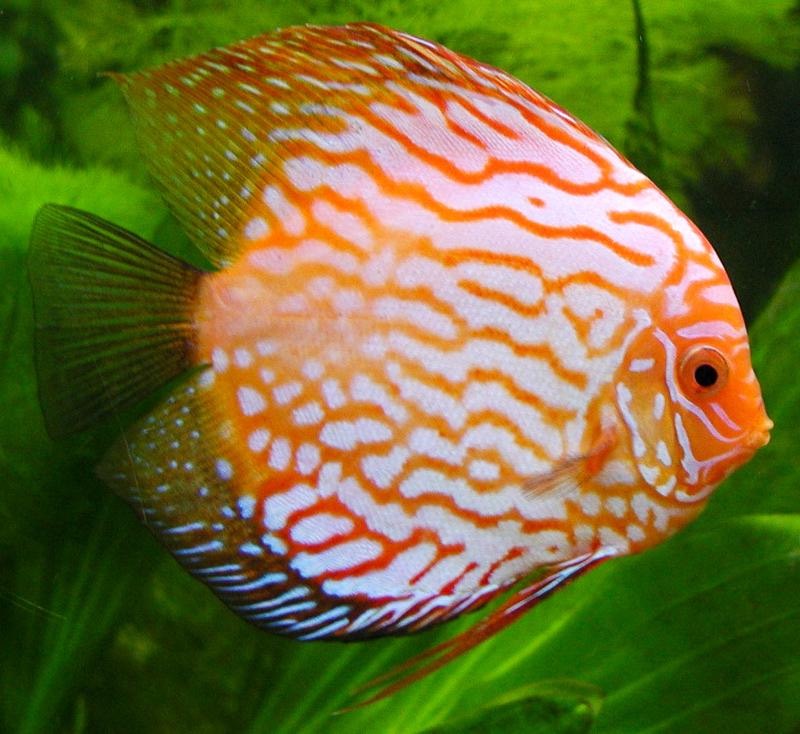
Discus Health Problems by Symptom: Quick Finder
Every symptom below links to a dedicated discus guide with causes, a diagnosis walk-through and treatment steps. Start with the sign that appeared first.
Discus behaviour and breathing symptoms
| Symptom | What it usually means | Guide |
|---|---|---|
| Not Eating | Refusing food for more than a day or two | Discus not eating → |
| Hiding | Staying behind plants or in a corner all day | Discus hiding → |
| Lethargic | Hovering motionless, slow to react | Discus lethargic → |
| Darting | Sudden bursts of frantic swimming | Discus darting → |
| Rubbing / Flashing | Scraping the body on décor or substrate | Discus rubbing / flashing → |
| Jumping | Leaping at the surface or out of the tank | Discus jumping → |
| Aggressive | Chasing, nipping or pinning tank mates | Discus aggressive → |
| Swimming Sideways | Tilted or listing while swimming | Discus swimming sideways → |
| Floating | Stuck at the surface, unable to dive | Discus floating → |
| Sinking | Resting on the bottom, unable to rise | Discus sinking → |
| Gasping | Mouthing at the surface for air | Discus gasping → |
| Rapid Breathing | Gill covers pumping fast at rest | Discus rapid breathing → |
| Coughing | Repeated jerky gill flushing | Discus coughing → |
Discus body, skin and colour symptoms
| Symptom | What it usually means | Guide |
|---|---|---|
| White Spots | Salt-grain dots on body or fins (ich) | Discus white spots → |
| Black Spots | Dark speckles or patches on the skin | Discus black spots → |
| Spots on Fins | Marks confined to the fins | Discus spots on fins → |
| Pale Color | Washed-out body colour | Discus pale color → |
| Losing Color | Colour fading over days or weeks | Discus losing color → |
| Fuzzy Growth | Cotton-like tufts on skin or mouth | Discus fuzzy growth → |
| Mucus Coating | Cloudy or grey slime film over the body | Discus mucus coating → |
| Red Streaks | Blood lines in fins or on the body | Discus red streaks → |
| Missing Scales | Bare patches where scales have lifted off | Discus missing scales → |
| Bloated | Swollen belly, sometimes with raised scales | Discus bloated → |
| Sunken Belly | Pinched, concave abdomen | Discus sunken belly → |
| Curled Body | Spine bent into a C or S shape | Discus curled body → |
Discus fin and eye symptoms
| Symptom | What it usually means | Guide |
|---|---|---|
| Fin Rot | Ragged, milky or receding fin edges | Discus fin rot → |
| Torn Fins | Splits or bite marks in the fins | Discus torn fins → |
| Clamped Fins | Fins held tight against the body | Discus clamped fins → |
| Cloudy Eyes | Milky film over one or both eyes | Discus cloudy eyes → |
| Bulging Eyes | One or both eyes protruding (pop-eye) | Discus bulging eyes → |
Most Common Discus Health Problems and Diseases
These are the conditions behind the symptoms above, in roughly the order a discus keeper is likely to meet them.
Hole-in-the-head (Hexamita) in Discus
The signature discus disease. Small pits appear above the eyes and along the lateral line, the fish turns dark, produces white stringy faeces and stops eating. Hexamita flagellates are usually present at low levels; they bloom when nitrate is high or the fish is stressed. Treatment is metronidazole in a hospital tank (or medicated food if the fish still eats) plus large, frequent water changes.
Symptom guides: Discus not eating → Discus sunken belly → Discus losing color →
Gill flukes (Dactylogyrus) in Discus
Discus with gill flukes breathe fast, keep one gill cover shut, cough, and rub their heads on décor. Young fish and new imports are the usual carriers. Praziquantel is the standard treatment; repeat after a week because eggs survive the first dose.
Symptom guides: Discus rapid breathing → Discus coughing → Discus rubbing / flashing → Discus gasping →
Internal parasites and wasting in Discus
A discus that eats but loses weight, or one with a pinched belly, clear or white faeces and a knife-edge back, usually has tapeworms, Capillaria or Hexamita in the gut. Levamisole or praziquantel (worms) and metronidazole (flagellates) are chosen by the type of parasite, so look at the faeces before you medicate.
Symptom guides: Discus sunken belly → Discus not eating → Discus lethargic →
Dark colour and stress in Discus
Discus go black or very dark when water quality drops, when they are bullied, or in the first days after a move. On its own this is a warning, not a disease: test ammonia, nitrite and nitrate, check the pecking order, and give the fish cover. If the dark fish also clamps its fins and hides, look for the parasitic or bacterial causes above.
Symptom guides: Discus losing color → Discus pale color → Discus hiding → Discus clamped fins →
Bacterial infections: fin rot, ulcers, columnaris in Discus
Ragged fins with a white edge, red streaks in the fins, open sores, or a white saddle across the back point to Aeromonas, Pseudomonas or Flavobacterium. These take hold on damaged or stressed fish; fix the water first, then use a broad-spectrum antibiotic in a hospital tank for anything beyond mild fin rot.
Symptom guides: Discus fin rot → Discus red streaks → Discus missing scales → Discus fuzzy growth →
Ich (white spot) and velvet in Discus
Discus are kept warm enough that ich cycles fast: salt-grain spots one day, flashing and clamped fins the next. Raise the temperature to 86°F, add aeration, and treat the whole tank with a malachite-green/formalin product or, if the tank has no invertebrates, copper. Velvet looks like gold dust and needs the same approach with the lights off.
Symptom guides: Discus white spots → Discus spots on fins → Discus rubbing / flashing → Discus mucus coating →
Bloat, dropsy and swim-bladder trouble in Discus
A swollen belly on a discus is usually constipation from too much beef heart, or an internal bacterial infection once the scales start to stand out (dropsy). Floating, sinking or tilting comes from the swim bladder being squeezed by the same swelling. Fast the fish, feed blanched pea or daphnia, and move to Epsom salt plus antibiotics if scales lift.
Symptom guides: Discus bloated → Discus floating → Discus sinking → Discus swimming sideways →
Cloudy or bulging eyes in Discus
Cloudy eyes on discus follow a water-quality dip or a scrape; pop-eye behind both eyes usually means a systemic bacterial infection. Water changes fix the first; the second needs antibiotics.
Symptom guides: Discus cloudy eyes → Discus bulging eyes →
Why Discus Get Sick: The Conditions Behind Most Discus Health Problems
Very few discus health problems start as a disease. They start as a husbandry gap that a parasite or bacterium then exploits. Close these and most of the list above never appears.
- Temperature below 82°F — Discus immune systems slow down in cool water. Keep 82–86°F (28–30°C) and use a heater with headroom; a 30°F drop from a failed heater over a winter night is a classic trigger for ich and Hexamita.
- Nitrate above 20 ppm — Discus are the least nitrate-tolerant common aquarium fish. Breeders change 25–50% daily; a display tank needs at least two 30% changes a week. Rising nitrate is the most common root of hole-in-the-head.
- Hard, alkaline water — Wild and most farmed discus do best at pH 6.0–7.0 and GH under 8°. Hard water is survivable but adds constant osmotic stress, which shows up as dark colour and slime coat problems.
- Beef-heart-only diet — Beef heart grows discus fast but is low in fibre and high in fat. Fed alone it causes constipation, bloat and fatty liver. Rotate with frozen bloodworm, brine shrimp, quality pellet and a vegetable-based mix; see the discus food guide.
- Crowding and pecking order — Discus are a shoaling cichlid with a strict hierarchy. Fewer than five fish, or a tank under 55 gallons, lets one fish bully the rest into hiding and starving. Check the discus tank size guide and calculator.
- Unquarantined new fish — Gill flukes, tapeworms and discus plague almost always arrive on a new fish. Quarantine every discus for four weeks and deworm during that time.
Before You Treat Discus Health Problems: Checklist
- Test water: Ammonia 0 ppm, nitrite 0 ppm, nitrate under 20 ppm, pH 6.0–7.0, temperature 82–86°F. Compare to the discus water requirements.
- Look at the faeces: White, clear or stringy faeces point to internal parasites (metronidazole or a wormer); normal dark faeces rule most of them out.
- Watch the gills: One gill cover held shut, or breathing over 100 beats a minute at rest, points to flukes or low oxygen rather than a bacterial problem.
- Count who is sick: One fish hiding and dark is usually bullying or an internal parasite; every fish gasping is water or oxygen; spots spreading fish to fish is ich or velvet.
- Set up a hospital tank: A bare 20-gallon tank at 86°F with an air stone and a seeded sponge filter lets you dose metronidazole, praziquantel or antibiotics without wrecking the display tank's filter.
- Do not stack medications: Metronidazole, praziquantel, copper and antibiotics each stress the liver; treat the parasite you have identified, then reassess after five days.
More Discus Health and Care Resources
Discus Health Problems: Symptom Checker
Interactive version of this hub with every symptom guide.
Discus Fish Diseases Guide
Long-form article on hole-in-the-head, flukes, wasting and ich.
Discus Water Requirements
Temperature, pH, hardness and water-change schedule.
What to Feed Discus
Diet rotation that prevents bloat and wasting.
Discus Tank Mates
Which fish share warm, soft water without bringing disease.
Discus Care for Beginners
The routine that keeps discus healthy from day one.
Discus Compatibility
Ranked pairings for a community discus tank.
Discus Tank Size Calculator
How many discus a tank can hold.
Discus Health Problems: Frequently Asked Questions
A: Hole-in-the-head (Hexamita), gill flukes, internal parasites that cause wasting, and stress darkening are the four that account for most discus health problems in home tanks. Ich, bacterial fin rot and bloat from a beef-heart diet make up most of the rest. Almost all of them are triggered by nitrate creeping up or temperature dropping below 82°F.
A: Dark colour is a stress signal. Test ammonia, nitrite and nitrate first, then check whether one fish is being bullied. A newly moved discus can stay dark for a week. If the fish is also clamped, hiding or refusing food, it is usually the start of Hexamita or an internal parasite and needs a closer look.
A: New discus often refuse food for several days; that is normal. An established discus that stops eating almost always has an internal parasite (Hexamita, tapeworm, Capillaria), gill flukes, or is being bullied off the food. Look at the faeces and the gills, and read the discus not eating guide.
A: Metronidazole is the treatment: 250 mg per 10 gallons in a hospital tank every other day for three doses with a water change before each, or mixed into food if the fish still eats. At the same time drop nitrate below 10 ppm with daily water changes and raise the temperature to 86°F. Early pits heal in two to three weeks; deep lesions leave scars.
A: 82–86°F (28–30°C). Below 80°F discus immune function drops and Hexamita, ich and bacterial infections take hold. 86°F is also the treatment temperature for ich and metronidazole. Use two heaters on a discus tank so one failure does not chill the fish.
A: Water-quality problems, stress darkening and mild ich can be handled in the display tank with water changes and heat. Metronidazole, praziquantel and antibiotics belong in a hospital tank: they are wasted in a large volume and damage the biological filter. Move the sick fish, not the medication.
A: At least twice a week, 30% each time, on a display tank; daily on a grow-out tank. Discus health problems track nitrate more closely than any other number, so if nitrate is above 20 ppm before the next change, the schedule is not enough.
A: Yes. "Discus plague" is a fast-spreading infection, thought to be viral with secondary bacteria, that makes every fish in the tank dark, slimy and clamped within days of a new addition. There is no direct treatment: keep water perfect, raise the temperature, treat the secondary infections and, above all, quarantine new fish for four weeks so it never arrives.
Sources and Editorial Method
This guide draws on:
- Merck Veterinary Manual – Management of Aquarium Fish
- Merck Veterinary Manual – Parasitic Diseases of Fish
- Merck Veterinary Manual – Bacterial Diseases of Fish
- UF/IFAS Extension – Introduction to Freshwater Fish Parasites
- World Organisation for Animal Health – Aquatic Animals
- The 30 discus symptom guides on FishCare AI, which cite the sources above per condition
Last reviewed: September 2026 | Reviewed for: species-specific accuracy, symptom terminology, water-quality guidance and treatment ranges.
Not a substitute for professional diagnosis. This guide is educational. Consult an aquatic veterinarian for persistent or severe symptoms.
← Back to All Fish Diseases Hub
Browse guides for 200+ other fish species and 30 symptom categories