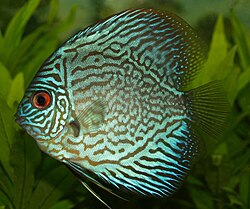
Missing scales in Discus can be caused by various factors including poor water quality, stress, and infections. It is a serious condition that can lead to secondary infections if not addressed promptly. Owners should first ensure proper water parameters and provide a stress-free environment.
Discus Missing Scales: Common Causes
Poor Water Quality
Most LikelyHigh levels of ammonia, nitrite, or nitrate can cause stress and lead to scale loss.
Stress
Most LikelyAggressive tankmates, rapid temperature changes, or loud noises can stress Discus and cause scale loss.
Ich (Ichthyophthirius multifiliis)
Most LikelyThis common parasite can cause scales to peel off, often with a cloudy eye and loss of appetite.
Hexamita (Hexamita spp.)
PossibleThis protozoan can cause internal and external damage to the fish, resulting in scale loss.
Bacterial Infections
Less CommonGram-negative bacteria can cause scale loss, along with other symptoms such as redness or ulcers.
How to Diagnose the Cause
Follow these steps in order. Stop when you identify a likely cause and move to treatment.
- Test the water parameters
Check ammonia, nitrite, nitrate, pH, and temperature levels.
Recommended: water test kit - Observe the fish's behavior and appearance
Look for signs of stress, aggression, or other symptoms such as cloudy eyes or redness.
- Inspect the scale loss
Check if the scale loss is uniform or patchy and if there is any evidence of infection.
- Consider the tank environment
Assess tank mates, decorations, and water conditions for potential stressors.
- Consult with a vet
If unsure, seek professional advice to rule out other conditions.
How to Treat Discus Missing Scales
- Improve water quality
Perform water changes and use filter media to remove toxins.
- Reduce stress
Ensure tank mates are compatible, provide hiding spots, and maintain consistent water temperature and pH.
- Treat Ich
Use an ich treatment specifically designed for freshwater fish, following the manufacturer's instructions.
- Treat Hexamita
Use metronidazole as directed by a vet, as it can be harmful if not used correctly.
- Treat bacterial infections
Administer appropriate antibiotics, following the vet's instructions, and ensure good water quality throughout the treatment process.
How to Prevent Discus Missing Scales
When to See a Vet
🔬 AI Symptom Checker
Not sure what's wrong? Describe your fish's symptoms to the FishCare AI and get an instant diagnosis.
Check Symptoms →Frequently Asked Questions
This guide was reviewed for biological accuracy and practical aquarium care guidance. Always test water parameters before treating a sick fish — poor water quality is the most common root cause. Consult an aquatic veterinarian if symptoms persist after 48 hours of correct treatment.
Sources: Merck Veterinary Manual — Aquarium Fishes · UF/IFAS Extension — Fish Health Management