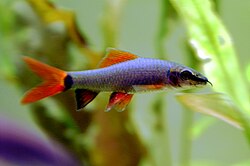
The Rainbow Shark gets its name from its shark-like silhouette โ a tall, triangular dorsal fin and torpedo-shaped body โ not from any relation to true sharks (it's actually a cyprinid, related to barbs and minnows). Its jet-black body and vivid red-orange fins make it a striking centerpiece fish, but its territorial streak means it needs a large tank and careful tank mate selection.
Taxonomy & Classification
Epalzeorhynchos frenatum (also seen as Labeo frenatus) belongs to the family Cyprinidae, making it a closer relative of goldfish, barbs, and true minnows than of any marine shark. It's also sold under the names ruby shark and red-finned shark. An all-white "albino rainbow shark" color morph is common in the trade and shares identical care needs.
| Rank | Classification |
|---|---|
| Order | Cypriniformes |
| Family | Cyprinidae |
| Genus | Epalzeorhynchos |
Natural Habitat
Native to the Mekong, Chao Phraya, Mae Klong, and Xe Bangfai river basins of Thailand, Laos, and Cambodia, rainbow sharks forage near sandy river bottoms in warm, well-oxygenated water with moderate flow. Wild populations have declined due to river damming, though virtually all fish in the trade are farm-raised in Thailand.
Tank Setup
A minimum of 55 gallons suits a single adult, with 75+ gallons recommended, especially if housing other bottom-dwellers. Provide a long, rectangular footprint with strong filtration and moderate-to-fast flow to mimic river conditions. Rainbow sharks are highly territorial and will claim a cave, driftwood piece, or corner of the tank as their own โ provide multiple such structures spread throughout the tank to diffuse aggression, plus a secure lid, since this species is a strong jumper.
Water Parameters
| Parameter | Ideal Range |
|---|---|
| Temperature | 74โ79ยฐF (23โ26ยฐC) |
| pH | 6.5โ7.5 |
| Hardness (GH) | 5โ11 dGH |
| Ammonia / Nitrite | 0 ppm |
| Nitrate | <20 ppm |
Diet & Feeding
Omnivorous with a strong algae-grazing component in the wild. Offer sinking algae wafers and vegetable-rich pellets as the staple, rotating in frozen or live protein (daphnia, brine shrimp, chopped prawn) a few times weekly, plus blanched vegetables like zucchini and spinach.
Tank Mates & Territory
Rainbow sharks are best kept with fast-moving fish that occupy the middle and upper water column and won't compete for bottom territory: barbs, danios, rainbowfish, gouramis, and larger tetras. Avoid other bottom-dwellers (loaches, plecos) where possible, and never keep with a second rainbow shark or a red-tail shark โ the two species will fight relentlessly, often to the death, in anything less than a very large, heavily structured tank.
Breeding
Breeding rainbow sharks in a home aquarium is very difficult, mainly because of their territorial intolerance of their own kind in confined spaces and their reliance on seasonal cues that are hard to replicate. Nearly all specimens sold are farm-raised in outdoor ponds in Thailand rather than bred indoors.
Common Health Issues
- Ich โ white spots; treat with standard freshwater medication and gradual temperature increase
- Stress-related aggression โ undersized tanks or insufficient territory intensify aggression toward tank mates; increase space and add more visual barriers (plants, caves)
- Jumping injuries โ a secure, tight-fitting lid is essential to prevent fish from jumping during stress or territorial disputes
Reviewed for Cyprinidae biology accuracy and territorial-behavior management guidance.
Frequently Asked Questions
Can I keep two rainbow sharks together?
Generally no. They're strongly territorial toward their own kind and will fight, often severely, unless the tank is very large with abundant separate territories.
Are rainbow sharks reef safe or community safe?
They're freshwater-only and not "community safe" in the gentle sense โ they tolerate fast-moving mid-to-upper water column fish but are territorial toward other bottom-dwellers.
Why is my rainbow shark chasing other fish?
This is typically territorial behavior, especially as the fish matures. Increase hiding spots and territory options, and avoid adding new bottom-dwelling fish.