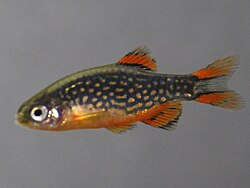
The Celestial Pearl Danio β better known by its nickname, the Galaxy Rasbora β is a pea-sized nano fish covered in shimmering, star-like spots that made it an overnight sensation when it was first discovered in Myanmar in 2006. Despite the small size, this is a fish full of personality: males spar constantly to establish rank, and a well-planted group puts on a genuinely dazzling display in a nano tank.
Taxonomy & Classification
Discovered in August 2006 in shallow ponds near Hopong, Myanmar, this species was initially named Celestichthys margaritatus before genetic studies confirmed it belonged in the genus Danio β making it a close relative of the zebra danio, not a true rasbora, despite its enduring "Galaxy Rasbora" nickname.
| Rank | Classification |
|---|---|
| Order | Cypriniformes |
| Family | Cyprinidae |
| Genus | Danio |
Natural Habitat
Native to small, shallow, densely vegetated ponds and rice paddies in Myanmar's Salween River Basin and neighboring parts of northern Thailand, celestial pearl danios inhabit calm, weedy water with a neutral-to-slightly-alkaline pH and moderate hardness β a much more limited natural range than most popular aquarium fish.
Nano Tank Setup
A 10-gallon tank comfortably houses a group of 6β8; these fish aren't strong swimmers and don't need a large footprint, but they do need dense cover. Include heavily planted areas (java fern, bacopa, rotala) alongside floating plants like frogbit for shy fish to retreat into. Use gentle filtration β a sponge filter works well β and keep the water line a few inches below the rim or add floating cover, since this species can jump when startled or spawning.
Water Parameters
| Parameter | Ideal Range |
|---|---|
| Temperature | 72β78Β°F (22β26Β°C) |
| pH | 6.5β7.5 |
| Hardness (GH) | 2β10 dGH |
| Ammonia / Nitrite | 0 ppm |
| Nitrate | <20 ppm |
Diet & Feeding
Omnivorous micropredators with very small mouths: offer finely crushed flakes or micro pellets as a staple, and prioritize small live or frozen foods β baby brine shrimp, daphnia, and micro worms β for the best color and condition. Feed small amounts multiple times daily rather than one larger meal.
Tank Mates
Best kept in a dedicated nano or species tank, or with other small, peaceful fish that won't outcompete them for food: pygmy corydoras, small rasboras, and dwarf shrimp (though CPDs will hunt shrimplets given the chance). Avoid larger or boisterous fish that could bully, out-eat, or simply intimidate this shy, small species.
Breeding
Celestial pearl danios breed readily in a well-fed, densely planted group of 6 or more. Females scatter a dozen or so eggs into fine plants like java moss or a yarn spawning mop; adults β especially males β will eat the eggs, so many breeders move spawning media to a separate grow-out tank. Eggs hatch within about a week depending on temperature.
Common Health Issues
- Fin rot β caused by poor water quality, fighting among excess males, or fungal/bacterial infection; monitor male-to-female ratio and water parameters
- Jumping β a real risk in open-top tanks, especially during spawning excitement; use a lid or floating plant cover
- Stress from bright, open tanks β this shy species needs dense planting to feel secure and display natural color and behavior
Reviewed for Danio biology accuracy and conservation-conscious sourcing guidance given this species' limited wild range.
Frequently Asked Questions
Is the Celestial Pearl Danio the same as the Galaxy Rasbora?
Yes β they're the same fish. "Galaxy Rasbora" is the original trade nickname; "Celestial Pearl Danio" reflects its correct scientific classification in the genus Danio.
How many celestial pearl danios should I keep together?
At least 5β6, ideally 8β10, for the most natural, confident behavior and best display of color and courtship activity.
Do celestial pearl danios need a heater?
Yes, in most homes β they need stable water in the 72β78Β°F range, which usually requires a small heater unless your room stays consistently warm.