Saltwater Fish Identification Chart: 26 Species with Pictures
This saltwater fish identification chart covers the ocean fish anglers, divers and beachgoers most often need to name: offshore pelagics, inshore game fish and bottom species. Each row pairs a photo with the two or three traits that separate the species from its look-alikes, plus size and range. Use the family key below when a fish is not on the chart, and the AI identifier when two rows still fit.
📷 Identify a saltwater fish from a photoSaltwater fish identification chart with pictures
Species run from offshore pelagics (tuna, wahoo, mahi-mahi, sailfish) through inshore game fish (snook, redfish, seatrout, striped bass) to reef and bottom species (snapper, grouper, sea bass, flatfish). Sizes are typical adult ranges; trophy fish run larger. Tropical reef species have their own reef fish identification chart.
| Photo | Species | Size Range | Key ID Traits | Where Found |
|---|---|---|---|---|
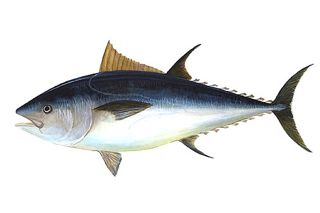 | Atlantic Bluefin Tuna Thunnus thynnus | 100–300 cm | Steel-blue back; silver belly; short pectoral fins; crescent tail | N. Atlantic, Mediterranean |
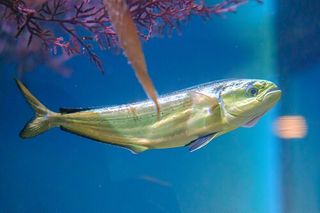 | Mahi-Mahi Coryphaena hippurus | 60–150 cm | Vivid blue-green-gold; blunt forehead in males; rapidly fades after death | Tropical worldwide |
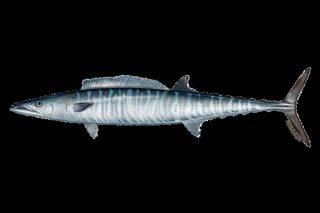 | Wahoo Acanthocybium solandri | 100–210 cm | Elongated; blue-grey with faint vertical bars; knife-like teeth | Tropical worldwide |
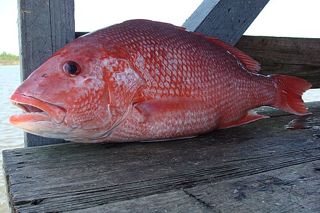 | Red Snapper Lutjanus campechanus | 40–100 cm | Rose-red; pointed anal fin; large eye with red iris | W. Atlantic, Gulf of Mexico |
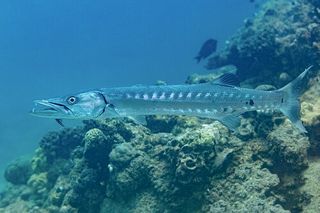 | Barracuda Sphyraena barracuda | 60–200 cm | Long cylindrical; silver with dark blotches; fang-like teeth | Tropical worldwide |
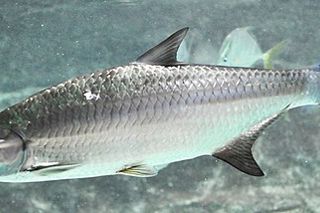 | Tarpon Megalops atlanticus | 100–250 cm | Very large silver scales; upturned mouth; bony gular plate | Atlantic, Caribbean |
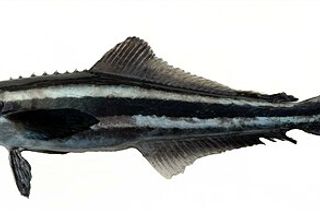 | Cobia Rachycentron canadum | 60–200 cm | Dark brown; white belly; distinct lateral stripe; flat head | Atlantic, Indo-Pacific |
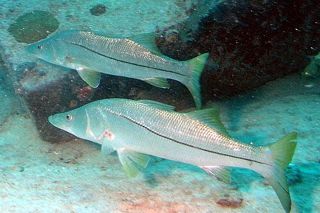 | Snook Centropomus undecimalis | 40–140 cm | Prominent black lateral line; protruding lower jaw; silver | Tropical Atlantic |
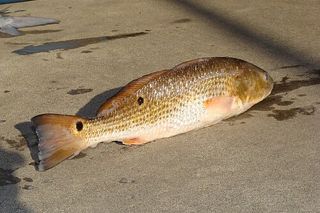 | Redfish (Red Drum) Sciaenops ocellatus | 40–160 cm | Copper-bronze; one or more black spots at tail base | W. Atlantic, Gulf of Mexico |
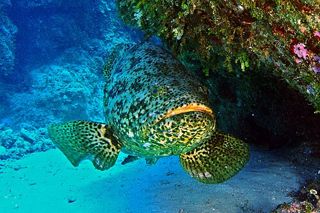 | Grouper (Goliath) Epinephelus itajara | 100–250 cm | Brownish with dark spots; massive; can exceed 400 kg | Atlantic, E. Pacific |
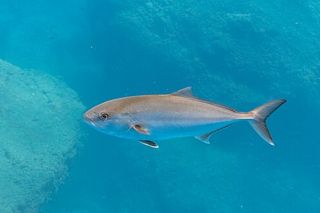 | Amberjack Seriola dumerili | 60–200 cm | Amber lateral stripe from eye to tail; dark dorsal, silver sides | Tropical/subtropical worldwide |
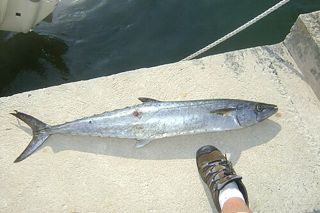 | King Mackerel Scomberomorus cavalla | 50–185 cm | Silver; lateral line dips sharply at mid-body; iridescent green back | W. Atlantic, Gulf of Mexico |
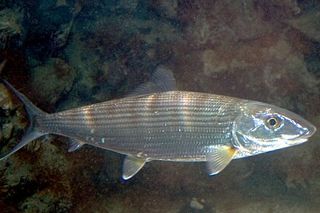 | Bonefish Albula vulpes | 40–90 cm | Extremely silvery; almost transparent; pointed snout; tails in shallow flats | Tropical worldwide |
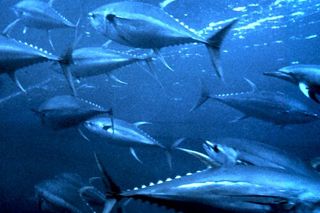 | Yellowfin Tuna Thunnus albacares | 80–200 cm | Bright yellow fins and finlets; streamlined; deeply forked tail | Tropical worldwide |
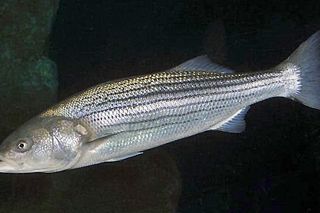 | Striped Bass Morone saxatilis | 50–120 cm | Silver with 7–8 unbroken dark horizontal stripes; two separate dorsal fins; forked tail | Atlantic coast of N. America, estuaries and surf |
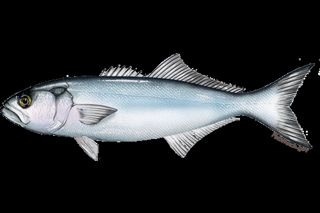 | Bluefish Pomatomus saltatrix | 30–100 cm | Blue-green back, silver sides; large mouth of flat triangular teeth; dark blotch at pectoral base | Temperate and subtropical seas worldwide |
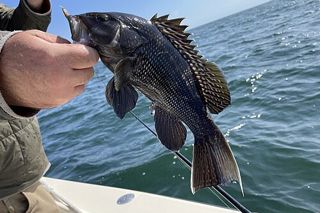 | Black Sea Bass Centropristis striata | 20–60 cm | Dusky black-grey; white spots forming faint stripes; tail with a long upper filament in adults | W. Atlantic, reefs and wrecks |
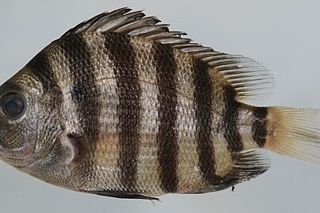 | Sheepshead Archosargus probatocephalus | 30–75 cm | Deep body with 5–7 bold black vertical bars; human-like incisor teeth; sharp dorsal spines | W. Atlantic and Gulf, pilings and jetties |
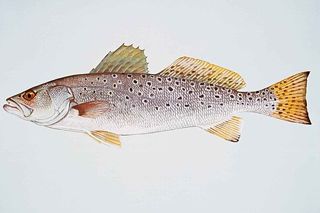 | Spotted Seatrout Cynoscion nebulosus | 35–80 cm | Silver-grey with round black spots on the back, dorsal and tail; two canine teeth in the upper jaw | Gulf of Mexico and SE US, grass flats |
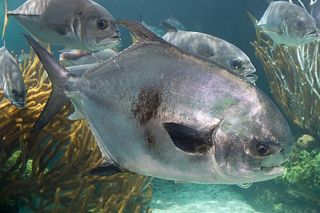 | Permit Trachinotus falcatus | 45–110 cm | Deep, laterally compressed; long sickle-shaped dorsal and anal fins; orange tint on the belly; larger and deeper than pompano | Caribbean and W. Atlantic flats |
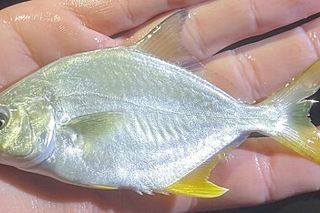 | Florida Pompano Trachinotus carolinus | 25–60 cm | Silver with yellow belly and fins; short dorsal lobe (permit's is longer); no scutes on the tail wrist | W. Atlantic and Gulf surf zones |
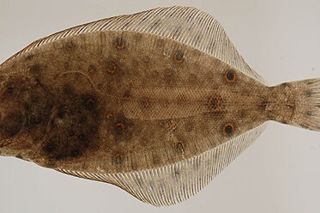 | Summer Flounder Paralichthys dentatus | 30–90 cm | Both eyes on the left side; brown with 5 or more ocellated (ringed) spots; large mouth with teeth | NW Atlantic, sandy bottoms |
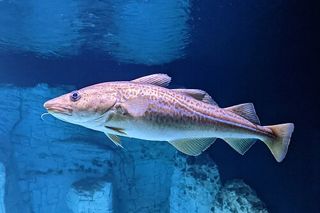 | Atlantic Cod Gadus morhua | 50–150 cm | Three dorsal fins and two anal fins; chin barbel; pale, curved lateral line; speckled brown-green | N. Atlantic, cold shelf waters |
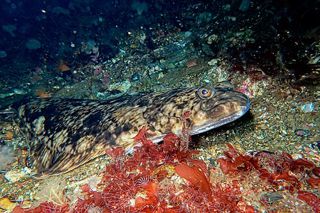 | Atlantic Halibut Hippoglossus hippoglossus | 100–250 cm | Right-eyed flatfish; diamond-shaped outline; slightly concave tail; largest of the flatfish | N. Atlantic, deep cold water |
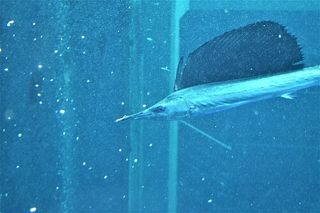 | Sailfish Istiophorus platypterus | 200–300 cm | Huge sail-like dorsal fin; long spear bill; blue with vertical bars of pale spots; very long pelvic fins | Tropical and temperate oceans worldwide |
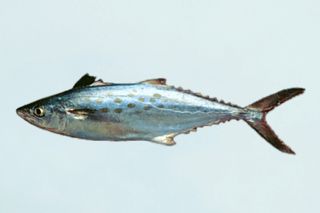 | Spanish Mackerel Scomberomorus maculatus | 40–90 cm | Slender, silver with rows of golden-yellow spots; black leading edge on the first dorsal; no lateral-line dip (king mackerel's dips sharply) | W. Atlantic and Gulf of Mexico |
Species photos are CC-licensed or public-domain images from Wikimedia Commons; see the full image credits for each file and its licence. All habitats are combined on the master fish identification chart.
Saltwater fish identification by family
When the chart does not give a clean match, place the fish in a family first. Six families account for most saltwater catches:
Stout body, large mouth, rounded tail. Solitary bottom dwellers; colour varies enormously within a species, so use shape and fin count.
Pointed snout, forked tail, one continuous dorsal fin. Many show a dark spot below the dorsal and prominent canine teeth.
Streamlined, deeply forked tail, narrow tail wrist often with bony scutes. Fast open-water predators, silver with yellow or dark accents.
Spindle-shaped; a row of small finlets behind the dorsal and anal fins; crescent tail. Built for sustained speed.
Both eyes on one side. Left-eyed = flounders of the Paralichthys group; right-eyed = halibut, plaice and most soles.
Redfish, seatrout and croaker. Two dorsal fins that touch; many have a tail-base spot or dark body spots; they audibly "drum".
Saltwater fish identification by fins and teeth
| Feature | What It Tells You | Example |
|---|---|---|
| Finlets behind dorsal and anal fins | Mackerel and tuna family | Wahoo, king mackerel, yellowfin tuna |
| Lateral line path | Sharp dip = king mackerel; gentle slope = Spanish mackerel; bold black line = snook | King vs. Spanish mackerel |
| Scutes on the tail wrist | Jack family (amberjack, permit lack them in the pompano group) | Amberjack, crevalle jack |
| Tail-base spot | Red drum; count them, some have several | Redfish |
| Which side the eyes are on | Left = summer flounder group; right = halibut | Summer flounder vs. Atlantic halibut |
| Three dorsal fins | Cod family | Atlantic cod, haddock, pollock |
| Teeth | Fang-like = barracuda; flat triangular = bluefish; incisors = sheepshead; canines = seatrout | Barracuda, bluefish, sheepshead |
Saltwater regions at a glance
- Indo-Pacific: the richest marine fauna on Earth, from East Africa to Polynesia. Home to most parrotfish, butterflyfish and lionfish.
- Caribbean / W. Atlantic: tarpon, bonefish, permit, snook and Atlantic-only groupers and snappers. See Caribbean fish identification.
- Gulf of Mexico: red snapper, redfish, spotted seatrout, cobia and king mackerel. See Gulf of Mexico fish identification and Florida fish identification.
- NW Atlantic (New England to Carolinas): striped bass, bluefish, black sea bass, cod, summer flounder.
- Eastern Pacific: garibaldi, sheephead, rockfish and lingcod not found elsewhere.
- Mediterranean: lower diversity with many endemics; Atlantic species enter via Gibraltar.
Saltwater fish identification FAQ
How do I tell a king mackerel from a Spanish mackerel?
Look at the lateral line and the first dorsal fin. On a king mackerel the lateral line drops sharply below the second dorsal, and the first dorsal is uniformly grey; a Spanish mackerel has a gently sloping lateral line, golden spots and a black patch on the front of the first dorsal.
Permit or pompano?
Permit are deeper-bodied and grow much larger; their dorsal and anal fin lobes are long and sickle-shaped and the belly often shows orange. Pompano stay under about 60 cm, have shorter fin lobes and a yellow belly and fins.
Why does my fish look different from the picture?
Saltwater fish change colour with depth, stress and death: a mahi-mahi fades from gold-green to grey within minutes on deck. Identify by shape, fin count, tooth pattern and lateral-line markings first, then use colour.
What if my fish is not on this chart?
Upload a clear side-on photo to the AI fish identifier. It covers 866 freshwater and saltwater species and returns the top matches with a confidence score.