Gulf of Mexico Fish Identification Chart: 26 Species with Pictures
The Gulf of Mexico is one of the most productive fisheries on Earth: shallow bays and seagrass flats, a wide shelf of hard bottom, oil platforms that act as reefs, and blue water beyond the shelf edge. This Gulf of Mexico fish identification chart pairs a photo of each species anglers meet from the Texas coast to the Florida panhandle with the traits that separate it from its look-alikes. Use the habitat notes below to narrow the list, and the AI identifier when two rows still fit.
📷 Identify a Gulf fish from a photoGulf of Mexico fish identification chart with pictures
Rows run from inshore bay species (seatrout, redfish, black drum, sheepshead, flounder, croaker) through nearshore surf and pass fish (jacks, cobia, mackerel, blacktip shark) to the offshore reef, platform and blue-water species (snapper, grouper, amberjack, tuna, wahoo, mahi-mahi). Sizes are typical adult ranges.
| Photo | Species | Size Range | Key ID Traits | Where Found |
|---|---|---|---|---|
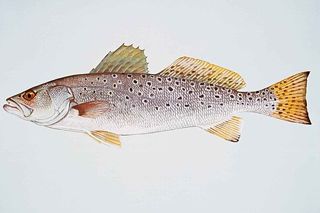 | Spotted Seatrout Cynoscion nebulosus | 35–80 cm | Silver-grey with round black spots on the back, dorsal and tail; two canine teeth in the upper jaw | Grass flats and bays |
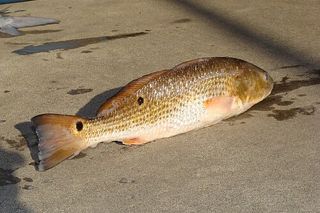 | Redfish (Red Drum) Sciaenops ocellatus | 40–120 cm | Copper-bronze; one or more black spots at the tail base; no chin barbels (black drum has them) | Flats, surf and passes; bull reds school in autumn |
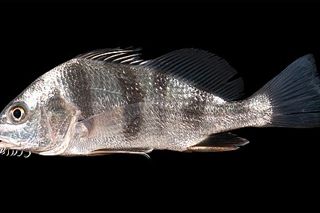 | Black Drum Pogonias cromis | 40–150 cm | High-backed; chin barbels; vertical bars in juveniles fade with age; drums audibly | Bays, bridges and oyster beds |
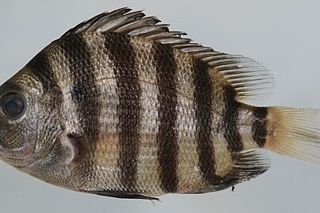 | Sheepshead Archosargus probatocephalus | 30–75 cm | 5–7 bold black vertical bars; human-like incisor teeth | Pilings, jetties and oyster bars |
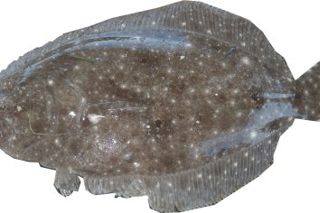 | Gulf Flounder Paralichthys albigutta | 25–45 cm | Left-eyed flatfish with three ocellated spots in a triangle | Sandy bottoms and passes; gigged at night |
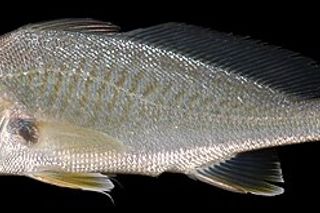 | Atlantic Croaker Micropogonias undulatus | 20–45 cm | Silver-bronze with faint diagonal lines; small chin barbels; croaks when handled | Bays and surf; bait and pan fish |
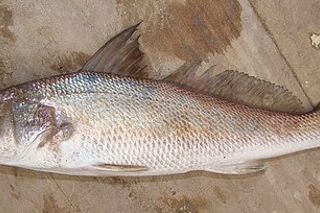 | Southern Kingfish Menticirrhus americanus | 25–45 cm | Silver-grey, single short chin barbel, no spots; often called whiting | Surf and sandy bays |
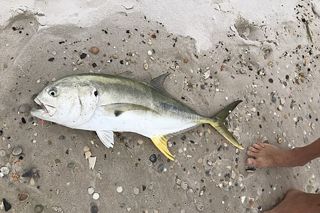 | Crevalle Jack Caranx hippos | 40–100 cm | Deep, blunt head; black spot on the gill cover and pectoral base; yellow tail; scutes on the tail wrist | Inshore and nearshore, in fast-moving schools |
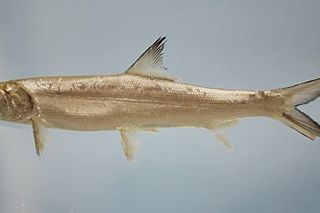 | Ladyfish Elops saurus | 30–70 cm | Slender, silver, small scales; looks like a miniature tarpon without the trailing dorsal ray; jumps when hooked | Bays, canals and surf |
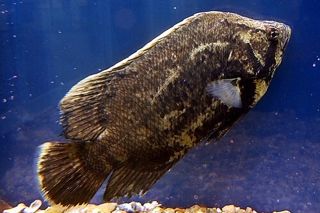 | Tripletail Lobotes surinamensis | 40–90 cm | Deep-bodied, mottled brown; rounded dorsal and anal lobes make it look three-tailed; floats on its side near buoys | Crab-trap buoys and weed lines |
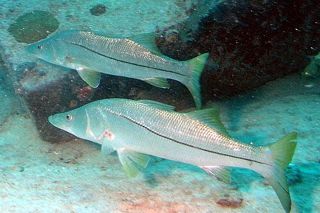 | Snook Centropomus undecimalis | 40–140 cm | Bold black lateral line; protruding lower jaw; silver-green | Mangroves, passes and beaches; south of Tampa/Cape Canaveral |
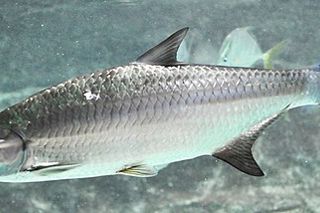 | Tarpon Megalops atlanticus | 100–250 cm | Huge silver scales; upturned mouth; long trailing last dorsal ray | Passes, bridges and flats; May–July migration |
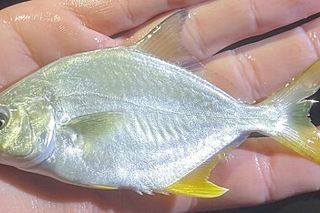 | Florida Pompano Trachinotus carolinus | 25–60 cm | Silver with yellow belly and fins; short fin lobes; no scutes | Surf and beaches on both coasts |
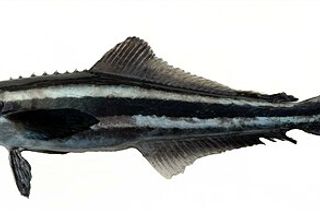 | Cobia Rachycentron canadum | 60–200 cm | Dark brown, flat head, white belly stripe; looks like a shark or remora from above | Follows rays and buoys nearshore; spring run |
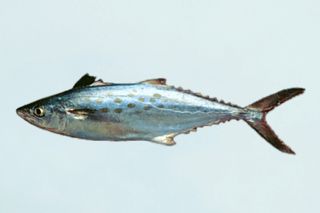 | Spanish Mackerel Scomberomorus maculatus | 40–90 cm | Golden spots; black patch on the first dorsal; gently sloping lateral line | Beaches and passes, spring and autumn |
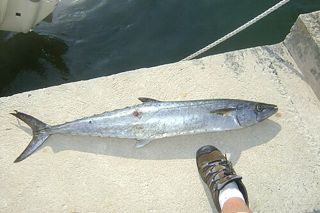 | King Mackerel Scomberomorus cavalla | 50–185 cm | Silver, no spots in adults; lateral line dips sharply mid-body | Nearshore in warm months |
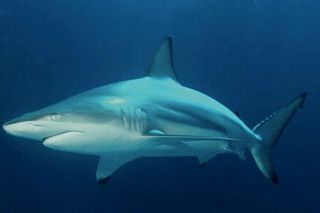 | Blacktip Shark Carcharhinus limbatus | 100–200 cm | Grey-bronze with black tips on most fins; pointed snout; no interdorsal ridge | Beaches, passes and bays in summer |
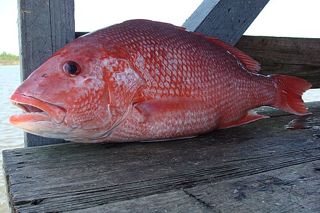 | Red Snapper Lutjanus campechanus | 40–100 cm | Rose-red; pointed anal fin; red iris; no flank spot in adults | Hard bottom 20–100 m, mainly the Gulf side |
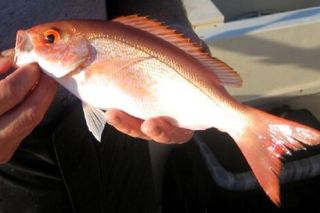 | Vermilion Snapper Rhomboplites aurorubens | 25–50 cm | Streamlined, vermilion-red with faint yellow lines; forked tail; small mouth (red snapper's is larger) | Offshore reefs and ledges |
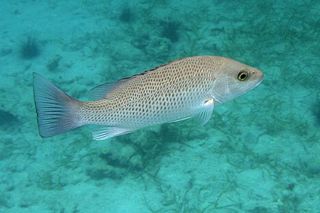 | Mangrove Snapper Lutjanus griseus | 25–60 cm | Grey-bronze; dark stripe through the eye in juveniles; two canine teeth; no black spot on the flank | Mangroves, docks and reefs |
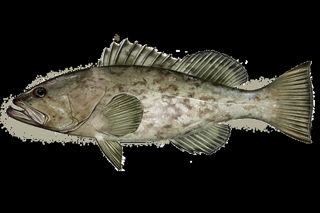 | Gag Grouper Mycteroperca microlepis | 50–120 cm | Grey-brown with worm-like dark markings; squared tail with a dark edge; long, sloping head | Nearshore reefs, ledges and wrecks |
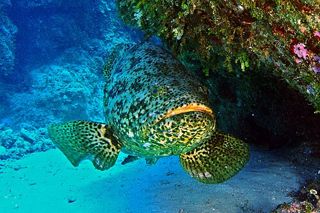 | Grouper (Goliath) Epinephelus itajara | 100–250 cm | Huge, brown-olive with small dark spots; rounded fins; protected — release only | Wrecks, bridges and mangroves |
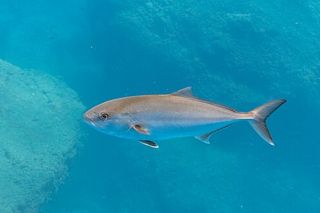 | Amberjack Seriola dumerili | 60–200 cm | Amber stripe from eye to tail; dark band through the eye; no scutes | Wrecks and reefs 20–100 m |
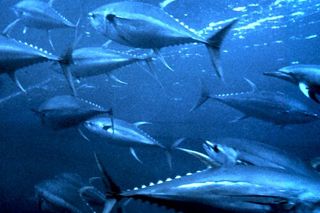 | Yellowfin Tuna Thunnus albacares | 80–200 cm | Bright yellow finlets; very long second dorsal and anal fins in large fish | Offshore, deep water |
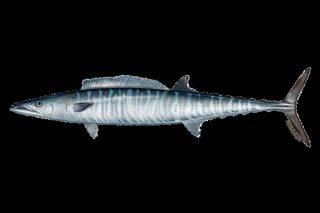 | Wahoo Acanthocybium solandri | 100–210 cm | Elongated; blue-grey with faint vertical bars; knife-like teeth | Offshore and deep-water ledges |
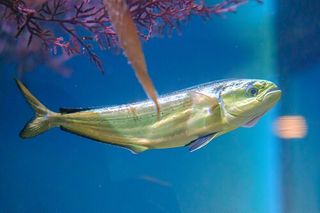 | Mahi-Mahi Coryphaena hippurus | 60–150 cm | Green-gold with blue spots; blunt forehead in males; fades fast on deck | Offshore weed lines |
Species photos are CC-licensed or public-domain images from Wikimedia Commons; see the full image credits for each file and its licence. Florida-only species and the Keys: Florida fish identification. All ocean species: saltwater fish identification chart.
Gulf of Mexico fish identification by habitat
Galveston, Matagorda, Laguna Madre, Mobile Bay, Apalachicola: speckled trout, redfish, black drum, flounder, sheepshead and croaker. Most Gulf fishing happens here.
Spanish mackerel, pompano, whiting, crevalle jack, ladyfish and blacktip sharks in summer; bull redfish and tarpon in autumn.
Red and vermilion snapper, gag grouper, amberjack, cobia and king mackerel. Platforms off Louisiana and Texas hold the densest snapper stocks.
Yellowfin tuna, wahoo, mahi-mahi and blue marlin along the shelf edge and floating structure.
Gulf of Mexico fish identification by state
- Texas: over 1,000 km of coast and the hypersaline Laguna Madre; the state's big three are speckled trout, redfish and flounder, with tarpon off Port O'Connor and platform snapper offshore.
- Louisiana: the marsh delta produces more redfish and trout than any other state; offshore platforms hold red snapper, amberjack and yellowfin tuna within a short run.
- Mississippi and Alabama: Mobile Bay and the barrier islands for trout, redfish and tripletail on the crab-trap buoys; Alabama's artificial reef zone is the largest in the US for red snapper.
- Florida Panhandle: Pensacola, Destin and Panama City: cobia run in spring, king mackerel in summer, gag grouper on nearshore ledges, and clear water for sight-casting.
Gulf of Mexico fish identification FAQ
What is the most common fish in the Gulf of Mexico?
Inshore, spotted seatrout and redfish are the most caught species in every Gulf state from Texas to Florida. Offshore, red snapper is the signature Gulf fish, with vermilion snapper, gag grouper and amberjack on the same reefs and platforms.
How do I tell speckled trout from a weakfish or sand seatrout?
Speckled (spotted) seatrout have distinct round black spots on the back, dorsal and tail. Sand seatrout and silver seatrout are plain silver-grey with no spots; weakfish have faint diagonal streaks and are rare in the Gulf.
Are there sharks near Gulf beaches?
Yes: blacktip, spinner, bull and bonnethead sharks work the surf and passes in summer. Blacktips are the ones most often seen jumping and caught from the beach; the black fin tips and pointed snout identify them.
What if my fish is not on this chart?
Upload a clear side-on photo to the AI fish identifier. It covers 866 species and returns the top matches with a confidence score.