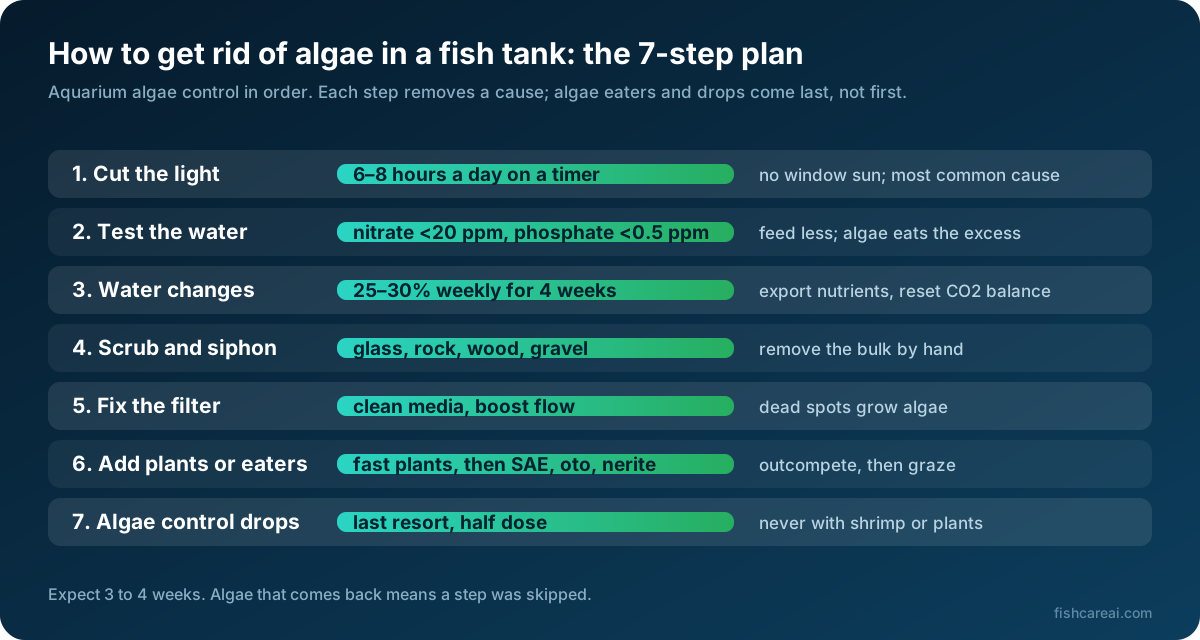
How to get rid of algae in fish tank glass, gravel and plants: cut the light to 6–8 hours, get nitrate under 20 ppm, change 25–30% of the water weekly, scrub and siphon, fix the filter flow, add plants and algae eaters, and only then consider algae control drops.
Done together, and in that order, the seven steps clear green film and diatoms in 10 to 14 days and black beard or hair algae in 3 to 4 weeks, and because they remove the cause rather than the symptom the algae stays gone.
Skip a step and the algae comes back, which is why most people are on their third bottle of algaecide and their second pleco. Identify the algae with the algae identification chart, then work through the steps below. The algae eater fish guide covers which animal to add in step 6.
Why Algae Grows in a Fish Tank
Algae needs three things: light, nutrients (nitrate and phosphate from fish waste and food) and CO2. It grows out of control when one is in excess or, in planted tanks, when the ratio swings, because algae adapts to a change in hours and plants take weeks. In practice five causes account for almost every tank algae control problem:
- Too much light. Lights on 10 to 14 hours, a tank near a window, or a bright LED over a tank with no plants to use it. The single most common cause.
- Too much food. Uneaten flake becomes phosphate within a day. Overfeeding shows up as green glass before it shows up as sick fish.
- Nitrate over 20 ppm. Overstocking, skipped water changes, a gravel bed full of mulm. Test with a liquid kit; strips read low.
- Low or uneven flow. Dead corners and a clogged filter starve plants of CO2 and nutrients while algae, which needs less, moves in. Black beard algae grows where flow drops.
- An immature tank. Brown diatoms in the first three months are normal and leave on their own once silicates are used up.
Check the tank's numbers against the aquarium water parameters guide before you start; nitrate, phosphate and the hours the light is on tell you which steps matter most.
How to Get Rid of Algae in Fish Tank Water, Glass and Gravel: The 7 Steps
| Step | Do this | Target | Why it works |
|---|---|---|---|
| 1. Cut the light | Timer, 6–8 h/day; move the tank or block the window | 6 h unplanted, 8 h planted | Removes the energy source; plants cope, algae does not |
| 2. Cut the nutrients | Feed once a day what is eaten in 30 s; skip a day a week | Nitrate <20 ppm, phosphate <0.5 ppm | Starves the algae; most tanks are overfed by half |
| 3. Water changes | 25–30% weekly, 30% every 3 days for the first 2 weeks | Nitrate falling week on week | Exports nutrients and loose algae; resets CO2 swings |
| 4. Scrub and siphon | Scraper on glass, toothbrush on wood and rock, gravel vacuum; trim algae-covered leaves | Bulk removed before each water change | Attached algae does not die from the other steps; it must come off |
| 5. Fix the flow | Rinse filter media in tank water, clear the intake, aim the outlet along the length of the tank | Gentle movement at every leaf; 4–6× turnover | Even flow feeds plants and denies algae its dead spots |
| 6. Add competition | Fast plants (hornwort, water sprite, floating plants), then otocinclus, nerite snails, amano shrimp or siamese algae eaters | Plants first, animals a week later | Plants outcompete algae for nutrients; grazers keep new growth down |
| 7. Algae control drops | Only if steps 1–6 have not worked after 4 weeks; half dose, airstone running | Last resort | Kills what is left without fixing anything; see below |
Do steps 1 to 4 on the same day. Steps 5 and 6 take the following week. Expect the glass to green again for the first fortnight while nutrients fall; that is normal and stops. A 3-day blackout (tank covered, lights off, no feeding, filter running) can be added between steps 4 and 5 for green water and blue-green algae; it does nothing useful for black beard algae.
Tank Algae Control by Algae Type
The seven steps apply to every algae, but each type has one extra move that speeds things up:
| Algae | Time to clear | The extra step |
|---|---|---|
| Green film on glass | 1–2 weeks | Nerite snails; scrape before every water change |
| Brown algae (diatoms) | 2–8 weeks in a new tank | Patience; otocinclus; a phosphate-removing filter pad if it persists |
| Green spot | 2–4 weeks | Razor blade on glass; raise phosphate slightly in planted tanks |
| Hair and thread algae | 2–3 weeks | Twirl out with a toothbrush; amano shrimp; cut light hardest |
| Black beard algae | 3–4 weeks | Hydrogen peroxide spot treatment; stabilize CO2; siamese algae eaters |
| Blue-green algae (cyanobacteria) | 1 week | Siphon sheets, 3-day blackout, dose nitrate to 10 ppm if it reads zero |
| Green water | 3–7 days | Blackout or a UV sterilizer; water changes alone make it worse |
Aquarium Algae Control Drops
Aquarium algae control drops are one of three chemistries. Copper-based algaecides kill algae and every snail and shrimp in the tank, and stay in the gravel for months. Liquid carbon (glutaraldehyde) products kill black beard and hair algae on contact at 2 to 3× the plant dose but melt vallisneria and some mosses and stress fish at that dose. Barley straw extract and enzyme drops are safe and do very little. None of them lowers light or nitrate, so the algae returns in 3 to 6 weeks unless steps 1 to 5 are done first.
If you use them: half the label dose, an airstone running for 48 hours because dying algae strips oxygen, and a 30% water change three days later. Never dose a tank with shrimp, nerite or mystery snails, or scaleless fish (loaches, some catfish) with a copper product. For a single patch of black beard algae, 3% hydrogen peroxide from a syringe onto the spot with the filter paused is cheaper, safer and works in days; the black beard algae guide gives the dose.
Keeping Algae Out of the Fish Tank
Once the tank is clear, the routine that keeps it clear is short. It is the same routine the fish tank water guide recommends for water quality, because algae is a water quality symptom:
- Lights on a timer, 7 to 8 hours, and no direct sun.
- Feed once a day, what disappears in 30 seconds; one fasting day a week.
- 25% water change every week with a gravel vacuum; nitrate under 20 ppm on a liquid test.
- Rinse filter sponges monthly in the water you removed; replace a canister filter's floss, never its ceramic media.
- Wipe the glass weekly with a magnet cleaner before it needs scraping.
- Keep the grazers fed: an algae wafer twice a week keeps otocinclus and siamese algae eaters alive after they have done their job.
- In planted tanks, keep CO2 and fertilizer steady; a change in either is an invitation to black beard algae.
A tank that grows a light green film on the glass in a week is healthy; that is the sign the light and nutrients are balanced and the nerites have work. A tank that grows nothing at all is usually under-lit for its plants. The question of how to get rid of algae in fish tank after fish tank stops coming up once the routine is weekly instead of monthly. The RSPCA's fish welfare advice makes the same point from the fish's side: stable, clean water is the whole job.
Fish Tank Algae Removal FAQ
What is the fastest way to get rid of algae in a fish tank?
Cut the light to 6 hours, do a 30% water change, scrub the glass and siphon the gravel, then repeat the water change every 3 days for two weeks. Most green film and diatom outbreaks clear in 10 to 14 days; black beard algae takes 3 to 4 weeks.
Are aquarium algae control drops safe for fish?
Most algaecides are safe for fish at the label dose but not for shrimp, snails or many plants, and the dying algae can crash oxygen overnight. Use them only after fixing light and nutrients, at half dose, with an airstone running.
How do I remove algae from fish tank glass?
Use an algae scraper or a magnet cleaner for glass, a razor blade for green spot algae, and an old credit card for acrylic. Do it right before a water change so the loose algae is siphoned out.
Why does algae keep coming back in my fish tank?
Because the cause is still there: too many hours of light, a window, overfeeding, nitrate over 20 ppm or a filter that has slowed down. Algae eaters and drops remove algae; only fixing the cause stops it.
Does a water change get rid of algae?
Partly. Water changes remove the nitrate and phosphate that feed algae and remove spores you have scrubbed loose, but they do not kill attached algae. Pair them with a light cut and scrubbing.
Will a blackout kill algae in a fish tank?
A 3-day blackout with the tank covered and no feeding kills green water and blue-green algae and weakens hair algae. It does little to black beard algae and stresses plants, so use it once, not routinely.