Betta Fish Overview
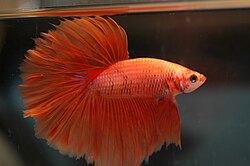
The betta fish — also called the Siamese fighting fish — is one of the most recognisable freshwater fish in the world. Males display spectacular finnage in nearly every color imaginable. Despite their reputation as fighters, bettas are complex, curious animals that respond to their keepers and can build bubble nests even in a basic aquarium.
Betta Fish Scientific Classification
| Rank | Classification |
|---|---|
| Family | Osphronemidae |
| Genus | Betta |
| Species | Betta splendens |
| Water type | freshwater |
| Native range | Southeast Asia (Thailand, Cambodia, Vietnam, Laos) |
Betta Fish Natural Habitat
Wild bettas inhabit rice paddies, slow-moving streams, roadside ditches, and shallow ponds across Thailand, Cambodia, Vietnam, and Laos. These environments are warm (25–30°C), often oxygen-poor, and heavily vegetated. Bettas evolved remarkable tolerance for fluctuating conditions, and their labyrinth organ allows them to breathe surface air directly.
Betta Fish Appearance & Size
Aquarium bettas show extraordinary variation in fin shape and color pattern. Common tail types include: Veil tail (most common, long flowing fins), Halfmoon (180° caudal spread), Crowntail (spiky crown effect), Double tail (split caudal fin), and Plakat (short-finned, closer to wild-type). Female bettas are smaller with shorter fins and less intense coloration.
Betta Fish Behavior & Temperament
Male bettas are highly territorial toward other males and toward fish with long, flowing fins that resemble rival bettas. They establish territories and flare aggressively at perceived threats — even their own reflection. Despite this, many individual bettas coexist peacefully with suitable tank mates in sufficiently large, well-planted tanks.
| Trait | Value |
|---|---|
| Temperament | Aggressive toward conspecific males |
| Schooling | No |
| Activity level | moderate |
Betta Fish Water Requirements
| Parameter | Ideal Range | Notes |
|---|---|---|
| Temperature | 24–28°C (75–82°F) | Use a reliable adjustable heater |
| pH | 6.5–7.5 | Avoid sudden swings |
| Hardness (GH) | 3–12 dGH | Soft to moderately hard |
| Ammonia | 0 ppm | Any detectable ammonia signals a problem |
| Nitrite | 0 ppm | Toxic even at low levels |
| Nitrate | <20 ppm | Manage through regular partial water changes |
| Min. tank | 19L (5 gal) | Larger tanks are easier to keep stable |
Interesting Facts About Betta Fish
- Bettas are labyrinth fish — a specialized organ lets them breathe oxygen directly from surface air.
- Male bettas build bubble nests at the water surface using saliva, even without a mate present.
- Bettas can recognize their owners and often swim to the front of the tank when a familiar person approaches.
- The genus Betta contains over 70 recognized species; most are smaller and drabber than the aquarium betta.
- In Thailand, bettas were originally selectively bred for fighting, not for their spectacular appearance.
📋 Full Care Guide
Ready to set up a tank for your Betta Fish? The complete care guide covers tank setup, feeding schedule, common diseases, tank mates, and breeding.
Read Betta Fish Care Guide →Species Related to Betta Fish
Related Species & Guides
This species profile was reviewed for biological accuracy and practical aquarium care guidance. For suspected illness or disease, test your water parameters first and consult an aquatic veterinarian if symptoms persist.