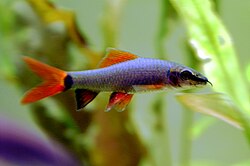
Torn or ragged fins in Rainbow Sharks are often due to territorial aggression or nipping from tankmates. This issue is typically manageable but requires prompt attention. Owners should monitor water quality and tank inhabitants closely.
Rainbow Shark Torn Fins: Common Causes
Territorial Aggression
Most LikelyFins can be damaged by aggressive behavior among tankmates, especially during feeding or breeding seasons.
Nipping from Tankmates
PossibleSmaller tankmates may bite the fins of a Rainbow Shark, particularly when the fish is resting or during breeding attempts.
Poor Water Quality
PossibleAmmonia and nitrite spikes can stress the fish, leading to weakened fins that are more susceptible to damage.
Dietary Deficiencies
Less CommonInadequate nutrition can cause overall health issues that affect the fin integrity, such as a lack of essential fatty acids.
External Parasites
Less CommonInfestations with parasites like Ichthyophthirius multifiliis can cause fin damage, though this is less common.
How to Diagnose the Cause
Follow these steps in order. Stop when you identify a likely cause and move to treatment.
- Inspect the fin condition closely
Look for signs of fraying, tears, or uneven edges on the fins.
Recommended: microscope - Check for tankmates with similar issues
Observe if other fish are displaying similar fin damage to rule out aggression or nipping.
- Evaluate water parameters
Test ammonia, nitrite, nitrate, pH, and hardness levels to ensure they are within the optimal range for Rainbow Sharks.
Recommended: test kit - Assess dietary habits
Ensure the Rainbow Shark is receiving a balanced diet with appropriate nutrients.
- Look for signs of external parasites
Examine the fish for any signs of external parasites such as spots or movement on the fins.
Recommended: microscope
How to Treat Rainbow Shark Torn Fins
- Improve water quality
Perform regular water changes and ensure proper filtration to remove harmful substances from the tank.
- Implement stress-reducing measures
Reduce aggression by rearranging the tank layout or adding more hiding spots. Avoid overcrowding and aggressive tankmates.
- Adjust diet and add supplements
Feed a balanced diet with high-quality food and consider adding vitamin and mineral supplements to support overall health and fin repair.
- Treat for external parasites if present
Use an appropriate treatment for external parasites as directed by a veterinarian or fish care specialist.
- Monitor for healing and adjust care as needed
Keep a close eye on the fish's recovery and make adjustments to its environment or care routine as necessary.
How to Prevent Rainbow Shark Torn Fins
When to See a Vet
🔬 AI Symptom Checker
Not sure what's wrong? Describe your fish's symptoms to the FishCare AI and get an instant diagnosis.
Check Symptoms →Frequently Asked Questions
This guide was reviewed for biological accuracy and practical aquarium care guidance. Always test water parameters before treating a sick fish — poor water quality is the most common root cause. Consult an aquatic veterinarian if symptoms persist after 48 hours of correct treatment.
Sources: Merck Veterinary Manual — Aquarium Fishes · UF/IFAS Extension — Fish Health Management