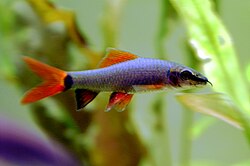
Rainbow Shark Overview
The Rainbow Shark (Epalzeorhynchos frenatum) is a freshwater fish from the family Cyprinidae. It thrives at temperatures of 24–27 °C with a pH of 6.5–7.5, requiring a minimum tank size of 200 litres. Territorial bottom dweller with a vibrant red-orange fin coloration. Highly aggressive toward own species and similar-looking fish.
Quick fact: Epalzeorhynchos frenatum belongs to the family Cyprinidae. Care level: intermediate.
Rainbow Shark Scientific Classification
| Rank | Classification |
|---|---|
| Family | Cyprinidae |
| Genus | Epalzeorhynchos |
| Species | Epalzeorhynchos frenatum |
| Water type | freshwater |
Rainbow Shark Natural Habitat
Rainbow Shark Appearance & Size
Rainbow Shark Behavior & Temperament
Highly aggressive toward own species and similar-looking fish
| Trait | Value |
|---|---|
| Temperament | Territorial bottom dweller with a vibrant red-orange fin coloration |
| Schooling | No |
| Activity level | active |
Rainbow Shark Water Requirements
| Parameter | Ideal Range | Notes |
|---|---|---|
| Temperature | 24–27°C (75–81°F) | Use a reliable adjustable heater |
| pH | 6.5–7.5 | Avoid sudden swings |
| Hardness (GH) | soft to medium dGH | Soft to moderately hard |
| Ammonia | 0 ppm | Any detectable ammonia signals a problem |
| Nitrite | 0 ppm | Toxic even at low levels |
| Nitrate | <20 ppm | Manage through regular partial water changes |
| Min. tank | 200L (53 gal) | Larger tanks are easier to keep stable |
Important: Always dechlorinate tap water before adding it to the tank. Chlorine and chloramines damage a fish's gills and reduce life expectancy.
Interesting Facts About Rainbow Shark
- Despite the name, Rainbow Sharks are cyprinids, not true sharks
Species Related to Rainbow Shark
Related Species & Guides
✓
Editorial review
This species profile was reviewed for biological accuracy and practical aquarium care guidance. For suspected illness or disease, test your water parameters first and consult an aquatic veterinarian if symptoms persist.