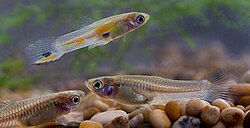
Floating at the surface in Guppies is an urgent sign of distress, often indicating severe health issues. It can be life-threatening and requires immediate attention. Owners should first remove the fish from the tank to prevent drowning and then quickly assess the water quality and behavior.
Guppy Floating at Surface: Common Causes
Poor Water Quality
Most LikelyHigh ammonia or nitrite levels can cause gills to swell and prevent breathing underwater.
Internal Parasites
Most LikelyParasites like flukes or monogenetic ciliates can cause gill damage and breathing difficulties.
Malnutrition
PossibleLack of essential nutrients can lead to weakened immune systems and breathing problems.
Stress
PossibleExcessive stress from tank mates or environmental changes can cause guppies to swim at the surface.
External Parasites
Less CommonExternal parasites like ich can irritate the gills and make it difficult for guppies to breathe.
How to Diagnose the Cause
Follow these steps in order. Stop when you identify a likely cause and move to treatment.
- Check water parameters for ammonia, nitrite, nitrate, pH, and temperature.
Use test strips or a digital tester to measure these values.
Recommended: Water test kit - Inspect the gills for signs of infection or parasites.
Use a magnifying glass to look for redness, swelling, or spots.
Recommended: Magnifying glass - Observe the fish for other symptoms like loss of appetite, bloating, or clamped fins.
These can indicate underlying health issues.
- Examine the tank environment for any recent changes or stressors.
This can help identify stress-related causes.
- Consider the fish's diet and recent changes to it.
Poor nutrition can lead to health issues affecting respiration.
How to Treat Guppy Floating at Surface
- Improve water quality by changing at least 50% of the tank water and adding dechlorinator if necessary.
- Administer appropriate treatments for identified parasites, following the instructions on the medication.
- Adjust the diet to ensure it meets the nutritional needs of Guppies, possibly including vitamin supplements or specialized food.
- Reduce stress by ensuring adequate space, minimizing aggression, and creating a stable environment.
- Monitor the fish's progress and continue treatments as needed, but consult a vet if symptoms persist or worsen.
How to Prevent Guppy Floating at Surface
When to See a Vet
🔬 AI Symptom Checker
Not sure what's wrong? Describe your fish's symptoms to the FishCare AI and get an instant diagnosis.
Check Symptoms →Frequently Asked Questions
This guide was reviewed for biological accuracy and practical aquarium care guidance. Always test water parameters before treating a sick fish — poor water quality is the most common root cause. Consult an aquatic veterinarian if symptoms persist after 48 hours of correct treatment.
Sources: Merck Veterinary Manual — Aquarium Fishes · UF/IFAS Extension — Fish Health Management