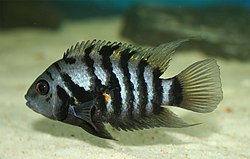
Missing scales in Convict Cichlids can be indicative of a range of issues, from aggressive tank behavior to underlying health problems. It's important to act quickly, as this condition can lead to secondary infections. As a hardy species, Convict Cichlids can be forgiving, but their aggression can exacerbate stress and injury, making it crucial for owners to understand the specific needs and behaviors of this species.
Convict Cichlid Missing Scales: Common Causes
Aggressive Tank Mates
Most LikelyFrequent aggression can lead to physical injuries that cause scales to fall off.
Poor Water Quality
Most LikelyHigh ammonia or nitrite levels can stress the fish and lead to scale loss.
Poor Diet
PossibleLack of proper nutrition can weaken scales, making them more susceptible to damage.
Parasites
PossibleInfestations like ich or velvet can cause scales to fall off as the parasites feed on the fish's skin.
Genetic Factors
Less CommonSome Convict Cichlids may be genetically predisposed to scale loss, though this is less common.
How to Diagnose the Cause
Follow these steps in order. Stop when you identify a likely cause and move to treatment.
- Inspect the fish for signs of injury or aggression.
Look for bite marks, fin nipping, or any visible wounds.
- Check the water parameters for ammonia, nitrite, and nitrate levels.
Use a test kit to ensure the water quality is within the optimal range for Convict Cichlids.
Recommended: Water test kit - Observe the fish's diet and overall health.
Ensure the fish is receiving a balanced diet and is not showing signs of other health issues.
- Look for signs of parasites or diseases.
Inspect the fish for any unusual spots, spots, or slime layers.
- Consider the fish's genetic history if other causes are ruled out.
If all other factors are normal, consult with a vet about genetic predispositions.
How to Treat Convict Cichlid Missing Scales
- Remove the aggressive tank mate(s) if necessary.
This can prevent further injury and stress to the fish.
- Improve water quality by performing regular water changes and maintaining optimal pH levels.
Water changes should be done at least 20-30% every week.
- Adjust the diet to ensure it is balanced and nutritious.
Provide a varied diet including high-quality pellets and fresh vegetables.
- Treat for parasites if present, following the vet's recommendations.
Common treatments include medicated baths or dips.
- Monitor the fish closely for any signs of improvement or worsening of the condition.
This will help determine the effectiveness of the treatment and if further intervention is needed.
How to Prevent Convict Cichlid Missing Scales
When to See a Vet
🔬 AI Symptom Checker
Not sure what's wrong? Describe your fish's symptoms to the FishCare AI and get an instant diagnosis.
Check Symptoms →Frequently Asked Questions
This guide was reviewed for biological accuracy and practical aquarium care guidance. Always test water parameters before treating a sick fish — poor water quality is the most common root cause. Consult an aquatic veterinarian if symptoms persist after 48 hours of correct treatment.
Sources: Merck Veterinary Manual — Aquarium Fishes · UF/IFAS Extension — Fish Health Management