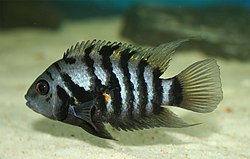
Darting or flashing in Convict Cichlids often stems from aggression, water quality issues, or parasites, which can lead to stress and erratic behavior. This behavior is not typically life-threatening but should be monitored closely. Owners should first ensure that the tank conditions are optimal and that the fish is not being bullied by tank mates.
Convict Cichlid Darting or Flashing: Common Causes
Aggression from Tank Mates
Most LikelyConvict Cichlids can be aggressive, especially when young or if there is competition for food or territory. This can lead to stress and erratic movement.
Poor Water Quality
Most LikelyHigh ammonia, nitrite, or nitrate levels can stress the fish, causing them to dart around the tank. Regular water changes are crucial.
Parasites
PossibleExternal parasites such as Ich or flukes can cause Convict Cichlids to rub against surfaces. Treatment with appropriate medications is necessary.
Dietary Issues
PossibleAn imbalanced diet can lead to malnutrition and stress, causing erratic behavior. Ensure a varied and balanced diet is provided.
Stress
Less CommonChanges in the environment, such as water temperature fluctuations or loud noises, can stress the fish, leading to darting behavior.
How to Diagnose the Cause
Follow these steps in order. Stop when you identify a likely cause and move to treatment.
- Inspect the fish for any visible signs of parasites or wounds.
Look for lesions, spots, or scales sticking out, which may indicate parasites like Ich or flukes.
Recommended: magnifying glass - Check the water parameters using a reliable test kit.
Test for ammonia, nitrite, nitrate, pH, and temperature. Any significant deviation from the optimal range can cause stress.
Recommended: water test kit - Observe the fish's diet and feeding habits.
Ensure the diet is balanced and includes a variety of foods, such as flake, pellets, and live or frozen foods.
- Assess the social dynamics in the tank.
Look for signs of aggression among tank mates, which can lead to stress and erratic behavior.
- Check for any recent changes in the aquarium setup or environment.
Changes can include new decorations, water changes, or temperature fluctuations.
How to Treat Convict Cichlid Darting or Flashing
- Remove any aggressive tank mates or create a separate tank for the Convict Cichlid if necessary.
- Perform a 25-30% water change to improve water quality and remove toxins.
- Administer appropriate medications for treating parasites, following the dosage instructions provided by the vet.
- Adjust the diet to ensure it is balanced and nutritious.
- Minimize stress by providing a quiet environment, avoiding sudden changes, and maintaining consistent tank conditions.
How to Prevent Convict Cichlid Darting or Flashing
When to See a Vet
🔬 AI Symptom Checker
Not sure what's wrong? Describe your fish's symptoms to the FishCare AI and get an instant diagnosis.
Check Symptoms →Frequently Asked Questions
This guide was reviewed for biological accuracy and practical aquarium care guidance. Always test water parameters before treating a sick fish — poor water quality is the most common root cause. Consult an aquatic veterinarian if symptoms persist after 48 hours of correct treatment.
Sources: Merck Veterinary Manual — Aquarium Fishes · UF/IFAS Extension — Fish Health Management